The agreement was signed just moments ago in the atrium of the presidential palace in Kabul. President Obama will now return to Bagram Airfield to address the American troops there, and then from Bagram will deliver a ten minute address to the American people that will be carried live on U.S. television at 7:30 PM, EDT.
Just last week the rumor was that the strategic pact wouldn't be signed until Mr Karzai attended the NATO summit in Chicago. This would have allowed enemies of the United States and Afghanistan additional weeks to continue to make last-ditch efforts to block the agreement. So while the signing of the pact won't cover all the outstanding issues connected with the post-2014 U.S. stay in Afghanistan, it will put a crimp in the machinations, which were launched on February 1 with the leaking of a NATO report to two British press outlets, the BBC and London Times.
In other breaking news, within the past hour the al Qaeda terrorist who plotted to bomb a subway in New York City has been found guilty all nine counts.
Tuesday, May 1


Monday, April 30
Thursday, April 19
"There is no freedom of press in Afghanistan"
Afghanistan has a stubbornly high illiteracy rate of 72 percent, so TV and radio are the most effective ways of spreading news around the country.
Afghan Journalists Strain Against Gags
By Giuliana Sgrena
Inter Press Service
KABUL, Apr 18, 2012 (IPS) - Afghanistan is quickly becoming one of the deadliest countries in the world for foreign and local journalists. In the last decade alone, 16 journalists have been killed on the job and so far no one has been brought to justice for these murders.
The silence of Afghan President Hamid Karzai in the face of such impunity is also a serious cause for concern for press freedom advocates.
After the fall of the Taliban and the arrival of foreign troops in 2001, Afghanistan experienced a ‘media boom’ that led to the rapid proliferation of publishing and broadcasting houses. The country is currently home to 200 print news outlets, 44 television stations (25 of which are in Kabul), about 141 radio stations and eight news agencies, all of which are increasing steadily.
Sadly, this increase has done little to improve press freedom in the country, since most media are linked to the government, warlords, the governments of occupying forces, or powerful, wealthy men – none of whom allow journalists to carry out their work properly.
Add to this the Taliban-imposed censorship of all media, including images of nudity that appear in soap operas, and the press landscape in Afghanistan bears striking resemblance to a battlefield on which journalists must wage a daily war to report the truth.
Widespread censorship
Nazir Fayaz, a 34-year-old journalist who has been working for years at Ariana TV, was forced to resign three months ago because of a dispute with the Iranian ambassador.
During an interview the Iranian diplomat accused Afghan people of "accepting the foreign occupation", a statement which Fayaz openly criticised.
Because his harsh response to the ambassador was broadcast nationwide, Fayaz was put in jail for two days, then forced by Iranian and Afghan authorities to resign.
Now, Fayaz gets threatening phone calls not only from the Iranian embassy but also from "the government, warlords, drug traffickers and Taliban. It’s very risky to be a journalist in Afghanistan," Fayaz told IPS.
"There is no freedom of press in Afghanistan because all the media are in the hands of warlords, mafia and banks. Censorship is even stronger in governmental media. Ariana TV was (independent) until the Afghan-American owner, Ehsan Bayat, became senator," Fayaz told IPS.
Fayaz is now considering leaving the field altogether to become an activist with the Afghan Independent Human Rights Commission because "there is no chance of doing an honest job in media in Afghanistan." He believes that free media is crucial to bringing peace to the country, "but if there is no freedom of expression the result will be the opposite," he predicted ominously.
Some provinces in the south and east of Afghanistan, like Helmand, Uruzgan, Paktika and Farah, are no-go areas for journalists.
On Feb. 22, 2011, the decapitated body of Sadim Khan Bhadrzai, who had been kidnapped the previous evening, was found in Urgun, in the southeastern province of Paktika. He was the manager of Mehman- Melma, a local, very popular radio, and his death was just the latest in a series of targeted assassinations of media personnel over the years.
Every year there are hundreds of cases of violence against journalists, most of them in Kabul, Herat and Helmand.
Women journalists solider on
Women journalists have increasingly become the target of threats. In 2007 Zakia Zaki, the owner of Radio Peace in Kandahar, was shot and killed in her bed, where she sleeping with her young son.
But despite the dangers of the job, women haven’t given up.
Najeeba Feroz is a frail but resolute 24-year-old journalist working for BBC Afghanistan, which broadcasts in Dari and Pashto. Her office in Shara Now, in the centre of Kabul, is a well protected building surrounded by armed guards.
Feroz earned her degree at Kabul University and worked at a string of independent print and broadcast outlets, including Tolo TV, but was soon frustrated by the lack of independent reporting and the heavy- handed political control of all media.
"The only choice you have is between censorship or self censorship. That’s why I moved to the BBC," she told IPS.
Here, "we verify all our sources and we don’t care if we have to report on corruption involving the government or warlords, as long as the reporting corresponds to reality," she said.
Feroz, like many other journalists, wants to leave the country.
"After three years of work here (at the BBC) we have the opportunity to spend one year outside, this will be a good chance, but after that I will come back to help my people," said Feroz, whose beat is covering women’s issues that often go unreported.
Senator Belqis Roshan, another intrepid female journalist, told IPS she travels around her province of Farah, collecting news about violence against women and raising the voices of victims in the senate, because "in Farah we have no media at all," she said.
Afghanistan has a stubbornly high illiteracy rate of 72 percent, so TV and radio are the most effective ways of spreading news around the country.
(END)
Wednesday, April 11
Bingo: "Infiltration of Pakistan, Iran in Afghan Media: NDS"
"[A] number of the programs broadcasted by these TV channels and News Agency are displayed with a motive to disrupt the thinking of the Afghan people."
Of course the infiltrators are hotly denying everything, probably on the technicality that they're influence agents, not spies, lol. But by any term the NDS has gotten a step ahead of them.
Infiltration of Pakistan, Iran in Afghan Medias: NDS
Khaama Press [Afghanistan]
March 11, 2012
Officials in the Afghan Intelligence Department (National Directorate for Security) announced a number of the local TV channels and a News Agency was financially supported by neighboring Pakistan and Iran.
A spokesman for the Afghan National Directorate for Security Lotfullah Mashal said, a number of the programs broadcasted by these TV channels and News Agency are displayed with a motive to disrupt the thinking of the Afghan people.
While speaking during a press conference along with the representatives from the Afghan Medias, Afghan Ministry of Culture and Information, Afghan Interior Ministry, Afghan Foreign Ministry and NDS, Mr. Mashal said, a number of the Iranian and Pakistani nationals are working as the program and policy makers of these Media Agencies without informing the Afghan government officials.
Mr. Mashal also named Tamadon and Noor Television Channels as an exemplary which broadcasts programs in accordance with the Agendas of the Iranian government.
He said, “The subjects broadcasted by Tamadon TV was handed over to them by Iranian sources and are not created by Tamadon TV officials, and Noor TV normally invites individuals who oppose the presence of foreign troops and installation of foreign forces in Afghanistan and also criticize the achievements of the Afghan government.”
He also said, a number of Pakistani spies are also working in Shamshad TV which broadcasts in Pushto language. He said, “Shamshad TV has hired 12 foreigners without informing the Ministry of Foreign Affairs and the Ministry of Culture and Information of Afghanistan. The Financial Director and a program maker of this TV is Pakistani nationals and creates Pakistani subjects for display.”
Mr. Mashal said he was 80% sure that the 12 individuals are the spies of ISI (Inter Services Intelligence), and would formally work in this TV if they were not spies.
According to Afghan NDS spokesman Lotfullah Mashal, the presence of foreign workers in Media Agencies without informing the Afghan government indicates that these individuals are following their political targets in this country.
However Tamadon and Shamshad TV officials denied the allegations by the Afghan NDS and urged them to hand over their evidences in this regard.
Mohammad Rahmati an official at Tamandon TV said, “Mr. Mashal presented his comments based on speculations and did not present any evidence. We deny his comments and will announce our stance formally in the near future.”
Khpalwak Safi Head of the Publications for Shamshad TV said, “I challenge Mr. Mashal and invite him to present evidences in regards to his comments and prove his claims.”
Afghan NDS spokesman Lotfullah Mashal also said, Fars Press and Press TV was working without having legal permit in Afghanistan and urged Pakistan and Iran to prevent interfering in internal issues of Afghanistan.
This comes as financial support to a number of Media Agencies in Afghanistan is considered to be an ambiguous issue, where 50 TV channels, 80 Radio Stations and dozens of printing presses have been launched across the country during the past 10 years.
In the meantime officials in the ministry of culture and information of Afghanistan recently urged the Media Agencies to specify their financial sources and present it to the ministry in written statements.
********
Sunday, April 8
Notes from the real Afghan War: Up to 30 percent of Afghanistan’s water is used by Pakistan and Iran
Bottom line: poppy is a less water-intensive crop than other exportable agricultural commodities, and industrial mining is hugely water intensive.
Water & energy sector in critical situation
By Frozan Muradi
April 3, 2012
Pajhwok Afghan News
KABUL - A shortage water reservoirs and sharing of the precious, but depleting, resource with neighbours have created a critical situation for the country’s water and energy sector.
At a ceremony marking International Water Day in Kabul, Water and Energy Minister Mohammad Ismail Khan linked the lack of reservoirs to the continued war and insecurity in the country, where most of agriculture land is rain-fed.
“The climate change and rains have a direct impact on irrigated and rain-fed farms in the country, where droughts and floods are common,” the minister said in a statement read out at the ceremony.
Up to 30 percent of Afghanistan’s water is used by Pakistan and Iran. In his statement, Khan said his ministry planned to construct 22 dams in various provinces for agriculture development.
Addressing participants, Agriculture Minister Mohammad Asif Rahimi called improving the country’s economy and food security his ministry’s top priorities. He said the agriculture sector had improved a lot in recent years.
He said arable land had increased from 2.1 million hectares to 8.1 million hectares, wheat production from 5.1 million tonnes to 2.3 million tonnes, nurseries from 75,000 hectares to 119,000 hectares and grape production from 364,000 tonnes to 615,000 tonnes.
Almond production jumped from 19,000 to 56,000 tonnes and cotton from 20,000 to 45,000 tonnes, with the saffron yield reaching 2,000 kilograms over the past decade, the minister pointed out.
Water scarcity: Saving Jordan and the Dead Sea
Ah, but desalination is expensive....
Jordan’s critical water situation highlighted
March 19, 2012
The Jordan Times
[...]
Highlighting Jordan's critical water situation, [Jordan Minister of Water and Irrigation Mousa Jamani] noted that even with improving water efficiency, reducing water loss and wisely managing every drop of water, the country will still suffer from a water deficit.
A significant increase in population has led to a sharp decrease in per capita water availability in Jordan, which dropped from 3,600 cubic metres in 1946 to 145 cubic metres in 2008.
Water demand will rise to 1,673 million cubic metres (mcm) and the water deficit will surge from the current 457mcm to 659mcm within a decade, as the Kingdom's population is projected to exceed 7.8 million by 2022.
"The only long-term solution for the Kingdom's water scarcity is desalination. Studies for the Red-Dead [Red Sea-Dead Sea] project are nearing completion. Once the results out, the stakeholders will discuss the implementation phases," Jamani said yesterday.
The project is part of international efforts to save the Dead Sea, which has been shrinking at the rate of one metre per year, largely due to the diversion of water from the Jordan River for agricultural and industrial use.
Initial plans for the mega-venture propose pumping one billion cubic metres of water annually from the Red Sea into the rapidly shrinking Dead Sea to stop its depletion.
Meanwhile, Ministry of Water and Irrigation Assistant Secretary General and Spokesperson Adnan Zu’bi called on public, private and civic institutions to collaborate in order to reduce water consumption in Jordan by adopting environment-friendly practices.
"It is important to preserve water resources from depletion and pollution for the current and future generations," added Zu’bi, who is also president of the Jordanian Society for the Conservation of Water.
Jordan is recognised as the fourth water-poorest nation in the world, according to the ministry, which constantly urges households to install water-saving devices that can reduce water consumption by up to 30 per cent.
Tuesday, April 3
Are Muslim Syrian rebels driving Christian Syrians out of their homes and murdering them?
Generally I wouldn't pass along this story, which comes from an organization called Special Guests, because it's unsourced; it doesn't provide even one link to support the claims of a Christian activist named Wendy Wright about persecution of Syrian Christians under cover of a rebellion in Syria.
However, the gist of Wright's claims has been borne out in other countries, including Egypt and Iraq, where the Christian population was left helpless after the secularized regimes of Hosni Mubarak and Saddam Hussein were overthrown. And, after I dropped everything else to attempt to find a reasonably authoritative source for the Special Guests story (below), I see that the Los Angles Times has reported that 90 percent of Christians in Homs have been expelled from their homes by the rebels.
So if CNN could rip itself away for a few minutes from the role of Voice of the International Community and ask some hard questions about the present condition of Christians in Syria, then report on the answers, it would be helpful given the extent to which CNN has been propagandizing for U.S. intervention in Syria.
(Memo to self: ask Congress when it's going to stop clowning around and start procedures to make CNN an outright government agency.)
There's no way to prevent the American government from supporting the rebels; President Obama and Secretary Clinton have already clearly indicated they want Assad's regime gone. But since the White House has now taken the first step in direct intervention, it does have a responsibility to make help conditional on the rebels refraining from persecuting the Christians in the country.
From Special Guests:
Human rights organizations are reporting that Syrian rebels are actively involved in slaughtering hundreds of Christians and driving out tens of thousands from their homes--without even allowing them to bring their personal property.
This horrific escalation of “ethnic cleansing” of Christians from Syria must be exposed and stopped.
Telling this under-reported story is Christian Freedom International spokesperson Wendy Wright who shares how Barack Obama and many in the media continue to portray the uprisings throughout the Middle East as “freedom fighters.” In reality they are often sects of radical Islam overthrowing existing, sometimes more moderate regimes.
Wendy stated, "Christians are being slaughtered in Syria, yet world leaders are siding with the killers. The minority Christian population -- which is not taking sides in the current conflict -- is being kidnapped, used as human shields, tortured and executed.”
“Yet their plight is ignored by the media, UN, and the Obama administration. Their silence allows the genocide to continue. It will only get worse if the killers gain control of the government," concluded Wright.
Monday, April 2
Bravo, Burma -- er, Myanmar!

I meant to put this post up yesterday but I discovered it's really hard to type and dance around my desk at the same time. So I finally gave up on the attempt and just danced for joy. Here are the headlines that got me dancing -- and I'm sure the headlines also got Johnny Cash smiling down from his cloud in heaven (the campaign anthem of Aung San Suu Kyi's supporters is inspired by a Cash song):
Guardian: Burma celebrates Aung San Suu Kyi's apparent landslide election victory: Nobel laureate expected to take office for first time after landmark poll that could see end to 50 years of military rule
Agence France-Presse: No serious complaints in Myanmar vote: ASEAN chief.
Of course there were some shenanigans at the ballot box -- people rising from the dead to cast a vote, etc., but it's very clear that Myanmar President Thein Sein didn't want complaints from international election monitors to interfere with his star turn at the ASEAN summit on Tuesday. And, if one considers the courage he's and intelligence he displayed in somehow talking the country's generals into making Myanmar an upstanding member of ASEAN, he wanted nothing to interfere with the star turn of Myanmar's people on the world stage.
Success has been in the air for weeks; if the by-election was even halfway fair, Aung San Suu Kyi would win by at least a healthy margin. Rumors were flying last week that the government had already offered her a cabinet position and that she'd turned it down, saying being a parliamentarian was enough for her.
"Auntie Suu" was herself in such a good mood by last week that the 66-year old daughter of Burma's oops! Myanmar's founding father couldn't resist a little banter with a serious-faced Western reporter. He inquired worriedly about her health, which had been strained by the killer pace of campaigning. She told him with a grin that her health was so delicate she just might faint if the press asked her any tough political questions.
My celebratory mood was short-lived -- it is always is -- as I mulled over a long list of recriminations I might hurl at various parties because what happened yesterday in Burma could and should have happened decades ago. But I don't think Auntie Suu would appreciate my acid pen at this time. So I'll limit myself to saying to the Christian missionaries, the Soros Crowd and the Gene Sharp Crowd that if you'd like to see Burma's generals lower the boom again, push the envelope again. Are we clear? If so I'm willing to let the past remain where it is.
Now, as to whether Burma is the next Asian Tiger economy: the problem with turning your country into a fortress for decades is that the country falls greatly behind; add to that ethnic insurgencies fomented by outsiders and you end up with a fourth-world country. That's where Burma is today. But the country's potential is so great that economists and country analysts who specialize in ASEAN countries are seriously asking the question.
Here are two answers: one, from IHS Global Insight's Asia-Pacific Chief Economist Rajiv Biswas, is upbeat; the other, from Joshua Kurlantzick, a fellow for Southeast Asia at the Council on Foreign Relations, full of caution; both should be studied.
As to whether there's a tiebreaker, I think the money quote is found in Biswas's analysis:
From an economic perspective, Burma’s economic reforms and tariff liberalization will be important to ASEAN’s objective to create a single market for trade in goods by 2015.To meet the objective, Myanmar can count on help from other ASEAN members -- a lot of help.
Finally, a word to my own dear government: Don't tack 'defense-related' issues onto lifting sanctions that you said at the time you were imposing for humanitarian reasons.
Need I remind you that the Afghans are now so justifiably worried that their country is going to become a battleground between Iran and the United States that recently a member of the Afghan senate lashed out at both governments, and Hamid Karzai backed him up.
With that thought in mind, don't try to use Myanmar as a staging ground against China. If you don't want to confront Beijing's leaders directly, don't use the world's dirt-poor as a stealth weapon. I don't want to hear, 'They do it too.' Are you Chinese? And while I'm on the subject, stop weaponizing in the name of 'freedom' every principle Americans cherish.
Sorry, Auntie Suu. We're actually all for peace and love here in Punditaland.
Sunday, April 1
Washington stretches meaning of "humanitarian assistance" to give aid to Syrian rebels
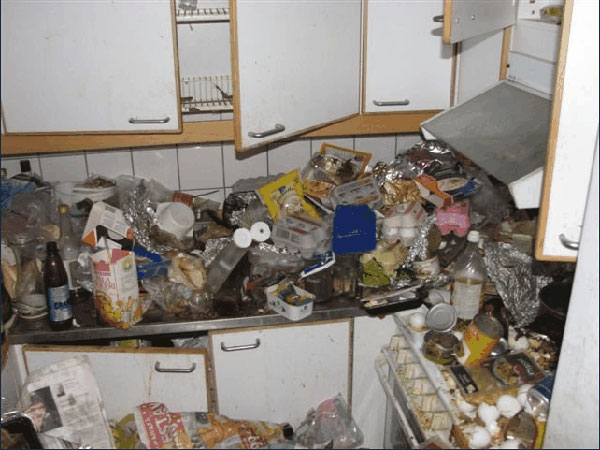
Here we go again. It's 'just' a pledge at the moment to provide communications equipment but this would happen on April Fool's Day. The joke being on the fools here in the USA who believed the State Department's solemn assertions a couple weeks ago that "we" can't provide military aid to the Syrian rebels because they're so disorganized that "we" don't know which faction to help and besides some factions are al Qaeda.
This move, of course, is against Syria's patron Iran. What else can I say except to note that the only governments left that believe in the concept of Westphalian sovereignty are ones U.S. Secretary of State Hillary Clinton deemed "despicable" for blocking the will of the International Community (pictured above) on the matter of Syria.
So, comrades and comradesses, I hope you like being a citizen of the International Community because that's what you are. If you're trying to find the member state of the USA in the above photo, I think we're the milk carton on the left-hand side of the counter.
Now I must go practice my stiff-armed salute. All hail the International Community! Hail!
U.S. Joins Effort to Equip and Pay Rebels in Syria
By STEVEN LEE MYERS
Sebnem Arsu contributed reporting from Istanbul, and Anne Barnard and Hwaida Saad from Beirut, Lebanon.
April 1, 2012
The New York Times
ISTANBUL — The United States and dozens of other countries moved closer on Sunday to direct intervention in the fighting in Syria, with Arab nations pledging $100 million to pay opposition fighters and the Obama administration agreeing to send communications equipment to help rebels organize and evade Syria’s military, according to participants gathered here.
The moves reflected a growing consensus, at least among the officials who met here this weekend under the rubric “Friends of Syria,” that mediation efforts by the United Nations peace envoy, Kofi Annan, were failing to halt the violence that is heading into its second year in Syria and that more forceful action was needed.
With Russia and China blocking United Nations measures that could open the way for military action, the countries lined up against the government of President Bashar al-Assad sought to bolster Syria’s beleaguered opposition through means that seemed to stretch the definition of humanitarian assistance and blur the line between so-called lethal and nonlethal support.
There remains no agreement on arming the rebels, as countries like Saudi Arabia and some members of Congress have called for, largely because of the uncertainty regarding who exactly would receive the arms.
Still, the offer to provide salaries and communications equipment to rebel fighters known as the Free Syrian Army — with the hopes that the money might encourage government soldiers to defect, officials said — is bringing the loose Friends of Syria coalition to the edge of a proxy war against Mr. Assad’s government and its international supporters, principally Iran and Russia.
The assistance to the rebel fighters as Mr. Assad’s loyalists press on with a brutal crackdown could worsen a conflict that has already led to at least 9,000 deaths and is increasingly showing signs of descending into a sectarian civil war. Some say that enabling the uprising to succeed is now the best bet to end the instability and carnage sooner.
“We would like to see a stronger Free Syrian Army,” Burhan Ghalioun, the leader of the Syrian National Council, a loose affiliation of exiled opposition leaders, told hundreds of world leaders and other officials gathered here. “All of these responsibilities should be borne by the international community.”
Mr. Ghalioun did not directly address the financial assistance from the Arab countries, including Saudi Arabia, Qatar and the United Arab Emirates, but he added, “This is high noon for action.”
But for some inside Syria, the absence of promises of arms far overshadowed the financial and communications aid. Mohamed Moaz, an activist in the Damascus suburbs who coordinates with rebel fighters, held Mr. Ghalioun responsible for failing to unify the gathered nations on sending arms, calling him “a partner with the regime in these crimes.”
“I’m the only one who watched this conference in our neighborhood, because there was no electricity and people don’t care,” he said. “I only watched it because Al Jazeera wanted my comment.”
At the conference, Secretary of State Hillary Rodham Clinton said that Mr. Assad had defied Mr. Annan’s efforts to broker an end to the fighting and begin a political transition. She said that new assaults had begun in Idlib and Aleppo Provinces in the week since Mr. Assad publicly accepted the plan. It does not call for him to step down, but rather for an immediate cease-fire followed by negotiations with the opposition.
“The world must judge Assad by what he does, not by what he says,” Mrs. Clinton said in a statement to officials who sat around an enormous rectangular table the size of a basketball court. “And we cannot sit back and wait any longer.”
Molham al-Drobi, a member of the Syrian National Council, said that the opposition had pledges of $176 million in humanitarian assistance and $100 million in salaries over three months for the fighters inside Syria. Some money was already flowing to the fighters, he said, including $500,000 last week through “a mechanism that I cannot disclose now.”
[...]
Monday, March 26
Afghan War got you down? Worried after watching Charlie Rose that the chief military advisor to the White House is as barking mad as the last one?
Take one reading of advice from the inimitable "(Ret.) Maj. Butt" to young aspiring Pakistani strategic analysts and call me in the morning. One reading -- two readings might keep you up all night laughing, then you'd be cussing me tomorrow.
How to Become A Strategic Analyst Like Yours Sachly
Thanks, Major, for restoring my sense of humor, which I lost somewhere along the way this past week while reviewing how Operation Enduring Freedom became Operation Hodgepodge.
How to Become A Strategic Analyst Like Yours Sachly
Thanks, Major, for restoring my sense of humor, which I lost somewhere along the way this past week while reviewing how Operation Enduring Freedom became Operation Hodgepodge.
Wednesday, March 21
If Gen. Allen and Amb. Crocker lose their jobs they can always find work as bouncers
"Yo Mama" event at highest level of Karzai's regime between pro- and anti-American staff; Allen and Crocker leap in to prevent fisticuffs. [wiping tears of laughter] This is what a highly decorated career diplomat came out of a happy and well-deserved retirement for and how a four-star Marine general has to spend his time.
I grudgingly admit Al Jazeera English bats it out of the park with their gossipy and very informative report. Because this is AJ, after all, the reporters, one based in Qatar, slip in a few snarky comments toward the end. A mere quibble, in light of the fact that they provide Americans with their first clear picture of what's really going on inside Afghanistan's government.
As long as I'm dishing out compliments, thanks to e-Ariana for spotting the AJ report. An Afghan War version of the late, great Iraq Slogger they ain't, but they try hard within their means to find reports that give insight into the dizzying array of issues critical to what may be the craziest war ever fought.
"It has been one and half years that the palace has been fractured into two groups."
Karzai's team clash over relations with US
By Qais Azimy and Mujib Mashal
Al Jazeera English
March 21, 2012
[See the report at the AJ website for a photograph of Messrs. Ludin and Khurram in a calmer moment inside the palace.]
Kabul - The increasing influence of a conservative circle within President Hamid Karzai's palace has impeded progress in signing a crucial strategic agreement with the US to chart the relationship beyond 2014, officials and analysts have said.
Their outspoken anti-US views have frustrated Karzai's diplomats negotiating with US officials, often resulting in messy clashes.
On March 8, a day before Afghanistan and the United States signed an agreement to gradually transfer control of prisons to the Afghan government, Jawid Ludin, the deputy foreign minister, and Karim Khurram, Karzai's chief of staff, were summoned to brief Karzai ahead of a video conference with US President Barack Obama. Also in the room were General John Allen, the US commander of NATO forces in Afghanistan, and Ryan Crocker, the US ambassador to Kabul.
Just minutes before the call between the two leaders, Karzai left the room for a break, according to three separate sources inside the palace. In the following few minutes, in a confrontation that reportedly verged on physical violence, Khurram and Ludin accused each other of spying - one for Pakistan, the other for the United States. They were split up by the NATO commander and the US ambassador.
Accusations
It all began with a complaint from General Allen, the palace sources said. The US embassy and NATO declined to comment for this article.
General Allen reportedly stated that the prison would be gradually handed over, one of Karzai's pre-conditions to signing a long-term strategic agreement on wider issues. But the Afghan government's media wing must tone down its anti-US rhetoric, Allen insisted.
The Government Media and Information Center (GMIC) falls directly under the authority of Khurram, Karzai's chief of staff.
Ludin, one of Karzai's chief negotiators, turned to Khurram and reiterated the General's point - that such comments hindered negotiations with the US.
Khuram, according to the palace sources, said GMIC was only defending Afghanistan's interests - which Ludin took as an insult.
What Khurram insinuated, an official close to Ludin said, was that the foreign ministry was betraying Afghanistan in negotiations with the US.
Ludin said he would take it upon himself to stop GMIC from making such statements, to which Khurram reportedly responded: "Not even your father can do that."
"You are a spy for the Americans, you do whatever they tell you," Khurram told Ludin at the meeting, according to one official.
Ludin, in return, accused Khurram of spying for Pakistan. At that point, General Allen and Ambassador Crocker are said to have stepped in to prevent a physical confrontation.
Ludin declined to comment for this article. Khurram, after hearing about the premise in person, promised an interview, but then refused to answer his phone.
"Diplomacy was set aside," one senior government official told Al Jazeera about the meeting. "They turned to the Afghan way of arguing."
When Karzai returned to the room, the video-conference went ahead. The prison deal, gradually transferring control to the Afghan government over six months, was signed before the cameras of the world's media the next day, as planned. But the reported confrontation underlines how divided President Karzai's inner court is, with regard to the nature of the long-term relationship with the United States.
Divided palace
"It has been one and half years that the palace has been fractured into two groups," said analyst Abdul Waheed Wafa, the director of the Afghanistan Center at Kabul University.
"On the one side, you have people who say: 'We have not achieved what we want, but we need to stick with the internationals because the alternative is chaos.' Then the other elements - they are against night raids, and against a long-term US and international presence."
The strategic agreement is supposed to provide Afghanistan - a poor country that requires foreign donations for roughly 90 per cent of its annual budget - some assurance to continue its new beginning after decades of war. More importantly, the support of the US would bolster Afghan standing in a volatile region, where the country's neighbours have long been accused of interfering in its internal affairs. For the US, a longer presence in Afghanistan would ensure that it could operate against "threats to US national security", by being able to go after the sanctuaries of those who it believes would use violence against US interests.
But the increasing influence of the conservative chief of staff, and his clashes with what he sees as pro-US elements within Karzai's circle and beyond, has hindered progress to such a point that, in recent weeks, the US announced "it is more important to get the right agreement than to get an agreement". Some interpreted that as the US expressing a decreasing interest in the commitment.
Wafa said the announcement was a bluff that put pressure on the Afghan negotiators, who then compromised, tabling certain preconditions for separate discussions.
"The change of tone in the US was partly to pressure Afghans," said Wafa. "But some Afghans believe it is true - that these people [US officials] are fully frustrated, the US public opinion is against the war, even some senators who were staunch supporters of the war are now saying it is hopeless. That those who wanted an exit got an excuse - that look, the Afghans don't want us, they don't want to sign a long term commitment."
Three issues have been of contention in the negotiating process: US control over Afghan detainees, night raids, and permanent military bases. The two sides agreed to remove the issues of prison transfer and night raids from the strategic agreement, allowing them to be discussed separately.
The prison transfer was signed on March 9, while the memorandum over night raids is being finalised this week, according to an official at the national security council. But the contentious issue of military bases still looms large.
Divisive figure
The argument on March 8 was not just a spur of the moment event. Those views were repeated in subsequent interviews.
"Khurram clearly has an agenda - and he wants to disturb any progress in the relations with the US," an official close to Ludin insisted days after the incident. The other side was no different.
"Absolutely, there are circles that see their sustenance in the West's benefits, and they don't think about the nation," said analyst Ghulam Gilani Zwak, the director of Kabul's Afghan Research and Consulting Center. "They insist on not negotiating and bargaining, and their actions are slave-like.
"But there are others who have the interest of the nation in mind, who don't want the repeat of what Dr Abdullah Abdullah and Younus Qanooni signed with the US in December 2001, bringing our independence under question."
Zwak was referring to an alleged status of force agreement signed between the US government and representatives of the northern alliance, then a minority group holed up in the north, which helped the US topple the Taliban.
The foreign ministry's dysfunction is much spoken about in Afghanistan. Zalmai Rasul, an aging foreign minister, has been called a passive operator without much foreign policy experience. Ludin, a former spokesman and chief of staff to Karzai, shoulders most of the responsibility in the foreign ministry, where many appointments are allegedly based on kinship.
"Our foreign policy weakness is that we haven't had a stable foreign policy, a clear vision. It's all been reactionary, ad-hoc," said Wafa.
Ahmad Shuja, a Washington-based Afghan analyst, believes the palace repeatedly steps on the toes of the diplomats, making it difficult for them to do their job.
"Karzai's statement, his dynamism, eclipses the efforts of the foreign ministry to set policy. It is diplomacy 'Afghanistan style' - not policy in the conventional sense."
And Khurram's tight grip over the president in the past year has made the job much more difficult for diplomats like Ludin, said analysts.
Frustrations
A controversial former minister of culture, Khurram took over the post of Karzai's chief of staff in early 2011 - a position that has held increasingly more power in the country, particularly under Khurram's predecessor, Omar Dawoodzai.
During his stint as culture minister, Khurram was known as a strict censor of television programmes.
Shuja believes Khurram's seemingly anti-US views stem from two sources.
"His political ideology is shaped by his alignment with Hizb-e-Islami, and that seems to figure in his calculations," he said. Led by Gulbuddin Hekmatyar, Hizb e Islami began as a political party that fought the Soviets. It played a major role in Afghanistan's bloody civil war in the 1990s, and now is considered the third (and weakest) faction of the anti-US insurgency.
"But also, let's not forget that they have been trying to reach out to the insurgency. Delaying the signing of a strategic pact will help them in appeasing the Taliban," added Shuja.
In purging the GMIC, which is largely funded by the US embassy, the new chief of staff announced his intention to control the government's message. Frustrated with Khurram's control, the US embassy cancelled funding for a brief period and withdrew its advisers from the media group.
Khurram also issued a warning to the president's press staff, ordering them not to allow US advisers in press conferences, one palace official tols Al Jazeera.
The US embassy declined to comment for this story. But a US official based in Kabul confirmed the frustrations with the palace.
"For the embassy, it is hard to get any access inside the palace since the chief of staff changed," the official said.
Khurram has at least three private newspapers, a television channel and a radio station under his control, directly or indirectly, one official - who formerly worked for him - said.
"The message is not just an anti-American one, but also divisive internally," said Khurram's former colleague. "His brand of conservative Pashtunism strengthens the notion that all Pashtuns are unilateralist and conservative by nature.
"The president's non-Pashtun allies have been increasingly isolated. The damage that Khurram has inflicted on President Karzai's image in one year - his enemies could not have done the same."
Reporting by Qais Azimy in Kabul, Afghanistan and Mujib Mashal in Doha, Qatar.
Friday, March 16
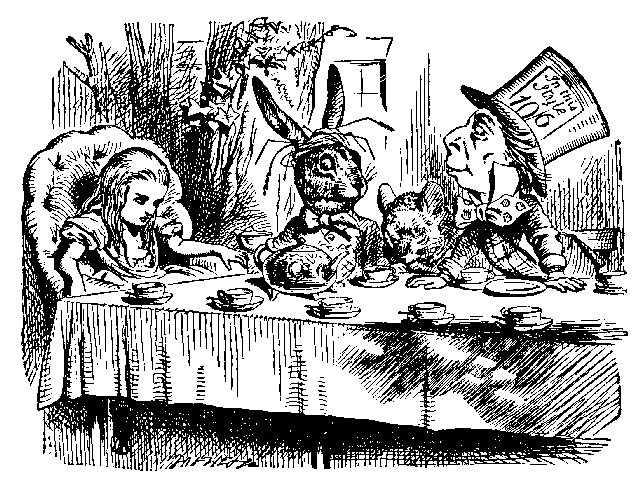
BREAKING NEWS: Pundita finds the bunny
March 15, The New York Times:
But let us return to the news from Helmand; to continue with the report from the Scotsman:
As to where I found the bunny -- oh, the same place I always find him.

KABUL, Afghanistan — Prospects for an orderly withdrawal of NATO forces from Afghanistan suffered two blows on Thursday as President Hamid Karzai demanded that the United States confine troops to major bases by next year, and the Taliban announced that they were suspending peace talks with the Americans.March 16, the Scotsman:
A two-month operation to clear poppy fields in Helmand province -- the world’s largest opium-producing region -- has begun.Now just see what patiently hunkering down in the duck blind can net you while editorialists, salaried opinion experts, members of Congress and national leaders hold forth on the meaning of the latest two-step from Karzai and Taliban.
But let us return to the news from Helmand; to continue with the report from the Scotsman:
Afghan enforcement teams have a 60-day window between early March and late April, dictated by growing patterns, in which to take action to eradicate crops in the war-torn province of Afghanistan.Any questions about Karzai's recent spate of seemingly irrational demands and Taliban's latest hissy fit?
The aim is to eliminate harvesting of the illegal crop from at least 2,000 hectares in the food zone around the Helmand valley.
The drive is being led by the province’s governor Gulab Mangal, aided by the work of Afghan security forces following years of fighting by coalition troops to secure swathes of land.
Major Ross Brown, head of eradication for the Provincial Reconstruction Team’s (PRT) counter-narcotics department, said Afghan teams from each district would use tractors and ploughs, provided by international funding, to target farms ranging from small holdings to large, organised crime operations.
They will face constant danger as many poppy producers use improvised explosive devices (IEDs) - more commonly associated with the insurgency - to protect their crops.
Maj Brown said a carrot and stick approach was being used - almost literally.
Farmers who have been offered the opportunity and support to switch to growing carrots and wheat, but who have refused to take up the offer, will be targeted first.
Maj Brown said: “The long-term aim is to create a secure and stable food zone in the heart of Helmand.”
As to where I found the bunny -- oh, the same place I always find him.
Wednesday, March 7
Barack Obama throws an entire nation under the bus, and Lindsey Graham ignores Hamid Karzai's major point about the strategic pact
President Barack Obama chose the first White House press conference of 2012 to throw Afghanistan under the bus. He did this by saying that the time had come for the United States to "transition" out of Afghanistan because the violence aimed at Americans in response to the Burned Korans incident was "unacceptable."
He added that this didn't mean a change in the plan to end all U.S. combat operations in Afghanistan by the end of 2014. But his remark added fuel to rumors flying around Washington since last week that he would use the NATO summit in May to move up the deadline date.
It's possible Obama's remark was at least partly intended as a counter-move to President Hamid Karzai's ongoing refusal to budge on two issues that have been holding up signing of the U.S.-Afghanistan strategic partnership agreement, which is crafted to govern the U.S. role in Afghanistan after 2014.
Yet if I were an Afghan who fears a precipitous U.S. exit from Afghanistan would unleash large-scale massacres, I wouldn't pin my hopes on the idea that Obama is just bluffing. Among people who've studied Obama's political career, he is infamous for betraying people, even those people who've been instrumental to his rise in power, and doing so even so for a small political gain.
In fact the slang term for such betrayal -- throwing someone "under the bus" -- gained popularity in the USA because of Obama's ruthlessness with those who least deserve the treatment.
He even threw his own grandmother under the bus by portraying her as someone prejudiced against blacks. He did this to burnish his 'black' credentials with a radio audience of black Americans in Philadelphia. His grandmother, who was still alive at the time if my memory serves, was white. She was the person who took on the responsibility of raising him after his mother abandoned him.
That's our President and Commander-in-Chief, who has all the instincts of a long-lived satrap.
Whether or not he was bluffing, Obama knew his remark about Afghanistan would give additional impetus to calls within his Democratic party base that the USA immediately quit Afghanistan. He'll need every vote he can get from the base if the U.S. economy is still in the doldrums on election day. Throwing Afghanistan under the bus is a negligible price to pay, in Obama's political calculus, if that would help lock in more of his voter base.
Although it would be a small detail to Obama, by hooking up the threat of immediate withdrawal from Afghanistan with the Koran burning incident, he was also putting General John Allen, Commander of ISAF, in a bad position. In the immediate wake of the revenge murders of American soldiers that were ostensibly connected with the Koran burnings, Allen passionately urged the American troops under his command not to retaliate for the murders and to 'stay the course' for the sake of the 50-nation NATO mission in Afghanistan.
Allen's words now ring hollow in light of the rationale Obama proffered for the U.S. to "transition" out of Afghanistan.
Another American politician who's now intimating that the U.S. should quit Afghanistan earlier than agreed is Republican Senator Lindsay Graham. Senator Graham has always been a staunch supporter of the U.S. staying the course in Afghanistan, but he lost his temper with Hamid Karzai over the issue of the stalled strategic pact. Graham is studiously overlooking something, but I'll let him blow off steam before I mention what that something is. From his remarks on March 6, reported by Foreign Policy's Josh Rogin:
So from Karzai's point of view, what does it accomplish to keep harassing Afghans with night raids and jailing an endless parade of proxies, if NATO won't deal forcefully with the locus of the 'Taliban insurgency' in Afghanistan?
I wouldn't call that point of view irrational. I'd call Lindsey Graham the irrational one for expecting that NATO and Afghan security forces can somehow prevail by emptying the ocean with a sieve.
I'd also call Graham a fool for failing to recognize that American troops are unwittingly helping Pakistan's regime carry out population control, Pakistani-style.
What does he think is happening, when Pakistan's military/ISI train the country's 'undesirables' -- the low castes, the least educated, the mentally ill, the Afghans living in refugee camps -- to set IEDs, then hand them an AK-47 and send them across the border to die by the hundreds of thousands at the hands of NATO troops?
However, here in the United States we have another term for that kind of population control. It's called democide.
He added that this didn't mean a change in the plan to end all U.S. combat operations in Afghanistan by the end of 2014. But his remark added fuel to rumors flying around Washington since last week that he would use the NATO summit in May to move up the deadline date.
It's possible Obama's remark was at least partly intended as a counter-move to President Hamid Karzai's ongoing refusal to budge on two issues that have been holding up signing of the U.S.-Afghanistan strategic partnership agreement, which is crafted to govern the U.S. role in Afghanistan after 2014.
Yet if I were an Afghan who fears a precipitous U.S. exit from Afghanistan would unleash large-scale massacres, I wouldn't pin my hopes on the idea that Obama is just bluffing. Among people who've studied Obama's political career, he is infamous for betraying people, even those people who've been instrumental to his rise in power, and doing so even so for a small political gain.
In fact the slang term for such betrayal -- throwing someone "under the bus" -- gained popularity in the USA because of Obama's ruthlessness with those who least deserve the treatment.
He even threw his own grandmother under the bus by portraying her as someone prejudiced against blacks. He did this to burnish his 'black' credentials with a radio audience of black Americans in Philadelphia. His grandmother, who was still alive at the time if my memory serves, was white. She was the person who took on the responsibility of raising him after his mother abandoned him.
That's our President and Commander-in-Chief, who has all the instincts of a long-lived satrap.
Whether or not he was bluffing, Obama knew his remark about Afghanistan would give additional impetus to calls within his Democratic party base that the USA immediately quit Afghanistan. He'll need every vote he can get from the base if the U.S. economy is still in the doldrums on election day. Throwing Afghanistan under the bus is a negligible price to pay, in Obama's political calculus, if that would help lock in more of his voter base.
Although it would be a small detail to Obama, by hooking up the threat of immediate withdrawal from Afghanistan with the Koran burning incident, he was also putting General John Allen, Commander of ISAF, in a bad position. In the immediate wake of the revenge murders of American soldiers that were ostensibly connected with the Koran burnings, Allen passionately urged the American troops under his command not to retaliate for the murders and to 'stay the course' for the sake of the 50-nation NATO mission in Afghanistan.
Allen's words now ring hollow in light of the rationale Obama proffered for the U.S. to "transition" out of Afghanistan.
Another American politician who's now intimating that the U.S. should quit Afghanistan earlier than agreed is Republican Senator Lindsay Graham. Senator Graham has always been a staunch supporter of the U.S. staying the course in Afghanistan, but he lost his temper with Hamid Karzai over the issue of the stalled strategic pact. Graham is studiously overlooking something, but I'll let him blow off steam before I mention what that something is. From his remarks on March 6, reported by Foreign Policy's Josh Rogin:
If Afghanistan President Hamid Karzai doesn't change his tune fast on two key U.S. demands, the U.S. military should just pack up and go home and leave Afghanistan for good, Sen. Lindsey Graham (R-SC) said today.The senator is ignoring one singular fact. Over the years Hamid Karzai's most consistent and adamant demand has been the U.S. government recognize that the vast majority of people killing the sons of American mothers and preying on innocent Afghan villagers are doing so with support from Pakistan's military.
Graham, who has been one of the strongest congressional supporters for continuing the U.S. military mission in Afghanistan beyond 2014, said today that unless Karzai relents on his demands that the United States immediately hand over control of Afghan prisoners and end night raids against insurgents, there is no way the U.S. can achieve its objectives in Afghanistan and therefore should just end its involvement there.
"If the president of the country can't understand how irrational it is to expect us to turn over prisoners and if he doesn't understand that the night raids have been the biggest blow to the Taliban ... then there is no hope of winning. None," Graham said in the hallways of the Capitol Building just before entering the GOP caucus lunch.
"So if he insists that all the prisoners have to be turned over by March 9 and that we have to stop night raids, that means we will fail in Afghanistan and that means Lindsey Graham pulls the plug. It means that I no longer believe we can win and we might as well get out of there sooner rather than later."
Graham acknowledged that those two issues were crucial in ongoing negotiations over a U.S.-Afghanistan Status of Forces Agreement, which would provide the legal basis for the ongoing presence of U.S. troops in Afghanistan beyond the end of 2014, the deadline President Barack Obama has set for transferring full control of the country back to the Afghans.
"I am going to pull the plug on Afghanistan from a personal point of view if we don't get this strategic partnership signed," Graham said.
"Karzai's insistence that all detainees we have in our custody be turned over by Friday to an Afghan system that will let guys walk right out the door and start killing Americans again is a non-starter."
Graham, who is a member of the Senate Armed Services Committee and the ranking Republican on the Senate Appropriations' State and Foreign Operations Subcommittee, visited Kabul and met with Karzai late last month.
Today he said he supports a U.S.-Afghanistan agreement for a post-2014 presence of about 20,000 U.S. troops, with three or four U.S. airbases and coordination in the military, political, and economic spheres.
"But I'm not going to support signing that agreement if Karzai insists that we end night raids, which are the biggest blow available to our forces against the enemy," he said. "If he requires that we end night raids, we'll have no hope of being successful."
Regarding the prisoners, Graham said that any follow-on U.S. force would be put at risk if U.S.-held prisoners, currently numbering over 3,000, were placed under Afghan control.
"I cannot go back home to South Carolina and tell a mother, ‘I'm sorry your son or daughter was killed today by a guy we had in custody but let go for no good reason.' We want Afghan sovereignty over prisoners but they're not there yet," he said.
"That's not good governance. That hurts the Afghan villagers that have been preyed on by these people and it sure as hell puts our people at risk. I want an agreement but not at all costs."
So from Karzai's point of view, what does it accomplish to keep harassing Afghans with night raids and jailing an endless parade of proxies, if NATO won't deal forcefully with the locus of the 'Taliban insurgency' in Afghanistan?
I wouldn't call that point of view irrational. I'd call Lindsey Graham the irrational one for expecting that NATO and Afghan security forces can somehow prevail by emptying the ocean with a sieve.
I'd also call Graham a fool for failing to recognize that American troops are unwittingly helping Pakistan's regime carry out population control, Pakistani-style.
What does he think is happening, when Pakistan's military/ISI train the country's 'undesirables' -- the low castes, the least educated, the mentally ill, the Afghans living in refugee camps -- to set IEDs, then hand them an AK-47 and send them across the border to die by the hundreds of thousands at the hands of NATO troops?
However, here in the United States we have another term for that kind of population control. It's called democide.
Tuesday, March 6
Berlin Mandate: With Obama out to lunch, some members of Congress come up with their own plan for Afghanistan
Jumpin' Jehosaphat, gentlemen, couldn't you have come up with an easier plan? Like trying to impeach Obama or raising Patton from the dead?
March 3, Washington, DC, al Jazeera:
Speaking of Pakistan's military, they're already a few steps ahead of the congressmen. They got Hamid Karzai to agree to shut down Baloch nationalist training camps in Afghanistan; the Afghan Minister announced that just this past Sunday.
Not only that, the Pakistani military has launched a charm offensive to head off international outcries about ethnic cleansing in Balochistan. One result, according to the report I link to above, is that Balochistan's Chief Minister has suddenly discovered that only 800 activists are missing, not the 6,000 they'd originally estimated.
And looking through the al Jazeera report, written by Eddie Walsh, "a senior foreign correspondent who covers Africa and Asia-Pacific" who also serves as a nonresident fellow at Pacific Forum CSIS, I see that the congressmen think they can outfox Pakistan's military by depriving them of "strategic depth" in Afghanistan. They're a little behind the times. Why, just the other day the Dragon Lady aka Pakistan's Foreign Minister cooed that it was time for Pakistan to get over its "strategic depth hangover." Not only that:
And while I don't like playing wet blanket, there are a few problems with the congressmen's plan as described by Mr Walsh. One problem, from geologic maps I've seen, is that Afghanistan's fabulous but largely untapped natural resources are not exclusive to the region the congressman see as becoming independent; the resources, different types, are distributed throughout the country.
The bigger problem is that balkanizing Afghanistan won't stop international terrorist groups such as al Qaeda and Lashkar-e-Taiba from continuing their expansion in areas in Afghanistan not controlled by a 'Northern Alliance.' Nor will it prevent the Arabization or to be more precise Saudification of such areas.
Another problem is found in the congressmen themselves, or at least in Dana Rohrabacher's terming of criticism about one part of the plan as, "a bunch of leftist garbage from liberal professors," as Walsh reported. If they're going to get past square one with their plan the congressmen need all the friends they can get, so go light on the insults. I think there are plenty of genuine liberals here and abroad and right next door in Canada who would support the basic plan -- and there could be many more supporters by the time liberals absorb this news from Afghanistan, datelined yesterday:
I see a few additional problems with the plan, but for now I'll return to Eddie Walsh's report:
March 3, Washington, DC, al Jazeera:
Over the last few months, a small faction of congressmen, minority Afghan groups, Baloch nationalists, and their supporters have laid out the framework for an alternative US policy approach for Southwest Asia. This alternative policy centres on backing remnants of the Northern Alliance and Baloch insurgents, who seek to carve out semi-autonomous territories or independent states from Afghanistan, Pakistan, and Iran.Regarding the summary of Obama's current policy -- true, true, all true, but that's one whale of a complex plan the congressmen have in mind. Granted, if their actions prompted Obama and the U.S. military command to feel their way to the concept of war that could redeem the American people, and boy do we need redeeming. I mean, how many people in history have paid another military to murder their own troops? Come to think of it, that would be all the people who pay for the NATO enterprise in Afghanistan and who saw their soldiers killed by proxies for Pakistan's military.
While supporters of this new approach are motivated by a variety of interests, they appear unified in their rejection of what they see as three cornerstones of the Obama administration's current regional policy approach:
1) Normalising relations with Pakistan's government and military;
2) Incorporating the Taliban into the current Afghan political system;
3) Overly accommodating an emerging Iran.
In one broad stroke, this new approach would attempt to advance US national interests by redrawing the political borders of Southwest Asia - contrary to the sovereignty and territorial integrity of three existing states.
[...]
Speaking of Pakistan's military, they're already a few steps ahead of the congressmen. They got Hamid Karzai to agree to shut down Baloch nationalist training camps in Afghanistan; the Afghan Minister announced that just this past Sunday.
Not only that, the Pakistani military has launched a charm offensive to head off international outcries about ethnic cleansing in Balochistan. One result, according to the report I link to above, is that Balochistan's Chief Minister has suddenly discovered that only 800 activists are missing, not the 6,000 they'd originally estimated.
And looking through the al Jazeera report, written by Eddie Walsh, "a senior foreign correspondent who covers Africa and Asia-Pacific" who also serves as a nonresident fellow at Pacific Forum CSIS, I see that the congressmen think they can outfox Pakistan's military by depriving them of "strategic depth" in Afghanistan. They're a little behind the times. Why, just the other day the Dragon Lady aka Pakistan's Foreign Minister cooed that it was time for Pakistan to get over its "strategic depth hangover." Not only that:
Hina Rabbani Khar has said she hopes for a relationship with Afghanistan based on trust and called for leaving behind the past associated with interference in that country and support for Taliban.Yes indeed; Pakistan's military is launching charm offensives on all fronts. Even on the Indian front.
And while I don't like playing wet blanket, there are a few problems with the congressmen's plan as described by Mr Walsh. One problem, from geologic maps I've seen, is that Afghanistan's fabulous but largely untapped natural resources are not exclusive to the region the congressman see as becoming independent; the resources, different types, are distributed throughout the country.
The bigger problem is that balkanizing Afghanistan won't stop international terrorist groups such as al Qaeda and Lashkar-e-Taiba from continuing their expansion in areas in Afghanistan not controlled by a 'Northern Alliance.' Nor will it prevent the Arabization or to be more precise Saudification of such areas.
Another problem is found in the congressmen themselves, or at least in Dana Rohrabacher's terming of criticism about one part of the plan as, "a bunch of leftist garbage from liberal professors," as Walsh reported. If they're going to get past square one with their plan the congressmen need all the friends they can get, so go light on the insults. I think there are plenty of genuine liberals here and abroad and right next door in Canada who would support the basic plan -- and there could be many more supporters by the time liberals absorb this news from Afghanistan, datelined yesterday:
Afghan clerics' guidelines 'a green light for Talibanisation'So. The plight of Afghanistan's more fair-minded citizens is a big-tent situation; it attracts interest from all parts of the Western political spectrum.
By Emma Graham-Harrison in Kabul
The Guardian
Edicts released by Hamid Karzai issue repressive rules for women who, they declare, are subordinate to men
Women are subordinate to men, should not mix in work or education and must always have a male guardian when they travel, according to new guidelines from Afghanistan's top clerics which critics say are dangerously reminiscent of the Taliban era.
The edicts appeared in a statement that also encouraged insurgents to join peace talks, fuelling fears that efforts to negotiate an end to a decade of war, now gathering pace after years of false starts and dead ends, will come at a high cost to women.
"There is a link with what is happening all over the country with peace talks and the restrictions they want to put on women's rights," said Afghan MP Fawzia Koofi, who warned that the new rules were a "green light for Talibanisation".
The points agreed at a regular meeting of the Ulema Council of top clerics are not legally binding. But the statement detailing them was published by the president's office with no further comment, a move that has been taken as a tacit seal of approval.
"Ultimately, I don't see a way you can read it as not coming from (Hamid) Karzai," said Heather Barr, Afghanistan researcher at Human Rights Watch. "It's probably not an extreme position for the Ulema Council, but it's an extreme position for Karzai, and not compatible with the constitution, or Afghanistan's obligations under international law."
The clerics renounced the equality of men and women enshrined in the Afghan constitution, suggesting they consider the document that forms the basis of the Afghan state to be flawed from a religious perspective.
"Men are fundamental and women are secondary," the statement says, according to a translation by Afghan analyst Ahmad Shuja. "Also, lineage is derived from the man. Therefore, the use of words and expressions that contradict the sacred verses must be strictly avoided."
The statement drew criticism in parliament, where some politicians took it as a direct assault on the constitution and the wider government. If a ban on men and women working and studying together were implemented, it would in effect dissolve the legislature.
"The statement is against the constitution, against human rights and against women's rights," said Ahmad Shah Behzad, a member of parliament from western Herat province, who warned that Karzai risked being in dereliction of his duty to protect the constitution.
The clerics also appeared to condone violence against women in some circumstances.[...]
I see a few additional problems with the plan, but for now I'll return to Eddie Walsh's report:
[...] While its advocates clearly do not yet have broad support for their initiative, the campaign for an alternative Southwest Asian policy approach is maturing and garnering increased attention in Congress and beyond, especially as a result of three recent high-profile events: a Balochistan National Front strategy session in Berlin, a US congressional hearing on Balochistan, and the introduction of a Baloch self-determination bill before the US Congress.
Regardless of whether you agree or disagree, it's nevertheless critical to understand how this alternative policy approach framework has evolved over the past few months.
The 'Berlin Mandate' as a loose framework
In early January, a bipartisan congressional delegation, led by Representative Dana Rohrabacher (Republican-California), held a "strategy session" in Berlin with Afghan opposition leaders, including the country's former intelligence chief. The meeting addressed constitutional reforms that would make Afghanistan a federal system.
Meeting participants argued that vesting political and economic power in the provinces, instead of centralising power in Kabul, would protect the US' Northern Alliance allies from retribution at the hands of Pashtuns once the Taliban is fully reincorporated into the Afghan political system.
By advancing these policies, the attendees portrayed the Taliban's incorporation into Afghanistan's political system as a greater risk than the threat posed to Afghanistan's territorial integrity by their alternative - which would risk the partition of "Afghanistan between the minority-dominated north and the Pashtun south". This clearly runs counter to the the interests of Hamid Karzai's government.
A few weeks later, Representative Louie Gohmert (Republican-Texas), a Berlin meeting attendee, added fuel to the fire by arguing in a video interview that the US should not just push for a new political system in Afghanistan but go further by rearming the Northern Alliance.
In the same breath, Gohmert provided one of the first definitive links between support for the Northern Alliance in Afghanistan and Baloch nationalists in Pakistan: "Let's talk about creating a Balochistan in the southern part of Pakistan. They'll stop the IEDs and all of the weaponry coming into Afghanistan, and we got a shot to win over there."
With these remarks, the two pillars of an alternative Afghanistan-Pakistan (Af-Pak) policy approach were now set: To advance its interests, the US should support the carving out of an independent Baloch state and semi-autonomous Afghan territories - even if it undermined existing US partnerships with the governments of Afghanistan and Pakistan.
In early February, Rohrabacher convened a public congressional hearing on Balochistan. While human rights violations in Pakistan's Balochistan province were discussed (per the agenda), the hearing also provided a forum to start a larger (and arguably off-topic) national dialogue on the viability of Southwest Asia's state borders.
As a result of the hearing, witnesses - including Ralph Peters and M Hossein Bor - were able to argue that the dismemberment of Afghanistan, Iran, Pakistan would serve the United States' long-term strategic interests. But, even more importantly, the hearing allowed the witnesses to inject their views into the larger debate on US foreign policy in Southwest Asia. This included Bor's controversial assertion (which was later censored in Pakistan) that supporting an independent Balochistan stretching from "the Strait of Hormuz to Karachi" would be a better policy approach than ongoing US efforts to counter the Iranian and Pakistani regimes.
Rohrabacher, Gohmert, and Representative Steve King (Republican-Iowa) followed up the hearing by introducing a new bill in Congress stating that the Baloch nation has a historic right to self-determination. With this action, the congressmen went from "familiarising themselves" with Balochistan to calling for Congress to recognise the Baloch nation's right to sovereign independence in roughly a week.
In many ways, this brought the "Berlin Mandate" full circle. In less than two months, a small group of congressmen, minority Afghan groups, Baloch nationalists, and their supporters had gone from voicing displeasure with the current Obama Administration's Af-Pak policy approach to advancing a revolutionary alternative policy approach that called for supporting the minority interests of the Northern Alliance and Baloch against the sovereign interests of Afghanistan, Iran, and Pakistan.
Reflecting upon this effort a few days after the bill was introduced, Rohrabacher confided to me in an on-the-record interview:
"There is a natural extension from the Berlin meeting with the Northern Alliance to the Balochistan bill. I have always stood for self-determination, but there are certain things that activate me to start pushing more on that philosophy. Clearly, the whole issue of the Taliban being reintegrated in Afghanistan and Pakistan, providing safe haven to terrorists like Bin Laden, are major factors.
"There is also my support for immediately withdrawing troops from Afghanistan. To do so, we need to have a major policy dialogue on what our policy is in Southwest Asia, how we properly transition out of Afghanistan, and what will be our ongoing relationship with Pakistan. Balochistan is clearly part of that debate."
Cross-linking with other congressional causes
While the introduction of the Baloch self-determination bill marks an important milestone for their cause, it is important to point out that there has been an equally big change in how "Berlin Mandate" supporters have advocated their cause. Over the last month, these supporters - particularly Baloch nationalists in the US diaspora - have increasingly sought to extend their cause beyond US foreign policy in the Af-Pak region. They appear to recognise the need to latch onto larger foreign policy issues as part of their efforts to garner mainstream support for their cause. Four of the most important include:
I. Punishing Pakistan for supporting terrorism and nuclear proliferation
Rohrabacher, Gohmert, and other key supporters of the alternative policy approach for Southwest Asia have been unabashed in overtly linking the need for policy alternatives to Pakistan's "betrayal of America's trust". It is even alleged that the Balochistan hearing was called specifically to "stick it to the Pakistanis" for their arrest of a reported key informant in the bin Laden operation. Even after widespread criticism for his past remarks against Pakistan, Rohrabacher does not shy away from his criticism: "Quite frankly, the Pakistani military and leaders that give safe haven to the mass murderer of Americans should not expect to be treated with respect."
Such rhetoric almost certainly will find a receptive audience in Congress - even among the many members who have never heard of Balochistan or know little about the Northern Alliance's struggles over the last year. For this reason, Peters pointed out to me recently as part of a yet unpublished post-hearing interview that the current high levels of anti-Pakistani sentiment in Congress probably provide the best opportunity that the Baloch may see to advance their cause.
II. Containing a rising China and an emerging Iran, and preventing Pakistan from achieving strategic depth
According to supporters, an independent Balochistan, "extending from Karachi to the Strait of Hormuz", would help to contain a rising China and an emerging Iran, provide a long-term security guarantee against China, Iran, and Pakistan emerging as maritime powers, and undermine the strengthening of strategic relationships between these three potential adversaries.
In an interview after the congressional hearing, Bor made this case:
"There are many interrelated issues at play. When one discusses Balochistan, you are discussing a way to contain China. You are also discussing economic relationships between Iran and Pakistan If (the Chinese) build their port in Gwadar, they will have a land route from Western China to the Indian Ocean.
This is of strategic interest to the United States because Chinese ships would have a direct route to China and no longer have to transit past the Indian and American navies. It therefore is logical that Balochistan should be concerned as part of the larger shift to the Pacific announced by the Obama Administration. (Separately,) Iran is an empire and they are using Baloch lands to try to become the dominant regional player. The Iranians are using the Strait of Hormuz as a choke-point for a huge percentage of the world's oil. They also are building a pipeline to Pakistan which violates UN sanctions. Such growing Iran-Pakistan cooperation is a major concern."
Other supporters have advanced similar arguments with respect to Afghan minority groups against the Pashtun-dominated central government. They assert that support for the autonomy or independence of the Northern Alliance serves as an insurance policy against Pakistan's military achieving strategic depth once the Taliban is fully integrated into Afghanistan's political system.
III. Providing the West with an opportunity to profit from Southwest Asia's natural resources
Recognising "the tremendous deposits of oil, gas, and minerals" found within or made accessible through the Baloch and Northern Alliance territories, some supporters have argued that the West should advance the "Berlin Mandate" if for no other reason than self-serving economic interests.
They have asserted that an independent Balochistan and autonomous Northern Alliance territories would provide Western companies with valuable new economic opportunities, which could help offset the costs of two failed wars in Afghanistan and Iraq and spur economic growth following the global economic downturn. They have also said that the West should do so to prevent potential strategic adversaries, including China, Iran, Pakistan, and Russia, from profiting off the natural resources of Central and Southwest Asia at their expense.
While Rohrabacher has called this "a bunch of leftist garbage from liberal professors", it must be said that his committee purposely selected a witness whose expertise lies in forging such partnerships in the Middle East region and who remains a vocal advocate for their consideration in the context of an independent Balochistan. Baloch nationalists clearly have started to reach out more aggressively to Western commercial interests on these grounds in recent months as well.
IV. Preventing gross human rights violations and providing post-colonial nations their right to self-determination
While members of Congress have long condemned the Taliban and the Pakistani government for human rights violations, supporters - particularly Baloch nationalists - have used novel approaches in recent months to win over members of Congress. They have increasingly restrained themselves from leading with the genocide argument. Recognising that this argument has failed to win over Congress in the past, they have instead turned to a more complex argument: that the Baloch, like the South Sudanese and numerous minority groups in the former Yugoslavia, have won their right to self-determination because Pakistan and Iran have failed to provide basic human rights protections. Pakistan and Iran have, they argue, thereby forgone their sovereignty over Baloch territories - regardless of historical precedent.
While few in Congress will support their cause on these grounds alone, Baloch nationalists acknowledge the moral power of the argument for members of Congress who may be seeking to justify their support for an oppressed group on other grounds. This argument could become a powerful advocacy tool for Baloch and Afghan minority interest supporters, especially when reaching out to congressmen serving on other minority group interest caucuses with their own claims to self-determination.
Saturday, March 3
Afghan Koran Burning incident: Here ye! Here ye! Kangaroo courts now in session!
Afghan-US military inquiry may lead to review of at least five personnel despite concluding burning of texts unintentional ... But a different panel appointed by the Afghan president, Hamid Karzai, to investigate the incident, has concluded that the burning of the holy books was deliberate. ... "What the Afghan president has requested from US officials and the US military is a trial and punishment."
The NATO panel is still investigating.
US troops could face disciplinary action over Qur'an burning in Afghanistan
March 3, 2012
The Guardian (U.K.)
Staff and agencies
At least five US military personnel could face a disciplinary review following the burning of copies of the Qur'an by American soldiers in Afghanistan.
A joint investigation by senior Afghan and US military officials has concluded that although mistakes were made when troops at Bagram airbase, near Kabul, had burned copies of the Qur'an and other religious literature along with piles of waste paper, there was no intent to desecrate the Islamic religious texts.
A western official said the investigation could lead to a disciplinary review of at least five US military personnel involved.
But a different panel appointed by the Afghan president, Hamid Karzai, to investigate the incident, has concluded that the burning of the holy books was deliberate.
Maulvi Khaliq Dad, a senior Afghan religious leader on the panel, said US troops told Afghans at the base that the religious materials pulled from a detention centre library were to be stored, but were then sent for incineration.
"They are claiming that it was not intentional. Our investigative team says it was intentional," Dad said.
After the panel presented its findings, Afghanistan's top religious leaders demanded on Friday that those involved be put on public trial and be punished, a position that Karzai backs.
Barack Obama and other US officials have apologised for the incident on 20 February, which triggered six days of riots across Afghanistan. The apologies, which described the incineration as accident, have failed to quell the anger in the country, although the violent protests that killed more than 30 Afghans and six US troops have subsided.
Karzai's office said on Saturday it had only seen the report drafted by the religious leaders and had not yet been given the joint report, so could not comment on it.
"We are waiting for the result of the investigation by Nato, which will probably show who is involved in this and how many people are involved. After studying it we will announce our stance," said a presidential spokesman, Aimal Faizi. "What the Afghan president has requested from US officials and the US military is a trial and punishment."
Friday, March 2
What's the biggest reason for the spike in fratricidal Afghan attacks on ISAF troops?
Take special note of the dates of the following two reports. (The Wall Street Journal one was probably filed just hours before the Koran burning incident, and in any event before the rioting that broke out in response to the incident.)
February 21, 2012:
So why was the plan re-announced as new, little more than a week ago? From the wording of the rest of the 2011 report, there were 'turf' battles going on between agencies and also within agencies. And the army and police forces were waiting on equipment, including computers, before the plan could become fully operational.
And although the report doesn't mention this, once all the equipment was in place, the soldiers and police would have to be trained in the proper use of equipment for processing biometric data, proper methods for questioning new recruits and profiling them, and so on. But from the following two reports it seems the agencies are finally getting all their ducks in a row:
February 23, 2012:
February 28, 2012:
Imagine something like that happening at the CIA -- the best at the agency standing up and saying in one voice, "Bye." No one is indispensable but it takes time, particularly for a spy agency, to recover from such a blow.
But I digress. The point is that the large increase in attacks on NATO soldiers by ANSF personnel began in 2010.
In addition to the walkout at the NDS there were three other pivotal events in June 2010 that feed into the present crisis in Afghanisan, and which together signaled a new phase in the war. I'll pick up on that discussion on Monday.
I'll close with some observations for readers who've interpreted every fratricidal killing of six U.S. soldiers in little more than a week as a direct consequence of the Koran burning incident, and who believe that ISAF is now hamstrung because of fallout from the incident.
There's not enough publicly available information at this early stage to nail down every motive in the killings. But in light of the reports I've featured in this post, I'd leave room for the speculation that the fratricidal attacks (one of which, the one yesterday, was also aimed at ANA soldiers) were to take advantage of the rioting, in an all-out attempt to sway public opinion before the NDS/ANSF coordinated onslaught on infiltrators got up to full speed.
One thing Amrullah Saleh was never able to accomplish in his years at the NDS was getting the military and police forces on the same page with the NDS. Turf battles. (Read the entire 2011 report.) Now, clearly, the agencies at least understand the urgent necessity of working together. So now all the players that have been having a walk in the park at the expense of the ANSF and NATO know the game is going to get a lot harder for them.
In an uncertain world, you can be certain the players haven't taken the knowledge in the spirit of fair play -- particularly since they learned that the centerpiece of the new ISAF war strategy is to 'surge' U.S. military trainers to Afghanistan to train and support Afghan soldiers and police.
As to when the U.S. military announced the centerpiece -- on February 15. A week later came the Koran burning incident at Bagram Airfield.
February 21, 2012:
Afghanistan to Spy on Its SoldiersMay 24, 2011:
by Dion Nissenbaum
The Wall Street Journal
Effort Seeks to Curtail Attacks by Local Uniformed Troops on Coalition Forces, Say Afghan and U.S. Military Leaders
WSJ's Dion Nissenbaum has exclusive details of a plan by Afghanistan to spy on its own soldiers in the aftermath of more than 70 coalition troops killed by Afghan soldiers since 2007.
KABUL - Afghanistan is rolling out an ambitious plan to spy on its own soldiers, the most serious attempt so far to halt a string of attacks by Afghan troops on their Western comrades-in-arms, according to Afghan and American military leaders.
As part of the effort, agents of the National Directorate of Security, the country's spy agency, will be deployed to army units across the country to monitor Afghan soldiers at every step, from recruitment and training to deployment and home leave, these people said.
The intent is to identify and weed out any potential troublemakers before problems turn deadly, Afghan Defense Minister Gen. Abdul Rahim Wardak said in an interview. "Every soldier has to become an informer," he said.
So-called green-on-blue attacks by Afghan servicemen on coalition personnel claimed at least 77 lives in the past five years, with three-quarters occurring since early 2010. Last year, an analyst for the U.S. military warned that the attacks were turning into a "growing systemic threat" to the mission, in a study that has since become classified.
[...]
Afghan Secret Police to Weed Out Insurgents From MilitarySo, almost a year before Nissenbaum's report with "exclusive" details on a new plan to seed the ANSF with NDS spies, the plan had been announced.
Institute for War and Peace Reporting via UNHCR
Worried about Afghan soldiers and police who turn their guns on their own side, Kabul has assigned the intelligence service to keep a close eye on the armed forces.
The government ascribes a spate of attacks on NATO troops and Afghan officials to the Taleban infiltrating the Afghan National Army, ANA, and Afghan National Police, ANP, or masquerading as members by obtaining uniforms. Analysts say this has been going on for some years, but a spate of high profile deadly attacks has prodded the government into action.
Lotfullah Mashal, spokesman for the National Directorate of Security, NDS, said the agency would for the first time place units within recruitment centres and other facilities of both the defence and interior ministries, which control the ANA and ANP, respectively.
“Recent incidents have forced the NDS to work in close coordination with the defence ministry and the interior ministry,” he said, without detailing how this scrutiny would work.
[...]
So why was the plan re-announced as new, little more than a week ago? From the wording of the rest of the 2011 report, there were 'turf' battles going on between agencies and also within agencies. And the army and police forces were waiting on equipment, including computers, before the plan could become fully operational.
And although the report doesn't mention this, once all the equipment was in place, the soldiers and police would have to be trained in the proper use of equipment for processing biometric data, proper methods for questioning new recruits and profiling them, and so on. But from the following two reports it seems the agencies are finally getting all their ducks in a row:
February 23, 2012:
Attacks on US embassy, palace thwarted, Afghan spy agency saysRegarding the second report, note that while it was filed just a few days ago, the arrests it refers to occurred in January of this year.
Deutsche Presse Agentur
Kabul - Afghanistan's intelligence agency on Thursday said it has thwarted planned attacks on the presidential palace and US facilities in Kabul.
Officers with the National Directorate of Security (NDS) arrested three people in Kabul who had been trained in Pakistan's tribal areas, spokesman Lutfullah Mashal told reporters in Kabul.
"They intended to carry out suicide bombing and terrorist attacks against the US embassy in Kabul, the presidential palace and Ariana Hotel but the NDS arrested them" before they could carry out their attacks, Mashal said.
The Ariana Hotel is believed to be occupied by the US Central Intelligence Agency. US officials have told DPA that it has been converted into one of their facilities, without providing details.
The building is next to the president's office and the US embassy.
[...]
February 28, 2012:
Four Afghan Officials Arrested On Spying ChargesThe NDS was hit with a double whammy in June 2010 when Amrullah Saleh, under pressure from President Hamid Karzai, resigned as head of the agency; that's because the cream of the agency walked out in solidarity with him. I can't recall offhand how many left -- maybe 12 or 18, something in that range -- but it wasn't only a couple people and they didn't resign over a period of weeks or months; they all left at once.
Radio Free Europe/Radio Liberty
KABUL - Information has emerged about the arrests of four Afghan officials for allegedly spying on behalf of neighboring Iran and Pakistan.
A spokesman for Afghanistan's National Directorate of Security, Lutfullah Mashal, said the arrests had been made on the basis of "concrete evidence."
He declined to provide further details.
Sources at the Afghan spy agency told reporters on condition of anonymity that a high-ranking diplomat at the Foreign Ministry's Asia section has been accused of providing information to Pakistan's military intelligence agency.
The three other suspects are described as government employees in the eastern Nangarhar, western Farah, and Herat provinces.
The Afghan Foreign Ministry has not yet commented about the arrests, which were reportedly made one month ago.
Imagine something like that happening at the CIA -- the best at the agency standing up and saying in one voice, "Bye." No one is indispensable but it takes time, particularly for a spy agency, to recover from such a blow.
But I digress. The point is that the large increase in attacks on NATO soldiers by ANSF personnel began in 2010.
In addition to the walkout at the NDS there were three other pivotal events in June 2010 that feed into the present crisis in Afghanisan, and which together signaled a new phase in the war. I'll pick up on that discussion on Monday.
I'll close with some observations for readers who've interpreted every fratricidal killing of six U.S. soldiers in little more than a week as a direct consequence of the Koran burning incident, and who believe that ISAF is now hamstrung because of fallout from the incident.
There's not enough publicly available information at this early stage to nail down every motive in the killings. But in light of the reports I've featured in this post, I'd leave room for the speculation that the fratricidal attacks (one of which, the one yesterday, was also aimed at ANA soldiers) were to take advantage of the rioting, in an all-out attempt to sway public opinion before the NDS/ANSF coordinated onslaught on infiltrators got up to full speed.
One thing Amrullah Saleh was never able to accomplish in his years at the NDS was getting the military and police forces on the same page with the NDS. Turf battles. (Read the entire 2011 report.) Now, clearly, the agencies at least understand the urgent necessity of working together. So now all the players that have been having a walk in the park at the expense of the ANSF and NATO know the game is going to get a lot harder for them.
In an uncertain world, you can be certain the players haven't taken the knowledge in the spirit of fair play -- particularly since they learned that the centerpiece of the new ISAF war strategy is to 'surge' U.S. military trainers to Afghanistan to train and support Afghan soldiers and police.
As to when the U.S. military announced the centerpiece -- on February 15. A week later came the Koran burning incident at Bagram Airfield.
Thursday, March 1
David Ignatius auditions for the role of Baghdad Bob
February 27, 2012:
Negotiations with the Taliban find some momentumFebruary 18, 2012:
By David Ignatius
The Washington Post
U.S. diplomats have noted with interest that a prominent Taliban spokesman, when asked by a Saudi newspaper whether it would host al-Qaeda once more if it regained power, answered that the leaders of al-Qaeda “are no longer interested in Afghanistan.” That appears to some officials to signal acceptance of one key U.S. and Saudi goal in peace talks in Afghanistan.
The comments by Qari Yousuf Ahmadi, one of the Taliban’s top spokesmen, were made last Saturday to Asharq al-Awsat, a Saudi-owned newspaper in London.
[...]
These slight concessions ... will not do much to reassure non-Taliban Afghans, many of whom fear that in its eagerness to withdraw forces from the country, the United States will sanction the return of a Taliban leadership that is unpopular in most parts of the country.
But the Ahmadi interview is the clearest sign yet that the process of negotiation led by State Department representative Marc Grossman is beginning to gather momentum -- even as the broader U.S. position in the country deteriorates.
Al Qaeda 'operates in Afghanistan under the flag of the Islamic Emirate': Taliban spokesman
By Bill Roggio
The Long War Journal
A Taliban spokesman who identified himself as an "Authorized Correspondent by the Media Committee of the Islamic Emirate of Afghanistan" said that the Taliban will not renounce al Qaeda and that the terror group operates under the command of the "Military Command of the Islamic Emirate."
The Taliban official, Abdullah al Wazir, made the statement yesterday in response to a posting at Shumukh al Islam, a jihadist Internet forum linked to al Qaeda. Wazir was replying to a question from a forum member who thought "that by agreeing to negotiations with the United States, the Afghan Taliban has taken the 'first step' to abandon al Qaeda," said the SITE Intelligence Group, which translated the statement.
"They [al Qaeda] are among the first groups and banners that pledged allegiance to the Emir of the Believers [Mullah Omar, the leader of the Afghan Taliban], and they operate in Afghanistan under the flag of the Islamic Emirate," Wazir said.
"They are an example of discipline and accuracy in the execution of missions and operations entrusted to them by the Military Command of the Islamic Emirate," Wazir continued, calling al Qaeda "lions in war."
Wazir said he was an "Authorized Correspondent by the Media Committee of the Islamic Emirate of Afghanistan." SITE described Wazir as the "Afghan Taliban's correspondent on jihadist forums."
A US intelligence official who follows the Taliban said that Wazir is a member of the Haqqani Network, the powerful Taliban sub-group that operates in eastern Afghanistan and in Pakistan's tribal areas.
The Haqqanis are closely tied to al Qaeda; Siraj Haqqani, the network's operational commander, has a seat on al Qaeda's council, and he and five other members of the network have been added to the US's list of Specially Designated Global Terrorists for their close ties to al Qaeda.
The Haqqanis routinely conduct join operations with al Qaeda in eastern Afghanistan, and provide shelter, support, and training facilities to leaders and operatives in Pakistan's Taliban-controlled tribal agency of North Waziristan.
[...]
Mystery of the Burned Bagram Korans, Part 2: The riots
Hekmatyar is responsible for deliberately slaughtering roughly 50,000 Kabuli civilians during his bombardments of the city during the extermination campaign westerners still quaintly refer to as the “Afghan civil war,” that hellish ISI-wrought, Khomeinist-contested and Saudi-funded interregnum between the Red Army’s massacres and the Taliban despotism.
Terry Glavin tries to see behind the dust kicked up by the Koran burning riots in Afghanistan, and with help from Amrullah Saleh spies a pattern that first manifested clearly in the deadly Mazar-i-Sharif riots last year:
An Equal Opportunity Butcher Returns to Afghanistan
by Terry Glavin
The National Post [Canada]
February 27, 2012
In a column in the Ottawa Citizen I examined the shadowy and overlooked forces at work behind the latest bloodcurdling eruptions of what we’re all expected to believe are the offended religious sensibilities of those inscrutable Afghans. I relied mainly on some key observations the legendary Afghan spy chief Amrullah Saleh shared with me during a telephone conversation in the early hours of Thursday morning.
The script that’s playing out in the latest riots in Afghanistan is an almost play-by-play reenactment of last April’s berserking, which everyone was also expected to apprehend as eruptions of religious outrage, but which was also no such thing. For an elaboration of what was really going on last April, you can look it up in an essay I wrote for Dissent while the ashes in Mazar were still smouldering.
In my column, there is mention of the psychopathic mass-murderer Gulbuddin Hekmatyar. Pakistan’s notorious Inter-Services Intelligence agency also gets honourable mention, and I am not hesitant to reiterate here that no adequate remedy for the ISI may exist except to get rid of everyone above the rank of major.
To appreciate what follows, you’ll want to know straight away that Hekmatyar heads up the original faction of Hezb-e-Islami, an offshoot of which is well represented in Afghanistan’s Wolesi Jirga, and even in Afghan President Hamid Karzai’s cabinet, in the person of Economy Minister Abdul Hadi Arghandiwal.
You will also need to know that the ISI has declared that it is most pleased that the United States is setting up Mullah Omar’s Taliban in a fancy district of Qatar to begin the final forced “reconciliation” of the Afghan people with the genocidal Taliban high command. The ISI is seeing to it that Omar’s Haqqani wing will have Qatari office space of their own so that they won’t feel left out of the bargain.
And here’s Hekmatyar’s mouthpiece, immediately prior to the Koran riots: “If any groups are ignored in the peace talks, it would change to resistance force against the government and could be a major threat to Afghanistan,” Mr Baheer said. “Destabilizing Afghanistan is not a difficult task, it’s too easy.”
In other words, nice filthy little disgrace of a capitulation you’ve got going here, it would be a shame if anything happened to it, we want our piece. And with the right people in the right places, “destabilizing Afghanistan” is a very easy thing to do indeed.
I now introduce Afghan analyst Abdul Ali Faiq, who these days works in London with the European Campaign for Human Rights in Afghanistan. Abdul has closely tracked the trajectory of this past week’s protests and their locales, and he’s also closely monitored the local buzz and the factional polemics in Dari/Farsi and Pashto media. His findings stand in sharp contradiction to the story that most westerners are hearing about what’s going on. But they are perfectly consistent with Amrullah Saleh’s assessment.
The whole thing’s got Hekmatyar’s signatures all over it.
“What happened at Baghram, this is not a concern for the 29 million people of Afghanistan,” Faiq told me. Some soldiers mistakenly burned a Koran, it was a sad and regrettable mistake, even President Barack Obama is falling all over himself issuing groveling apologies. Most Afghans have their minds on other things. “They say, why should we care?”
One of Faiq’s key findings is that even in the Tajik and Hazara areas of the north – Kabul, Parwan, and so on – and in the Persian west – Herat, for instance – the specific locales of the violence and the slogans being shouted are associated with ethnic pockets of Pashtuns, but more importantly, with centres of Hezb-e-Islami.
“It’s a manipulation of the masses,” Faiq says. “It is Hekmatyar’s Hezb-e-Islami. This is a milking cow for them. They have made this drama. They made this scenario.”
Many Afghans are legitimately aggrieved by the sacrilegious aspect of the Bagram incident. But what most Afghans are more likely to notice is that it’s almost poetically emblematic of what a growing number of people across the country’s political, ethnic and religious divides now cannot help but conclude: the Obama administration holds them and their sorry little country in utter contempt, and he never did mean it when he said he was going to be the president who would take Afghanistan seriously for once.
The American surrender crept up so subtly, and was couched in such syrupy lies — of course all wars end in negotiations, of course all negotiations must be Afghan-led — that it was accomplished before most Afghans had even an inkling that they were being sold out.
You think it’s hard to figure out who’s who around the presidential palace in Kabul? Most North Americans and Europeans couldn’t tell you the first thing about who’s who around the Obama White House these days. Cut the Afghans some slack here. It’s taken them a while, but they’ve finally figured out that as far as the whole “Af-Pak” thing goes, it’s all Joe Biden, all the time, and he’s the dumbest American vice-president to come along since Dan Quayle.
My friend Sanjar Sohail, editor of the liberal Kabul daily Hasht-e Sohb, put it this way: “This is good for the Khomeinists, the ISI, and for Hezb-e Islami. If there was no Koran burning at the Bagram base, it would have been something else, and of course Hezb-e-Islami is benefiting from it.”
No serious person in Afghanistan has any doubt that Gulbuddin Hekmatyar, if not living in a mansion in Rawalpindi within a short limousine ride from ISI HQ, is living in swank digs known to the ISI, somewhere, instead of spending his days at the International Criminal Court at the Hague on charges of crimes against humanity, which is where he belongs.
It should tell you something that the reason the ISI generals invented the Taliban in the first place was that they thought Gulbuddin Hekmatyar and his Hezb-e-Islami were a bit too harsh. Hekmatyar had been the ISI’s most lavishly-funded war-criminal proxy all through the 1980s. The ISI wanted something a little less bloodthirsty, so in around 1994 they replaced him and Hezb with Mullah Omar and his Islamic Emirate of Afghanistan. Hekmatyar’s been ostensibly freelance ever since.
Hekmatyar is responsible for deliberately slaughtering roughly 50,000 Kabuli civilians during his bombardments of the city during the extermination campaign westerners still quaintly refer to as the “Afghan civil war,” that hellish ISI-wrought, Khomeinist-contested and Saudi-funded interregnum between the Red Army’s massacres and the Taliban despotism.
A Pashtun supremacist turned Stalinist, then drug-trafficker and drooling Islamist fanatic, Hekmatyar ran his Hezb faction in Leninist style, a habit he picked up from his days as a student at Kabul University, where he’d been jailed for two years for his part the murder of a Maoist rival. Hekmatyar is an equal-opportunity butcher. He was the gangster the ISI spent most of its American money on during the anti-Soviet jihad (although they say he never won a battle against the Soviets and that all his victims were Afghans) and was also the Saudis’ anointed proxy for a while, and has also been a frequent guest of Khomeinist Iran.
Hekmatyar rushed to Osama bin Laden’s aid after September 11. He brags about having helped Al Qaida forces escape through the Tora Bora mountains into Pakistan, and he brought Al Qaida fugitives back with him to Iran, where he wore out his welcome after a year or so. Dozens of the more deadly attacks carelessly attributed to the Taliban in recent years were Hekmatyar jobs. His Hezb gangsters have even carried off some spectacular whacks of Talib columns, just to prove they can do it. It was a Hekmatyar rocket that came close to killing Karzai at a military parade in Kabul in 2008.
We are supposed to believe the ISI doesn’t know his whereabouts, and we are supposed to believe the Americans will scruple about cutting Hekmatyar in on Obama’s new reconciliation and power-sharing action in Qatar. Believe what you like, but believe this: the vampire’s back in town.
Terry Glavin is a journalist and cofounder of the Canada-Afghanistan Solidarity Committee.
Subscribe to:
Posts (Atom)