Translate

Saturday, August 29

Freezer truck deaths part of a "vast" globalized human smuggling network

By Griff Witte and Anthony Faiola
August 29, 2015 - 2:40pm EDT
The Washington Post
The smugglers responsible for driving 71 migrants to their deaths in the back of a cramped, unventilated truck in Austria were part of a vast international syndicate that has been a subject of multiple criminal investigations, a leading European law enforcement official said Saturday.
So far, just four relatively low-level operatives have been arrested in connection with the deaths, which were discovered on Thursday when authorities pried open the door to an abandoned truck emitting a noxious odor on the main highway between Budapest and Vienna.
But Rob Wainwright, director of Europol, said in an interview that his organization and national law enforcement agencies were “working urgently” to catch the ringleaders of an operation that epitomizes the rapid expansion and increasing sophistication of human smuggling networks across the continent.
“It was a direct hit in our systems,” said Wainright, whose agency serves as the law enforcement arm of the 28-member European Union. “We were able to make intelligence connections with many other cases that we’re currently working on across Europe.”
The horrifying nature of the deaths has drawn attention as never before to the smugglers who have become instrumental and much-loathed players in the migrant crisis that is playing out across Europe.
From European capitals to the White House, leaders in recent days have called for a fresh crackdown on the networks that have enabled more than 300,000 migrants to reach the continent this year, while also leading at least 2,600 more to their deaths.
But the smugglers are becoming harder to combat as their operations become more agile, more international and more innovative in their use of new tools such as social media, Wainright said.
The exponentially growing scale, too, has proved a difficult impediment for police and intelligence services.
[...]
That's all you're going to get from the Washington Post about the vast web; the article continues with a discussion of the freezer truck deaths, the most recent drowning of migrants off the coast of Libya, and political gridlock in Europe about the illegal immigration crisis.

But note the passing mention of the role that social media sites have played in the human trafficking, which the BBC examined in depth in May (The Facebook smugglers selling the dream of Europe). We need more such in-depth reports.

********

Bangkok Erawan Shrine and Sathorn pier bombings: suspect arrested UPDATED 3X

UPDATE 4:25am EDT August 30

From a BBC report, 3:55am EDT Aug 30:

 [...]
Police spokesman Prawut Thavornsiri said the man "is a culprit in the same network" as those behind the blast.
'Personal feud'
But national police chief Somyot Pumpanmuang downplayed any suggestion that the suspect was connected to terrorism.
"He is a foreigner, but it's unlikely he is an international terrorist. It's a personal feud," Mr Somyot told a televised news conference.
"He got angry on behalf of his friends and family members," he added without elaborating.
[...] 
****

UPDATE 2:00 AM EDT August 30 
For the moment Bangkok Post has the most authoritative report on the captured Bangkok bombings suspect:

Police arrest Erawan bomb suspect (Updated Sunday). 

http://www.bangkokpost.com/learning/learning-from-news/673540/police-arrest-erawan-bomb-suspect

I'm not going to bother to quote the extensive report, which conflicts with other news sources in various details including how the police nabbed the suspect. But this does look like the most informative and authoritative report to be published so far.

A Reuters report filed at 12:07 EDT August 30 adds a few details that can be thrown onto the pile of data bits.  

***
UPDATE 12:35pm EDT August 30
See my post from a few moments ago:

Captured suspect in Bangkok bombings NOT the suspect in police sketch OR shown in CCTV footage

****

2:38pm EDT - August 29, 2015
The Associated Press via TV New Zealand (TVNZ)

Thai authorities have identified the foreigner they arrested with a fake Turkish passport and bomb-making materials, in the first possible breakthrough in the deadly bombing at a Bangkok shrine nearly two weeks ago.


"He is most likely related to the bombing," said deputy police chief Chakthip Chaijinda of the suspect.
Police spokesman Prawuth Thavornsiri said police found detonators and a metal pipe with lids, apparently meant to be used as a bomb, during the raid on 28-year-old Adem Karadag's apartment in outskirts of eastern Bangkok.
He said several passports were found in the apartment but did not say from which country.

The August 17 blast at the Erawan Shrine in one of Bangkok's most upscale shopping districts left 20 people dead, including several foreigners, and more than 120 people injured. 
A day later another bomb exploded in the Sathorn area of Bangkok but did not cause any injuries.

Thavornsiri said preliminary checks show the suspect is related to both bombings.
Authorities had not yet determined his nationality, dismissing reports by local news organisations that he is Turkish, he said.
Images of the passport were posted on social media. "The passport you see is fake. We don't know if he is Turkish or not," Thavornsiri said.

The suspect is being held by the military for interrogation.


"Thai police picture shows alleged Turkish suspect called Adem Karadag arrested in Bangkok for the Erawan explosion in Bangkok."

[END REPORT]

********

Friday, August 28

Elysian Fields Lost: The sea is reclaiming Louisiana's Cajun country

"Louisiana's coastal wetlands are eroding -- more than a football field of land is lost every hour. As the marsh erodes, homes, communities and the local Cajun culture are under threat."

-- From James Fletcher's The washing away of Cajun culture; BBC Magazine, August 27. 2015

Odd that I should have to learn about this from a British publication; I saw the headline out of the corner of my eye while I was at the Beeb reading about a dispute between Colombia and Venezuela. I thought, 'Don't look at it.' But I did.  
In 2005, at a time when I thought an illness was going to kill me, I wrote on this blog that Cajun country was my Elysian Fields and wished Pundita readers could join me in the bayou where we'd laugh and dance to Zydeco music and eat crawfish and not have a care in the world.

It was my way of saying goodbye.

I guess that's why I've never visited Louisiana; it is a place that exists in my imagination, perfect.

For that reason I don't like hearing anything about Cajun country, not since Hurricane Katrina, which took an awful toll on the bayous.

But the region didn't die, and neither did I.

Should I steel myself to read the rest of Fletcher's report?  Maybe soon but not now. Not now.


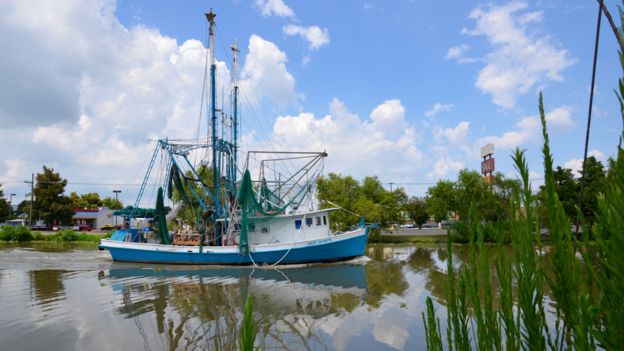
A shrimp boat heading out to fish on Bayou Lafourche

********

Thursday, August 27

Afghanistan: Sorry, Col. Kemp; the fix is already in

There are plenty of things NATO and its U.S.-led command could be doing at their current troop levels to help the Afghan army. For instance, a big driver of desertions is the wacky pay system, which doesn't allow troops or their families to collect their pay for weeks and even months on end when troops can't get to a designated ATM machine.  

Another instance: overseeing rotations to spell Afghan troops who've been under constant Taliban fire for weeks on end. 

There are numerous other important things NATO could be doing in Afghanistan to help beleaguered troops and provincial governors without getting directly involved in the fighting and which aren't costly, but isn't.   

The good Colonel Kemp needs to ask himself why.  

Col Richard Kemp: Turning our back on Afghanistan could trigger another 9/11
Former commander of British forces in Afghanistan warns there is a danger country could become a 'safe haven for terrorism' once again

"Pakistan’s nuclear arsenal could become the world’s third-biggest." Now you know where all that Western aid money to Pakistan disappeared to.

Poor widdle Pakistani military, so nervous, so insecure, so frightened, so, so -- predatory.  

Report: Pakistan’s nuclear arsenal could become the world’s third-biggest
By Tim Craig
August 27, 2015 - 12:01am EDT
The Washington Post

 — A new report by two American think tanks asserts that Pakistan may be building 20 nuclear warheads annually and could have the world’s third-largest nuclear stockpile within a decade.
The report by the Carnegie Endowment for International Peace and the Stimson Center concludes that Pakistan is rapidly expanding its nuclear capabilities because of fear of its archrival, India, also a nuclear power. The report, which will be released Thursday, says Pakistan is far outpacing India in the development of nuclear warheads.
Analysts estimate that Pakistan has about 120 nuclear warheads, while India has about 100.
In the coming years, the report states, Pakistan’s advantage could grow dramatically because it has a large stockpile of highly enriched uranium that could be used to quickly produce low-yield nuclear devices.
India has far larger stockpiles of plutonium, which is needed to produce high-yield warheads, than Pakistan does. But the report says India appears to be using most of its plutonium to produce domestic energy.
Pakistan could have at least 350 nuclear weapons within five to 10 years, the report concludes. Pakistan then would probably possess more nuclear weapons than any country except the United States and Russia, which each have thousands of the bombs.
“The growth path of Pakistan’s nuclear arsenal, enabled by existing infrastructure, goes well beyond the assurances of credible minimal deterrence provided by Pakistani officials and analysts after testing nuclear devices,” the report states.
Pakistani military officials were not available to comment on the report when it was made available to journalists Wednesday.
Western officials and analysts have struggled for years to get an accurate assessment of Pakistan’s nuclear capabilities. Several Pakistani analysts questioned the findings of the report, saying it is based on a faulty assumption that Pakistan is using all of its existing stockpiles of fissile material to make nuclear weapons.
Mansoor Ahmed, a nuclear expert at Quaid-i-Azam University in Islamabad, said he suspects that a more accurate assessment of Pakistan’s capability is that it can develop no more than 40 to 50 new warheads over the next several years.
Ahmed, however, doesn’t dispute that Pakistan’s military is seeking to expand its nuclear capabilities.
“This report is overblown,” said Ahmed, who was recently named a nuclear security fellow at Harvard University’s John F. Kennedy School of Government. “However . . . what the world must understand is that nuclear weapons are part of Pakistan’s belief system. It’s a culture that has been built up over the years because [nuclear weapons] have provided a credible deterrence against external aggression.”
France has about 300 warheads and the United Kingdom has about 215, according to the Federation of American Scientists. China has approximately 250.
The report was written by Toby Dalton, co-director of the Carnegie Endowment’s Nuclear Policy Program, and Michael Krepon, co-founder of the Stimson Center.
Pakistan is believed to use plutonium as well as highly enriched uranium to create nuclear warheads. Dalton noted that Pakistan recently added a fourth plutonium production reactor at its Khushab Nuclear Complex.
“We assume, maybe correctly, maybe inaccurately, with the fuel coming out of the four reactors, they are processing it as rapidly as possible to get the plutonium out,” Dalton said.
India and Pakistan, which have fought three major wars, became declared nuclear powers in 1998. Since then, Western leaders have been increasingly alarmed about the potential for a nuclear exchange between the rivals.
India has adopted a no-first-use policy on nuclear weapons. Pakistani leaders have repeatedly declined to take a similar stance, saying they might be forced to resort to using the weapons should India’s larger army ever invade Pakistan.
India views nuclear weapons “as a political tool, a prestige item, not something you use on a battlefield,” Krepon said. In Pakistan, he said, nuclear weapons are seen as “things you have to be willing to use” to guarantee stability.
[...]
********

Former Afghan gov spokesman on American indifference, disengagement and double dealing

The U.S. wanted Afghan President Ashraf Ghani to make nice with Pakistan's government, which he did. Until he learned the hard way that everything Hamid Karzai said about Pakistani backing of attacks on Afghans was the truth..... 

The US is needed to battle terror in Afghanistan
By Aimal Faizi
August 18, 2014
Al Jazeera

[...]

Now, more than ever before, the absence of a genuine US commitment with Kabul in its "good fight" against terrorism is pushing Afghanistan and the region further into turmoil.

For years, Afghanistan has been crying out for US action against state-sponsored terrorist attacks from Pakistan on its soil.

Afghan President Ashraf Ghani recently called upon the military and civilian leadership in Pakistan to have the "same definition of terrorism in regard to Afghanistan", as it has for itself.

In his recent remarks, Ghani said "The suicide training camps and the bomb making facilities used to target and murder our innocent people still operate, as in the past, in Pakistan."

Afghan political leadership pointed the finger at Pakistan after a chain of deadly attacks in Kabul on August 8 killed over seventy people and left hundreds injured.

The US state department was quick to rebuff Kabul, stating that Washington did not have "specific intelligence" to conclude whether Pakistan was involved in the deadly attacks on the Afghan side of the border.

US disengagement

Kabul has long been at odds with Washington over its policy vis-a-vis terrorist safe havens and training camps in Pakistan.

After all the blood and treasure the US and its NATO allies spent in Afghanistan, why this US reluctance and unwillingness with regards to dealing with terror sanctuaries and state-sponsored terrorism?

How much longer will Washington gloss over Pakistan's state-support of terrorism?

President Ghani has remained a steadfast US ally who authorised the signing of a major bilateral security agreement between Afghanistan and the US right after taking office as president.

But there was one simple message for Washington in his recent remarks - which must not go unnoticed: The US anti-terrorism strategy is not degrading nor destroying terrorist safe havens in Pakistan.

A decade-old Afghan experience shows that Pakistan-based terror groups continue to plan, organise, recruit, indoctrinate, train, raise funds and operate from their safe havens, killing thousands of Afghans and foreign citizens in Afghanistan, including Americans.

Washington's lack of clarity in its overall policy towards Pakistan, including Islamabad's political will in denying terrorists safe havens and limiting the Afghan Taliban's ability to operate freely on its soil, severely damaged Afghan-US relations under the former President Hamid Karzai.

US indifference

Abetted by Washington after 10 months of sincere cooperation and concessions to Islamabad, the president of the Afghan National Unity Government faces the same impediments to peace as his predecessor.

"Pakistan still remains a venue and ground for gatherings from which mercenaries send us message of war," Ghani said on August 10, referring to the open meetings held by the Taliban in Pakistan after the announcement of the death of spiritual leader, Mullah Omar.

As all Afghan political leaders, from the former to the current president, see eye to eye on Pakistan, the US state department urges both countries to "eliminate safe havens".

"It is in the urgent interest of both countries to eliminate safe havens and to reduce the operational capacity of the Taliban on both sides of the border," said its spokesman.

I am dumbfounded by Washington's statement asking "both countries to eliminate safe havens".

Until just last year, the US had a very strong military presence and full control over ground and air in every part of Afghanistan.

It should know and answer all the whys and hows of "safe havens" on the Afghan side of the Durand line - if there are any answers.

After more than a decade of injecting cash to Islamabad for its role in the "war on terror", Washington is still asking it to "eliminate safe havens".

Since 2001, under the Coalition Support Fund (CSF), Pakistan has received nearly $13bn from the US alone for its "role in combating a Taliban insurgency in Afghanistan".

Just last month, it received $337m under the CSF as the first tranche for the current fiscal year.

US double-dealing

The US is committed to combating "terrorism" and its "safe havens" in its Security and Defence Cooperation Agreement signed with Afghanistan.

What does this pact serve?

Some, including the Afghan national security advisor, may respond by stating that the purpose of the agreement is not "contribute to peace in Afghanistan".

They will argue that its primary goal is to provide more than $12m a day to Afghan security and defence institutions.

I would counter-argue that.

According to the pact, the US intent is to "strengthen security and stability in Afghanistan, contribute to regional peace... combat terrorism, and achieve a region which is no longer a safe haven for al-Qaeda and its affiliates".

Afghans endorsed the security pact with the US, expecting that it would strengthen security in their country and protect them against an imposed war.

The Afghan people always knew - as it was recently stated by President Ghani - that "the war in Afghanistan is fought for and by others and that the so-called Amirul Momineen [Mullah Omar], who apparently led and commanded the war, might not have even existed."

In Afghanistan, the US' "good war" is turning into public discord at a fast pace.

Washington must avoid the growing perception of the US double-dealing in regard to Pakistan.

Terrorists and their harbourers are the common enemies of all mankind, and stopping Pakistan from its state-sponsored terrorism will save innocent lives in both Afghanistan and Pakistan.

Aimal Faizi is an Afghan journalist and former spokesperson for former Afghan President Hamid Karzai from 2011-2014.

The views expressed in this article are the author's own and do not necessarily reflect Al Jazeera's editorial policy.


[END ARTICLE]

********


NATO snores through large Taliban gathering outdoors in Kunduz

The Taliban even flew dozens of banners to advertise their location to air surveillance. 

"Mullah Abdul Salam was one of several Taliban shadow governors who were detained by Pakistan in early 2010. He was later released and returned to Afghanistan and resumed his role as the Taliban’s governor for Kunduz."

By Bill Roggio
August 27, 2015
Long War Journal


[See LWJ for additonal photographs of the gathering]

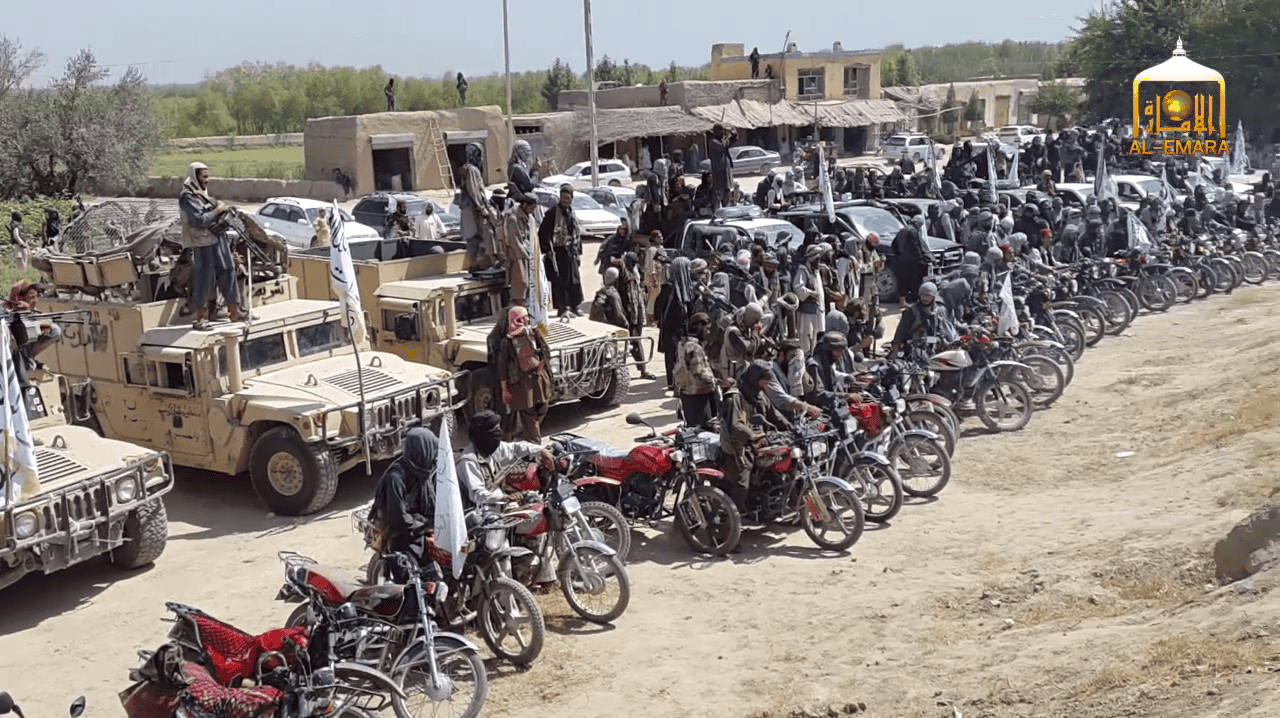
Hundreds of heavily armed Taliban fighters gathered in the open in the northern Afghan province of Kunduz to pledge an oath of allegiance to Mullah Akhtar Mohammad Mansour, the new emir of the group.

The Taliban released a video on Aug. 25 on its official website, Voice of Jihad, that showed the massing of jihadists in Kunduz and its leaders issuing lengthy speeches before pledging fealty to Mansour, who replaced Mullah Omar, the group’s founder and first leader. The video was “published by Al Emarah Studio, part of the Multimedia Branch of Islamic Emirate of Afghanistan’s Cultural Commission,” the Taliban stated.

“A large number of Mujahid leaders, tribal elders, locals and ordinary Mujahideen in northern Kunduz province pledged their allegiance to the Islamic Emirate’s new Amir ul Mumineen, Mullah Akhtar Mohammad Mansour (HA), at the hands of the Jihadi in-charge [shadow governor] of Kunduz, Mullah Abdul Salam Akhond,” the Taliban said in the statement that accompanied the video.

Mullah Abdul Salam was one of several Taliban shadow governors who were detained by Pakistan in early 2010. He was later released and returned to Afghanistan and resumed his role as the Taliban’s governor for Kunduz.

The video shows that the Taliban in Kunduz, including its top leaders, do not fear massing in the open and staying there for extended periods of time. Members of the group do not appear all that concerned about the prospect of getting hit by a US or Afghan airstrike, and clearly control the ground in the area. Dozens of white Taliban banners are flying in the open.

Additionally, the video demonstrates that the Taliban has seized a number of military and police vehicles from the Afghan army and police. At least seven US-supplied Humvees and nine Ford pickup trucks are manned by Taliban fighters. The vehicles and fighters line up in formation – with Humvees in one area, Fords in another, and scores of motorcycle-mounted fighters in front – to listen to its leaders give speeches and then recite the oath to Mansour. Additionally, several jihadists mounted on horses are in the formation. While the commanders are talking, more fighters arrive in trucks and on motorcycles.

[...]

Bill Roggio is a Senior Fellow at the Foundation for Defense of Democracies and the Editor of The Long War Journal

********

Mastermind of Iran-backed 1996 bombing of US Air Force dorm Khobar Towers captured

"The 209-page ruling found that the truck bomb involved in the attack was assembled at a base in Lebanon's Bekaa Valley operated by Hezbollah and the Revolutionary Guards, and the attack was approved by Iran's Supreme Leader Ayatollah Ali Khamenei."

I'm thinking of John O'Neill right now....  

Mastermind Of Khobar Towers Bombing Captured After 20 Years
By Radio Free Europe/Radio Liberty (RFE/RL)
With additional reporting from Reuters and Associated Press
August 27, 2015

A man described as the mastermind of the 1996 bombing of the Khobar Towers U.S. military residence in Saudi Arabia has been captured after nearly 20 years on the run, officials said August 26.

Ahmed al-Mughassil, leader of the Saudi Hezbollah group and one of the FBI's most wanted terrorists with a $5 million bounty on his head, was under indictment for the attack on a U.S. Air Force dormitory that killed 19 U.S. service personnel and wounded almost 500 people.

Mughassil, also known as Abu Omran, was captured in the Lebanese capital Beirut two weeks ago after traveling there from Iran, and transferred to Riyadh, U.S. and Saudi officials said. Saudi intelligence believes that four other suspects wanted in the bombing are living in Iran.

Saudi Arabia and the United States have accused Iran of orchestrating the devastating truck-bomb attack. Iran has denied any responsibility.

In 2006, a U.S. federal judge ordered Iran to pay $254 million to the families of 17 U.S. service personnel killed in the attack in a judgment entered against the Iranian government, its security ministry, and the Revolutionary Guards.

The 209-page ruling found that the truck bomb involved in the attack was assembled at a base in Lebanon's Bekaa Valley operated by Hezbollah and the Revolutionary Guards, and the attack was approved by Iran's Supreme Leader Ayatollah Ali Khamenei.

The militant group Hezbollah Al-Hejaz confirmed that the suspect Mughassil, a 48-year-old Saudi, was stopped by security officials at Beirut airport and detained on August 7.

The Saudi newspaper Asharq al-Awsat called the capture of Mughassil an "achievement, for the man had been in disguise in a way that made it hard to identify him."

[...]

In the 1996 bombing, militants parked a fuel tanker truck just outside the shallow perimeter of the Khobar Towers apartment complex, 85 feet from one of the eight-story dormitories. The blast tore the face off one side of the building, leaving a massive crater.

Three other Saudis are still on the FBI's most-wanted list for the attack: Ali al-Hoorie, Abdelkarim al-Nasser, and Ibrahim al-Yacoub.

Nine other Saudis have been imprisoned in the kingdom for the past 19 years after secret trials with unknown verdicts in connection with the attack, Matthiesen said. It's unclear whether Mughassil will face a similar trial or be given one in a special court handling terrorism cases.

[END REPORT]

********

Taliban kill two Americans Wednesday, capture Afghan district despite heavy U.S. airstrikes

"We had asked for reinforcements for days but none arrived and this was what happened."

"The Taliban currently control three districts in northern Helmand and have partial control of several others, including Kajaki, where they frequently disrupt supplies from a large U.S.-built hydroelectric dam powering the province."

Wed Aug 26, 2015 - 3:50pm EDT
U.S. soldiers killed in Afghanistan, Taliban grab district
BY MOHAMMAD STANEKZAI
Reuters

(Lashkar Gah, Helmand) Taliban fighters seized a district headquarters in Afghanistan's Helmand province on Monday despite repeated U.S. air strikes to repel them, adding to the insurgents' recent advances in a heavily fought over region of opium farms and trade routes.

Elsewhere in Helmand, a man in Afghan uniform opened fire in the former British base of Camp Bastion, killing two U.S. service personnel, before being shot and wounded. Another man in Afghan uniform was wounded in the return fire.

It was the second incident this year involving Afghan troops, or people wearing Afghan uniforms, shooting at foreign soldiers. No group has claimed the attack.

Pentagon spokesman Captain Jeff Davis said the attacker opened fire on the vehicle in which the Americans were traveling. He gave no more details.

An Afghan regional official said the incident involved Afghan special forces firing on allies at the former Camp Bastion, which was handed over to Afghan forces last year.

Helmand's Musa Qala district fell after the Taliban overran police and army posts to retake a district straddling smuggling routes that was wrenched from them by British and Afghan troops eight years ago.

U.S. warplanes have been bombarding Musa Qala since the weekend, killing up to 40 militants, with two new air strikes on Tuesday. But they regrouped, chasing the district government out of town and confiscating weapons in what a spokesman for Afghanistan's 215th Maiwand Corps called a "tactical retreat" to protect civilians.

Coalition military advisors have recently been working with the 215th Corps, which based in Helmand capital Lashkar Gah.

"Afghan special forces, police and commandos have been deployed to Helmand in order to retake Musa Qala district. Foreign air strikes are backing our forces," said Dawlat Waziri, a spokesman for the defense ministry.

In Afghanistan's first summer fighting season since foreign troops stepped back from combat roles, the Taliban have pushed into several districts in the North and South but have mostly struggled to keep hold of them.

Last week, Afghan forces pulled out of the town of Nawzad, the headquarters of a neighboring district that was also fiercely fought over when British and U.S. forces were stationed in Helmand, the country's main opium production center.

That means the Taliban currently control three districts in northern Helmand and have partial control of several others, including Kajaki, where they frequently disrupt supplies from a large U.S.-built hydroelectric dam powering the province.

"We left the district early in the morning because the Taliban were attacking from all sides," Musa Qala district Governor Mohammad Sharif told Reuters by telephone.

"We had asked for reinforcements for days but none arrived and this was what happened," he said.

In the years following the 2001 U.S. invasion that toppled the Taliban government, more than 400 British soldiers died in Helmand, several while defending Musa Qala. More than 350 U.S. Marines also lost their lives in the province.

Nearly 14 years later and after foreign forces formally ended their combat mission, the Taliban is still fighting a guerrilla war aimed at restoring their hardline regime.

Violence has increased sharply across Afghanistan since the coalition mostly withdrew in December, leaving a small contingent of about 12,000 NATO troops to train Afghan forces.

(Additional reporting by Hamid Shalizi in Kabul and David Brunnstrom in Washington; Writing by Frank Jack Daniel; Editing by Angus MacSwan)

[END REPORT]

********

Wednesday, August 26

When will Americans act on what Amrullah Saleh says? UPDATED

"Mullah Omar was never behind making strategies and planning operations. He was a myth kept in a mythical space. It was the ISI that planned and organized everything then and now."

"There is no ISIS in Afghanistan."

Amrullah Saleh has given an interview, published today, and which I republish below.  In the interview he outlines a grotesque tragedy that has cost many American lives.  

This is not the first such interview.  Year after year Amrullah Saleh, while he was Afghanistan's NDS chief and after, has told the truth about terrorism in Afghanistan -- at defense fora, in the media, and in well-publicized speeches in the USA.  He's listened to politely but business as usual continues between the United States and Pakistan.

****
UPDATE  

As to recent news that the Congress is considering withholding $300m in funding to Pakistan out of concern that their military is not doing enough to rein in the Haqqani Network:  the concern has nothing to do with the Haqqanis or security in Afghanistan.  It has everything to do with Pakistan making a deal with Russia to purchase attack helicopters. 

The U.S. Congress wants Pakistan to purchase all its military hardware from American manufacturers.  As Pakistan's Express Tribune cynically noted in its April article, the U.S., Chinese, and Russian defense manufacturers have been in competition to sell military hardware to Pakistan. The Express reported that in April the U.S. Department of State approved $1bn in sales to Pakistan of U.S.-made attack helicopters, missiles and other equipment.  

The U.S. manufacturers were able to sweeten their pitch through the Pentagon's outright gift to Pakistan's military of "leftover" weapons and other military equipment including armored vehicles used by ISAF in Afghanistan and worth over $7bn.  Yes of course the Afghan government tried to object on the obvious grounds that their own country needed the equipment. They wasted their breath.  
**** 

Afghanistan’s Future: Interview with Amrullah Saleh
By FAHIM MASOUD
August 26, 2015
International Policy Digest 

Afghanistan faces a unique set of challenges. From overcoming the failed legacy of Karzai to defeating or trying to defeat a still problematic Taliban, Afghanistan will have to figure out a way forward. On top of the immediate challenges that the government faces, it will have to survive without the assistance of U.S. troops once they eventually leave. One of the few Afghan government officials to have witnessed these challenges first hand is Amrullah Saleh, the former Director of National Directorate of Security, Afghanistan’s national intelligence agency. He served from 2004 until his resignation in 2010. Below is an interview that Fahim Masoud conducted with Saleh.

Afghanistan continues to be very unsafe. In fact, under President Ghani’s leadership, the country has become much more chaotic. Why do you think there’s so much insecurity and incoherence in the country right now?

I am asked this question almost on a daily basis. Two things.

1) Pakistan has increased its support for the Taliban. Given the timetable for foreign troops’ withdrawal, and the caveats under which they operate, Pakistanis believe that the finish line is near; therefore, they feel like they shouldn’t restrain from increasing their destabilization efforts in Afghanistan. They, the Pakistani intelligence and army personnel, are now staging their attacks with unprecedented boldness. So the dramatic decline in the number of foreign troops has resulted in the dramatic decline in the number and nature of operations conducted by foreign troops. 

2) The political turbulence that the country experienced due to bad and prolonged presidential elections and the subsequent emergence of National Unity Government, which was a unique experience in Afghanistan, are among some other reasons for why more incidents take place. But don’t forget that the Taliban insurgency has the backing of a nervous nuclear state that bases its whole raison d’etre on hegemony, militancy and extremism in the region and that is of course Pakistan.

Is there a way out of this current political crisis in Afghanistan? 

I am not sure the country is in a political crisis. There is a broad acceptance of the National Unity Government. The issue is not its legitimacy, but its competence and delivery. The Afghan government has failed to deliver so far; but its failure does not mean it is mired in a political crisis. The current Afghan government leadership is in a crisis of leadership and management.

You have always been a vociferous opponent of peace talks with the Taliban. Why do you think peace is not possible with the Taliban?

I have never been opposed to peace talks. Never. I have been opposed to the way these talks are conducted and the issues they revolve around. They are not necessarily peace talks; they are talks to cater to the interests of the Taliban. This is appeasement and I have been against it. I have been against giving the Taliban a new identity in so far as to de-couple them from terrorists. Telling ourselves that these destructive forces are no longer espousing Talibani ideas and beliefs does not make them so.

Pakistan has always supported the Taliban. It has also always been involved in destabilizing Afghanistan. Why do you think Pakistan wants an unstable Afghanistan? What is it about an unstable Afghanistan that benefits Pakistan? 

Pakistan is a politically insecure, psychologically nervous, and strategically narrow-minded state. It wants parity with India. In the belief of the Pakistani strategists, subordination of Afghanistan to the wishes and demands of Pakistan will give them a depth in the region and will in some way put pressure on India. They also hate seeing Afghanistan have a democratic system. Pakistan sees democracy as an existential threat. A real, robust democracy will transform Pakistan into a cultural and economic satellite state of India. Something that the Pakistani leaders want to avoid at any cost. While on the surface Pakistan seems to have a democracy, it is an army-run country. Democracy in its truest sense does not exist in Pakistan. On critical foreign policy issues — issues that have the potential to change the national fate of Pakistan — it’s not the country’s parliament that has decision making powers, but its army’s.

There are rumors that Pakistan and a few other foreign governments have asked the present Afghan leadership not to give you a political role in the government. You are a capable public servant. Why does Pakistan and its allies fear you so much?

I have also heard such rumors, but I don’t have solid evidence to back them.

According to an article from the BBC, only under twenty percent of Afghans approve of this current government. And Tolo TV reports that corruption has gone up under the present leadership. Given these realities, will the Unity Government survive?

I wouldn’t place too much confidence on opinion polls. A few months ago, they said that Ghani’s popularity was above eighty percent. They should explain the nose dive his fame has taken. That I don’t see these polls do.

Any informed political person from around the world knows that ISI is funding, training, and mobilizing the Taliban to send suicide bombers to Afghanistan. Suicide attacks have killed hundreds of innocent Afghans in recent weeks. The current government seems toothless and is obviously not able to get Pakistan to stop these attacks. Is there anything that can be done to make ISI stop its criminal and terrorist activities in Afghanistan?

Pakistan is a weak country. It has inherent and default weaknesses. Pakistan is not going to stop terror in my country anytime soon. Therefore, it is up to the Afghan government to strategize ways of getting Pakistan to refrain from interfering in Afghanistan diplomatically. Creating trouble in a neighboring country is not rocket science.

What will happen to Afghanistan after the U.S. leaves the country given that the majority of the Afghan government budget comes from the U.S.? 

Afghanistan is not a concept. It is a country with a thousand years of history and culture. Without the presence of foreign troops, it will have more problems, but it won’t cease to exist nor will it experience a downward spiral. It won’t. We will survive as we always have. We may not have some of the comforts of today but we will be around.

You were extremely effective as the Intelligence Chief of Afghanistan. What did make you so effective as the man in charge of this entity?

It was not just a job for me. It was a passion. It was an obsession. I was devoted to the cause. I had forgotten about myself. It was all about how to bring about change, how to do things differently. It felt like I had found myself sitting in the cockpit of our history. It was an excitement. It was an honor and pride, too. Most of the people working with me were like brothers to me; I was like a brother to them. There was no atmosphere of stiffness. None. There was no hierarchy when it came to ideas, initiatives and motivation. There was no hierarchy when it came to demonstration of will and passion for accomplishing a big task at hand. The hierarchy mattered only when it came to resources, legal issues, and making decisions. So I was running the organization like an entity with a flat structure and no walls. I could see everyone and everyone could see me. That way of leading had created a sense of ownership amongst all. It was a collective leadership. No arrogance. No grand standing. We were all doing something. We all believed in the cause. We were in it together.

What do you think of President Ghani as a leader? What are some of the major differences between President Ghani and President Karzai?

I don’t want to comment on former President Karzai. In my view President Ghani needs to create a space in which consensus and a sense of we-ness can emerge. To do that he would need to sacrifice some parts of his intellectual and professional capacities. He is smart and knows things for sure. However, he doesn’t want to recognize those around him who are also smart, and from whose knowledge and expertise he can learn. It frustrates him to see officials who don’t share his world view. He tries to download his knowledge into his cabinet’s head — a Herculean task. To borrow his analogy, he is Mircrosoft 10 and a number of his cabinet members are the ancient Word Perfect. There is a mismatch. Will he change and reverse his own default system or upgrade his cabinet members? I don’t know.

How will the death of Mullah Omar affect the Taliban? 

Mullah Omar was never behind making strategies and planning operations. He was a myth kept in a mythical space. It was the ISI that planned and organized everything then and now. Though with the mythical figure gone the new leadership has to establish its legitimacy and prove its effectiveness on the ground. Not easy. Certainly, Omar’s death has weakened the Taliban and will continue to do so. Inshallah.

Will the struggle for power within the Taliban group make ISIS stronger in Afghanistan?

There is no ISIS in Afghanistan.

Please tell us a little about the movement you have founded? What kind of activities is your movement engaged in?

Afghanistan Green Trend (AGT) stands for three distinct objectives. A) de-radicalization and anti extremism; b) Youth empowerment; c) Fight against corruption, elitism, and injustice. We have around eighty thousand members and volunteers. We are known for our street power, advocacy, efficiency, and pan-Afghan stand and vision.

If you had to choose between freedom and democracy and order and security, which one would you choose and why?

All of them are essential for a happy, just existence, so I would like to have all of them. We, the Afghans, should have all of them. We are entitled to all. I have been fighting for these rights all of my life and will continue to remain in the fight until we are in possession of these rights.

What are you reading these days?

I am reading a couple of history and geopolitics books at the moment.

[END INTERVIEW]
********


Tuesday, August 25

America's Bay of Pigs moment in Syria and the U.S. Ministry of Silly Walks in Afghanistan

The United States’ botched effort last month to support a Syrian moderate rebel group known as Division 30 was a chain of errors that recalls, in a small way, the 1961 Bay of Pigs fiasco.
The Division 30 debacle has some clear and disturbing lessons: The rebels weren’t well prepared for their mission, and they had poor intelligence about potential adversaries inside Syria. The United States was too dependent on Turkey, and it didn’t have clear plans about how to respond if the rebels were attacked; although the United States eventually provided air support, it was too late to do much good.
Division 30 was the first contingent of Syrian rebels deployed under a $500 million “train and equip” plan authorized last year by Congress.
[...]
Given the United States’ history of mismanaging military support for rebel groups over many decades, it’s a wonder that people like Abu Iskandar still want to enlist. When the CIA landed a Cuban rebel force at the Bay of Pigs in 1961, the U.S. failed to provide adequate planning, intelligence, air cover or political support.
According to Evan Thomas’s 1995 book “The Very Best Men,” a Cuban operative abandoned on the beach cursed his American handler in a last radio transmission: “And you, sir, are a son of a bitch.”
From David Ignatius'  August 20 Washington Post opinion column, Lessons from the Bay of Pigs in the Syrian ‘Division 30’ debacle.  Undaunted or perhaps stung by the debacle, the U.S. is soon launching "comprehensive" operations with Turkey' military to "flush Islamic State fighters from a zone in northern Syria bordering Turkey, Foreign Minister Mevlut Cavusoglu told Reuters on Monday."

It seems to be a very complicated comprehensive operation, from the FM's outline, and doesn't seem to have anything to do with flushing the route that Islamic State uses to deliver Iraqi oil to Turkey.


But I certainly wish these two wonderful NATO allies well in their endeavor, although frankly I think the U.S. arming a contingent of female Kurdish guerrilla fighters would do a better job flushing IS routes in the region.


But there are the protocols and traditions of the military to be observed and these are more important than uncouthly obtained victories, to more or less summarize General Robert E. Lee's views on war fighting.     

Moving on to Afghanistan:  


Defense Dept. Inspector General Criticized as Worse than Useless
August 17, 2015
ALLGOV

The Special Inspector General for Afghanistan Reconstruction (SIGAR) has done his job well. John Sopko and his group have saved taxpayers hundreds of millions of dollars, referred companies and individuals that have committed contracting violations and pointed out many examples of government waste.

No wonder then that the federal government would attempt to supplant SIGAR with an authority that doesn’t work nearly as well.

The Lead Inspector General for Overseas Contingency Operations, which comprises the inspectors general for the Department of Defense(DOD), the State Department and the U.S. Agency for International Development (USAID), became the primary agency for investigating fraud and waste in Afghanistan thanks to a provision in the 2013 National Defense Authorization Act, inserted by Senators Claire McCaskill (D-Missouri) and Jim Webb (D-Virginia).

This group, led by DOD Inspector General Jon Rymer, put together a report (pdf) for Congress that has many attractive photos and facts about the mission in Afghanistan, but information on only eight issues that require attention, and even those are provided with a notation that the “October 2015 Lead IG biannual report will provide details of these and other reports.”

In contrast, SIGAR’s quarterly report (pdf) details 21 audits, inspections, alert letters, and other reports, and savings of $214.7 million for U.S. taxpayers.

The Lead Inspector General for Overseas Contingency Operations’ reports are so lacking in content that Anthony H. Cordesman of the Center for Strategic and International Studies compares the group to Monty Python’s “Ministry of Silly Walks.”

“As for the military content, the report serves no known purpose and has almost no meaningful content,” Cordesman wrote. “The Lead Inspector General for Overseas Contingency Operations does not come close to dealing with any of the issues and problems raised in the Department of Defense’s semi-annual report on the war—the Report on Enhancing Security and Stability in Afghanistan.” The inaugural version of this report was released to Congress on June 16.

Cordesman drew a scathing comparison between that report and SIGAR’s. “It will take you no more than 15 minutes of comparing the Lead Inspector General for Overseas Contingency Operation’s Quarterly Report to the report by SIGAR to see just how empty and totally vacuous the work by the Lead Inspector General for Overseas Contingency Operations really is.”

He added that the Lead IG report “reads more like a public relations exercise than anything else. It also follows a pattern within the Executive Branch of steadily reducing reporting that has any negative content…”

There is hope that SIGAR will once again become the lead agency for investigating where U.S. tax dollars are going in Afghanistan. The Project on Government Oversight has supported an amendment to the National Defense Authorization Act for Fiscal Year 2016 that would ensure SIGAR isn’t crowded out.

This isn’t the first time the executive branch has tried to mess with SIGAR. Earlier this year, the State Department ordered SIGAR to cut its staff by 40%. When word reached the media, the State Department backed down.

[END REPORT]

********