Translate

Sunday, July 19

Chilling Out in the Dog Days of Summer


Then there's always Yoga 


But what do dogs and cats know


I'll be back the first day the temperature here in Washington, DC is below 90 degrees. Won't be any day this week, that's for sure.  Let's see: 98, 96, 96, ah a cold snap on Thursday; only 92! 93, 93, 96, 95 -- and on and on.       

I think we're nearing a record, if it hasn't already been reached, for most days in a row at 90 or above. 

Have fun, stay safe, stay cool. Hasta luego!  

********

In America, a flight from the cities


1968
"Nathan La Franeer" by Joni Mitchell

I hired a coach to take me
from confusion to the plane
And though we shared a common space
I know I'll never meet again
The driver with his eyebrows furrowed in the rear-view mirror
I read his name and it was plainly written 

Nathan La Franeer
I asked him would he hurry
But we crawled the canyons slowly
Thru the buyers and the sellers
Thru the burglar bells and the wishing wells
With gangs and girly shows
The ghostly garden grows

The cars and buses bustled thru the bedlam of the day
I looked thru window-glass at streets
and Nathan grumbled at the grey
I saw an aging cripple selling Superman balloons
The city grated thru chrome-plate
The clock struck slowly half-past-noon
Thru the tunnel tiled and turning
Into daylight once again I am escaping
Once again goodbye
To symphonies and dirty trees
With parks and plastic clothes
The ghostly garden grows

He asked me for a dollar more
He cursed me to my face
He hated everyone who paid to ride
And share his common space
I picked my bags up from the curb
And stumbled to the door
Another man reached out his hand
Another hand reached out for more
And I filled it full of silver
And I left the fingers counting
And the sky goes on forever
Without meter maids and peace parades
You feed it all your woes
The ghostly garden grows


2020
Americans leave large cities for suburban areas and rural towns
A combination of the coronavirus pandemic, economic uncertainty, and social unrest is prompting waves of Americans to move from large cities and permanently relocate to more sparsely populated areas. The trend has been accelerated by technology and shifting attitudes that make it easier than ever to work remotely. Residents of all ages and incomes are moving in record numbers to suburban areas and small towns.
A perfect storm of factors makes the decision to leave major cities like New York very obvious. The dense nature of urban living and the lack of proper local government planning led to the coronavirus spreading five times faster in New York than the rest of the country. The city that never sleeps now resembles a ghost town in many areas after thousands of its wealthy and middle-class residents fled early in the pandemic.
[...]
The flight began much earlier than the pandemic; Covid only accelerated it. A half century ago Canadian Joni Mitchell's haunting song expressed the feelings of urbanites who felt trapped in a way of life they had begun to see as dehumanizing, alienating.  But it was Australia's Gregory Copley who echoed Plato to explain the worst aspect of life in the big cities. From a review of his 2012 book, UnCivilization:
... Copley remarks that urbanization entails distortions in epistemology and ethics. The apocalypse of the megalopolis, its apparent (but false) independence, its triumphant concentration of power and wealth, provokes the urbanite into “disregard… of respect for hierarchy,” which, while it “has not yet reached the status of anomie,” has nevertheless become “that which Plato feared most about democracy,” namely “ochlocracy (mob rule), and the demands for gratification which are the hallmark of all mobs.”
Why yes. The megacity, which should be the crowning glory of democracy, is actually the agent of its doom. I doubt the majority of Americans now fleeing cities have thought about the matter as deeply as Copley -- or Plato, for that matter. But they know, as Joni knew a lifetime ago, they are fleeing something that is terribly wrong for the life of the individual. 

Today, large swaths of residential buildings in New York City stand empty -- not because they're abandoned but because they've been bought or rented by wealthy foreigners, who use the domiciles as boltholes in case they have to flee their country -- and as safe deposit boxes to house their valuables. It's the same in London, England.  

But you can't expect a viable democratic political climate to flourish in a ghost city.

*********

Monday, July 13

Covid Era: U.S. Food companies scramble to ramp up depleted inventories

"Flour has remained particularly hard to come by, as a surge in home baking caught the sleepy industry off guard. Sales of baking ingredients had been sluggish for years, making it difficult to ramp up to meet the sudden demand."

"Soup is particularly hard to source ... 'There’s no plethora of manufacturers available.' "

****
Half the story of how Covid has affected the food supply in the USA was already told in a Wall Street Journal report published March 23, headlined, Grocers Stopped Stockpiling Food. Then Came Coronavirus. 

But the other half is the companies that supply grocers.  Food processing companies, even the big boys, were also blindsided. So by today, “We are running flat out,”Conagra’s Chief Executive told the Wall Street Journal.  Across the board, food makers are doing everything they can think of to build up wiped-out inventories. 

So while there is plenty of food in its raw form in the United States, getting it processed and distributed to the grocery shelves is the challenge in the Covid Era, which could last much longer than the pandemic.
It's too soon to estimate how many Americans will keep up the food shopping/consumption habits they formed during the pandemic, once the lockdowns finally end. But I've seen signs that many Americans won't return to the pre-Covid Era, at least not at the same level. They learned during the lockdowns they could save a lot of money buying in bulk and doing their own cooking and baking. This trend, if it continues, will cause big changes in food industries of all types.  

If the pandemic continues for two years, as some observers have estimated, will this eventually create true food shortages at the level of the global supply chain? The pandemic has always been very uneven in when it strikes at countries, and there have been differing rates of recovery across societies. This has given foodstuff importers the ability to switch their suppliers from one country to another, and so the global food supply chain hasn't collapsed because of Covid.   
One thing can said with a fair amount of certainty at this point. The possibility that a pandemic can cause widespread food shortages has scared the tar out of all sensible governments around the world, not to mention the people who dominate agribusiness. Vast changes in both domestic and international food supply chains can and most probably will evolve from the scare. How, exactly, the changes will shake out, by country, is something to watch for.

Covid has awakened many sleeping companies, not just the American flour makers, as the following report underscores:                  
Food makers work to meet rising demand after initial lockdowns ate through inventories
By Annie Gasparro and Jaewon Kang 
Photographs by Katie Currid for The Wall Street Journal
July 12, 2020 - 5:30 am ET
The Wall Street Journal

Grocers are having trouble staying stocked with goods from flour to soups as climbing coronavirus case numbers and continued lockdowns pressure production and bolster customer demand.

Manufacturers including General Mills Inc., Campbell Soup Co. and Conagra Brands Inc. say they are pumping out food as fast as they can, but can’t replenish inventories. Popular items such as flour, canned soup, pasta and rice remain in short supply.

As of July 5, 10% of packaged foods, beverages and household goods were out of stock, up from 5% to 7% before the pandemic, according to market-research firm IRI.


Restocked
Many key items have returned to supermarket shelves since the height of the lockdown

[GRAPHIC: Percentage of items out of stock at U.S. supermarkets]

“We are running flat out,” said Conagra’s Chief Executive Sean Connolly. He said Conagra won’t be able to build up inventory of certain brands, such as Chef Boyardee and Healthy Choice, unless demand slows or it further increases manufacturing capacity.

Food makers and grocers expect prolonged shelter-in-place orders and restrictions on restaurants, as well as the battered economy, to result in a longer stretch of eating at home. Added safety measures at plants are slowing operations, too. There is enough food in the U.S. to keep people fed, executives say, but every product might not be available everywhere while inventories are strained.

Many retailers in states where cases are surging, including Texas-based H-E-B LP, are reinstating rationing on high-demand items including paper products. They say their distributors are still capping the amount of fast-selling products that can be ordered at one time.

Shelf Stable Stock levels at supermarkets are approaching the industry’s historical average

[GRAPHIC: Percentage of U.S. supermarket items listed as out of stock]

Mark Griffin, president of Nebraska-based B&R Stores Inc., said the chain would be in worse shape if cases rise again in the Midwest because it lacks the inventory it had in March. B&R has been stockpiling bottled water and other products at its warehouses, he said. The grocer has also tried to secure new suppliers for canned products, baking items and ramen noodles. So far, that has only yielded a truckload here and there, Mr. Griffin said.

Soup is particularly hard to source, he said: “There’s no plethora of manufacturers available.”

Campbell’s CEO Mark Clouse said the company ran through reserves of its namesake soup and snacks such as Pepperidge Farm Goldfish crackers during the initial rush of orders in the spring. That demand was a shock to a supply chain that had been largely recalibrated to handle flat or falling demand over the past decade, he said: “We’re racing to try to rebuild some inventory.”

General Mills, which owns Gold Medal flour and Betty Crocker dessert mixes, said it hasn’t built up normal levels of inventory of baking ingredients or its Progresso soup.

McCormick & Co. is also struggling to rebuild inventory of its spices and other items. It is adding the equivalent of another U.S. factory by using more third-party manufacturers and increasing production at its own plants.

Koninklijke Ahold Delhaize NV, owner of the Giant and Food Lion supermarket chains, said it is trying to build up inventory by finding new suppliers and adding shifts at distribution centers. The company found a new toilet paper supplier that primarily sold to college bookstores before the pandemic, said Andre Shaw, a senior vice president of supply chain at Ahold’s services business. Ahold Delhaize also found new pasta suppliers in Italy.

Wisconsin-based grocer Festival Foods is receiving about 80% of the goods it orders and is removing some products from shelves to make room for roughly double the toilet paper it normally stocks, said Chief Executive Mark Skogen.

Availability for some products has improved, Mr. Skogen said, including meat, which ran short this spring when some meatpacking plants temporarily closed after they became hot spots for coronavirus transmission.

Flour has remained particularly hard to come by, as a surge in home baking caught the sleepy industry off guard. Sales of baking ingredients had been sluggish for years, making it difficult to ramp up to meet the sudden demand.

Flour Power
Mills can't keep up with the rise in baking.

[GRAPHIC: Change in U.S. flour sales from a year earlier]

In mid-March, U.S. flour sales soared 233% from a year earlier, according to market-research firm Nielsen and remained 25% higher in June than the prior year.

“The orders are still there even though we are producing double to triple the normal volume,” said Bill Tine, head of marketing at King Arthur Flour Co.

Mills that never caught up with that demand are now trying to build surpluses to prepare for the holiday baking season and the potential for higher orders if the rise in Covid-19 cases causes more areas to slow reopening plans and weigh a return to shelter-in-place status.

King Arthur has added a fulfillment center in Kansas and booked more time on manufacturing lines at the mills that make its flour.

“There is enough wheat. There are a lot of mills. The packaging lines at the mills are the limiting factor,” Mr. Tine said.

Home bakers such as Beth Boyington, an athletic trainer near Boston, have had difficulty securing flour. Ms. Boyington splurged on a 25-pound bag of her favorite King Arthur flour when she finally found it.

“Stores seem to continue to be low on specific brands and types of flour, which is annoying,” she said. “Baking is my stress relief.”

Farmer Direct Foods Inc., a Kansas mill and supplier for King Arthur, is filling about 35 trucks a month with flour, up from 18 typically.

The mill has run out of packaging at times, said CEO Bob Morando, and equipment has broken down because he added a shift and hasn’t had time to do preventive maintenance.

“We’re going to run like crazy from now to Christmas,” he said.

[END REPORT]

RELATED READING WSJ REPORTS:

Sunday, July 12

From the ashes of failure, a world-changing triumph

"Reij, Garrity and other scientists working on the ground knew what Wade and other political leaders did not: that farmers in Niger and Burkina Faso, in particular, had discovered a cheap, effective way to regreen the Sahel. They did so by using simple water harvesting techniques and protecting trees that emerged naturally on their farms."

Years ago on this blog I argued in defense of Earth's huge human population; I observed that given looming threats to living things and Earth itself, humans needed all the brain power we could get. And I pointed out that there was no telling where great solutions would emerge; they could come from the least likely places and the least among us -- the poorest, the unschooled, those living in 'underdeveloped' regions.  

I remembered my words when I read The Smithsonian Magazine's August 2016 The “Great Green Wall” Didn’t Stop Desertification, but it Evolved Into Something That Might. The title gives no indication of the amazing turnaround wrought by many African small farmers but while the report details their successes, the story seems to have landed in a news media Black Hole. This, despite the fact that it got attention at the United Nations and African Union and of course the World Bank. 

At any rate Jim Morrison's report for the venerable Smithsonian Magazine does the story justice. I invite you to read the whole thing in case you have doubts about the human ability to adapt.  

But is it too little, too late, in this case? 

Well, one should also not doubt the World Bank's ability to muck up a great idea. The farmers' success at land reclamation in the early part of this century happened under the radar (see the report). This meant the Bank didn't know was going on for years.

However, in this era so many specialists outside the Bank are aware of its penchant for overkill that with any luck they will be effective at running interference for the farmers while helping them make the best use of Bank loans.

******** 

Now more than ever, "Take it easy policy"


A.R. Rahman's remake of Urvasi Urvasi, which uses crowdsourced lyrics, is still as relevant today as when it was released in 2017.  Never mind that the lyrics about Hillary Clinton and India's demonetization are a little dated, which might be why Rahman balked at first at including such topical themes. But there is nothing dated about the song's message: learn to practice a "take it easy policy" when met with upsetting situations, and don't blindly follow the crowd.

I see MTV Unplugged is still refusing to the release the video of the recording to YouTube. Maybe Vimeo paid for a copy but one is embedded in the Hindustan Times report on the remake, published in January 2017, which includes English translations of some lyrics -- all of which surely have been translated to English by now and posted at various sites on the internet.  

As to the rest of the song, goes to show what can happen when a musical genius merges the old and new, 'East' and West. When an Indian bowed instrument that's thousands of years old can hold its own with violins and cellos -- that's saying something. I think it works out to the essence of hipness.

******** 

Tuesday, July 7

How to de-escalate a potentially violent situation

This is about dealing with one-on-one situations that arise 'spontaneously,' without pre-planning. The kind of situations that are often described as senseless violence. 

Below is a 57 minute talk/demonstration that can save your life. And, it turns out, there really is an 'art' to de-escalation, or rather a craft, although one easily learned. 

The people at Google thought so highly of  Gershon Ben Keren's advice that they invited him to speak then posted the video of the talk at YouTube. From the introduction at YouTube:
Gershon Ben Keren, is a 5th Degree Black Belt in Krav Maga (the fighting system of the IDF), and is a professional security consultant, with over 20 years working as both an operative and a trainer. His book, "Krav Maga – Tactical Survival", presents as many non-physical solutions to violence, as physical ones, and describes in detail how and when to de-escalate potentially violent situations, recognize the warning signs of an attack and how to shut it down before it happens. In this talk, you will learn the psychology of violence and how to effectively communicate with angry and aggressive people in order to resolve conflicts and disputes, before they turn physical – skills that he has learnt and employed over his 20 year career, dealing with aggressive and violent individuals. 
I note that he has had plenty of 'real-world' experience at de-escalating potential violence; perhaps he chose work situations that can easily result in violence in order to test and refine theories.  In any case, this is not the advice gained from the 'hothouse' environment of a martial arts school, even though he's clearly studied in such.  
 
********

Monday, July 6

"After deadly clash with India, Beijing asserts right to territory in Bhutan"

China took a somewhat more forceful tone, emphasizing that it would “continue to vigorously defend its own territorial sovereignty and maintain peace and tranquility in the border areas."
The Chinese aren't at it again; they're always at it. They never stop. They can pull back from one area, then start in on another. Thanks to The Wall Street Journal for trying to keep up; however, I'm going to take the Journal's specific discussion about Bhutan from the end of the article and put it at the start, then return to the beginning:

China Pulls Back From One Disputed Border, Makes New Claims on Another
By Sha Hua and Rajesh Roy
July 6, 2020 3:25 pm ET
The Wall Street Journal

[see the WSJ site for maps of Bhutanese border the Chinese are disputing]

HONG KONG --  

[...]

The conflict arose in early June, when China opposed a grant for a wildlife sanctuary in Sakteng, in eastern Bhutan, during an online meeting of the Global Environment Facility, an international financial organization that funds environmental projects.

Beijing said the wildlife sanctuary is located in disputed areas that are “on the agenda of China-Bhutan boundary talks,” according to the minutes of the meeting.

Bhutan rebutted China’s claim to Sakteng, stating that “at no point during the boundary discussions between Bhutan and China has it featured as a disputed area.”

While China and Bhutan have long disagreed over territorial boundaries along central and western stretches of their mutual border, experts said, the eastern stretch has been free of dispute.

China’s Foreign Ministry said disputes had existed in all three sectors for a long time and that “there are no new disputed areas,” in a statement to the Hindustan Times on Saturday.

The Bhutan Embassy in India didn’t address the sanctuary issue specifically in responding to a request for comment. “The boundary between Bhutan and China is under negotiation and has not been demarcated,” it said.

The Chinese and Indian foreign ministries didn’t respond to requests for comments on the situation in Bhutan.

Fudan University’s Mr. Lin said China and Bhutan had basically resolved their border issues 20 years ago. “But they cannot sign a border agreement because India, which wields great influence over Bhutan, doesn’t allow it to sign the treaty with China,” he said.

Making new claims in eastern Bhutan is a low-risk way for Beijing to put added pressure on New Delhi, said Kanti Prasad Bajpai, professor of international relations at the Lee Kuan Yew School of Public Policy in Singapore.

The area, which borders the Indian territory of Arunachal Pradesh—which is also claimed by China—could serve as a bargaining chip for Beijing when negotiating this round of disengagement with Indian troops and to signal to its home audience that China will defend its territorial claims even though it is pulling back troops from one of the disputed areas.

“The Bhutan claim is something the Indians will notice but they won’t necessarily get hot headed over it and immediately send troops to defend the area,” Mr. Bajpai said.

[Start of report:]

China and India began pulling back troops from the site of a deadly border clash, as Beijing opened another front in the region’s territorial disputes with a new claim in nearby Bhutan.

Chinese and Indian troops both started to withdraw from some friction points in disputed areas along the two countries’ Himalayan border, Indian security officials said Monday, following talks between senior diplomats and military commanders to calm tensions.

The troop movements came two days after an Indian newspaper reported a brewing conflict between Beijing and Bhutan over a wildlife sanctuary involving what the Bhutanese government and experts said is a new territorial claim.

Messrs. Doval and Wang agreed to de-escalate the China-India border situation as quickly as possible and to continue he communication between diplomatic and military officials to ensure the implementation of the agreement, both statements said.

Indian security officials said Monday that Chinese troops were spotted removing tents and structures from the so-called “patrolling point 14” in the Galwan Valley near which soldiers of the two nuclear-armed nations had clashed in a hand-to-hand combat into the night of June 15, leaving 20 Indian soldiers dead.

Both sides had agreed not to take “any unilateral action to alter the status quo,” the Indian government said.

China took a somewhat more forceful tone, emphasizing that it would “continue to vigorously defend its own territorial sovereignty and maintain peace and tranquility in the border areas." Indian and Chinese armies have been locked in a bitter standoff at multiple locations in eastern parts of the Ladakh region since early May, when a skirmish broke out in one of the disputed points during patrolling by troops. The region has seen a heavy buildup of troops and artillery by both the sides since then.

Last month’s conflict in the Galwan Valley, a barren stretch of mountains in the northeastern part of Ladakh, marked the first time since 1975 that border clashes between Chinese and Indian troops had resulted in deaths. Indian security officials said there were casualties and injuries on the Chinese side, though Beijing hasn’t confirmed any.

Chinese leader Xi Jinping has been pursuing an increasingly aggressive approach to asserting territorial claims along the country’s periphery. The resulting tensions have raised expectations that India could draw closer to the U.S. and other Asian countries for help in fending off Beijing’s pressure.

Removing troops from volatile border areas is seen as a confidence-building exercise following multiple meetings between the two militaries, including a face-to-face discussion between senior commanders in late June.

“The most important thing for now is that everyone gets to cool down,” said Lin Minwang, deputy director of the Center for South Asian Studies at Fudan University.

In a broad plan, described by the Indian Ministry of External Affairs as “phased and stepwise,” troops of both the countries are to gradually move back from the front line to a so-called buffer zone to keep a safe distance and not see each other eye-to-eye, said one of the Indian security officials. Night patrolling too would be avoided to check further spat and flare-ups, said the official.

China’s latest dispute with Bhutan, an ally of India, adds a new wrinkle to territorial contests in the region—and suggests Beijing still wants to keep pressure on New Delhi.

[...]

—Raffaele Huang contributed to this article.

Write to Sha Hua at sha.hua@wsj.com and Rajesh Roy at rajesh.roy@wsj.com

*********

"FDA warns of 5 more hand sanitizers to avoid, growing list to 14"

MAKE SURE TO READ THE LABEL. Methanol is very toxic, so what kind of people would put it in a hand sanitizer isn't even a question. 

Note that this latest batch doesn't list methanol on the labels. So the fiends are getting craftier. You'd have to get the ingredients tested to learn they contain methanol.  So the really scary question is how many of the sanitizers that popped up during the pandemic contain methanol.  The only defense is to try to find a reputable brand, and if the sanitizer is made by a distillery, several of which dedicated at least a part of their operations to making sanitizers, I'd say it's a pretty safe bet they don't use methanol. Again, read the labels; if it's a distillery it says on the label; they're proud to be doing what is in effect a public service. 

The NBC report doesn't mention where this latest batch of methanol sanitizers is made (the earlier ones listed, which the report mentions, are made in Mexico): 
[...]
In early July, the [FDA] identified additional hand sanitizer products containing methanol:
  • Grupo Insoma's Hand Sanitizer Gel Unscented, 70% alcohol)
  • Transliquid Technologies' Mystic Shield Protection Hand Sanitizer
  • Soluciones Cosmeticas' Bersih Hand Sanitizer Gel Fragrance Free and Antiseptic Alcohol 70% Topical Solution Hand Sanitizer
  • Tropicosmeticos' Britz Hand Sanitizer Ethyl Alcohol 70% 
Here's the rest of the report, which passes along the advice that the best hand sanitizer is actually soap and water -- used properly, meaning to wash about 20 seconds. This technique literally rolls germs off the hands. Of course for people who don't have much access to water, and that's so for many in this world, the alcohol-based sanitizers are a godsend -- provided they don't contain methanol. My fear is that it's just such people, and their governments, who are being targeted by the fiends.  
See also: 

https://pundita.blogspot.com/2020/06/made-in-mexico-9-highly-toxic-hand.html

********

Saturday, July 4

Yorktown wasn't actually the decisive battle of the War of Independence

"A veritable hydra of resistance."

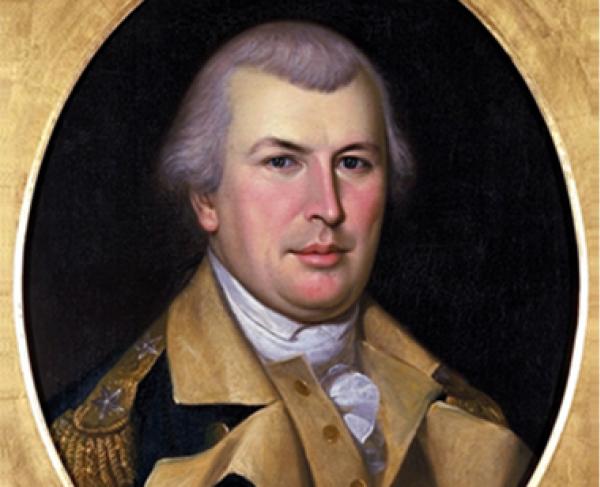
Limping, asthmatic Patriot General Nathanael  Greene


The Battle of Yorktown, fought September 28, 1781 – October 19, 1781, was the Patriot victory that pushed the British to throw in the towel, but 1781 was a year of decisive battles that led up to Yorktown. From a summary of Robert Tonsetic's 1781: The Decisive Year of the Revolutionary War:
The Treaty of Paris in 1783 formally ended the American Revolutionary War, but it was the pivotal campaigns and battles of 1781 that decided the final outcome. 1781 was one of those rare years in American history when the future of the nation hung by a thread, and only the fortitude, determination, and sacrifice of its leaders and citizenry ensured its survival. 
By 1781, America had been at war with the world’s strongest empire for six years with no end in sight. British troops occupied key coastal cities, from New York to Savannah, and the Royal Navy prowled the waters off the American coast. The remaining Patriot forces hunkered down in the hinterland, making battle only at opportunities when British columns ventured near. 
But after several harsh winters, and the failure of the nascent government to adequately supply the troops, the American army was fast approaching the breaking point. 
The number of Continental soldiers had shrunk to less than 10,000, and the three-year enlistments of many of those remaining were about to expire. 
Mutinies began to emerge in George Washington’s ranks, and it was only the arrival of French troops that provided a ray of hope for the American cause. 
In a shift of strategy given the stalemate between New York and Philadelphia, the British began to prioritize the south. After shattering the American army under Horatio Gates at Camden, South Carolina, the British army under Lord Cornwallis appeared unstoppable, and was poised to regain the Carolinas, Georgia, and Virginia for the Crown. 
However, when General Nathanael Greene arrived to take command of Patriot forces in the south, he was able to gradually turn the tables. By dividing his own forces, he forced the British to divide theirs, dissipating their juggernaut and forcing Cornwallis to confront a veritable hydra of resistance.
1781 was a year of battles, as the Patriot Morgan defeated the notorious Tarleton and his Loyal legion at Cowpens. Then Greene suffered defeat at Guilford Courthouse, only to rally his forces and continue to fight on, assisted by such luminaries as Francis Marion, the “Swamp Fox,” and “Light Horse Harry” Lee. 
While luring Cornwallis north, Greene was able to gather new strength and launch a counterattack, until it was Cornwallis who felt compelled to seek succor in Virginia. He marched his main army to Yorktown on the Peninsula, upon which the French fleet, the British fleet, Greene, Washington, and the French army under Rochambeau all converged. 
On October 19, 1781, Cornwallis surrendered his weary and bloodied army.
[...]
In this book, Robert Tonsetic provides a detailed analysis of the key battles and campaigns of 1781, supported by numerous eyewitness accounts from privates to generals in the American, French, and British armies. He also describes the diplomatic efforts underway in Europe during 1781, as well as the Continental Congress’s actions to resolve the immense financial, supply, and personnel problems involved in maintaining an effective fighting army in the field. 
[...]
With its focus on the climactic year of the war, 1781 is a valuable addition to the literature on the American Revolution, providing readers with a clearer understanding of how America, just barely, with fortitude and courage, retrieved its independence in the face of great odds.
Here, Robert Tonsetic along with American radio show host John Batchelor picks up the story with Rochambeau's fateful meeting with Washington. If you're not very knowledgeable about the American Revolutionary War, listen and learn. 

*******  

I'm so glad those Awful White Men overthrew the British overlords

The jawdropper is that it only took them seven years to do it. It was touch-and-go during those years, and it can be argued that without help from the French, it might have taken them much longer.  But they had something most people in British-ruled India and the Africans living under British rule didn't have. Those men had the will to be independent, and to hell with fellow American colonists who wanted to keep on living under the rule of a monarch. 
   
Happy Independence Day, America! 

*********

Friday, July 3

Three entries at Sputnik's Photo Gallery for week of 6/27 - 7/3


© AP PHOTO / GYORGY VARGA / MTI.
The photograph was taken in Nagykanizsa, Hungary but I think it well conveys the mood in many societies during this fraught time, including America's. The picture is even more spectacular full size; it can be viewed at the Sputnik site.

But just to keep a little context, here are two additional entries in the picture gallery. As Sputnik remarks, life goes on....


© SPUTNIK / KONSTANTIN MIHALCHEVSKIY
"A young woman in a lavender field in Crimea. Lavender plantations occupy more than 120 hectares in the Bakhchisarai district near the village of Turgenevka."


© AFP 2020 / PRAKASH MATHEMA
"A woman smiles in a rice paddy field during 'National Paddy Day,' which marked the start of the annual rice planting season, in Tokha village on the outskirts of Kathmandu on 29 June 2020. Traditional farming songs and laughter echoed in the air as farmers waded into waterlogged fields to sow green paddy."

********

Top Two T-Shirt Messages in 2021

#2 Message: I SURVIVED 2020

#1 Message: shut up

*********

Thursday, July 2

Scanning city sewers for early signs of a disease outbreak

This is an idea whose time has come; although it's not completely new it's being taken up to a new level, prodded on by the Covid pandemic, which blindsided societies around the world. It's also a very complicated idea to put into practice and will require a lot of problem solving to be successful, as the report explains. It looks as if New York City will serve as the pilot project.  

Great journalism from The Wall Street Journal -- and accompanying photographs, posted at the WSJ site, convey something of the size and complexity of big-city sewage systems.  

Analysis of wastewater could serve as an early detection system and get ahead of outbreaks
By Melanie Grayce West | Photographs by José A. Alvarado Jr. for The Wall Street Journal
July 1, 2020 4:10 pm ET
The Wall Street Journal

Wednesday, July 1

What a cold fury looks like


Humans have become so socialized that rarely do our facial expressions fully reveal primitive complex emotions when we're dealing with each other.  Yet we can often find in the rest of the animal kingdom true portraits of our feelings and especially among dogs who live closely with humans. 

The Husky in the above screenshot from a video is conveying to his master that he is beside himself with fury because of the trammeling of his dignity at the veterinarian's office.  And in another blow his master is laughing at his fury in an effort to jolly him along. But even the attempt and the "I'm so, so sorry, baby" from the master was adding insult to injured pride.

I think we can all remember having been in something like that dog's situation in relation to a parent, if we can recall far back enough in our childhood. It's clear what the Husky wanted was to see tears of guilt. That wasn't going to happen because dogs who live in human families do have to get treated on occasion by veterinarians and sometimes wear large, uncomfortable, ridiculous-looking floppy plastic cone collars to prevent them from biting at an infection on their back and licking away medication used to treat it. 

The topper is that the Husky sensed all this. He knew the master was doing this for his own good. That's why he didn't snap and growl.  He also knew there wasn't a damn thing he could do about the collar. 

All he could do was attempt to solicit some indication of guilt and thus, the refusal to be jollied along, to change his expression of cold fury. The question I find fascinating is whether the Husky had enough self-awareness to know just what his expression conveyed. Certainly seems so. 

Anyhow, the incident is a great thumbnail sketch of the nature of complex emotions and how they're conveyed amongst mammals. 

Here's the video at Sputnik.

********

How Wei Ying Luo dealt with slanderers. Russian government take notes.

Watch from the 27:25 minute mark. (Click on YouTube's "CC" to get English translation if English text doesn't show immediately at bottom of screen. And watching on YouTube's full screen enlarges the text.)  


Saturday, June 27

"Covid-19 was in Spanish sewage as early as MARCH 2019, study claims"

June 26, 2020 - 23:23
RT

Traces of the novel coronavirus have been discovered in Barcelona sewage water months before the first case of the dreaded disease was reported in China, claims a new study by a group of Spanish researchers.

Scientists with the Enteric Virus Group at the University of Barcelona detected the presence of the virus in frozen samples of the city’s wastewater collected as early as March 12, 2019. The group, led by Rosa Maria Pintó and Albert Bosch, was exploring the potential of wastewater analysis in early warning systems and the prevention of future Covid-19 outbreaks when it made the surprise discovery.

Initially, the team found the virus in samples dated January 15, 2020 – some 41 days before the first confirmed case of Covid-19 in Spain. They decided to check earlier samples, taken between January 2018 and December 2019, and all proved negative “except for the one from March 12, 2019, in which the SARS-CoV-2 levels were very low but were clearly positive,” the team said in a statement, using the official name of the virus.

The researchers came to the conclusion that the virus might have spread around the world much earlier than initially thought.

“Barcelona receives many visitors for tourist or professional reasons,” said Borsch. “It is more than likely that a similar situation has occurred in other parts of the world.”

The group assumed that some early cases of Covid-19 might have been mistaken for a severe flu. While the study published in the medRxiv repository has not been peer-reviewed so far, the revelation was extensively covered by the Spanish media, such as the El Mundo daily.

The virus has spread almost all over the world, infecting more than 9 million people and claiming almost 500,000 lives. Scientists have hypothesized that it originated at a wet market in the central Chinese city of Wuhan in December 2019.

The first confirmed European case of the coronavirus was recorded in France in January 2020. Various studies that have appeared since have challenged that, however. Italian research also focused on sewage water analysis said that traces of the virus were found in Milan and Turin samples dating back to mid-December 2019.

[END REPORT]

********

Friday, June 26

India increases troop deployment to contested border

I don't know whether the Indian press has reported the numbers.  


India and China deployed in 'large numbers' in border showdown: foreign ministry
June 26, 2020
AFP via Yahoo News


New Delhi (AFP) - India acknowledged for the first time Thursday that it has matched China in massing troops at their contested Himalayan border region after a deadly clash this month.
But India's foreign ministry accused China of causing the tensions by starting military deployments, and warned relations between the world's two most populous nations could be undermined if the standoff continues.
The neighbours have blamed each other for a June 15 battle in the Ladakh region in which 20 Indian soldiers were killed while China suffered an unknown number of casualties.
While each has said it wants to de-escalate the territorial showdown, India's foreign ministry spokesman Anurag Srivastava said "both sides remain deployed in large numbers in the region, while military and diplomatic contacts are continuing".
Srivastava said "Chinese actions" on the unofficial border, known as the Line of Actual Control (LAC), led to this month's deadly fight with rocks and batons. No shots were fired.
"At the heart of the matter is that since early May, the Chinese side has been amassing a large contingent of troops and armaments along the LAC," the spokesman charged.
He added that China had obstructed India's patrols in contravention of accords made to avoid skirmishes between their armies, who fought a border war in 1962 and have regularly clashed since.
Srivastava said Chinese forces had built "structures" on the Indian side of their demarcation line in the Galwan Valley in Ladakh where the high-altitude battle was fought.
"While there have been occasional departures in the past, the conduct of Chinese forces this year has been in complete disregard of all mutually agreed norms," the spokesman said.
India had "to undertake counter deployments" because of the Chinese buildup, he said.
[...]
********