Translate

Monday, April 4

Ko Sira: The road to the river ends in unsustainable mass migrations without more intelligent ways to stay in place

The people in the United States, France, Britain, Saudi Arabia, UAE, Qatar and Turkey who set out to destroy Syria are not only the worst examples of humanity; they are also so far behind the realities of the present era they're almost primitives except for their sophistication at protecting their positions in government. 

But the Russian government under the leadership of Vladimir Putin has been working toward creating a sustainable model of society, one that takes the present era into account. If this is news to you, it's been hidden by a wall of anti-Russian propaganda. The model could be called "Stay in Place."  

In 2007 the Israeli-American counterterrorism specialist Youssef Bodansky strove to explain the early stage of the model in a book that was mostly about Chechyna and the terrorist threat from that region. Yet with this model the Russians were converging with a fledgling movement among disaster-relief experts and humanitarian workers who mobilize to help victims of natural and manmade disasters stay in place rather than flee their home regions.

(The movement and the model are in evidence in Russia's military strategy in Syria. So for readers who thought it was hyperbole when I wrote that civilization would stand or fall in Syria, I was simply referring to what's behind the propaganda wall.)     

To get you in the ballpark, which is by no means limited to the situation in the world's poorest countries, here are the opening passages from IRIN's April 2012 report (also available in French) Beyond the drought - “Families will disappear”:
Kayes, Mali
“It was the drought that made people move away from here,” Ousmane Touré said in Kayes, 450km northwest of Bamako, the capital of Mali, and a 10-hour bus ride across the scorched scrubland of the western Sahel.
“There had been a tradition of emigration, but it was when the harvests failed in the 1970s that we saw a real surge in emigration. There was simply not enough to eat, so people took off for France, Germany and the United States. They knew it was only the way of feeding their families back home in Kayes. The same thing is happening this year.”
Touré heads the Association of Returning Migrants of Kayes (AMRK), a welfare organization that tries to provide short-term shelter and counselling to people coming back to this part of the country. The returnees, particularly those from the ethnic Soninké community, which spreads across Mali, Senegal, Mauritania, Gambia and Guinea-Bissau, have played a major role in developing western Mali through their remittances and other cash transfers, giving it a stronger identity and economic base. Many of them are now deportees who have fallen foul of immigration restrictions in France and other countries.
“The emigrants have been well-organized and have always ensured money gets channelled back, building health centres, schools, even roads,” said Touré, but the economic crisis in Europe and tighter immigration controls are having a serious knock-on effect, and impoverished villages can no longer count on the same level of support."
As we now know the migrations from Mali in 2012 were soon to run into mass migrations from several other parts of the world, and the looming threat is that these are unsustainable in the West as they continue to grow.

Fast forward to an April 2015 Reuters report, Drought, expanding deserts and 'food for jihad' drive Mali's conflict. Just as the West has long used food aid to help promote its views, so the Salafists are aiming their message at local rebellions and tribal leaders by delivering food aid to regions that fall between the cracks of increasingly beleaguered Western and UN-based food delivery programs.

The bottom line for these competing world views and the food aid that accompanies them was spelled out in the Reuters report, written by Chris Arsenault:
Mali's average rainfall has dropped by 30 percent since 1998 with droughts becoming longer and more frequent, according to a 2013 study by the U.S. army's Strategic Studies Institute.
As a consequence, hunger is a chronic problem in the West African country with more than 1.8 million people, including 660,000 children, in need of food aid.
But the situation is worse in the north, which was briefly seized in 2012 by Tuareg separatists allied with Islamic militants until a French-led military operation scattered them.
Here, some 270,000 people face starvation, according to figures from the U.N. Food and Agriculture Organization (FAO).
EXPANDING DESERT
For generations, people from Menaka have wandered the land with their cows and goats in search of water and grass for grazing. Now, even this is under threat, Majga said.
The Sahara desert is expanding southward at a rate of 48 kms (30 miles) a year, forcing whole communities to migrate and pushing them on to land occupied by other groups, researchers said in a 2011 study.
Herders from other regions, and even neighboring countries such as Algeria and Niger, are moving onto territory that Majga's mostly Tuareg community uses for grazing.
"This will destroy the land even more," he said, fearing inter-communal conflicts.
Experts have long warned of the risk that climate change would worsen conflict in many of the world's poorest regions as different groups struggling to cope with poor rains and growing desertification take up arms to fight over scarce resources.
Last year, the Brookings Institute published a study showing that the frequency of cross-border violence grows by four percent, while inter group violence - the kind seen in Mali - rises 14 percent for each percentage change in average temperature and rainfall.
WARNING SIGNS
Pittsburg State University professor Steve Harmon said water shortages linked to global warming is one of the factors fuelling the latest Tuareg revolt in a country that has had four rebellions since winning independence from France in 1960.
"The droughts of the 1970s and 1980s in the Sahel were kind of the canary in the coal mine for climate change (causing violence)," Harmon said in an interview.
The droughts decimated Tuareg animal herds, the main source of wealth and sustenance for the nomadic community.
After losing their livelihoods as the climate became more erratic, many Tuareg fled to neighboring Libya, often serving in the security forces of ousted leader Muammar Gaddafi.
Following Gaddafi's death in 2011, many Tuareg returned home and launched their latest uprising.
"The current crisis ... coincided with a period of drought and famine," Dona Stewart, a former U.S. military analyst, said in an interview.
"Environmental issues certainly can exacerbate the economic and political drivers of conflict," she said, adding that it was impossible to draw a direct causal link between climate change and ongoing violence.
FOOD IN EXCHANGE FOR JIHAD
The links between climate change, violence and basic human needs are not lost on Malian government officials.
"In the north there is such poverty, the environment is so tough, that when the jihadists come they find it easy to get followers," said Paul Coulibaly, a senior adviser to Mali's agriculture ministry, said in an interview in his air conditioned office in Bamako.
"Even if (fighters) don't bring money -- just food -- they will find allies if they can feed people," Coulibaly said.
[...]
Chief Majga, however, does not believe the government really understands the problems his community face. Echoing one of the major grievances of the Tuareg separatists, he said the Bamako government had neglected the region and was responsible for its poverty.
"The government hasn't done anything," Majga said.
Officials back in the capital said action was being taken to address some of the problems caused by climate change, pointing to new irrigation efforts and other plans to offset a warming planet.
The government didn't do anything for years because there was no pressure on it to take action. Periodic mass migrations from Mali to richer countries coupled with the remittances system made it easy for the government to stave off critical reforms. It was only when the hopelessly outdated system crashed from over-use that officials began to wake up -- and in many cases, as in Mali, at the literal point of a gun.  

Multiply Mali's government by about 100 others that have been doing the same -- depending on migrations and remittances; add governments overwhelmed by immigrants and strains on their own nations' resources, and there you have an accurate portrait of humanity as it is today.


Against this is a poorly-understood new model of society that is still being worked out in ad hoc fashion.


All this is a far cry from Malian singer Oumou Sangaré's delightful Ko Sira ("Road to the River"). The 1993 video of the song (unfortunately no longer available at YouTube) shows Oumou and other women in a lush region of rural Mali singing as they take their laundry to a river to wash it. That was the reality in that part of the world for many thousands of years. For many Malians, this is the reality today:

(top photo from IRIN, bottom one from the Reuters report)


"We didn’t have droughts like we get now"

I'll give the last words to IRIN:


... The events in the capital and the north have overshadowed the food crisis in the west. “A lot of things have been put on standby,” said Abdoulaye Samoura, advocacy officer for NGO Oxfam. “There have been serious delays in getting food distributed.” The dramatic price hikes at local markets in January and February have eased off, but there is no reason for complacency.
“What do you do when there is no food and you have to take care of five, 10, 20 people?” Touré asked. The answer is an exodus of men to Bamako, or across the border into Senegal, or to the gold-mining areas 75km to the south.

Mariam Cissoko, who heads the women’s section of the Association des Organisations Professionnelles Paysannes - Association of Professional Peasant Farmers (AOPP) - in Kayes, confirms that 2012 has been markedly worse. “It rained for only month of the usual three (in 2011) and that has meant drought and everything that comes with it,” she said.

“For us, the Bambara people, we don’t have the same tradition of emigration as the Soninké. We are agro-pastoralists. If you work the land, you will also have some livestock. But there is a strong spirit of solidarity here. In normal times, if you have something in reserve, you will give to those who don’t. But times like these, people just don’t have anything to spare.”

The priorities are stark. “Feed us and feed our animals,” stressed Cissoko. “If NGOs come and talk to us about education, that is all well and good, but we need food first. Without that, everything falls to pieces. People will get sick. Children won’t go to school. Men may be able to take off and look for opportunities elsewhere, but women and children are stuck where they are.”
Market gardening is increasingly important to boost food security

Kayes has been described as the second hottest place in Africa after Djibouti. “I grew up here and I remember an abundance of corn. We didn’t have droughts like we get now,” Cissoko told IRIN. “In the hottest months, the temperature normally goes to 42 or 43 degrees Celsius, but last year it was 47 or 48 at times, in the shade. The desert is advancing and the climatic changes are here for everyone to see. It has all come progressively.”

Food aid from the UN World Food Programme (WFP) and others may ease the problem, but Cissoko says rural communities in the Kayes region are exhausted by the cycle of drought and dependency. They need long-term practical help as they confront shrinking pasture and ongoing food deficits.

“We need proper cereal banks in villages; we need irrigation systems that protect agriculture; we need a credit system that can work, where people can afford the interest rates,” she told IRIN.

Kayes town lies on the banks of the Senegal River. In stark contrast to the dominating barrenness of the western Sahel, the riverbanks are studded with neatly tended plots yielding tomatoes, cucumbers, onions and other crops. This is all part of the maraîchage, or market gardening, that provides women in particular with a livelihood. “When I was a child, people said: ‘You will never get to plant fruit and vegetables here,’” but they were wrong. That was forty years ago. It began timidly, but the gardening has really picked up.”

But Cissoko acknowledges that cereal production is critical, and Ousmane Touré is equally blunt in demanding that the state and its international partners step up their efforts to help Kayes cope with the food deficits and the devastating drought. “What do you do when there is no food?” he asked. “People will not stay here. Families will disappear.”

cs/aj/he
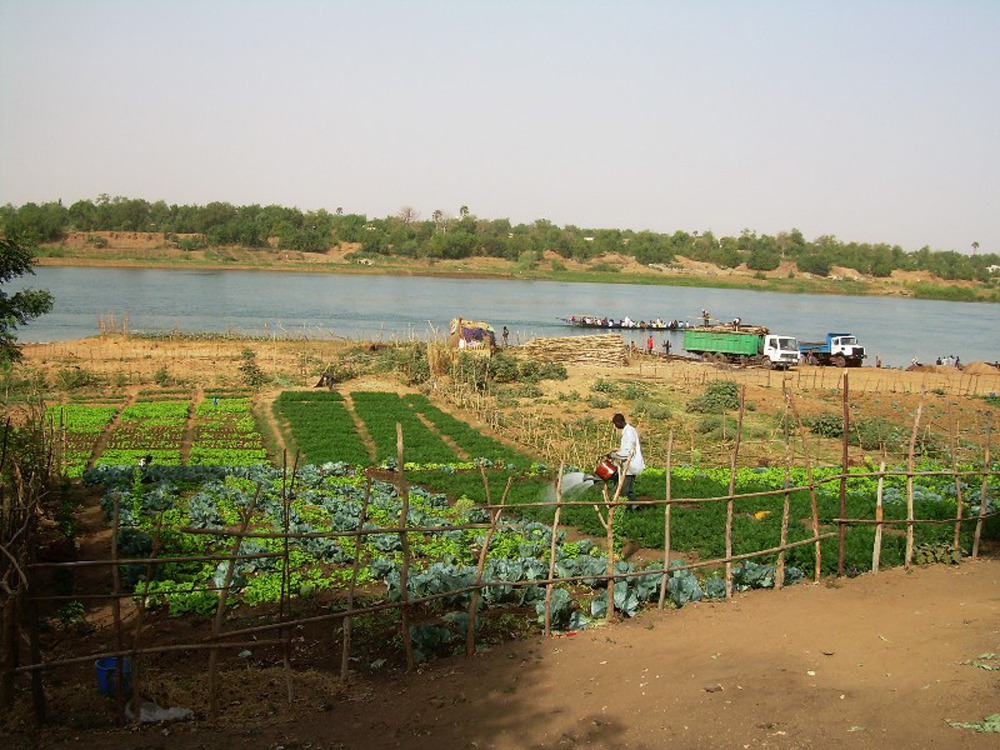

Photo of riverbank garden: Chris Simpson for IRIN

*********

Sunday, April 3

Sighing

Regime loyal Mufti Ahmad Hassoun has left & arrived in with his entire family

He is back in Damascus today. Thank you for the fiction.

 
not only that but he's giving a live interview from Damascus on al mayadeen tomorrow. Lol

Saturday, April 2

China in Syria and other Middle Eastern countries

$200bn is up for grabs in reconstruction projects in Syria, although companies in nations that conspired to destroy Syria, including the United States, will be excluded from the bonanza if Assad remains in power. He's already named China, Iran and Russia as three countries that can expect to profit from contracts. Here, SCMP looks at China's approach to Syria.

China’s appointment of Syria envoy to boost involvement in Middle East and protect regional interests, say analysts
By Nectar Gan
April 3, 2015
South China Morning Post

China’s appointment of a special envoy to help mediate in the conflict in Syria is aimed at increasing the nation’s diplomatic involvement in the Middle East, boosting its global image and protecting its expanding economic and security interests in the region, according to analysts.

The appointment last week of Xie Xiaoyan, a career diplomat who has served as ambassador to Iran, as China’s first special envoy for Syria shows Beijing’s growing involvement in the Middle East, following President Xi Jinping’s high-profile visit to the region in January.

The appointment of a Syria envoy was above all else symbolic, demonstrating China’s determination to play a role in talks to end the conflict, according to Michael Singh, managing director at the Washington Institute for Near East Policy.

“Syria is arguably the most important issue in the Middle East right now, drawing in all of the key regional players as well as outside powers such as Russia, the EU and the US who all see themselves as having a vital stake in the resolution,” said Singh, a former senior director for Middle East affairs at the US National Security Council. “China cannot afford to be absent from the deliberations.”

China appoints first special envoy for Syrian crisis

A partial ceasefire brokered by Russia and the United States in late February has largely held, with the Syrian government reaping a series of recent military gains.

China, along with Russia, vetoed four resolutions at the United Nations Security Council on Syria until one proposing support for international efforts to seek a political solution to the crisis was finally approved last December.

Xiao Xian, head of Middle East studies at Yunnan University, said China should get more involved in resolving the crisis especially now that the situation in Syria was becoming clearer.

“In my view, China should have participated more a long time ago. If we don’t do it now, it will be too late,” he said.

He urged Beijing to engage more in peace talks, post-war reconstruction and discussions over the refugee crisis in keeping with its image as a “responsible great power”.

“Other countries in the Middle East, such as Iran, Saudi Arabia and Turkey all wish China to exert more influence, to strike a balance from powers like the US and Russia ... but it seems like China has not met their expectations,” he said.

It is not only image and prestige that China wants to bolster through more active diplomacy in Syria, according to Singh. More importantly, it is aimed at ensuring China’s interests in the region are protected or advanced, he said.

“China has been expanding its diplomatic involvement in the Middle East for a number of years in lockstep with the expansion of its economic and security interests there,” he said.

China backs ‘transition’ in Syria, opposes intervention

Trade between China and the Middle East soared to USD340 billion in 2014, according to Chinese government data.

The number of Chinese workers in the region has also soared and 52 per cent of China’s oil imports now come from the region.

“These developments have been packaged as elements of Xi Jinping’s ‘One Belt, One Road’ initiatives, but in reality they have been in the works for some time,” said Singh. “China has largely abandoned its former standoffish approach for one which is growing more active every year.”

China played a key role last year in brokering the Iran nuclear deal, aimed at curbing Tehran’s nuclear programme in return for the easing of international sanctions.

Robert Bianchi at the Middle East Studies Institute at Shanghai International Studies University, said increased influence in the region would strengthen China in dealing with other great powers anywhere where their spheres of influence overlap or collide.

“China’s leaders want as many bargaining chips as possible to trade across the vast continents and oceans where Chinese commerce and security are facing greater risks,” he said.

Li Guofu, director of Middle East studies at the China Institute of International Studies, said Beijing was in a strong position to mediate in Syria.

“Given that the United States, Russia and neighbouring countries have opposing stands on relevant issues, China should search for a breakthrough amid these opposing views,” he said.

[END REPORT]

BREAKING NEWS: "Syrian Army fighting ISIS inside Qaryatayn"

Posted within about the past hour at AMN: 

The Syrian Arab Army (SAA), backed by the paramilitary National Defense Forces (NDF), has managed to infiltrate into neighborhoods inside the ISIS-held town of Qaryatayn in central Homs. 

Earlier this day the government troops controlled Kharoubi Kabir and Hazm Abyad mountains, in addition to the orchards to the northwest of the Assyrian town; thus encircling ISIS militants from the north and northwest. ISIS stiff defenses almost entirely collapsed thanks to Army’s sweeping offensive and aerial campaign.

According to a military source, the Russian highly efficient helicopters have been deeply engaged in the battle to retake this town, which has been under the terror group’s control since August 2015.

[END REPORT]

Syrians in Damascus celebrate New Year by the 6,766 year-old Syrian calendar


From SANA, April 2
Damascus, Syria- Activities of the Syrian Heritage Festival (AKITO) started Friday in Damascus

Celebrating Akito, which is the oldest celebration written in the Near East history, is an indication that we are living here for more than 6700 years and we are the builders of a civilization that in its history is even deeper than that; Aleppo civilization dates back to more than 12,600 years and Damascus more than 10,000, minister of tourism Bishr Yazgai said. Akito festival is another proof that Syrians are adherent to their land, civilization and roots, the minister added.

The 3-day festival includes a number of social, sport, handicrafts, exhibitions, plastic art and various popular folkloric activities in different locations in Damascus including Takiyaeh Suleimaniya, al-Jala’a sports hall, Tishreen park, Meskiyeha roundabout and Dama Rose hotel.

Syrian singer Reber Waheed celebrated the first day of activities with a number of songs, particularly about Syria in all its languages, which he sang in seven languages. He said that Akito proves that Syrians are highly interested in reviving their heritage and folklore, which represent a challenge to terrorism ...

For her part Mai al-Sileh, Damascus tourism manager, said that the aim of the festival is to shed light on the Syrian heritage and Syria’s role in civilization since Akito represents the ancient Syrian calendar, which dates back to 6766 years ago.


[...]

********

Syrian Christians return from Europe as their towns safe again


The Syrian businessman who's quoted in the following report is jumping the gun just a bit when it comes to the liberation of the ancient Assyrian Christian city of Qaryateyn (which is spelled more than one way in press reports and variously referred to as a town or city). Not quite yet, although by tonight IS could be routed. See these reports from FARS, Syrian Army's Heavy Shelling Pins ISIL Terrorists down in Quaryatayn Battlefront and Syrian Army, Popular Forces Inching Closer to Quaryatayn in Homs Province and this report from Sputnik, Syrian Army Takes Control Over Mountain Range Near Al-Qaryatayn. 

‘Christians Return to Syrian Town’ as Situation Stabilizes
April 2, 2014 - 20:04 GMT
Sputnik 

Residents of the Syrian Christian town Sadad in the province of Homs began returning from Europe after stabilization of the situation in their country due to the actions of the Russian air force according to the head of the city of Sadad, Suleiman Al-Khalil.

“Christians who left Syria for Europe began to return to Sadad, as well as to other cities. People believed that the operation of the Russian air force was successful and agreement on the ceasefire is maintained, with peaceful life returning to the country, this is obvious,” Al-Khalil said.

During the crisis in Syria, from the city of Sadad, which has a population of 12 thousand people, around 900 residents left right away. Over the past three months, around ten percent of the refugees have returned. In the near future, the city authorities are ready to take about three hundred inhabitants.

“After the liberation of Palmyra and the surrounding areas including the Christian town of Qaryateyn I decided to restore my poultry farm (which is the largest in Sadad). The city has obtained license for re-opening of three other factories. Everyone is talking about stability and security,” local businessman Mufid al-Sith from Sadad said.

The city of Sadad has both strategic and religious significance. The settlement is located just 14 kilometers from the main highway of Damascus-Homs.

In the northwest of the city on March 16 production of a new oil field started. It will become one of the largest in Syria. Every day, according to the mayor of Sadad, the oil field produces 380,000 cubic meters of natural gas.

[END REPORT]

"Saudi Arabia faces catastrophe as reservoirs run dry"


The following report is almost a year old so I don't know how I missed it at the time but it's good I did because I think I would have just walked away permanantly from the Internet if I'd seen it last May. What lunatic thought to grow wheat in Saudi Arabia for export? How could people with that much money be that stupid? 

I guess it was the times. Trying to be modern, to diversify from oil. But by growing wheat on sand dunes -- and using the flood irrigation method to water it? Or is it just that it seems insane only in retrospect because of what we know today about water issues? It was another world in the 1980s. 

Then what is the excuse today? Saudi Arabian dairy buys 14,000 acres in California to take advantage of U.S. water laws; Associated Press, March 29, 2016.

One question for the Saudi former official quoted below: Does he still believe that Saudi Arabia has as much as 30 years before catastrophe strikes the country?   

Saudi Arabia "faces catastrophe" as reservoirs run dry
By Khaled al-Shayea
The New Arab
May 1, 2015

A former Saudi government official has given warning that the country faces a drought and called for an end to the use of precious water reserves on unsustainable projects.

The former undersecretary of the Saudi Arabian ministry of agriculture, Ali al-Takhees, said the use use of non-renewable groundwater on economically unviable agricultural projects would end in disaster.

"Saudi Arabia is facing a catastrophe if agricultural practices don't change. The remaining groundwater needs to be preserved," he said.

Groundwater reserves are being depleted at an alarming rate. About 40 percent of water wasted is groundwater. Takhees said the kingdom would experience a major drought in 30 years if practices did not change.

The government has banned wheat farming; however, hay continues to be grown for animal fodder, and olive trees and date palms all use large amounts of groundwater.

"We also need to adopt drip irrigation methods rather than using flood irrigation," Thakhees explained.

Although the kingdom has no rivers, Saudis use more water per person than water-rich European countries.

Figures released by Abdullah bin Abdul Rahman al-Hossein, the minister of water and electricity, show that an average of eight million cubic meters were used each day last year. Daily use per person was 265 litres, double the EU average.

Reservoirs in central Saudi Arabia have turned into giant sand pits, and those in the east are facing a similar fate.

Takhees said rainwater was only able to replenish shallow aquifers, and not the deep aquifers that are being emptied.

The Arab Gulf, specifically Saudi Arabia, "suffers from the most complex water crisis in the world, especially as water usage per person is 1,035 cubic meters a year," said Radwan al-Weshah, an international water expert and former director of Unesco's water programme in the Arab region.

Abdullah al-Misnid, a Saudi climate professor, said the water crisis was largely due to the decision in 1983 to grow wheat in the kingdom.

"We wasted fresh water growing subsidised wheat on hot, dry sand dunes, which was later exported for far less than its production price," Misnid said.

This article is an edited translation from our Arabic edition.audi 

[END REPORT]

*********

DROUGHT

April 1, 2016:

1. Chinese dams blamed for exacerbating Southeast Asian drought; 
Associated Press: Much of Southeast Asia is suffering its worst drought in 20 or more years. Tens of millions of people in the region are affected by the low level of the Mekong, a rice bowl-sustaining river system that flows into Laos, Thailand, Cambodia and Vietnam. ... Fingers are mainly pointed at the El Nino climate phenomenon, which produces drier and hotter-than-usual weather globally. But environmentalists and some officials say the situation is worsened by the 10 dams on the Mekong’s mainstream built over the past two decades, at least partly because they reduce rainy-season flooding and trap sediments, making the downstream delta more vulnerable to seawater intrusion.

2. Philippines drought protest leaves at least two farmers dead; The Guardian: The farmers, who have been demanding financial aid and rice during a drought which has lasted for months, said the police fired at them. Police said some of the protesters were armed and fired first.

3. California drought patterns becoming more common; National Science Foundation: The epic drought is far from over. These scientists show that the frequency of atmospheric circulation patterns that worsen drought conditions has increased over the long-term. ... The study focused on the northeastern Pacific Ocean and far western North America.

4. Prolonged drought leads to severe malnutrition in southern Madagascar; AFP: Scavenging for wild fruits has become the norm as hunger continues to bite for most of the population in the southern part of the country. ... The government of Madagascar declared a state of emergency in the region. The UN has drafted a contingency response plan with a budget of $70 million, of which only 9% has been secured so far.

5. In fact: There is a drought in many parts of India. Why hasn’t it been noticed?; The Indian Express: Because this time it's only rural producers feeling the heat, not urban consumers.

6. El Niño is behind a life-threatening drought in the islands of the West Pacific; The Washington Post (March 31): The Marshall Islands, the Federated States of Micronesia and Palau have all declared states of emergency. NOAA predicts that drought conditions will only worsen, with below average rainfall forecast for the next two to three months.  

7.  AFDB pledges half a billion dollars for African drought relief; Reuters: 
The African Development Bank (AfDB) on Friday pledged half a billion dollar relief package to 14 Southern and Eastern African countries most affected by an El Nino-propelled drought. The $549 million package will help an estimated 36 million people needing food assistance as abnormally high temperatures and the worst drought the region has seen in decades scorches staple crops from South Africa to Zimbabwe.

8. Many Central Valley farmers face severe water shortages despite easing drought; The Sacramento Bee:  
  • North state growers to receive 100 percent of federal allocation
  • Many farmers south of Sacramento-San Joaquin Delta to get 5 percent
  • Drought’s effects will hit agriculture hard in much of San Joaquin Valley
The huge disparities in water allocations reflect California’s hodgepodge water rights system, which generally favors farmers north of the Delta. They also reflect the uneven performance of El Niño, which delivered a lot of rain and snow in the Sacramento Valley and northern Sierra but relatively little south of the Delta.

9. From drought, seeds of discontent; The New Mexican: Time and again, drought was the final straw that disrupted complex ancestral Puebloan societies in the Southwest and shifted the cultures, according to a new study. “Those societies took a long time to build and a very short time to collapse,” said Washington State University anthropologist R. Kyle Bocinsky, one of the study’s lead authors. “We think those collapses were tied to slightly worse-than-normal climate challenges that undermined leadership and social consensus.”


Read more here: http://www.sacbee.com/news/state/california/water-and-drought/article69451732.html#storylink=cpy

Read more here: http://www.sacbee.com/news/state/california/water-and-drought/article69451732.html#storylink=cpy
10. Rivers turn to dust as drought bites Somalia; Phys.Org (March 31): Somalia's bread basket has become a dust bowl as the life-giving waters of the mighty Shabelle river run dry amid intense drought in the war-torn country. ..."All the villages in the regions rely on water from the river to survive, there are very few wells here and I don't think life is possible without the flow of water of the Shabelle River" ...

11. Drought Conditions Expand in the Plains; Big Country (March 31):
After a record dry start to 2016, rainfall during the month of March has been above average in the Big Country. Abilene is now just 1.09 inches below average for the year, with 3.03" so far in 2016. More rain is expected to arrive to the Big Country on Friday.
The Panhandle of Texas hasn't been so lucky. Amarillo has only seen 0.96" so far this year and Lubbock has recorded even less, just 0.59".

Because of the dry start to the year, drought conditions now cover nearly 25% of the state of Texas, according to the US Drought Monitor. Right now, these drought conditions are mainly in the Panhandle and far western portion of the state. This number was at just 5% at the start of 2016.

Texas isn't the only state impacted by the growing drought conditions. Oklahoma was 100% drought free at the begin of 2016 but now is faced with drought conditions covering nearly 60% of the state.

Kansas also was nearly 100% drought free at the beginning of 2016, but now 74% of the state is facing drought conditions.

Dry brush and very high winds are being blamed for the historic Anderson Creek fire in Oklahoma and Kansas that spread explosively last week. That fire has burned over 367,000 acres and is now 95 percent contained.
[END REPORT] 
12. Current Conditions; Global Drought Information System (February 2016 report):
At the end of February 2016, El Nino continues to exert its influence across the earth and is expected to continue at least through spring of 2016. February was the warmest February on record (137 year history) for the earth, according to NOAA and NASA. In Europe, drought conditions further intensified around the Mediterranean Sea this month.
In Asia, drought remains entrenched across the Indian sub-continent, around Mongolia, and in the West.
Tree ring research in the Middle East indicate the present drought, beginning in 1998, is likely the most severe in the last 900 years, according to NASA.
In Vietnam, the Mekong River is at its lowest level since 1926.
In Africa, short-term drought intensified again this month in the northern portion of the continent, around the Mediterranean, and remains intense in the South. In Zambia and Zimbabwe, Victoria Falls are being affected by the Zambezi River flowing at a 30-year low. If the drought continues, downstream hydroelectric power is expected to be reduced or stopped in the next six months.
In Morocco, drought has reduced the wheat harvest by half
In North America, drought remains entrenched in the higher latitudes, while the Southwestern U.S. experienced some drying. In the US Pacific Northwest, an ample snowpack has improved, and is expected to further improve, drought conditions there. I
In South America, drought remains in the northern part of the continent while the South saw much-needed rain again this month. In Colombia, farmers from the Bolivar Province have abandoned their land after drought ruined their crops.
In Oceana, drought continues in Southern Australia and Papua New Guinea. Australian beef sales to the U.S. have increased over the past three years, while drought in the U.S. Southwest reduced livestock there.
[END REPORT]
********


Friday, April 1

April Fool: "Oil Falls As Saudi Arabia Questions Freeze Deal"

After all that huffing and puffing, the Saudis are re-thinking. More April 1 foolery from Bloomberg's publication of a marathon March 30 interview with Deputy Crown Prince Mohammed bin Salman, who doffed his headdress for the five-hour gab fest, which thankfully included dinner. Saudi Arabia Plans $2 Trillion Megafund for Post-Oil Era: Deputy Crown Prince.

If only there was a way to convert hot air into energy output. What is not hot air are the following passages from the Bloomberg article (which is accompanied by a video of the lead interviewer's discussion about the interview):
An International Monetary Fund study in 2014 noted there were “many examples of failure” by countries trying to reduce reliance on energy production and few successes. Gulf Arab monarchies may have missed their best chance when oil prices were above $100 a barrel rather than about $40 now.
“It is clear Saudi Arabia needs to reform, diversify, and re-energize its economy, but this will involve more than just increasing investments in non-oil industries,” said Paul Sullivan, a professor of security studies at Georgetown University in Washington. “One cannot order economic reforms like a multiple course dinner.”
Taking Control
Prince Mohammed has consolidated more power than anyone in his position since the founding of the kingdom in 1932. His attempt to shake up the economy comes against the backdrop of mounting domestic security threats and regional turmoil, with the Sunni-ruled kingdom fighting a war in Yemen against Shiite rebels it says are backed by Iran.
As Defense Minister, Prince Mohammed leads the military effort. He also oversees ministries including finance, oil and the economy through the Council for Economic and Development Affairs. The council, which was established after his father became king, also controls the Public Investment Fund.
We're seeing this same consolidation of power in one man in China and Turkey. Might be the same for Egypt as well.  

********  

Are Turkey and Al Saud trying to further destabilize Lebanon? UPDATED April 6

UPDATE

According to this March 3 report from Sputnik, Greece's Coast Guard intercepted the ship that Col. Neriah is referring to (see below) and that it had six containers, two of which were loaded "with weapons and ammunition."  Two, not six as Neriah claimed.  

In addition, while he termed the intercept a coincidence, he also spoke of 'intelligence' bringing the ship to the attention of Greek naval authorities.  So it's not clear to me whether this was a complete accident, as I wrote originally, or "coincidence" as Neriah termed it -- in particular because the Sputnik report specifically named the Coast Guard intercepting the ship.  

He also mentioned the weapons shipment is "one of the things that Turkey has been doing over the past four years."  So within the grand scheme of Turkey's weapons shipments -- at least to Syria -- two versus six containers isn't a big mistake. And it's possible that Sputnik got the number of weapons/ammo containers wrong.  

I don't think any of this overturns Neriah's reasonable concern that Turkey is now trying to destabilize Lebanon. But I did want to mention the discrepancy about the containers.  

****   

The John Batchelor show featured reports last night that provided updates on hotspots in the vast landscape of conflicts in the Middle East -- Jordan, Turkey, Gaza-West Bank, Lebanon, Syria, Iran. But here I want to focus on his discussion with Israeli Col. Jacques Neriah, PhD at the Jerusalem Center in Israel about Turkey and Neriah's conjecture that Erdogan is trying to make so much mess in Lebanon that Hezbollah fighters in Syria will be forced to return to to defend the homeland. 

This question first surfaced when (by pure accident) Greek port inspectors discovered six shipping containers of weapons sent from Turkey to Lebanon via Tripoli. 

Now who would they be shipping those weapons to?  That's what Col Neriah wanted to know. Certainly not Hezbollah. But the Saudis, who also want Hezbollah out of Syria, have a large footprint in Lebanon and control some (if not all) of the takfiri groups, as FARS would call them, in the country.   

The discussion starts at the 10:15 mark on the podcast. Here is Neriah's March 27 report for the Jerusalem Center, on which the discussion is based.

This is bad news if Neriah is right but even if his concerns are overblown it is by now painfully clear that Turkey is a very bad actor in its own neighborhood and that it has greatly abused its membership in NATO. The question is what NATO is going to do about this.  

Just how bad the situation is with Turkey was outlined last night on the Batchelor show by Gregory Copley. So that's another discussion bound to send people at NATO to the aspirin bottle.

As to what NATO's most powerful members are going to do about Al Saud -- nothing, it seems, except try to sell them more weapons.  

********

Infighting heats up between rival terrorist groups in Syria

As always there's lots of war news from FARS in addition to their daily sitrep. See today's sitrep, Syria in Last 24 Hours: Army, Popular Forces Close to Winning Key Regions in Homs, Hama Provinces. FARS is a great source because Iran and Hezbollah have so many fighters in Syria. But I was struck by these headlines at FARS today:

Syrian Air Force Destroys Al-Nusra Front [al Qaeda] Military Positions in Eastern Idlib
ISIL Executes 10 Al-Nusra Front Rival Militants after Infighting in Damascus Countryside 
Heavy Infighting Intensifies between Rival Terrorist Groups in Damascus Countryside 
Infighting between Rival Terrorist Groups in Damascus Countryside Leaves 18 Dead 
Heavy Infighting Rages among Terrorists in Damascus Countryside

There's going to be even more infighting as the Syrian Army continues to shut down supply routes for al Qaeda and Islamic State and the rest of the alphabet soup of jihadist fighters.  So it might not even be necessary to completely seal off all the border crossings because if they can't move the supplies further into Syria, the bad guys are toast.  

This wouldn't prevent the Axis of Evil -- US, Al Saud, France, Britain, Turkey, etc. etc. -- from making large-scale airlifts of weapons into Syria but I have a feeling the Russian air force is waiting for them to try.  

From the second report on the FARS list:

TEHRAN (FNA)- Field sources reported intense infighting between the Free Syrian Army (FSA) and Al-Nusra Front [al Qaeda] on one side and the ISIL-affiliated Brigade terrorist groups on the other side in the Western parts of Dara'a.

During the clashes, the FSA and the Al-Nusra Front managed to take full control of the Northern part of the town of Tassil in Western Dara'a from Lawa Shohada al-Yarmouk and Harakat al-Mosana terrorist groups.

Score of terrorists from both sides were killed and injured during the infighting on Friday.

Internal clashes among the terrorist groups are on the rise after the Syrian army's advances in more militant-held territories and after a recent ceasefire between the government troops and armed opposition factions that excludes the al-Nusra Front, ISIL and Jeish Al-Islam.

Almost the entire range of extremist and terrorist groups are supported by Saudi Arabia and Turkey, with their key commanders and leaders being Saudi nationals. ISIL, Al-Nusra and other extremist groups pursue the same line of ideology exercised and promoted by Saudi Arabia, Wahhabism. Hundreds of Saudi clerics are among the ranks of ISIL and Al-Nusra to mentor the militants.

[...]

Syrian Army methodically cutting off IS supply routes; plus advance on Quraytayn steps up

One by one they're cutting off the routes. No time stamp on the report but I think it was about an hour ago AMN reported Syrian Army cuts ISIL’s main supply route in east Hama, as follows:
One day after repelling the Islamic State of Iraq and the Levant’s (ISIL) large-scale assault on the important town of Sheikh Hilal, the Syrian Arab Army’s 66th Brigade launched their own offensive to cut off the terrorist group’s primary supply route in the eastern countryside of the Hama Governorate.

The Syrian Arab Army’s 66th Brigade – backed by the National Defense Forces (NDF) – began their attack by targeting ISIL’s positions at the village of Abu Hanaya; this would result in a long and bloody battle on Friday as the government forces made a push towards the nearby town of Al-Hardana.

ISIL fought hard, but in the end they were unable to maintain control over the Abu-Hanaya-Hardana Road due to the Syrian Arab Army’s relentless push and the Syrian Arab Air Force’s merciless airstrikes that helped weaken the terrorist group’s defenses and resolve.

With the Abu Hanaya-Hardana Road cut off, ISIL has lost one of its most important supply routes in the east Hama countryside, leaving them in desperate need to counter the Syrian Arab Army’s recent advance before it is too late.

Making matters worse for ISIL in east Hama, the Syrian Arab Army’s 66th Brigade is also pushing southeast towards the terrorist group’s main stronghold at ‘Aqayrbat; if captured by the Syrian Armed Forces, ISIL will be cut off from another important supply route.

[END REPORT]

As to the army's assault on Quraytayn City, for background see my March 30 post Syrian Army coalition storms outskirts of Christian city of Quraytayn.  SouthFront's April 1 video sitrep on Syrian and Iraqi military action includes an update on Quraytayn. From the transcript:
The SAA and its allies continue attempts to liberate the town of Quraytayn. The Syrian government reportedly decided to deploy additional reinforcements to strengthen the 4000-strong military grouping aimed to conduct operations in the area. A new full-scale advance on the town is expected in the nearest future.
This report from FARS today at 5:30 PM (I will assume Iran time) updates the SouthFront report, which was published much earlier today, and goes into detail about the reinforcements and advance on the city:

Syrian Army Preparing for Large-Scale Offensive in Quaryatayn, Reinforcement Arrives

TEHRAN (FNA)- The Syrian army is preparing for massive offensive against the ISIL Takfiri terrorists' positions in the strategic city of Quaryatayn as large reinforcements arrived in the region.

The Syrian army's 4th Mechanized Division sent a large number of its troops and military hardware to Quaryatayn to help the army conduct its military operations there.

The 43rd and 63rd brigades of the 4th Mechanized Division from Damascus have been redeployed to the Eastern part of Qalamoun in order to help liberate Quaryatayn and Mahsa'a from the remaining ISIL terrorists.

The 64th Regiment of the Syrian army's 4th Mechanized Division and Desert Hawk Brigades (Liwaa Suqour Al-Sahra) will also join the 43rd and 63rd brigades in the Eastern Qalamoun to help with winning back more strategic regions in and in the surrounding areas of Quaryatayn.

The 43rd and 63rd brigades are well-known from their successful Qalamoun and Zabadani offensives, which they conducted side-by-side with Hezbollah in the Summer of 2015. The Desert Hawk Brigades already had a number of battalions in Quaryatayn, but they have now increased their units to lead the battle against the ISIL.

Approximately 4,000-4,500 military men of the Syrian army are currently present in East Qalamoun and the number will surely increase in the coming days.

In a relevant development on Thursday, the Syrian army continued pounding the ISIL terrorists' military positions and gathering centers in different parts of Quaryatayn city.

The army units hit hard the ISIL terrorists in Southern, Southwestern and Northern parts of Quaryatayn region in Homs province.

The army's artillery units backed up by Russian and Syrian fighter jets hit the ISIL's fortifications and gathering centers in al-Sukhneh region.

Scores of ISIL terrorists were killed and wounded in the Syrian army's attacks on Thursday.

In a relevant development on Wednesday, the Syrian army and popular forces continued their advances in the Eastern part of Homs province, and seized back two strategic regions near Quaryatayn.

The army units took full control of the Southern Farms and Height 861 in the surrounding area of Quaryatayn.

Scores of militants were killed and wounded in heavy clashes with the Syrian government troops near Quaryatayn.

Also on Tuesday, the Syrian army seized back a strategic height near the town of Quaryatayn.

The army units took full control of Hazm al-Gharbiat height by moving from Jabil mountain towards Hazm al-Awsat mountains in the Western part of Quaryatayn town.

The Syrian army inflicted heavy losses on the ISIL Takfiri terrorists and destroyed their armored vehicle killing all its crew members.

On Monday, the Syrian army and the Lebanese Hezbollah resistance movement started fresh military operations against the terrorists' military positions Quaryatayn town in Homs province, and seized control of a strategic hill in the region in the first phase of the operation.

The army units attacked the terrorists' positions in Quaryatayn.

The Syrian army and resistance forces seized back Mantar al-Ramliya Hill in Taloul al-Soud area in the Western part of Quaryatayn early in the first phase of their massive operations.

The Syrian army started its fresh operations after it cut the terrorists' supply routes to the ancient city of Palmyra which is also located in Eastern Homs.

Meantime, the Syrian army's artillery units heavily pounded the terrorists' positions in Quaryatayn.

[END REPORT]


Watch out for spattering propaganda goo, Part 2

If you haven't seen Part 1, please read it first.

From Foreign Policy magazine, December 23, 2015, Syria's Stalingrad:
Homs, Syria — More than four years of relentless shelling and shooting have ravaged beyond recognition this city, which once served as the symbolic capital of the revolution.
[...]
As far as the government of Syria is concerned, the war in Homs is over. Rebel factions were defeated more than a year ago in the Old City, and the last holdouts, who carried on the revolt from the suburb of al-Waer, signed a cease-fire agreement this month. A few weeks before Christmas, busloads of fighters quit al-Waer for rebel-held villages to the north, under what the Syrian government and the United Nations hailed as a breakthrough cease-fire agreement to bring peace to one of the Syrian war’s most symbolic battlefields.
Gov. Talal al-Barazi, an energetic Assad-supporting Sunni, has been instrumental in pushing the cease-fires in Homs’s Old City and recently in al-Waer district. But almost none of the pro-uprising Sunnis who once filled its center have returned, and at times he seems to be presiding over a graveyard — an epic ruin destined to join Hiroshima, Dresden, and Stalingrad in the historical lexicon of siege and destruction.
[...]
Authorities showcase the reconstruction of Homs to spread a clear message: They intend to regain full control of the country. If they can tame Homs, a Sunni city where the majority of people actively embraced the revolt, they can do it anywhere.
There’s another more menacing message in the Homs settlement, however, as the neighborhoods that wholeheartedly sided with the revolution were entirely destroyed and have been left to collapse after the government’s victory. Almost no Sunnis have been allowed to return. Displaced supporters of the revolt from Homs understand that this is the regime’s second wave of punishment — they might never be allowed to go home.
This is the Homs model from the regime’s perspective: surround and besiege rebel-held areas until the price is so high that any surviving fighters surrender. The destruction left behind serves as a deterrent for others. Supporters of the government say that fear of a repeat of the ravaging of Homs is one major reason why militias around Damascus, like Zahran Alloush’s Army of Islam, have largely kept their indiscriminate shelling of the city center to a minimum.
The rebels, of course, take a different lesson: Assad will annihilate any opposition he can, unless the rebels fight hard and long enough to win, secure an enclave, or, at the very least, force the government to allow safe passage to another rebel-held area. Only force can extract concessions from the state.
[...]
From Voltaire Network, March 4, 2012, The journalist-combatants of Baba Amr:
Member States of NATO and the GCC [Gulf Cooperation Council] were unable to launch a conventional attack against Syria. However, for ten months they have been laying the groundwork by waging a low-intensity war coupled with an economic and media assault. The city of Homs became the symbol of the conflict. The Free "Syrian" Army seized the neighborhoods of Baba Amr and Inchaat and proclaimed an Islamic Emirate that heralds its political program.
With the backing of Russia, still traumatized by her experience with the Islamic Emirate of Ichkeria, and China, eager to see the Syrian government protect its citizens, the Syrian National Army stormed the stronghold on 9 February after all mediation attempts had failed.
Defeated, the Free "Syrian" Army soon entrenched itself in an area of approximately 40 hectares, which was immediately sealed off by loyalist forces; it steadily withered and eventually fell on 1 March.
In retaliation, the remaining armed elements of the Emirate massacred the Christians in the two villages they ripped through on their way to exile in Lebanon.
[...]
As everyone who follows the war news from Syria (or just reads Wikipedia's article) knows, the Free Syrian Army became an umbrella term for scores of anti-Syrian government militias, each of which supported by one or more foreign governments -- Western, Turkish, Sunni Arab.

As for Zahran Alloush, he is famously associated with Al Saud and it's likely his army is supported by the Saudi government.

These points and ones in Voltaire Network's report don't make an appearance in the Foreign Policy article, which was written by the same person, Thanassis Cambanis, whose March 29 article for Foreign Policy The Syrian Revolution Against Al Qaeda I quoted in Part 1. 

To be continued.

Melee at Brookings as Erdogan ignores differences between Washington and Ankara

Such a good boy, Barackie


The staid Washington-based Brookings Institution, the most influential think tank in the world, hasn't seen so much excitement since never before as Erdogan's security detail treated American protestors and journalists the way they do in Turkey.

See the following report for photos and video of the scuffles inside Brookings and just outside the building, as Brookings guards, DC police and even Brookings staff jumped in to protect journalists from Erdogan's thugs.

Photos: Turkish President's Visit To Brookings Turns Violent
BY RACHEL SADON
March 31, 2016 - 2:10 PM EDT
The DCist
Security for Turkey's President Recep Tayyip Erdogan clashed with protesters, journalists, Brookings staff, and D.C. Police this afternoon, as the violence outside the prominent think tank overshadowed his scheduled speech.
 Erdogan is in town for the Nuclear Security Summit, which is causing more traffic chaos than anything else thus far, and he met with Vice President Joe Biden earlier today. He was also due to give a 12:30 p.m. speech at Brookings on "global challenges and Turkey's goals for the year 2023."
Supporters showed up with signs and flags to welcome him, while protesters came out with posters calling the Turkish president a war criminal, among other criticisms.
Although Erdogan's address was being webcast, his security detail tried to bar multiple reporters from the event.
A Wilson Center scholar and Turkish journalist tweeted that Erdogan's guards called her a "PKK whore." Others filmed Brookings staff working to protect journalists as the Turkish personnel tried to kick them out of the building.
Foreign Policy reports that at least one reporter was removed from the site, a second was kicked by a guard, and a third thrown to the sidewalk outside the Brookings Institution. Turkish officials also demanded that police remove the protesters, which they declined to do.
"You're part of the problem, you guys need to control yourselves and let these people protest," a D.C. police officer told one of the Turkish guards, FP's Paul Mcleary reports.
No arrests have been made, according to a D.C. Police spokeswoman.
The National Press Club had even stronger words than the police. From the CBS report on the melee:
In a statement Thursday, NPC President Thomas Burr said the Turkish leader's team "have no right to lay their hands on reporters or protesters or anyone else for that matter, when the people they were apparently roughing up seemed to be merely doing their jobs or exercising the rights they have in this country."
CBS goes on to mention:
In Turkey, Erdogan's government has been cracking down on the press, and earlier this month seized Zaman, the newspaper with the highest circulation in Turkey.
CBS avoids mentioning that Erdogan treated his American hosts like Turks because he has complete contempt for America's President, which frankly President Obama brought on himself.  

********

El Niño falls short of hopes, leaving California still in historic drought

Well, even though it wasn't the "Godzilla" Californians were hoping for, I'd say that without El Niño this year California's water situation would have been catastrophic. However, the most troubling aspect about the latest bad news is that it relates to the snowpack, which fell short of hopes. It could have been much worse but now Californians must look ahead to next year's snowpack and ask whether the new normal will be virtually no snowpack wthout help from El Niño. In that case brown lawns and less flushing of toilets will be laughingly inadequate measures to save California.  

As a California politician noted decades ago, you can't conserve what you don't have. Neither can you shunt from one part of the state or import from other states what is not there.  

So we are down to hope, hope that the weather pattern afflicting California, other Western states and northern Mexico for the past five years isn't evidence of a 'thousand-year' drought cycle.

Doyle Rice
4:42 p.m. EDT March 31, 2016
USA TODAY

A robust El Niño that was supposed to drench California in rain fell short of its promise, leaving nearly 90% of the state stuck in a historic drought, according to the most recent U.S. Drought Monitor.

California's all-important snowpack came in below average this week, state water officials said. This time of year is typically the high point for snowpack. Snow provides about a third of California's water.

El Niño, a climate pattern marked by warmer-than-average ocean water in the central Pacific, affects weather patterns in the U.S., often delivering plentiful rain and snow to the West.

"March came in like a lion here in California, and went a long way toward refilling our dwindling reservoirs and replenishing the snowpack on the Sierra Nevada mountains, which is an important part of the state’s water supply," said Matthew Heberger, a senior research associate at the Pacific Institute, an environmental think tank in Oakland.

"However, the latest snowpack measurements show that it’s still a little below average for this time of the year, so we are not out of the woods yet," Heberger said. "It’s too early to declare an end to the drought, and Californians have to continue conserving water."

Statewide, water content of the mountain snowpack hit 87% of average, theCalifornia Department of Water Resources reported. While better than last year's dismal 5% of average, it's still far from ideal.

Many parts of the state will have fuller reservoirs and more water in their streams, but it's not enough to make up for the effects of previous dry years, said Frank Gehrke, chief of the California Cooperative Snow Surveys Program.

The snowpack this week fell just 3% short of average in the northern Sierra Nevada, but hit only 72% of average in the southern Sierra Nevada, reflecting the “northern” storm track that has been a hallmark of the 2015-16 winter wet season, according to the Drought Monitor.

During the historic drought, now in its fifth year, Californians have been ordered to use at least 20% less water, according to the Associated Press. To comply, many residents have let lawns turn brown and flushed toilets less often.

[END REPORT]