Translate

Wednesday, October 10

Getting around the fact that free-market farming isn't so free, after all

If, as I've contended, there's a global farming crisis that extends even to the United States, why isn't this making headlines in the U.S.? Partly because America's urban-based media giants aren't focused on the crisis. The U.S. Congress then feels free to ignore it in lieu of appealing to the 'urban vote' and suburban vote.

That is why U.S. House of Representatives Speaker Paul Ryan didn't even mention agriculture or food in a press conference ahead of the House passage of its version of the 2018 Farm Bill. He opted instead to promote the bill's role in closing the workskills gap and getting more Americans into the workforce so they could climb the ladder of opportunity.   

Yet political hullabaloo around the Farm Bill hasn't been enough to convey to urbanites that there's a crisis in America's farming industry. From an article at Civil Eats, a food and policy website that this year undertook to inform the public about under-reported issues related to farming:
In the divergent House and Senate versions of the 2018 Farm Bill, SNAP (formerly known as food stamps) cuts in the House version have made endless headlines, but debate over the farm-focused sections of the bill has been relatively quiet—even as the farm crisis has escalated through the summer.
Both versions of the bill contain small provisions to help grain and dairy farmers and the Senate has increased funding for Black farmers and beginning farmers.  But none of these will rein in consolidation or provide real assistance to farmers who are out of options. While there was discussion of alternatives early in the farm bill process, no senators are proposing to overhaul the farm system and a broad grassroots coalition is not forcing such a move.
For a sample of the "endless headlines" see Food stamp fight stalls critical farm bill, published in the Washington, DC based-Washington Examiner, on October 9. 

Although the problems for minority and beginning farmers -- and SNAP recipients -- are serious, the biggest problem is that small-scale farming in America is on its last legs. This is at a time when American proponents of 'Go Big or Get Out' farm consolidation have learned the hard way that Going Big is something every government-backed group of farmers on the planet can do. 

So what we're looking at now is a perfect storm. How bad is it? I've pulled a few passages from the Civil Eats report, although the entire report is valuable:

ITEM 

“I think people would be shocked the extent to which the farmers at their farmers’ market … are in or near poverty.”

ITEM

As early as February 2018, the U.S. Department of Agriculture (USDA) predicted a decline in net farm income to its lowest level since 2002 (adjusted for inflation), with median farm income projected at negative $1,316. For well over a year, worries about a new farm crisis have rippled across rural America. The very term is synonymous with the 1980s, when the bottom dropped out of the agricultural economy, sending thousands of farms into foreclosure and shuttering businesses.


ITEM 

Even as the number of dairy farms shrinks, the milk supply continues to grow as the remaining farms get ever larger. In 1987, half of American dairy farms had 80 cows or fewer; by 2012, that number was 900 cows. In March, Walmart announced plans to open its own bottling plant in Indiana, leading Dean Foods, a major Walmart supplier, to terminate its contracts with over 100 dairy farmers in eight states. 

Processors in Wisconsin and New York have also recently ended farmer contracts. In an interview with Food Business News at the time, Dean Foods CEO Ralph Scozzafava said the company expected to “consolidate our supply chain by a meaningful amount over the next 18 to 24 months.”

That’s just what many farmers fear. Some regions only have one processor; if it terminates a farmer’s contract, the farmers are left with nowhere to sell their milk and few options other than selling off their cows.


ITEM 

With the focus on production and no safety net, smaller farms have sold out and relatively few big farms have expanded. In 2015, about 65,300 farms making over $1 million in gross income accounted for 51 percent of the value of all U.S. agricultural production. At the other end, the nearly 1 million farms making under $10,000 accounted for just 1 percent of production. 

As farms have consolidated and turned to technology to replace human labor, jobs have dried up, rural communities have shrunk, and isolation has grown.

While the big farms have been able to absorb losses and weather ups and downs—at least until recently—the many farmers who have not gotten big or gotten out have struggled day-to-day for decades. Seventy percent of farmers make less than a quarter of their income from farming and only 46 percent have positive net income from their operations.


ITEM

In a much-publicized move earlier this year, dairy cooperative Agri-Mark included suicide hotline information along with farmer milk checks. A Guardian report on U.S. farmer suicides in the U.S. brought the issue further into the spotlight. The report referenced a Centers for Disease Control study whose finding on the rate of farmer suicide has since been retracted, but the picture of rural hardship and depression remains accurate.

****
Fog

There are debates related to the 2018 Farm Bill that are actually about farming. There is the issue of Cotton Growers vs. Urban Farmers: Bitter partisan fight threatens farm bill (Politico). The debate is even more complicated than Politico reports. But the biggie, and the most complex, is the land use debate: Commodity program dispute stalls farm bill. This one even has a WTO angle:
One of the concerns expressed by opponents of tying payments to planted acres was that it could have made it easier for competing countries to claim that the U.S. farm bill was unfairly distorting trade under World Trade Organization rules.
The land use issue is also directly connected to the hideously complicated crisis of chemical fertilizer runoffs on farms, which are poisoning America's water supply.

But stumble around long enough in the fog of debates and it dawns that they boil down to government subsidies: who gets how much of the taxpayer-funded subsidy pie and how each portion of the pie is further divided according to arcane regulations that make winners out of some recipients and losers out of others, depending on how well-financed and energetic their political lobbies. 

Free Market Farming Isn't So Free After All

With the fog lifted one comes face to face with a debt crisis that undergirds the farming crisis -- debts that force farmers to turn to the government for help just to survive in farming. While the American small-scale farmer is theoretically free to pursue profits, he's doing so with government assistance and controls that are the real manager of the farm, and often to the detriment of the individual farmer and the entire farming industry.  

Is There a Way Out For Farmers?

Here I return to the late Thai King Bhumibol Adulyadej's 'New Theory of Agriculture,' which rests on a stepwise approach to free market capitalism that protects the farmer against putting his farm in hock to the bank or government just so he can farm for profit. At a certain step in his majesty's system, debt is spread among what is in essence a farming cooperative.    

Some American small-scale commercial farmers are feeling their way toward the same approach. From the Civil Eats article:
Meanwhile, Jerry Pennick, of the Federation of Southern Cooperatives, isn’t going to wait around for a government that has so long disenfranchised his community. “While holding the government accountable, we need to do things that will sustain us without the government,” he points out. Pooling resources and working together through farmer cooperatives is one of the few ways for farmers to gain power and raise their prices even in a heavily consolidated market.
30:30:30:10

However, a commercial cooperative is subject to the same market forces as the individual who's trying to build a business from farming. For that reason King Bhumibol's system makes the cooperative a secondary step. The first step reflects the old adage, "The only time to ask for a loan is when you don't need it."

In like manner, before making farming into a for-profit enterprise, the farmer should ensure that he and his family can live on what the farm produces. 

In other words, to move ahead safely in the high-risk occupation of farming, subsistence farming must precede commercial farming.  His majesty's 'New Theory' farm is a subsistence farm that can serve as a springboard to commercial farming -- and to a cooperative built around selling farm produce.

A genuine subsistence farm -- meaning one that can fully serve all the food needs of a farmer and his family -- is no small feat. But King Bhumibol did all the heavy lifting by working out, with mathematical precision, how six acres (average small farm size in Thailand) can provide a high-quality diet for an average family in Thailand. 

Every New Theory farm is laid out according to a formula known as 30:30:30:10:
The New Theory farming system advocates dividing a farmer’s total land area into four, well-defined plots in the ratio 30:30:30:10. 
The first plot (30%) is for water storage [the pond can also hold fish for family consumption and/or sale]
The second (30%) is for cultivating rice [Thailand's staple crop] to ensure that households have a year’s supply.
The third (30%) is used to grow vegetables, fruits, and herbal plants for household consumption, with surpluses sold to earn additional income.
The last and smallest plot (10%) contains the family dwellings and outbuildings for raising livestock.
Dividing the land into these proportions enables farmers to optimize agricultural activities in an efficient manner. In the New Theory, soil fertilization, weed control, and pest control use natural methods. The production system maximizes synergies between livestock and crops and makes the household self-reliant. 
His Majesty stressed that this is a basic model that could be easily modified to different regions where soil, water, and cropping conditions [and staple crop] vary.
There are special reasons, having to do with Thailand's climate and the planting season there for rice, why every NT farm has a pond, which is also worked out to mathematical specifications to take evaporation into account. But while the farm makes allowances for variables, the standardization means that if you've seen one NT farm you've pretty much seen 'em all.   

The standardized NT farm can easily be integrated with a network of other NT farms. The network forms the basis for a commercial cooperative that can qualify for loans to start small retail businesses related to farm products. In one sentence King Bhumibol's NT system is small-farm capitalism.

Has the system worked in Thailand? Sure it's worked, and for at least 23,000 farming villages. After King Bhumibol's death in 2016 the Thai government talked about setting up 70,000 NT farms within a year. I have yet to hear how that project worked out. But the NT system is voluntary and quite a number of Thai farmers have been very determined to get rich selling rice and hang fooling around with stepwise progress and subsistence farming. 

As to how that's worked out for them, a shockingly large number of Thais have lost their farms during the past few decades. And many are still waiting for their cut of (former) Thai Prime Minister Yingluck Shinawatra's 'Can't Fail' rice price- fixing scheme. I think it was probably the stupidest get-rich-quick scheme in modern history but to repeat, the NT system works.  

In closing, in my opinion American small-scale farmers should aim to get on firm footing before they try to stand their ground in today's highly globalized farming industry and fractious domestic political system. They have a choice: 

A version of the New Theory farm:


Or this:


Related Pundita posts:
Civilization is now based on market valuations of food products. What's next? (October 7)

Tuesday, October 9

Corn farmers poisoning America's water supply to feed China's pigs and US ethanol makers

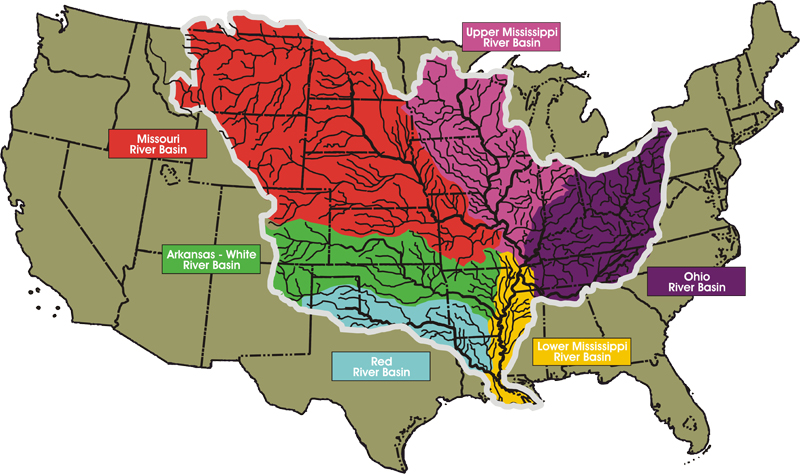
"Iowa is the largest corn producer in the U.S.—and the second largest producer of nitrate pollution in the Mississippi River Basin."

"When it comes to polluting the air and the water, agriculture has, to some extent, gotten a pass in this country."

"We’ve been subsidizing conservation since the Dust Bowl [1930s], and water quality is only getting worse.”

"Phosphates running off Ohio farm fields help trigger algae blooms in Lake Erie, which has impacted the water supply of Toledo."

PHOTOGRAPH BY PETER ESSICK, NAT GEO IMAGE COLLECTION


I note Politico files its report under "Energy" rather than "Farming," although it should have been filed under both topics -- if Politico has a farming category. Stick around for the National Geographic report after the Politico one.  (I've excerpted only a few passages from the Politico report; emphasis in both reports is mine.)

Trump's ethanol move delivers gift to corn country
By ERIC WOLFF
10/08/2018 - 08:53 PM EDT
Politico

President Donald Trump has ordered the Environmental Protection Agency to expand sales of corn ethanol, a senior White House official said on Monday, delivering a gift to farm state Republicans a month before the midterm elections.
The move ends months of bitter behind-the-scenes fighting between corn backers and the oil industry over Trump's calls to increase ethanol sales, and it could benefit Iowa's Republican governor, who is trailing her Democratic challenger in the polls, as well as at least two Iowa House incumbents who are also vulnerable. But the oil industry's most powerful trade group immediately said it will fight to block the action.
Trump is expected to announce the change on Tuesday in Washington before leaving for a rally in Council Bluffs, Iowa.
Trump, a vocal supporter of corn ethanol, will order EPA to allow year-round sales of gasoline with 15 percent ethanol content, an increase over the 10 percent blends that are sold at most gas stations around the nation.
The sale of the blends, known as "E15," is currently prohibited during the summer months in several states because of Clean Air Act restrictions, and corn growers have long sought to expand sales of the higher concentrations.
"This is a big deal," said Jeff Navin, a Democratic former aide to ex-Senate Majority Leader Tom Daschle of South Dakota and former chief of staff in the Obama administration's Energy Department. "It's not something that makes a front page of East and West Coast newspapers, but it's something that farmers watch closely. I’m sure the political team and elected officials in Iowa told [Trump] he has to do something to staunch bleeding."
Trump has previously called for increased sales of ethanol, which consumes about 40 percent of the U.S. corn crop. He strongly backed the biofuel during the 2016 campaign, a stance that appealed to Midwestern farmers who helped carry him to victory but who have been battered by his trade war and retaliatory tariffs from countries angry over his steel and aluminum tariffs.
But the U.S. oil industry has staunchly opposed increasing ethanol sales, and it has pressed for EPA and Congress to overhaul the federal biofuels mandate that Congress first created in 2005 to help reduce U.S. dependence on imported oil. The mandate requires oil refiners to blend specified volumes of biofuels into the nation's gasoline supply, and to purchase biofuels credits that are traded in a market that has been plagued by fraud.
[...]
Most U.S. gasoline sold in the U.S. is E10, meaning it contains 10 percent ethanol, though the 15 percent ethanol is sold by many retailers, particularly in big corn-producing states. Trump, who cannot change the policy through an executive order, has now ordered acting EPA Administrator Andrew Wheeler to issue a waiver to the rules specifically for E15 to allow year-round sales.
[...] 
“We’re very excited to hear the president’s upcoming announcement," Emily Skor, CEO of Growth Energy, an ethanol trade association, said in a statement. "He knows farmers are hurting and they want action on E15 in time for the next summer driving season. Year-round sales of E15 nationwide could deliver demand for two billion bushels of American cornand help restore growth in rural communities."
[...]
The Simple River-Cleaning Tactics That Big Farms Ignore
BY ELIZABETH ROYTE
December 7, 2017
National Geographic

[See website for photographs]

"Sixty percent of Iowa farmland is owned by absentee landlords and rented on one-year contracts, which leaves tenants with little incentive to invest in the land’s long-term health."

This report was produced in collaboration with the Food & Environment Reporting Network, a nonprofit investigative news organization.

In Iowa and elsewhere, runoff from fertilized fields pollutes drinking water and creates dead zones. Yet straightforward solutions exist.

(DES MOINES, IOWA) - Ione Cleverley wasn’t eager to break up with her tenant, who had been farming 88 acres of her central Iowa land for more than a decade. He was affable and hardworking, but after harvesting his corn and soybeans, the farmer left her fields unplanted. Cleverley had learned that each spring, as the soil warmed and moistened, it released nitrogen—both naturally occurring and left over from the last application of synthetic fertilizer. Rain washed the chemical into her stream, which flows into the Skunk River and thence into the Mississippi.

Along its winding route, nitrogen, which converts to nitrate in water, presents two serious problems. It threatens the health of those who drink it at the tap, and when it reaches the ocean, it hyper-charges the growth of algae and aquatic bacteria, which use up most of the oxygen in the water, leaving it uninhabitable by many other sea creatures. This past summer, the Gulf of Mexico had its largest ever “dead zone”—and the largest of several hundred in the world.

After speaking with a farm consultant about how to stanch her contribution to it, Cleverley met with her tenant. “I told him I wanted him to quit tilling and plant a cover crop this fall”—whether cereal rye, clover or alfalfa, it would soak up excess nitrogen come spring. “He wasn’t too receptive,” Cleverley says, dryly. “He didn’t see the connection with downstream water quality.” Moreover, the chemical company that advised her tenant—and sold him fertilizers and seeds—had warned him that cover crops might reduce his corn and soybean yields, at least at first.

[...]

Too Much of a Good Thing

Iowa has some of the richest farmland on the planet; an acre in Cleverley’s region can sell for upwards of $10,000. The state produces more corn than any other in the nation, and its soybean yields are second only to Illinois.

But all this production—abetted by steady applications of nitrogen fertilizer— has taken a serious toll. More than two hundred of Iowa’s community water systems struggle with high nitrate levels, periodically issuing “Do Not Drink” orders. The state is the second-largest contributor of nitrates to the Gulf in the Mississippi River Basin.

The good news is that researchers have a pretty good handle on how to solve Iowa’s water problem. In 2014 the state released a Nutrient Reduction Strategy that calls for slashing nitrate runoff by 41 percent. The plan lists a suite of tools that farmers can use to hit this mark, from applying fertilizer more sparingly—crops take up, on average, only half the nitrogen that’s applied to fields—to planting cover crops, to allowing strips of farmland to revert to unfertilized prairie.

The bad news: These recommended practices are voluntary, and relatively few of Iowa’s 88,000 farmers do them. Many, like Cleverley’s tenant, just don’t see their personal connection to the problem—and that leaves it for others to solve.

Someone’s Got to Pay

The U.S. Environmental Protection Agency requires utilities to deliver tap water with no more than 10 milligrams of nitrates per liter. Water above this limit can, in infants, inhibit the blood’s capacity to carry oxygen, causing the potentially fatal “blue baby syndrome.” Some studies have linked high nitrate levels with birth defects and, in adults, various cancers and thyroid problems.

Nationwide, utilities spent $4.8 billion to remove nitrates from public drinking water supplies in 2011, the last year for which data are available. The money goes toward energy- and chemical-intensive filtration systems, or toward drilling new wells into cleaner supplies, or toward pumping and blending water from different sources.

“We have a responsibility to provide safe water,” Bill Stowe, general manager of the Des Moines Water Works, says in his sunlit conference room. “High nitrates are a public health risk whether they are consumed by a six-month-old or a 66-year old.” Most consumers don’t care how those nitrates are removed, so long as their water bills don’t rise. But it is far cheaper, on a per pound basis, to keep nitrates from water upstream—on farms, that is—than it is for utilities to remove them downstream.

Stowe may understand these economics better than any utility operator in the nation. Between 1995 and 2014, nitrate concentrations at his utility’s intakes on the Raccoon River exceeded the federal drinking-water standard on at least 1,635 days, or 24 percent of the time. In 2015 the utility spent $1.5 million to strip nitrates from the water, and it was also facing a roughly $15 million bill to revamp the denitrification equipment. “It’s basically been run into the ground with overuse,” Stowe says.

Fed up, Stowe in 2015 sued those he considered responsible for tainting his water. He targeted three upstream drainage districts, representing more than two thousand farmers, and claimed that perforated pipes underlying their fields, which drain excess rain and snowmelt into ditches and creeks, constitute “point sources” of pollution. As such, he argued, those pipes, known as tiles, should be regulated under the federal Clean Water Act, just like factories spewing chemicals into rivers. (Historically, agriculture has been considered a “nonpoint” source of pollution that is exempt from the Clean Water Act.)

Stowe’s lawsuit was a big deal, on many levels. Drinking water utilities tend to be conservative: They avoid engaging in cutting-edge environmental, public policy, or legal issues. Now, not only was Stowe flamboyantly taking an activist stance, he was also challenging the supremacy of production agriculture in a state widely considered to be controlled by that industry. As former governor Terry Branstand said, shortly after the suit was filed, “Des Moines has declared war on rural Iowa.”

That’s because farmers rely so heavily on fertilizer to boost yield and profits. It’s cheap insurance for expensive seed, and billion-dollar industries have formed around its unbridled use—from fertilizer manufacturers to equipment makers and ag consultants. Stowe’s lawsuit threatened all of that, but it turned out the corn and soybean industry, which poured money into a defense fund, needn’t have worried. This past March, a federal judge dismissed the suit on the grounds that drainage districts have immunity from lawsuits seeking monetary damages. The question of who should be responsible for keeping agricultural pollutants from drinking water remains open.


An Uncovered State

Just two hours east of Des Moines, the Cedar River provides drinking water to about 130,000 residents of Cedar Rapids. Nitrate levels in the Cedar and its tributaries often rise above federal limits, just like levels in the Raccoon, but the city solves its problem by blending high-nitrate river water with lower-nitrate water from wells—at least for now.

Climate change is pelting the Midwest with more frequent and intense rainstorms, which wash nutrients from fields into source water. After a 5-inch (13-centimeter) rain in June of 2014, nitrate loading at a study site in the Cedar Rapids watershed shot from an average of 45 tons per day to more than 1,000. By the end of the century, scientists predict that climate change will increase the amount of nitrogen flowing into the Gulf by 24 percent, and that’s not even counting expected increases in acres planted with crops.

To get a grip on the nutrients flowing from fields today, a consortium of local government, industry, and civil society groups has teamed up, as the Middle Cedar Partnership Project, to support farmers willing to try some of the practices laid out in the state’s nutrient reduction strategy. Nick Meier, a former seed dealer who farms roughly a thousand acres about 45 miles upstream from Cedar Rapids, is one of the project’s star ambassadors.

“I feel strongly about conservation,” says Meier, who quit plowing his hilly fields decades ago to control soil erosion. But in the fall of 2014, he took a more radical step and filled his planter with the seeds of cereal rye, a cover crop for which he has yet to find a market. Asked what drove him to this extra labor and hassle, Meier is unequivocal: “I didn’t want to be regulated by the government.” Better to voluntarily reduce nitrogen pollution, he figured, than to suffer a government crackdown.

Cover crops can reduce nitrogen runoff by 30 percent, but in 2016 Iowa farmers planted them on less than three percent of the state’s cropped land. The state strategy aims for more than half. According to one analysis, 60 percent of Iowa farmers quit growing cover crops after government aid—usually $25 an acre for just one year—ends. “There is no proven economic benefit [to landowners] for taking nitrates out of the water,” says Dean Stock, a farmer and elected supervisor in Sac County, which was targeted by Bill Stowe’s suit.

In fact, cover crops have been shown to reduce the need for fertilizer. And after first dampening corn yields, as Cleverley’s tenant feared, they eventually increase yields. All that provides economic benefits to the farmer. But cover crops can be tricky to implement and manage. For example, as spring rains get more intense, farmers have a shorter window to terminate a cover crop—by killing it with an herbicide or crushing it with a roller—in time to plant their cash crop.

“The learning curve for these in-field practices can be steep,” acknowledges Nick Ohde, of Practical Farmers of Iowa, which promotes and teaches cover cropping. “If you’re making money as is, then change is problematic. You’re not going to see any benefits if these practices aren’t executed properly.”

The Power of the Prairie

There are plenty of alternatives to cover-cropping, however. On a sunny summer morning, Meier drives his all-terrain vehicle past a blue-green field of bushy soybean plants and parks atop a mowed rectangle. Right under our feet, he explains, a six-foot-deep bunker stuffed with woodchips is filtering runoff from a 60-acre field underlain with drainage pipes.

Microbes in the woodchips reduce the water’s nitrate concentration by 43 percent, converting it to inert nitrogen gas, the stuff of the air around us. Meier seems delighted with his denitrifying bioreactor, as the gizmo is called: It functions properly, it robs him of very little cultivatable space, and it was funded by a state environmental program.

Keen to show off another tool promoted by the Middle Cedar Partnership Project, Meier hops back onto the Gator, zips across a county road and past a field of eye-high corn. “This is a saturated buffer,” he says, gesturing toward a 70-foot wide strip of native grasses and wildflowers that hugs a 1,200-foot stretch of Miller Creek. As tiles under the corn field collect water, then distribute this flow into the buffer, the prairie plants’ deep and extensive roots consume up to half the nitrates in it, releasing cleaner water to the creek. A saturated buffer costs about a third of a bioreactor, and it provides habitat for pollinators and other creatures.

Elsewhere in the state, a smattering of farmers are trying other techniques for capturing nitrate—collecting it in engineered wetlands on their soggier fields, for example, or in silted-in oxbow river bends excavated to hold more water. But Iowa State researchers say the single best thing that farmers could do to improve Iowa’s water quality is to plant prairie grasses on ten percent of their land, in buffers like Meier’s or in strips across the fields.

The problem is that very few farmers volunteer to retire cropland—not when grain prices are high, and not when grain prices are low. As Stowe says, “There’s a lot of talk about volunteerism and conservation practices. But in the real world, the play is always for greater productivity and greater profit.”

Unfortunately, says Anne Weir Schechinger, a senior economics analyst for the Environmental Working Group, “It’s the farmers polluting the most who are the least likely to adopt those methods.” Most farmers, if they adopt a conservation tool at all, opt for one that’s least disruptive to their practice: tweaking the timing and application rate of fertilizer. That cuts nitrate loss, at best, by just 10 percent.


Exceptional Farmers


The various conservation practices “do work,” says Art Cullen, who won a Pulitzer Prize in 2017 for his fierce editorializing against industrial agriculture in The Storm Lake Times, published about a hundred miles northwest of Des Moines. “But the Raccoon River is imperiled, and a bioreactor here and a wetland there is just a drop in the bucket. It’s trivial compared to what’s needed. We’ve been subsidizing conservation since the Dust Bowl, and water quality is only getting worse.”

When it comes to polluting the air and the water, agriculture has, to some extent, gotten a pass in this country. No one wants to stick it to a farmer. In the current political climate, there seems little prospect of increased government regulation of nutrient runoff — yet voluntary measures clearly haven’t cut it so far. If nothing else, the Des Moines Water Works suit has energized public discussion of the question: Who will pay to keep nitrates out of our rivers?

The Iowa Farm Bureau, for its part, insists farmers are stepping up; they just need more time. “The problem was a century in the making,” says the bureau’s Laurie Johns. “Farmers need more time to adopt these strategies, they need more incentives and more knowledge.”

In November, the Iowa Department of Agriculture implemented a small policy fix, promoted by Practical Farmers of Iowa and others: It now offers a $5 per acre rebate on crop insurance to farmers who plant new acres with cover crops, which have been shown to reduce insurance claims. Other groups suggest tying federal farm subsidies to measurable nitrate reductions. Bill Stowe—aligned with some small-government groups—insists farmers alone should shoulder nitrate-reduction costs. “Iowa producers are already getting $1 billion a year from the USDA,” he says in a tone of outrage.

Market pressures could help. Roughly half of Iowa’s corn and 98 percent of its soybeans feed livestock, much of which is consumed in China. (Most of the rest of Iowa’s corn feeds ethanol plants.) Large companies along that food chain have lately started trying to influence how their raw ingredients are grown.

For example, Smithfield Foods, in partnership with the Environmental Defense Fund, is seeking to source more of its pigs’ corn and soybeans from geographic areas in Iowa—not individual farms—that have shown improvement in reducing nutrient runoff. “These companies want brand-level recognition for their efforts,” Suzy Friedman, EDF’s senior director of agricultural sustainability, says. “They want to say that [they] are good corporate stewards.”

But figuring out the best way to support farmers as land stewards is a complicated proposition. Sixty percent of Iowa farmland is owned by absentee landlords and rented on one-year contracts, which leaves tenants with little incentive to invest in the land’s long-term health. Thankfully, there are a handful of land owners brave enough to shoulder some risk for the greater good.

After Ione Cleverley presented her tenant with a cover-crop ultimatum, this past July, their relationship grew tense. But together they attended several field demonstrations and information sessions on cover cropping. “He still rejects those practices,” Cleverley reports, “but I’m more convinced than ever that it’s the way to go. If you own land, it’s your responsibility to take the best care of it.”


Despite his skepticism, Cleverley’s tenant did, eventually, agree to try a cover crop, but by then it was too late to apply for funding from the USDA. And so Cleverly decided to kick in half the cost of the cereal rye and radish seed herself.

“We’re starting slow, just on the bean ground this year,” she says. “I really don’t want this to fail.”

[END REPORT]

********

Monday, October 8

Blueprint to Shore Up Civilization's Base

This post picks up where the previous one left off (Civilization is now based on market valuations of food products. What's next?) I'll be covering a lot of ground fast; check with the other post if any references in this one aren't clear to you. 

There is a worldwide crisis in farming. Yet it's not been dealt with squarely because it keeps being labeled as something else: climate change, water shortages, 'humanitarian' crises, migrant/refugee crises, political crises, rampant urbanization, globalization, and on and on. But the crisis in farming is fueled by a debt crisis in small-scale commercial farming. So this is very serious when you consider that farming is the world's biggest business employing the most number of people, and that farming is civilization's most important industry. 

How did this crisis get off the ground? During the past century the two great waves of farming modernization -- mechanization and the Green Revolution-- have required expensive 'inputs.' In the case of the first wave it's mass-produced motorized farm equipment. The second wave has been hybrid seeds and chemicals such as herbicides and pesticides, all of which have required very expensive research to develop, with the price being passed on to the farmer.

Because most of the world's farms are small-scale commercial enterprises, few farmers have been able to afford modern inputs without going into debt -- either to banks or some version of a loan shark. That is how countless millions of small-scale commercial farmers have lost their farms and flooded into cities. Many millions of other farmers have depended on their nations' governments to help finance their commercial farms or at least save them from going under -- an approach that has often ended in the farmers still losing their farms or staying in deep poverty.  

The solution is a stepwise approach to commercializing small-scale farming that doesn't require the farmer to take on personal debt in order to establish his business. Such an approach was worked out by Thailand's King Bhumibol Adulyadej. He called it the "New Theory of Agriculture." He outlined an economic system to support the farming system he created, and which is called "Sufficiency Economics." Here I'll just refer to the whole shebang as "NT" for new theory.

The key to NT is to think in terms of a network of farms. That's pretty easy in Thailand and other countries that still have large numbers of farming villages. It requires a little more creativity in heavily urbanized regions of the world.
    
1. Start with subsistence farming, using modern, low-tech  methods that are high-labor but don't require expensive inputs. Although the subsistence farm generates no income beyond the sale of any surplus produce, it does make the farmer and his family self-sufficient in food -- and even clothing if some sheep or a cotton crop, etc. is added. Over decades King Bhumibol personally modernized every aspect of small-scale farming in Thailand and when he couldn't find an off-the-shelf solution he invented one. 

2. Working with the average size of a small farm in Thailand, about 6 acres, he plugged the innovations into the New Theory farm -- a standardized farm that was mathematically laid out so that not a square foot was wasted. The NT farm allowed the farmer and his family to be completely self-sufficient in food. One hundred percent food security -- and with a diverse, high-quality diet. Yes, he did it on 6 acres -- actually less because the 6 acres had to hold the family's domicile as well as a livestock shelter. 

3. The standardization allowed him to integrate NT farms into a network -- a kind of cooperative of subsistence farms that together can generate enough income from sales of surplus produce to qualify for bank loans, in order to start small retail businesses based on farm products. 

4. Once a single network is established, it can then network with another NT network. NT networks can keep spreading until an entire rural region has achieved the best of both worlds: self-sufficiency in food, plus enough income for individual farmers to live reasonably well. 

5. The NT farming networks also allow a group of farmers to purchase whatever expensive farming equipment they might need that could be shared, which also cuts out the need for individual farmers to go into debt. For example, his majesty introduced dairy farming to Thailand and encouraged villagers to set up a small dairy farm in each village, which  could be used to raise income through making and selling cheese, etc.

A bird in the hand is worth two in the bush

The stepwise progression of NT development means that no matter how much commercialization comes in, the farmer and his family have genuine food security at every step of the way, once their NT farm is set up. 

Unfortunately that point is not clear in descriptions of Sufficiency Economics, which tend to focus on character issues such as thrift. But Sufficiency Economics derives from common sense -- universal folk wisdom: 

Don't bite off more than you chew.
A bird in the hand is worth two in the bush. 
Don't put the cart before the horse.
Don't count your chickens before they're hatched. 

If you have a small plot of land and want to farm it, first learn to feed yourself from the farm. Once you can do that, then is the time to think about starting a small business based on farming. Then hook up with other farmers and together you can take on debt to do even more business. 

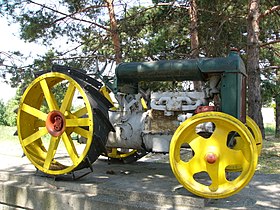
So the idea is not to reject capitalism but to reject the wrong timing of debt financing. A farmer is not an industrialist. Yet a great many people forgot that when Get Rich Quick Fever first struck small-scale farming. It happened in the West in 1917 with the introduction of the amazing Fordson motor tractor:  mass-produced, lightweight, gasoline fueled, relatively cheap.

Why, one man and his Fordson could bring in harvests that would rival those overseen by big landowners. That meant for the first time in history the little guy could break into commodity markets that had always been the exclusive province of the big boys -- the kingdoms, colonizing empires, and conquerors that could command vast tracts of land and huge numbers of laborers.

So people back then can be forgiven for throwing common sense out the window. The euphoria didn't last long when the Great Depression smashed commodity prices. But there is no getting rid of Get Rich Quick Fever; it keeps popping up. I'd guess that King Bhumibol's hardest task in the 1960s and 1970s was trying to talk Thailand's small scale farmers out of the idea that they were going to get rich quick selling rice. Then it all came crashing down in the recession in the late 1990s. The farmers who'd listened to his majesty were able to put food on their tables and keep their farms.

Now, what does a NT farm look like, how does it work? And can the entire NT blueprint be applied to regions outside Thailand? To that last -- I hope ways can be found because the greatest threat is always the one that creeps up on your blindside. 

To be continued.

UPDATE:

Continued: Getting around the fact that free-market farming isn't so free, after all; Pundita, October 10

********

Sunday, October 7

Civilization is now based on market valuations of food products. What's next?

The End

End Times prophecies "have increasingly become part of mainstream convictions throughout the greater Middle East," Yossef Bodansky writes in his report for Defense & Foreign Affairs, "Historical Fatalism, Water and Food Shortages, and Jihadism Conspire to Set the Stage for a Major Conflict Escalation Based on 'Greater Syria'," published July 23.(1)  Greater Syria refers to "modern Syria and adjacent areas in southern modern Turkey, Lebanon, and the northern half of Palestine; that is, Israel, the Palestinian Authority, and Jordan."

Yossef Bodansky's complete report is behind a subscription paywall but on July 27 -- the date of a Blood Moon eclipse, which figures in End Times prophecies -- John Batchelor spoke with Gregory Copley, chief of the Defense & Foreign Affairs group of publications, discussed the report. Here's the link to the 10 minute podcast of their talk, which is titled "Drought in the Ummah Under the Blood Red Moon."

The report reviews water shortages and related crises that have sparked recent anti-government mass protests/riots in the Middle East and details how these are playing out across the region. Bodansky goes on to observe: 
What began as indigenous fear over the plight of daily life has quickly evolved into communal protests against higher authorities and the ruling states.
A myriad of grassroots heritage grievances is coming to the surface. Significantly, in all the countries, more segments of the grassroots populace are participating in the ongoing protests and riots than at the height of the original intifadas [Arab Spring uprisings] of 2011-12.
He describes the more politically significant of the "heritage" (ethnic, religious, tribal) grievances then notes:  
By now, local governments throughout the greater Middle East had no inkling how to cope with the catastrophes: with the shortages of water, the marked decline in food production, the massive internal migration and dislocation from rural areas which overwhelmed the already-collapsing urban slums filled with refugees from fighting and carnage, and, most importantly, the intensifying radicalization of the grassroots which challenged the governments’ own legitimacy.
I will return to Bodanksy's report in a later post but for now I want to discuss the most striking aspect of the above passage. In that one sentence he tells the story of countless mass calamities all around the world in the modern era.

Yet by what strange alchemy are vastly different societies creating the same disastrous circumstances? 

To understand the alchemical formula you need to keep five points in mind:

1. There are basically two types of farming: commercial, which is simply the raising of produce for sale, and subsistence, whereby the farmer raises enough produce to sustain himself and his family and sells or barters any surplus. 

There is also what could be called the quasi farming method, whereby the farmer raises some produce for personal consumption and also raises a 'cash crop' for sale, but this is really commercial farming with a nod to subsistence farming. 

2. Most of the world's guesstimated 570+ million farms, both large and small, are today commercial farms.

3. By the 1950s commercial farming had virtually eclipsed subsistence farming in Europe and the United States, a trend that spread across the rest of the world during the closing decades of the last century. While subsistence farming still exists here and there, mostly in the poorest regions of the world, all the modernizing innovations in farming during the past century were plugged into commercial farming. The principal reason was that societies in which currency was replacing barter and near-money, the subsistence farm, which doesn't generate any income to speak of, came to be seen as a relic of humanity's past.

4. Most of the world's farms are small-scale. 

5. All the above means that the majority of the billion or so people who farm are actually businesspeople. Keep that in mind the next time you see a report about starving people fleeing to the cities from their failed farms. For the most part those starving people are actually fleeing their failed small businesses.

The Formula


The first great wave of modern commercial farming was mechanized farming. Machines cost money. No paying for the machines with bales of hay. So, as the mass-produced motorized tractor and its add-on equipment catapulted farming into the industrial era in 1917, the system for financing mechanized commercial farming was grabbed 'off the shelf' from the financing of mechanized factories. 

The system was misapplied to small-scale commercial farming from the beginning.

That's the alchemy. Everything else is knock-on effects. 

Patches

The misapplied system of financing hung on because of 'patches' that Western governments started devising in the 1930s, during the Great Depression. This was when the first red flags went up about the advisability of millions of small-scale farmers jumping into capital-intensive commercial farming by taking on debt. This was how a great many Americans lost their farms during the depression.  

In the United States the patches ranged from welfare and 'social safety net' programs to farm subsidies and buy-back schemes. As small-scale commercial farming spread to other parts of the world, some of the Western patches were used by governments in the 'developing' nations but without the fail-safes that the wealthiest Western governments had, beyond ones provided by foreign aid -- and by the IMF, whose radical financial surgery on gasping governments amounted to the old joke that the operation was a success but the patient died.

Then the patches began wearing out. This happened under the competitive onslaught unleashed by the modern era in globalized trade, which got fully underway in the early 1980s with the launch of standardized modular containerized shipping.

The Absent-Minded Economists

Adding to the woes of small-scale farmers, economists didn't think to tell them that as soon as you make farming into a business, this means you're ruled by something called 'market valuations' of your products. This adds a layer of risks on top of the risks, such as vagaries in the weather, that have always been a farmer's lot. 

The economists also didn't think to mention that once your farm is a for-profit business and your product can bring a decent price, there is stiff competition to deal with. 

All this means that small-scale commercial farmers are subject to market forces that can take down even the big boys.  

Economists also neglected to mention that when governments make it part of economic policy to use exports of their nations' commercial farm produce to scare up foreign exchange, this is getting into the shark-infested waters of international trade in food commodities. 

And when governments assume they can import their way around any shortfalls in national food production, they might as well dunk their nation in a tank of piranhas.

To be fair to economists, even if they'd mentioned these harsh realities the government officials would've said, 'So what are you proposing as the alternative? Everybody return to the Seventeenth Century?'

Frankly by the time governments finish applying patches to the worn-out patches, the Seventeenth Century will look like the cutting edge in modernity. 

The Big Picture
   
In summary, once civilization replaces its foundation of food production with market valuations of farm produce, the negative consequences keep forming the same pattern of events that Yossef Bodansky described, no matter how different the details of climate, geography, heritages, and political systems. 

Indeed, I think Middle Easterners would be stunned if they knew the future of their region as it is today was foretold in the 1930s on America's Great Plains. 

The same problem keeps recycling. 

Is there any way I've come across that could break the cycle?

The Key

On paper there is a way. The key is for the farmer to understand that it's not necessary to burden himself with debt in order to make a go of a commercial farm. This is what sets him apart from, say, the industrialist who wants to start an assembly-line factory. 

It's a matter of timing. There is a time for taking on debt, which is when the small-scale farmer doesn't need the loan in order to survive. As to how to accomplish that feat, Thailand's King Bhumibol Adulyadej figured it all out. He created a farming system and an economic system to support the small-scale farm that checked all the boxes and passed all the field tests.

The problem was that Thailand's major rice exporters and  members of the International Financial Community nearly had an aneurysm when King Bhumibol finally got around to outlining the economic system for the public.

"Archaic," snarled the Wall Street Journal.

Well, it's not if his majesty was trying to crash global trade.   

To be continued.

1) Yossef Bodansky, who is among other things a senior editor at D&FA, has written reports on the same theme in two earlier years, which are available to the public in pdf. The reports include a short bio on him.

Heretical Musings on the Coming End-of-time Battle; ISPSW Strategy Series, June 2015

More Heretical Musings on the Coming End-of-time Battle; ISPSW Strategy Series, January 2016

*********