Translate

Monday, July 22

Breaking News: Hell freezes over

Where are my smelling salts? But it's not the New York Times that's the biggest problem; it's the British government. By the way, MI-6 discovered that it was the Russians who were responsible for Iran seizing a British oil tanker. But of course it was the Russians. First they jammed the GPS tracking system on the Stena Impero. Then they slipped LSD into the captain's coffee. Then they switched the ENTER and EXIT lane signs for the Strait of Hormuz and told the captain to ignore all the ships sailing out of the ENTER lane. 

Hell freezes over? New York Times wants closer relationship with Russia, congratulates Trump
22 July, 2019 - 14:53

Graham Dockery, RT
RT


The New York Times’ editorial board, fresh from peddling anti-Russia conspiracies for two years, has made a remarkable about-turn. Now the paper wants closer relations with the Kremlin, all to thwart China’s ambitions.

‘Russiagate’ has maintained an iron grip on American political discourse for two years now, even after Special Counsel Robert Mueller’s report cleared President Donald Trump of conspiring with the Kremlin to steal the 2016 US election. In the media, the public has been treated to nightly conspiracy theories and bizarre connect-the-dots articles claiming to prove collusion; and lawmakers have crafted ever more draconian sanctions bills against Russia and have slotted opposition to Russia into their campaign messages.

Meanwhile, Moscow and Beijing have looked to each other, holding joint military exercises and upping their trade volume to more than $100 billion in 2018. Russian Prime Minister Dmitry Medvedev recently announced plans to build a new, 2,000km-long highway linking Europe and China, while President Vladimir Putin has been mulling connecting Russia’s Northern Sea Route with China’s Maritime Silk Road, an ambitious global trade route linking China with ports in Southeast Asia, Africa, Europe, and the Middle East.

The idea of closer Moscow/Beijing cooperation clearly worries the New York Times’ editorial board. In an op-ed published on Sunday, the board wrote that “President Trump is correct to try to establish a sounder relationship with Russia and peel it away from China” – itself a remarkable compliment from a paper that ran op-eds titled “Donald Trump Hates America,”and “Trump is Racist to the Bone” in the last five days.

The board then suggested that the US could strengthen its cooperation with Russia in space exploration and Arctic cleanup – areas untainted by ‘Russiagate’. In addition, new arms control treaties could be a step towards geopolitical cooperation between the two rival superpower.

All valid and worthy points, but from the New York Times? Yes, we’re talking about the same newspaper that last year called Trump a “treasonous traitor” ahead of his meeting with Putin in Helsinki. Instead of seeking rapprochement then, the paper argued that Trump should “be directing all resources at his disposal to punish Russia.”

We’re talking about the same New York Times that dubbed Trump “Putin’s Lackey” and released a mocking video detailing a ‘love story’ between Trump and Putin, laden with homoerotic overtones and culminating in a tongue-locking kiss between the two leaders. It’s funny because they’re gay, see?

The piece surprised many, like pundit George Szamuely, who wrote that Washington has “demonized Russia and blamed it for every problem besetting [the] US,” while the Times “has for years berated Trump for advocating this perfectly sensible policy, at times suggesting that he was doing so only because he was Putin's agent and a traitor to the United States.”

Bear in mind that the Times’ editorial board does not hold the same opinions as its revolving cast of op-ed writers. Still, for a newspaper whose writers almost unanimously despise the US president, Sunday’s op-ed represents a shocking repudiation of two years of anti-Russia, anti-Trump static.

Perhaps the outlet that often voiced the ideas of the American establishment has finally realized that the ‘Russiagate’ horse is too long dead for another flogging? Or maybe the Times saw it’s time for a new kind of politics: the politics of Detente. Either way, the change is a surprising one.

Graham Dockery is an Irish journalist working for RT since March 2018

[END REPORT]

********

The Saudi-Emirati divide is older than the Yemen War

Photo: Reuters/Johnathan Ernst

The divide between Saudi Arabia and the UAE became very clear to outsiders when the UAE signaled it was doing a major drawdown of its troops in Yemen. This told the Saudis that they could no longer depend on the highly-trained Emirati troops for muscle -- anywhere. I think that's the overriding reason King Salman asked Trump to station several hundred troops in Saudia Arabia. I think Russia's Sputnik thinks so too.  

The above photograph was taken at the Arab Islamic-American summit on May 21, 2017, in Riyadh. That's Jordan's King Abdullah II on the right in the front row; he's standing next to Saudi King Salman bin Abdulaziz Al Saud, who is standing next to President Donald Trump. The man with the serene smile standing on Trump's other side is Abu Dhabi Crown Prince Mohammad bin-Zayed al-Nahyan, popularly known as MbZ, who is the de facto ruler of the United Arab Emirates. That's the man King Salman is looking at as President Trump speaks.  

Sputnik dredged up the two-year-old photograph to accompany their July 20, 2019 report headlined US Secretary of Defence Authorizes Military Personnel, Resource Deployment to Saudi Arabia.

The problem is that the Saudi and Emirati governments are so opaque that observers have to piece together what's really happening between the two from a patchwork of news reports about, say, their actions toward crisis situations in Libya and Sudan. But in my July 17  post, UAE's major move against forces of darkness by promoting Sufism, I stressed that the divide between KSA and UAE while not very broad at this point is very deep; it can't be sealed over because it goes to the heart of the struggle for Islam's soul.

MbZ is no angel, although I think Middle East Eye, which positively detests him for his strong anti-Muslim Brotherhood stance, has a tendency to demonize him. But all you have to do is read through Wikipedia's listing of his initiatives to know that he is genuinely dedicated to elevating Islam to a major force for religious tolerance. His government's promotion of Sufism in Syria is just one indication of this.

However, the Saudi-Emirati divide is much older than events in the past few years suggests; in fact, it is existential. 
[...]
When the UAE came into existence in December 1971, Riyadh achieved its objective of excluding Qatar and Bahrain from the new federal state. Tremendous Saudi pressure forced the UAE to sign the 1974 Treaty of Jeddah that ceded claims to the Khor al-Udaid inland sea that linked it to Qatar. Riyadh refused to recognize the UAE's independence until its president, Zayed bin Sultan, signed the treaty under duress although the UAE has not yet ratified the treaty. 
When UAE head Khalifa bin Zayed took office in 2004, he visited Riyadh and demanded the treaty's abrogation, ushering in an explosive crisis between the two states that took six years to subside.
Emirati officials viewed the hostile Saudi behavior as another siege: Since its creation, the Emirate has had to grapple with formidable security challenges from both its Arab and Iranian neighbors and has been overburdened with territorial disputes from the beginning. Iran seized the Abu Musa and Lesser and Greater Tumb islands; Oman established its sovereignty over Buraymi Oasis while Saudi Arabia completed the UAE's diminution by cutting it off from Qatar.
Early on, Zayed bin Sultan had serious doubts whether the new federal entity could survive. In the words of two observers of the Gulf:
Because the UAE was a relatively small state, its leaders recognized that defending the country's security from both internal and external threats depended on skillful management of diplomatic relations with other countries.
Saudi efforts to prevent the UAE from becoming a competitor in the GCC have succeeded despite the UAE's soft power. Thus, for example, in December 2004, Riyadh vetoed a Qatari-UAE plan to construct a causeway to link Abu Dhabi and Doha without having to travel through Saudi territory.
[...]
The passages are from "Un-Brotherly" Saudi-Emirati Ties by Hilal Khashan for the Spring 2018 edition of Middle East Quarterly. Kashan is a professor of political science at the American University of Beirut. I consider his entire analysis to be a must-read for Americans trying to make sense of present Middle Eastern conflicts. 

One of the advantages Middle Easterners have in their dealings with Washington is that they know Americans are very poorly informed about the region, despite a large number of news reports about U.S. involvement in conflicts in the Middle East. The war reporting tends to contextualize events around how Americans want to view the conflicts. That's a valid consideration for Americans, but it edits a great deal out of what is actually happening and ignores background that is key to understanding events.

********

Of course Iran wants war

The perception among many Western analysts is that the Iranians are determined not to play the 90-pound weakling but they really don't want war. Yes, they do, if the choice is between being bombed to death or starved to death. 

So it is folly for the U.S. and its allies to keep piling on, in the belief that this will persuade Tehran to clutch at straws. 

What could be done is give Tehran assurances that are outside the American-Western orbit. For example, it would help if Riyadh started treating the Shiites in Saudi Arabia as if they were human beings. There is plenty of room for the Saudis to make concessions without fear of being overthrown by Saudi Shiites in cahoots with Tehran. 

Better treatment of the Shiites would be more than a message to Iran's leaders; it would be evidence that the Saudis are willing to be an honest negotiator over issues that keep both nations at loggerheads. That would really mean something to the Iranians. 

As to assurances from the West -- the Iranians are justified in considering those just more hot air.   

********

Sunday, July 21

If Stena Impero was going the wrong way and had its GPS tracker off --

This story has been out there for many hours and has been covered by several news outlets; I set it aside because there was just no way to tell whether it was true, especially with the propaganda goo flying thick and fast from all quarters. But to my knowledge, the British have yet to publicly dispute Iran's claim. 

If that tanker was indeed going the wrong way as it started to enter the Strait of Hormuz and had its GPS tracker turned off and refused to heed warnings from the Iranian Navy -- at the least, the shipping company would have a lot of explaining to do. At worst, the British government could be accused of staging an outright provocation. 

The following CNN report doesn't mention the warnings, which I've seen in at least one other report. But if the tanker just kept going despite a warning(s) -- that was really all the Iranians needed to justify boarding the tanker because its maneuvers were a clear and active danger to other shipping traffic.

I fear this entire incident is a lesson on the perils of knee-jerk actions taken before anyone has had time to get a handle on just what happened. 

12:32 p.m. ET, July 20, 2019
Iran says UK tanker wrongly used exit lane to enter into Strait of Hormuz
From CNN’s Sara Mazloumsaki in Atlanta
CNN
[includes video of Iranian Navy seizing the tanker]

Iran says the British-flagged Steno Impero tanker was using the exit lane to enter into the Strait of Hormuz, almost colliding with other vessels, state-run Islamic Republic News Agency (IRNA) reported.

According to IRNA, Iranian General Ramazan Sharif said the vessel was being escorted by the British Royal Navy when it "violated maritime rules and regulations" by sailing into the Strait of Hormuz in the wrong direction.

The Iranian Navy seized the tanker at the request of the Ports and Maritime Organization of Iran’s Hormozgan province, the General went on to say, according to IRNA.

Iran’s semi-official Tasnim news agency reported the UK vessel was in "contravention of international regulations" by sailing into the Strait of Hormuz in the wrong direction and switching off its GPS tracker.

The tanker "was entering the Strait from the southern route which is an exit path, increasing the risk of accident," Tasnim news, an outlet close to the Iranian Revolutionary Guard Corps (IRGC), reported.

[END 12:32 CNN UPDATE IN THEIR LIVE-BLOGGING OF THE INCIDENT]

********

Count how many times Sputnik wrote "reportedly" in this short Syrian war report

Everybody outside Syria who's trying to learn what the Syrian and Russian militaries are up to right now regarding the Syrian Army's Great Idlib Offensive, which has been set to launch any day now for over a year, is going nuts. This includes Reuters and Associated Press. But now even Sputnik -- that's a Russian state news outlet -- doesn't know what the hell is going on. Even FARS doesn't know. That's the Iranians. They spend their time now translating Syrian war news reports from 'Arab press' and Sputnik Arabic. 

As for Syrian's state-run news agency, SANA -- oh forget them. Two weeks after a big military operation they announce it. Okay, sometimes they come through if you can read their Arabic version. But everyone is relying on a very few on-the-ground observers for English-language news who are still willing to talk to reporters. Thus, this howler from Sputnik; why did they even bother to publish it? Actually, I know why: everybody on the planet who follows the Syrian War is yelling at them for news. So, reportedly:

Syrian Air Defences Thwart Hostile Targets in Hama's Masyaf - Reports
00:43 22.07.2019 (updated 00:54 22.07.2019)
Sputnik
[emphasis mine]

Syrian air defenses on Sunday repelled the hostile attack in the northwestern city of Masyaf in Hama province, Reuters reported, citing local media. There have been reportedly no further details available.

Earlier in July, the Syrian army reportedly launched bombardment of several Nusra Front positions in Hama and Idlib provinces in retaliation for attacks on Hama villages. A number of terrorists' positions and rocket launch pads were reportedly destroyed in the operation.

The terrorists have reportedly increased the frequency of shelling of the Syrian provinces of Hama, Aleppo, and Latakia. They were also attempting to attack Syrian army positions in the region. The government forces have responded by attacking terrorists in Idlib.

Most of Idlib is reportedly controlled by Hayat Tahrir al-Sham, an alliance of Islamic terror groups led by al-Qaeda-linked Nusra Front. There are reportedly 30,000 militants, including foreign mercenaries, in the region.

Earlier on Sunday, the Syrian army reportedly repelled an attack by the Nusra Front terrorists on its positions in the Qasabiyeh village in Idlib's southern countryside, recently retaken by the government forces. Terrorists used suicide bombers and several armored vehicles to carry out the attack but were repelled by the Syrian army units, the SANA news agency stated. 

The military killed several terrorists and destroyed their equipment, the media outlet added.

[...]

****
Let me see if SouthFront and Al-Masdar News have been able to scrape together some news. All right, here's something from SouthFront, but as for "very soon" regarding the Idlib ground offensive, I think the RU and SY governments are waiting for the Astana Process to kick off again in early August followed by a summit in Turkey -- I guess between Iran, Russia, and Turkey. 

It's still called the Astana Process even though the Kazakhs finally got around to naming their capital city but it's still at the same gorgeous hotel as the earlier confabs. They want to see what excuse the Turks come up with this time for not cleaning large numbers of terrorists out of Idlib. Which, if done -- reportedly -- should have mooted the RU-SY full-scale attack on Idlib. 

Meanwhile, President Trump got in on the act -- reportedly -- telling Putin at the G20 summit to please go easy on Idlib. See how easy he would go if Kansas was overrun by terrorists.

SouthFront
July 21, 2019

The Syrian Arab Army (SAA) has deployed additional reinforcements along several frontlines in the northern Hama countryside.

Pro-government sources revealed on July 21 that the reinforcement consisted of hundreds of troops from the army’s 5th Division as well as dozens of battle tanks, Infantry fighting vehicles and howitzers.

Syrian Military Capabilities, a pro-government Facebook page, shared a video showing a part of the reinforcements, which arrived in the last two days.

The deployment of these new reinforcements comes as the tension in northern Hama mounts. Earlier today, the SAA repelled another large attack by Hay’at Tahrir al-Sham (HTS) and its allies.

[Video]

With the apparent failure of all peaceful solutions, the SAA may resume their ground operations in Greater Idlib very soon.

[Syrian War Sitrep July 21 - Map]

[END REPORT]

******** 

Saturday, July 20

Now the Spanish are accusing the Americans of tricking the British into impounding an Iranian tanker

Well, they're not outright accusing the U.S., just pointing the finger of blame, which is as much an accusation. See Simon Tisdall's How Trump’s arch-hawk lured Britain into a dangerous trap to punish Iran: "With the seizure of a supertanker off Gibraltar, distracted UK government was set up by John Bolton as collateral damage." 

His piece is based in part on a news report in Spain's El Pais newspaper, which cited official sources. 

The British are of course complete victims in the mess, poor dears. [flipping a pen into the air] 

I can't take much more of this. I'm going on vacation. Goodbye. 

********  

Friday, July 19

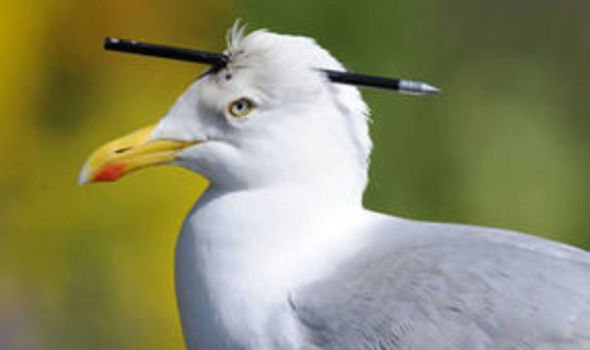
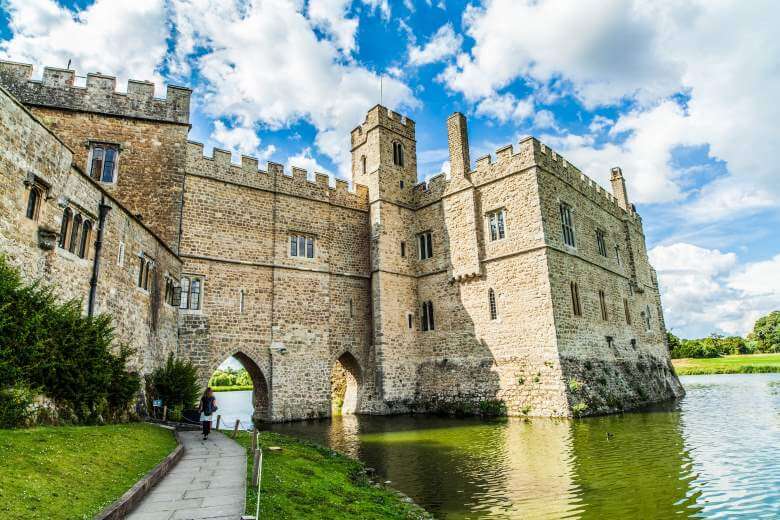
US Navy disables Iranian spy seagull. Iran impounds Leeds Castle.

Yes of course it survived being shot down
Iranian seagulls are tough.


Yes of course it survived being towed to Iran
Leeds Castle is used to water


Now how much longer will this crap continue? Until the propagandists run out of breath or the U.K. and its go-fers in the American government finally manage to gin up a shooting war against Iran at the behest of Gulf Arab governments. 

But the longer it continues, the larger the percentage of people who won't believe a damn thing said by the American and British governments about Iran, Russia, or anything else for that matter. This is the consequence of endless conflicts: They generate massive amounts of propaganda goo, and now a great many people are sick of being slimed.    

********

Russian bombshell uses her boobs to complete bottle cap challenge

All the news that's fit to print, Sputnik-style. Yes of course there's video. 

********


In the Middle East Trump is the proverbial boiling frog

Photo of very upset tribal elders


I think the Iranian military, which really does know what is going on Syria and Iraq, is smugly watching the Trump Administration progressively get more tangled up by conflicts in the Middle East.

If you had the patience to wend through the reports in my previous post, you came, at the end, to the story of Arab tribal leaders in al-Akidat and al-Bakareh tribes in eastern Deir Ezzur strongly opposing the dismissal of the head of the Deir Ezzur Civil Council by Kurdish militias in control of the region, who replaced him with one of their own. The leaders are so upset by this turn of events that now they're busy organizing a "popular resistance" to the U.S. forces in Syria because of said forces' support of said Kurdish militias.

But, as I noted at the very end, there's more to the situation than a cursory glance reveals. From a July 17 FARS report  (don't fidget):
[...]
Al-Watan newspaper reported that al-Jamel tribe in Eastern Deir Ezzur has issued a statement to emphasize its opposition to the appointment of SDF-affiliated Ahmed al-Khabil as the Sheikh of al-Bakir tribes in Eastern Deir Ezzur and the head of Syria's military democratic council.
Al-Jamel tribe has referred in the statement to the terrorist acts by the SDF in Eastern Euphrates region, and said that it does not recognize al-Khabil who has been appointed with the support of Saudi Minister for Persian Gulf Affairs Thamer al-Sabhan and the terrorist militias as the Emir of al-Bakir Sheikhs.
Other Syrian tribes had also earlier stressed their opposition to al-Khabil's appointment.
[...]
If you ask why in the Sam Hill the Saudis got involved in this tempest in a teapot, well, it has something to do with Saudi opposition to the Muslim Brotherhood and Qatar, which backs the Brothers, and Erdogan's support for both. So naturally, the Saudis are backing the Kurds in this particular situation. But they are also realizing that they were short-sighted to make war on Assad, who is no friend of the Muslim Brotherhood or Erdogan for that matter.  

To cut a story, it's actually a pretty big teapot. In fact, it's a kettle. 

Donald Trump has unwittingly landed in the role of the frog in a kettle of slowly heating water. He has so many advisors focused on so many different agendas in the Middle East that he's only slowly become aware that his plans for extricating the United States from the region are being killed.

See also: "Turkey responds to Saudi Arabia's actions in E. Syria. Here we go;" July 13, 2019,  Pundita 

********

US has a tiger by the tail with Syrian Democratic Forces

The making of a "popular resistance"


"Residents of Hasaka have accused the SDF of retaliatory measures against farmers who refrain from giving their wheat to them, saying that the SDF sets fire to their farms."

The following report is the latest among several similar ones I've seen during the past year which describe the SDF acting badly toward Arab civilians in Eastern Syria. But the U.S. still keeps supporting the SDF with military aid  -- a sore point with Turkey given that the majority of SDF fighters are Kurds that Anakara deems terrorists. 

Whether or not they're terrorists, they've certainly worn out whatever welcome they had among Arabs who supported their fight against Islamic State in Syria. The SDF has retaliated in several ways, creating a tit-for-tat conflict with the Syrian Arabs that keeps escalating.  

All this has fallen back on the United States; Arabs in the region have become vociferously anti-American just because of U.S. support for the SDF and many have turned to Syria's government for help.   
   
US-Backed SDF in Eastern Syria Prevent Civilians' Interactions with Damascus
July 18, 2019

FARS

General-Director of Syria's Grains Committee Yousef Qassem said on Thursday that the SDF in Hasaka does not permit the Syrian farmers in the region to sell their wheat to the government centers in Syria.

The Arabic-language al-Watan newspaper quoted local sources in Deir Ezzur province as saying that residents of Hasaka have accused the SDF of retaliatory measures against the farmers who refrain from giving their wheat to them, saying that the SDF sets fire to their farms.

A number of civilians were killed in Hasaka recently in an extensive fire in vast areas of the province's farmlands.

Sources noted in June that several civilians were killed and wounded in SDF and US attacks, and said that the entire regions under the SDF control in Hasaka and Deir Ezzur provinces were the scenes of popular protests against the presence of occupying forces there.

The Arabic-language Al-Khabour News Website reported that the SDF in Hasaka province prevented civilians from leaving the regions under their control for safe regions controlled by the Syrian Army.

The SDF fighters also asked for the payment of a sum of about 100,000 Syrian liras from any vehicle trying to leave the SDF-controlled region for Hasaka.

[END REPORT]

Not only has the situation escalated, but it's also gotten increasingly tangled for Americans. From the July 18 Syrian War sitrep at FARS:
TEHRAN (FNA)- Syrian tribes are working to form a Popular Resistance against the occupying US Troops in Eastern Syria, the Arabic-language media outlets said on Wednesday.
Deir Ezzur
The Arabic-language al-Watan newspaper quoted local sources in Eastern Syria as saying that a meeting has recently been held between tribal leaders and the elderly as well as head of Deir Ezzur Military Security Committee and the province’s governor Abdelmajid al-Kawakebi and Syrian Army’s backup forces. [above photo]
The sources noted that participants in the meeting discussed issues such as forming popular resistance forces against occupying American forces in Deir Ezzur and al-Jazira region of Syria and ways to confront these forces.
Meantime, the Arabic-language Arabi al-Youm pointed to acute differences between Arab tribes in Eastern Deir Ezzur with the US-backed militants, and said that the tribal leaders of al-Akidat and al-Bakareh tribes in Eastern Deir Ezzur strongly opposed the Kurdish militias’ decision to dismiss head of Deir Ezzur Civil Council and replace him with their own forces.
[...]
But here the plot thickens because the Saudis are involved. If you ask how this happened, it's a long story. They're all long stories in the Middle East.  

********

Thursday, July 18

Verified: Hourly massive Russia air attacks across N.W. Syria including Idlib

I don't think this is the first of Russian airstrikes across the region, but it's the latest of several signs that the SAA is nearing a long-planned major offensive in Idlib. I think the U.S. view of Turkey's activities in Syria has changed markedly in recent days, which is working in the Syrian government's favor with regard to Idlib. 

Ankara going ahead with the purchase of Russian S-400s has put Erdogan on thin ice with the Trump administration. Things are now at the point where yesterday the Pentagon issued a public warning to Turkey not to attack U.S. troops in N.E. Syria in retaliation for U.S. imposing sanctions for the S-400s. The Pentagon knows Erdogan would have to be mad to order any such action, so I think the warning is yet another sign of a shift in U.S. views of Turkey's actions in Syria.

Russian Air Force launches massive attack over northwestern Syria
Al-Masdar News
July 18, 2019

"These strikes by the Russian Air Force come at the same time that the Syrian Arab Army (SAA) is preparing to storm the militant-held areas in the Al-Ghaab Plain area of both Hama and Idlib."

BEIRUT, LEBANON (8:20 P.M. local time) – The Russian Air Force has launched their biggest attack of the month in Syria this week, targeting several areas across the Latakia, Idlib, and Hama governorates.

According to a military source in the Hama Governorate, the Russian Air Force has been launching hourly strikes over the northwestern region of Syria, inflicting heavy damage on the jihadist defenses.

Among the targets for the Russian Air Force are the Idlib Governorate cities of Jisr Al-Shughour and Khan Sheikhoun.

These aforementioned cities have a large presence of jihadist rebels from factions like Hay’at Tahrir Al-Sham and the Turkestan Islamic Party.

The Arabic-language version of the Sputnik News Agency reported this morning that the Russian Air Force had destroyed at least a half dozen militant bases and ammunition depots in the Idlib Governorate.

These airstrikes by the Russian Air Force come at the same time that the Syrian Arab Army (SAA) is preparing to storm the militant-held areas in the Al-Ghaab Plain area of both Hama and Idlib.

[END REPORT]

********

US resumes training terrorists at Al Tanf and sneaks more mercenaries into Syria

"Sneak" is a relative term here because the Russian military is watching their every move. But yes, the U.S. is still up to no good in Syria, although they can stand in line behind the Turks, the Euros, Brits, Saudis, and Qataris. What a collection of scoundrels. The only good news is that they're ratting each other out, all the time now. So guess where Iran's FARS got this shocking news from?

Washington Resumes Training of Terrorists in Syria's Al-Tanf Region
July 18, 2019 - 3:11
FARS
TEHRAN (FNA)- The US forces resumed training of Washington-backed terrorists in al-Tanf region in Homs province after a one-year halt.
Turkey's Anadolu news agency quoted informed sources as saying on Thursday that Jeish al-Maqawir terrorists affiliated to the so-called Free Syrian Army (FSA) are again being trained by the US forces.
They added that the trainings are underway in al-Tanf base in the bordering triangle between Syria, Jordan and Iraq and some bases in Jordan, noting that the FSA militants undergo special trainings, including heliborne and combat operations as well as battle in hard conditions.
The sources also said that a number of US army and intelligence officers along with a number of US-led coalition advisors supervise these trainings.
Meantime, the US forces in al-Tanf region have paved the ground for recruiting more militants for Jeish al-Maqawir terrorist group.
[...]
Meantime, SouthFront reported that the Russians have spied the U.S. sneaking yet more, uh, 'mercenaries' into Syria:
The U.S. has been increasing the number of private military contractors deployed in the northeastern region of Syria, Russian Foreign Ministry Spokesperson Maria Zakharova revealed during a press briefing on July 17.
“It is reported that the number of private military contractors in Syria exceeds 4,000, and as many as 540 people arrived in the country in the second half of June, including 70 command personnel and instructors … These mercenaries are transported by car in groups of 12 to 16 people,” the spokesperson said.
The private military contractors are reportedly training US-backed forces, protecting oil and gas infrastructure and ensuring security. The U.S. Central Command (CENTCOM) is responsible for their deployment and activities. 
Zakharova noted that the U.S. had followed a similar tactic in Iraq before and warned that the deployment of private military contractors in Syria is a dangerous violation of international laws.
“These US mercenaries will be [are] present on Syrian soil illegally in violation of all international norms and rules, which is another outrageous fact,” Zakharova said.
 [...]
Everything the U.S. and its cohorts have done in Syria has been illegal and a blatant violation of all international norms, but in training terrorists -- al Qaeda linked terrorists, no less -- the U.S. has gone over the top. To return to the FARS report:  
A prominent Russian military analyst revealed last year that the US was training terrorists in 19 military bases in Syria in pursuit of its military and political objectives in the country.
Vladimir Kozin, a military expert at Moscow State Institute of International Relations, was quoted by the Arabic website of RT as saying that the US has 19 bases in Syria to train the terrorists.
He added that the weapons, ammunition, fuel and foodstuff needed in these centers are provided by 22 US military bases outside Syria.
Kozin said that the American forces trained the terrorists at al-Tanf base in Syria's Badiyeh [desert] region in the South, adding that the US army had closed the airspace of this region in a radius of 50km without any agreement with the Damascus government.
He described Washington's military and technical support for terrorist groups as a violation of the UN Charter and agreements to decrease tensions in Syria, and said the US supported the terrorists to maintain its influence on the political and military situation of the country.
********

Wednesday, July 17

"Wildfires Rage through Israel as Country Faces Extreme Heatwave"

The Media Line
July 17, 2019
Several wildfires broke out across Israel on Wednesday as the country faces an extreme heatwave. Temperatures across the nation have ranged from 39 Celsius (102 Fahrenheit) in Tel Aviv to 42 Celsius (108 Fahrenheit) in the southern city of Beersheba.
[...]
The fires have been described variously as brush fires (The Times of Israel)  and forest fires (Media Line) but all the press blame the fires on the heatwave, which is near record-breaking in some areas. So far no casualties according to Debkafile's one-paragraph report, although the Times reports some minor injuries due to smoke inhalation. 

All the Israeli English-language major press, e.g., Jerusalem Post, Haaretz, the Times, etc., have reported about the fires; see those outlets for details.

As to whether the heatwave has affected regions near Israel, I'm just learning about the Israeli heatwave. We have our own heatwave right here in Washington, DC, along with two-thirds of the rest of the nation; the heatwave could break records across the Northeast. Washington is expected to be as hot as Death Valley this Saturday. 

Give me a moment. [taptaptaptaptap. tap] I'm not seeing anything on Google News about a heatwave in the Middle East, beyond the Israeli one. Wait. On page 2 of the headlines, there's a report from The National about a heatwave that struck the Middle East in June, with Bahrain registering its highest temperature since 1902. 
[...]
The Middle East’s heatwave has intensified in the past few weeks, and the death of an outdoor worker in Kuwait was linked to the high temperatures.
Among the countries hardest hit was Iraq, where electricity production in the summer only meets half of the demand.
Countries across the region sought to lessen the impact on their populations. 
[...]
And I see Accuweather reported on May 23, "Dangerous heat wave to stretch from Egypt to Turkey, Syria into Friday."

So while the world press was focused on the extreme heatwave in Western Europe in late June, the Middle East has been hit by a series of extreme heatwaves since late May, including one in June.  

By the way, next week Europe might be hit again. From Euronews, today:
After a brief spell of respite from a scorching heatwave that gripped Europe last month, projections show that temperatures are likely to soar once again next week in areas including France, Germany, Austria, the UK, Norway, the Netherlands Spain, and Portugal.
Météo France, the country's national weather agency, said on Wednesday that we could be heading towards a second heatwave, but that forecasts were not yet definitive.
[...]
******** 

UAE's major move against forces of darkness by promoting Sufism

(Any excuse to play a qawwali.)


A divide has opened between the United Arab Emirates and the Kingdom of Saudi Arabia. It seems this divide, while not terribly large at this point if one doesn't count the UAE signaling that it is pulling out of the Yemen War, is very deep because it has to do with religion. 

In late December the UAE reopened its embassy in Syria but the Emirates didn't stop with high-level diplomatic overtures. It backed these with humanitarian aid projects in the war-torn country and an extraordinary media effort done in cooperation with Syria's government. From a May 31 report in Asia Times headlined UAE using soft power in Syria after 7-year frost:
[...]
The UAE is also looking to influence minds — in Syria and beyond — bankrolling two Syrian soap operas this Ramadan airing exclusively on Abu Dhabi TV.
The first, Maqamat al-Asheq, tells the story of a renowned Sufi mystic Ibn A,rabi, who lived in Damascus centuries ago and is buried on the slopes of Mount Qassioun overlooking the city.
The second, Al-Asheq (The Impassioned), is the tale of the Abbasid-era Sufi philosopher al-Hallaj.
Both preach a version of Islam that the UAE and Syria are trying to promote, and which radical groups like the Islamic State tried to eradicate over the course of the war in Syria and other territories it seized.
Sufism is an order of peaceful mystics that once prevailed in Damascus under Ottoman rule. Sufi scholars have wide authority to interpret religious issues and take action based on judgement unless otherwise mentioned in the Quran. Connectivity with God takes different forms, in addition to prayer, and can be achieved through spiritual dancing or religious hymns — two acts that radical groups like ISIS consider un-Islamic.
When ISIS overran the city of Mayadeen in eastern Syria, its militants raided the homes of Sufis, arresting, flogging and often killing members of their order. 
Because Sufism appeals to [so many] Muslims, ISIS saw this brand of the religion as a threat to its power base, more than Christianity, for example.
Sufi clerics like Ibn Arabic and al-Hallaj, portrayed in the new Emirati-funded dramas, in contrast strictly banned the killing of any member of the monotheistic religions.
Like all Muslims, Sufis too believe in a caliphate. But any caliph, they say, needs to come “through brotherly love and fluttering hearts” — in the words of Ibn Arabi — rather than by the sword.
[...]
Of course, there are all sorts of politics and business dealings involved in the defrost. The lede for the AT report reads, "Emirati authorities keen to get a foothold in Syria, despite US sanctions against full investment." And given that the UAE is a hub for entertainment productions, even the financial backing for the Sufi dramas, which have an appeal across many regions in the world, has a big financial angle. 

But from the Asia Times report, clearly, this isn't just about entertainment profits. This is about the United Arab Emirates working to create a sea change with epochal ramifications for Islam and thus, all societies across the world. 

I don't want to fall prey to irrational exuberance, but this really is a very big story, a hopeful one. However comma as you will see if you read the entire Asia Times report, right now many Muslims, including Syrian Muslims, are caught between Wahhabism on one side and the Muslim Brotherhood on the other. It's like being asked if one prefers death by poisoning or hanging. And the governments pushing these two versions of Islam -- notably Turkey and Qatar on one side and Saudi Arabia on the other, are in turn backed by various Western governments including, I am ashamed to say, my own government.

But the journey of a thousand miles begins with the first step and the United Arab Emirates has taken that step. If they keep it up, if they act from the heart, then the journey could be much shorter than supposed at this time. Here I am reminded of the children's rhyme:

How many miles to Babylon?
Three score miles and ten.
Can I get there by candle-light?
Yes, and back again ... 

When a journey is lit by the heart's candle, distance and time make no matter. 

See also U.A.E. Pulls Most Forces From Yemen in Blow to Saudi War Effort; July 11, 2019, The New York Times

********

Oil price plunges on hopes for start of U.S.-Iran negotiations

Iran was in the midst of planning major airplane purchases from Boeing before the Trump administration scrapped the [Iran] deal.

Oil Plunges As Iran Conflict Cools
July 16, 2019, 6:00 PM CDT
Oil Price
[...]
The lengthy interview and rather accommodating tone from Zarif appeared to succeed in softening up the Trump administration. President Trump said at a cabinet meeting on Tuesday that the U.S. was “not looking for regime change,” although he added that he did “want them out of Yemen.”
“They’d like to talk, and we’ll see what happens,” Trump said.
Following those comments, Sec. Pompeo said that “for the first time” Iran was “ready to negotiate on their missile program.”
Oil prices plunged by 4 percent on Tuesday after Trump and Pompeo seemed to lay the groundwork for de-escalation. There are no formal next steps that the two countries might take, but the positive back-and-forth is a long way from where they were a few weeks ago, on the eve of a U.S. military strike.
[...]

I suspect Javad Zarif, Iran's Foreign Minister, struck a somewhat conciliatory tone in his interviews with major American news outlets because Trump's A-Team was sending conciliatory signals; I think that's why Zarif got the interviews. (Zarif considers Bolton part of the B-Team)

And as Nick mentions:
The nascent thaw in U.S.-Iran relations comes after the U.S. Gulf of Mexico avoided serious damage from Hurricane Barry, and 1.3 million barrels per day of disrupted oil production is in the process of coming back online.
********

EU sanctions Turkey over its drilling in Cyprus exclusive economic zone

Some of the sanctions look pretty to serious to me. It's a lengthy report, which includes the reaction from Greece, but here are the opening passages:

July 16, 2019
SouthFront

On July 15 the European Union’s foreign ministers decided to impose sanctions on Turkey over its drilling activities within the territorial waters of member state Cyprus.
The EU maintains that those activities are illegal.
The sanctions include freezing most high-level contacts with Turkey and cutting the flow of funds to the country. No sanctions that target specific Turkish companies involved in the offshore drilling in the eastern Mediterranean were introduced.
[Pundita note: The individual sanctions are being prepared. See the entire report.]
The decision includes a freeze of pre-accession assistance to the tune of 146 million euros, the suspension of negotiations on the Comprehensive Air Transport Agreement and a halting of high-level dialogues in the fields of economy, energy, transport, and agriculture – as well as the suspension of lending activities of the European Investment Bank.
[...]

SouthFront Syrian War sitrep map update

Readers may recall my trials with reading SouthFront maps but this one is reasonably clear, although you'll have to scroll right to read the color-coded keys, etc. because I couldn't stuff the entire enlarged size into the margins of this blog. 

Thank you, SouthFront!


"Russia Sends Heavy Military Equipment to Syrian Army Positions in Hama"

July 16, 2019 - 1:41
FARS
According to a military source in Aleppo city, the Syrian Air Force specifically targeted the Regiment 46 Base that is located just North of the provincial borderline of Idlib.

TEHRAN (FNA)- The Russian Army has sent heavy military equipment to the Syrian Army’s military positions in Northern Hama as Damascus government forces launched ground and air raids on the terrorists’ military positions and movements in Northern Hama and Western Aleppo, media reports said Tuesday.

The pro-militants Smart News website quoted special sources as saying that the Russian Army has sent large amount of weapons and military equipment comprising artillery units and missile launchers as well as many military tanks for the Syrian Army in contact lines with terrorists in Northern Hama.

It noted that the Russian military equipment had arrived in Syria’s Tartus port on two ships.

The Arabic-language al-Watan newspaper also reported that the Syrian Army units pounded the terrorists’ movements in Tal Sakik and Atshan regions in Northern Hama, killing and injuring a large number of terrorists.

The Syrian Air Force also pounded the terrorists’ military positons and movements in Northern and Northwestern Hama, destroying the terrorists’ military equipment and killing a number of them.

In Northern Aleppo, the Syrian Army’s artillery units destroyed several military positions of the terrorists in response to attacks by the terrorists stationed in Rashedeen region in Western Aleppo on residential areas of Aleppo City as well as civilian casualties.

In a relevant development in late May, the Syrian Army launched air and ground strikes on Ankara-backed militants across Aleppo province.

The Syria Army had engaged in fierce clashes with Faylaq al-Sales terrorists as artillery units pounded the Ankara-backed militants' military positions near the town of al-Bab in Northern Aleppo, the Arabic-language al-Watan newspaper reported.

Field sources, meantime, reported that several military vehicles of the Turkey-backed terrorists were destroyed in clashes with the Syrian army, adding that several militants were killed in exchange of fire.

The sources further said that the Syrian Army's artillery units also pounded the terrorists' military positions in the town of Khalseh in Southern Aleppo.

The Syrian Air Force carried out several airstrikes over territories South-West of Aleppo province, AMN reported.

According to a military source in Aleppo city, the Syrian Air Force specifically targeted the Regiment 46 Base that is located just North of the provincial borderline of Idlib.

The heavy bombardment by the Syrian Air Force came just days after the Syrian Army sent a large number of reinforcements to the Southern Aleppo town of Al-Hadher.

[END REPORT]

********

Monday, July 15

Trump says what a lot of people think but won't say


The photo montage, posted above the headline, "You can't leave fast enough!" is courtesy of the Drudge Report. The quote is from one of President Trump's Twitter rants. Mediaite has the story, headlined, Trump Says Ilhan Omar Should Go Back to Africa: ‘You Can’t Leave Fast Enough.’

I took one look at the photos and burst into laughter. The look on Omar's face is priceless.

Makes no matter that three of the four women Trump told to return to their own countries are American-born and that they all serve in the U.S. Congress. They know what he was saying and so does everyone else.
“So interesting to see ‘Progressive’ Democrat Congresswomen, who originally came from countries whose governments are a complete and total catastrophe, the worst, most corrupt and inept anywhere in the world (if they even have a functioning government at all), now loudly ... and viciously telling the people of the United States, the greatest and most powerful Nation on earth, how our government is to be run ...
"Why don’t they go back and help fix the totally broken and crime infested places from which they came. Then come back and show us how ... it is done. These places need your help badly, you can’t leave fast enough. ..."
Tut. Tut. Trump broke the code.

********