Karzai Fraud
By John Batchelor on October 5, 2009
Washington Accepts the Lie
The dogged, dangerous diplomat, Peter Galbraith, former deputy of the UN mission in Afghanistan, that was in charge of the recent presidential elections, has now launched a frontal assault on the UN, his former boss in Kabul, the Norwegian UN diplomat Kai Eide, and on the US envoy Richard Holbrooke as well, by declaring in copy and on TV in London and Washington that Hamid Karzai stole the election, that the election results are fraudulent, and that the UN, NATO and the US are going along with a disgraced lie. Karzai is not the elected president of Afghanistan.
Ann Marlowe told me in August, the weekend of the election, that preliminary results show that Karzai had taken up to 72% of the vote and that Dr. Abdullah, the major rival, was down to 24% -- with the other dozen or so canditates showing minute results. All a fraud, Ann Marlowe reported. She pointed to the province of Khost, with one million residents all told, where the intial results show one million votes for Karzai. Laughable, disgraceful.
Since then there have been adjustments to Karzai's vote total (reduced to the less ridiculous 54%, as the Karzai machine can claim any number it wants) yet there have been consistent and widespread and documented reports of ballot-stuffing after a low voter turnout.
Galbraith made his charges of fraud in September and was fired by the Norwegian Eide in retaliation. Last week, before Galbraith wrote in London and Washington, the Obama Politburo decided to accept Karzai as the winner of the fraudulent first round of voting.
The [Obama administration] Politburo needs Karzai in place so it can go ahead with its plan to buy off the Taliban, using Saudi Intelligence and Pakistani Intelligence, and then leave Afghanistan to the offices of the UN and NATO and other international bodies.
The Obama administration's needs are for the mid-term election of 2010, not for Afghanistan or Pakistan, not for the hunt for al Qaeda and the completion of the mission in the region, not even for the integrity of the American military mission. The Politburo's mission is for the Politburo's success -- to get out of the Gulf and get the power to reshape the American economy to its imagination.
Now Comes Galbraith
Peter Galbraith stands in the way of the Politburo because he insists, as above, that the election was fraudulent and corrupt and a lie and is therefore useless for legitimacy. Peter Galbraith's charge is not in a vacuum. The so-called second-place candidate, Dr. Abdullah, has written UN General Secretary Ban Ki-Moon that Eide was "giving a green card for fraud to determine the outcome of the election."
Abdullah wants a second round of voting, with Karzai and him in a run-off that is monitored correctly by the UN. Will Abdullah get his run-off? Not likely. The Politburo needs Karzai now. I am told again this day, after Galbraith's salvos, that the Politburo will ignore the corruption and force its will on the UN and NATO and Kabul because it believes it must have a viable government in place now.
Because of the winter weather, no new election can be held until the Spring, which is much too late for the Politburo's desires to get out of Afghanistan before the 2010 election. The UN is caught now between three immovable voices:
The truth-teller Galbraith, who will not back off and has now been given the forum of ABC "Good Morning" with Diane Sawyer; the Karzai mob in Kabul, that has been handed the presidency and its renewed license to steal aid and run the narco trade, and which will not back off; and then there is the Obama Politburo, that continues to rethink and rethink and rethink its strategy on Afghanistan.
Of these three immovables, Galbraith is the most vulnerable to attack and smear and dismissal. There is the complication that Galbraith published a blistering attack on the Bush administration's policy in Iraq, "The End of Iraq," and is therefore not easily stuffed in a box labeled "right-wing critic." Galbraith does not look vulnerable this day. Also, there is the detail that he is speaking a truth that is widely known.
Rotten
The veteran American aid worker and observer Rufus Phillips, author, "Why Vietnam Matters," told me again on Saturday 3 that the election was a well-known fraud (he was an observer in Kabul) and that Karzai is not legitimately the president.
Wise men like Rufus Phillips, who mentored the young Richard Holbrooke in Saigon in the 1960s, have potent voices in American foreign policy. Rufus Phillips told JFK the grim, complex, discouraging facts of the Saigon Delta in the summer of 1963, before the disaster of the Diem Brother murders; and Rufus told JFK during a Cabinet meeting in front of Maxwell Taylor, Dean Rusk, Ted Sorenson, McGeorge Bundy, Robert McNamara and other luminaries of the Vietnam war. From the description of the scene in Rufus's book, it was a message that made everyone unhappy, especially Rufus's boss at AID.
Peter Galbraith's message to the UN makes everyone unhappy in Washington, in the UN, in NATO -- in the Politburo. It is a direct blow to POTUS. Galbraith's statement comes to a simple formula that fraud is fraud. A presidency built on fraud stains and weakens any democracy that tries to negotiate with it.
Karzai at Kabul does and will weaken the Obama administration at Washington if and when the Politburo puts Karzai in the Dayton Accord-like deal to appease the Taliban and exit Afghanistan. Rotten fruit from the poisoned election. Bad policy and bad times and bad ends. Not Vietnam. Not yet. Pakistan has not spoken. Pakistan can make a bad situation much, much worse.
Monday, October 5


Threading the needle in Afghanistan: Is McChrystal's plan a replay of the Vietnam Strategic Hamlet Program?
Up until reading Stephen Diamond's latest post at his King Harvest blog I've resisted putting stock in attempts to draw significant parallels between the present Afghan conflict and the U.S. one in Vietnam.
One can always find similarities between wars in which guerrilla and conventional forces clash over prolonged periods. But to the best of my recollection there was no copper mining in Vietnam and in any event U.S. troops in Vietnam weren't helping to guard China's copper mining operations, as they are in Afghanistan.
And no matter how much I dredge my memory I cannot recall that the Vietnamese were sitting on huge reserves of oil, natural gas, gold, copper, iron ore, rare earths and just about every other coveted strategic natural resource you can think of. The Afghanis are sitting on such reserves; just about the only thing they don't have -- or which geologists haven't found yet -- are diamond lodes.
I've also been unable to recall that the Viet Cong made a fortune by guarding U.S. supply routes in Vietnam, as the Taliban have been doing for NATO supply routes in Afghanistan.
There are many other profound differences between Afghanistan and Vietnam, the eras in which the two wars were fought, and the peoples of the countries. But by gum after reading Steve's post I realized some things never change, including the famous human tendency to attempt to superimpose the past on the present no matter how much the present differs.
General Stan’s Afghan Plan: Déjà vu, all over again
By Stephen Diamond, October 4, 2009
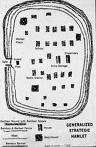
 So this is the plan: move our troops back into Afghan population centers to break the link between the Taliban army and the local population.
And here I thought the one thing that Generals of the post-Vietnam War era had learned was not to repeat the mistakes of America's defeat in Asia.
But the proposal by General Stanley McChrystal about how to fight the war in Afghanistan sounds an awful lot like the "strategic hamlet" tactics the US tried and failed with in Vietnam in the 1960s. It's no wonder Gen. McChrystal is getting such strong support from the British military. They invented the strategic hamlet approach in their crushing of national liberation movements like that of Malaya back in the 40s and 50s.
Here is how the Vietnam era plan was described in The Pentagon Papers:
The Strategic Hamlet Program was much broader than the construction of strategic hamlets per se. It envisioned sequential phases which, beginning with clearing the insurgents from an area and protecting the rural populace, progressed through the establishment of GVN infrastructure and thence to the provision of services which would lead the peasants to identify with their government. The strategic hamlet program was, in short, an attempt to translate the newly articulated theory of counter-insurgency into operational reality. The objective was political though the means to its realization were a mixture of military, social, psychological, economic and political measures.
But then as now we underestimated two things: first, the ability of the Viet Cong to resupply endlessly from the North and two, more importantly, the close family, ethnic and nationalist links between the VC and the local Vietnamese population.
The corrupt South Vietnamese regime tried to turn the program into its personal property thus further undermining its effectiveness.
The Pentagon Papers concluded: The weight of evidence suggests that the Strategic Hamlet Program was fatally flawed in its conception by the unintended consequence of alienating many of those whose loyalty it aimed to win.
Today, the Taliban are increasingly recognized as a Pashtun force, however reactionary, with deep ties in that entire region even on the Pakistani side of the border. Thus, barricading some Afghan villages may 'protect' them from the Taliban but they are not likely to lose touch entirely and it is hardly going to starve the Taliban fighters.
And who can guarantee that corrupt warlords in and around the Karzai regime, like the Diem regime in Vietnam, won't be able turn the program into a means to strengthen their fiefdoms?
Of course, more likely, the McChrystal 'plan' is a gauntlet thrown at the inexperienced inner circle surrounding Obama - Valerie Jarrett, Rahm Emanuel and David Axelrod. McChrystal is saying it's time to make good on that campaign promise that got you elected. The Pentagon is cashing the check that Obama wrote in the campaign.
Joe Biden was right about that foreign policy challenge early in the Obama Administration - it's coming from the US military, however, not Afghanistan.
One can always find similarities between wars in which guerrilla and conventional forces clash over prolonged periods. But to the best of my recollection there was no copper mining in Vietnam and in any event U.S. troops in Vietnam weren't helping to guard China's copper mining operations, as they are in Afghanistan.
And no matter how much I dredge my memory I cannot recall that the Vietnamese were sitting on huge reserves of oil, natural gas, gold, copper, iron ore, rare earths and just about every other coveted strategic natural resource you can think of. The Afghanis are sitting on such reserves; just about the only thing they don't have -- or which geologists haven't found yet -- are diamond lodes.
I've also been unable to recall that the Viet Cong made a fortune by guarding U.S. supply routes in Vietnam, as the Taliban have been doing for NATO supply routes in Afghanistan.
There are many other profound differences between Afghanistan and Vietnam, the eras in which the two wars were fought, and the peoples of the countries. But by gum after reading Steve's post I realized some things never change, including the famous human tendency to attempt to superimpose the past on the present no matter how much the present differs.
General Stan’s Afghan Plan: Déjà vu, all over again
By Stephen Diamond, October 4, 2009
So this is the plan: move our troops back into Afghan population centers to break the link between the Taliban army and the local population.And here I thought the one thing that Generals of the post-Vietnam War era had learned was not to repeat the mistakes of America's defeat in Asia.
But the proposal by General Stanley McChrystal about how to fight the war in Afghanistan sounds an awful lot like the "strategic hamlet" tactics the US tried and failed with in Vietnam in the 1960s. It's no wonder Gen. McChrystal is getting such strong support from the British military. They invented the strategic hamlet approach in their crushing of national liberation movements like that of Malaya back in the 40s and 50s.
Here is how the Vietnam era plan was described in The Pentagon Papers:
The Strategic Hamlet Program was much broader than the construction of strategic hamlets per se. It envisioned sequential phases which, beginning with clearing the insurgents from an area and protecting the rural populace, progressed through the establishment of GVN infrastructure and thence to the provision of services which would lead the peasants to identify with their government. The strategic hamlet program was, in short, an attempt to translate the newly articulated theory of counter-insurgency into operational reality. The objective was political though the means to its realization were a mixture of military, social, psychological, economic and political measures.
But then as now we underestimated two things: first, the ability of the Viet Cong to resupply endlessly from the North and two, more importantly, the close family, ethnic and nationalist links between the VC and the local Vietnamese population.
The corrupt South Vietnamese regime tried to turn the program into its personal property thus further undermining its effectiveness.
The Pentagon Papers concluded: The weight of evidence suggests that the Strategic Hamlet Program was fatally flawed in its conception by the unintended consequence of alienating many of those whose loyalty it aimed to win.
Today, the Taliban are increasingly recognized as a Pashtun force, however reactionary, with deep ties in that entire region even on the Pakistani side of the border. Thus, barricading some Afghan villages may 'protect' them from the Taliban but they are not likely to lose touch entirely and it is hardly going to starve the Taliban fighters.
And who can guarantee that corrupt warlords in and around the Karzai regime, like the Diem regime in Vietnam, won't be able turn the program into a means to strengthen their fiefdoms?
Of course, more likely, the McChrystal 'plan' is a gauntlet thrown at the inexperienced inner circle surrounding Obama - Valerie Jarrett, Rahm Emanuel and David Axelrod. McChrystal is saying it's time to make good on that campaign promise that got you elected. The Pentagon is cashing the check that Obama wrote in the campaign.
Joe Biden was right about that foreign policy challenge early in the Obama Administration - it's coming from the US military, however, not Afghanistan.
Sunday, October 4
Indonesia earthquakes: As an army of international aid workers converges on Padang city, hard-hit villages don't see a single aid worker
Just as we curse lawyers until we need one, we tend to have nothing good to say about reporters until we realize how much we depend on them to be our eyes and ears on the ground. So while the news that two Associated Press reporters bring us is upsetting, I want to start on a positive note by thanking Eric Talmadge and Irwan Firdaus for doing a great job. Their on-the-ground reporting for AP in this case is literal; the team had to walk four miles for 1-1/2 hours to investigate because landslides had cut off the road to a village they sought out.
Their exertions have brought to light that four days after an earthquake struck Indonesia, badly hit villages haven't received a bit of help from the outside world, unless we count packages of instant noodles dropped from a helicopter. Meanwhile so many rescue teams from around the world descended on Padang, the capital city of Indonesia's Western Sumatra province, that gridlock and chaos ensued.
Yet if Willie McMartin, operational director for International Rescue Corps is to be believed, the quakes were not as devastating to Padang as first feared. Willie's disaster team arrived in Padang on Saturday. He told the BBC that there were up to 30 teams like his in Padang and that some medical teams were spending their time "giving sweets to local kids" because the number of injuries was not as bad as had been feared. Willie also told the Beeb:
Of course they'd be used to such incidents. Indonesia is Earthquake Central; it's located on one of the world's most active fault lines. So one would think that after all these many years and disasters, and given that governments and aid agencies now have access to things like instant internet connections, they'd be able to better coordinate their relief efforts in Indonesia.
Wikipedia's article, 2009 Sumatra earthquakes features a table of countries that have sent aid to Indonesia and a detailed description of the type of aid each country is providing. The descriptions suggest there's no chain of command and that there's considerable redundancy of effort. That's an old story.
Everyone descends on the disaster area and does their own thing. Eventually it gets sorted out. On-site aid workers from different countries coordinate with each other and the local relief agencies, or at least make a stab at doing so, but this can take several days or weeks.
And as you can see from the AP report the sorting-out process can leave hard-hit regions without help in the early days of a disaster, when assistance is most needed.
The AP report also underscores that the arrival of so many aid workers (all of whom need to be housed, fed, and supplied with safe drinking water) places great strain on a disaster region's very limited supplies.
Given that a string of natural disasters has hit various Asian countries during the past month, I hope this galvanizes cash-strapped governments and international aid organizations to better coordinate their relief efforts.
The coordination should include prioritizing tasks based on a country's proximity to a projected disaster region. For example, the Wikipedia table shows that Saudi Arabia and Russia sent search-and-rescue ("sniffer") dogs to Indonesia. Given that every minute counts when trying to find people trapped under rubble, it would make better sense if Malaysia was the country to send sniffer dogs.
If Malaysia doesn't have such dogs, that's the point if countries coordinate responses to disasters. In the case of an earthquake in Indonesia the country closest to the archipelago should train sniffer dogs and have them and their handlers ready for rapid deployment.
The United Nations and other international organizations are always dialing for dollars when a disaster strikes. But disaster survivors can't sleep under money tents, drink money, or eat it.
What the survivors need most in the aftermath of a disaster are rapid response teams that arrive on the ground already coordinated. So, first do better advance planning, which will make cash donations for disaster victims go further.
I will close by mentioning the Associated Press staff writers in Jakarta who helped Eric Talmadge and Irwan Firdaus prepare their report. Thank you to Ali Kotarumalos, Anthony Deutsch, Niniek Karmini and Vijay Joshi.
Their exertions have brought to light that four days after an earthquake struck Indonesia, badly hit villages haven't received a bit of help from the outside world, unless we count packages of instant noodles dropped from a helicopter. Meanwhile so many rescue teams from around the world descended on Padang, the capital city of Indonesia's Western Sumatra province, that gridlock and chaos ensued.
Yet if Willie McMartin, operational director for International Rescue Corps is to be believed, the quakes were not as devastating to Padang as first feared. Willie's disaster team arrived in Padang on Saturday. He told the BBC that there were up to 30 teams like his in Padang and that some medical teams were spending their time "giving sweets to local kids" because the number of injuries was not as bad as had been feared. Willie also told the Beeb:
"The city has not been wiped out. I would say between 80 and 90% of it is still standing. Most of the damage is in shopping precincts and at a hotel and university building."Yes, well, if you're buried by a landslide, I can see how being crushed by concrete wouldn't be an issue for you. From the AP report, filed about 2:00 AM EDT Sunday
[...]
He said: "I'm pretty certain that the rescue work will finish today and we'll move into the relief and rebuilding phase to help those that survived."
Mr McMartin said two key roads linking outlying districts had been reopened. There are fears that rescue teams will find more casualties in the isolated villages but Mr McMartin was more optimistic.
He said: "Many people here live in single story homes so generally speaking they have suffered cuts and bruises. Yes, they need help, but so far there haven't been the fatalities we feared that you get from being crushed by concrete."
JUMANAK, Indonesia — With no outside help in sight, villagers used their bare hands Sunday to dig out rotting corpses four days after landslides triggered by a huge earthquake obliterated four hamlets in western Indonesia.The gridlock in Padang that Eric Talmadge and Irwan Firdaus describe is a common occurrence when aid organizations descend en masse on a disaster area. But as Willie McMartin points out about Padang's residents, "Life is getting back to normal for most people if they haven't lost a loved one. These people are used to such incidents."
Officials said at least 644 people were buried and presumed dead in the hillside villages in Padang Pariaman district on the western coast of Sumatra island. If confirmed it would raise the death toll in Wednesday's 7.6-magnitude earthquake to more than 1,300, with about 3,000 missing.
The extent of the disaster in remote villages was only now becoming clear. So far, aid and rescue efforts have been concentrated in the region's capital, Padang, a city of 900,000 people where several tall buildings collapsed.
But the quake was equally devastating in the hills of Pariaman, where entire hillsides were shaken loose, sending a cascade of mud, rocks and trees through least four villages.
Vice President Jusuf Kalla said there was little hope of finding anyone alive.
"We can be sure that they are dead. So now we are waiting for burials," he told reporters.
Where the villages once stood, there was only mud and broken palm trees. The mountainsides appeared to have been gouged bare by a gigantic backhoe.
The villages "were sucked 30 meters (100 feet) deep into the earth," said Rustam Pakaya, the head of Indonesia's Health Ministry crisis center. "Even the mosque's minaret, taller than 20 meters (65 feet), disappeared."
In Jumanak village, some 200 to 300 wedding guests at a restaurant were buried alive, including the bride, her 15-year-old brother, Iseh, told The Associated Press.
[...]
The adjacent villages of Pulau Aiya, Lubuk Lawe and Limo Koto Timur were also swept away.
[...]
Survivors in the area said no government aid or search teams had arrived, even four days after the quake. Only about 20 local policemen had come with a power shovel and body bags.
"My relatives were all killed, washed away by the landslide," said Dola Jambak, a 48-year-old trader, picking through the rubble of his house. "I lost seven relatives. Now all I can do is wait for the search teams. But they don't come."
The landslides cut off all roads, and the villages were accessible only by foot. An AP team reached Jumanak after walking about four miles (six kilometers) for 1 1/2 hours.
[...]
Aid also had not reached Agam district, which is much closer to Padang.
Laila, a villager in Agam district, said she and hundreds of others had no food, clothes and clean water.
"Our house is gone ... everything is gone," she sobbed.
She said a helicopter dropped some instant noodle packets Saturday. "But we need clean water to cook it," said Laila, who also uses one name. She said the local river had become dirty as people were using it to wash.
According to the National Disaster Management Agency, 83,712 houses, 200 public buildings and 285 schools were destroyed. Another 100,000 buildings and 20 miles (31 kilometers) of road were badly damaged, and five bridges had collapsed.
Meanwhile, hundreds of doctors, nurses, search and rescue experts and cleanup crews arrived Saturday at the Padang airport from around the world with tons of food, tents, medicine, clean water, generators and a field hospital.
But with no electricity, fuel shortages and telecommunication outages, the massive operation was chaotic.
Deliveries came on C-130 cargo planes from the United States, Russia and Australia. Japanese, Swiss, South Korean and Malaysian search and rescue teams scoured the debris. Tens of millions of dollars in donations came from more than a dozen countries to supplement $400 million the Indonesian government said it would spend over the next two months.
The U.N. said there are sufficient fuel stocks in the area for four days, but with the road to a major depot cut off by landslides, gasoline prices had jumped six-fold. [...]
Of course they'd be used to such incidents. Indonesia is Earthquake Central; it's located on one of the world's most active fault lines. So one would think that after all these many years and disasters, and given that governments and aid agencies now have access to things like instant internet connections, they'd be able to better coordinate their relief efforts in Indonesia.
Wikipedia's article, 2009 Sumatra earthquakes features a table of countries that have sent aid to Indonesia and a detailed description of the type of aid each country is providing. The descriptions suggest there's no chain of command and that there's considerable redundancy of effort. That's an old story.
Everyone descends on the disaster area and does their own thing. Eventually it gets sorted out. On-site aid workers from different countries coordinate with each other and the local relief agencies, or at least make a stab at doing so, but this can take several days or weeks.
And as you can see from the AP report the sorting-out process can leave hard-hit regions without help in the early days of a disaster, when assistance is most needed.
The AP report also underscores that the arrival of so many aid workers (all of whom need to be housed, fed, and supplied with safe drinking water) places great strain on a disaster region's very limited supplies.
Given that a string of natural disasters has hit various Asian countries during the past month, I hope this galvanizes cash-strapped governments and international aid organizations to better coordinate their relief efforts.
The coordination should include prioritizing tasks based on a country's proximity to a projected disaster region. For example, the Wikipedia table shows that Saudi Arabia and Russia sent search-and-rescue ("sniffer") dogs to Indonesia. Given that every minute counts when trying to find people trapped under rubble, it would make better sense if Malaysia was the country to send sniffer dogs.
If Malaysia doesn't have such dogs, that's the point if countries coordinate responses to disasters. In the case of an earthquake in Indonesia the country closest to the archipelago should train sniffer dogs and have them and their handlers ready for rapid deployment.
The United Nations and other international organizations are always dialing for dollars when a disaster strikes. But disaster survivors can't sleep under money tents, drink money, or eat it.
What the survivors need most in the aftermath of a disaster are rapid response teams that arrive on the ground already coordinated. So, first do better advance planning, which will make cash donations for disaster victims go further.
I will close by mentioning the Associated Press staff writers in Jakarta who helped Eric Talmadge and Irwan Firdaus prepare their report. Thank you to Ali Kotarumalos, Anthony Deutsch, Niniek Karmini and Vijay Joshi.
Saturday, October 3
Indonesia's earthquakes and President Obama's promise of American aid. Not so fast, sir.
Akhiruddin displayed the list of 15 contractors on his Microsoft Excel spreadsheet, showing a web of companies and subcontractors. Most appear to be controlled by a few individuals related to one another. “They were supposed to sink foundations up to 60cm,” he said. “But we found they’d just propped wooden stilts on stones and dug no foundations at all. The timber was substandard and already warping.”
A tragedy is unfolding in Indonesia, which was hit by powerful earthquakes on Wednesday and Thursday in the country's Sumatra region. The current death toll is around 750 but the United Nations estimates that as many as 4,000 people could be buried under rubble.
The impulse for those standing outside the tragedy is to race to help, and aid organizations from around the world have already converged on Indonesia.
Yesterday President Barack Obama spoke with Indonesian President Susilo Bambang Yudhoyono and according to a White House statement "offered, on behalf of the United States, to do everything we can to help alleviate the suffering and provide assistance to the relief operation."
I appreciate that he made the offer. Yet the story unfolds with sickening predictability, an old story, always the same story in Indonesia and in many parts of the world. In one area the only people who survived the earthquakes were those who were not caught in the death trap of their houses. Concrete, particularly sub-standard concrete and building practices, earthquakes, and humans don't mix well.
The stench of corruption in Indonesia is as strong as the stench of decomposing corpses after every natural disaster to strike that country, which sits in the Pacific "Ring of Fire," and which sees frequent earthquakes, volcanic eruptions, and tsunamis.
This is not the time for recriminations but it's never a good time. Aid workers and government officials can become furious when the subject of corruption is broached, particularly while a disaster is unfolding. They say, 'Yes, forty percent of all aid is stolen, but that's not a reason to withhold aid to the neediest.'
The problem is that the theft of forty percent (the figure is just an estimate; in many instances theft from an aid/loan project is much higher) has become the global standard. This is because aid from wealthy governments, and the NGOs that work with them, has been based largely on defense and trade considerations.
The desire of the wealthy donor governments to buy influence with the recipient governments, not the desire to help the neediest, has been the motive for much charity and many development loans. Given that mindset, corruption has been greatly tolerated by the donor governments because it's considered part of the cost of doing business.
So over the past half century, which saw the veritable industrialization of international aid and development loans, corruption that was spawned by stealing from such funds spread like a cancer across the world; it financed criminal networks and terrorist organizations, which are now threatening to destroy civilization.
Another argument is that emergency relief assistance is a special category of aid that shouldn't be constrained by draconian attempts to rein in corruption. The spirit of the argument has merit but it doesn't square when donor governments are deeply in debt and have to borrow in order to give aid.
The page has turned. We're in a new era, and foreign aid initiatives of all kinds must adjust to the new realities. For the Americans, that means every aid dollar from public and private sources is precious.
Indonesia's government has been working hard in recent years to address their country's corruption, which is so endemic that President Suharto once told Paul Wolfowitz, "What you Westerners consider corruption we call taking care of family."
I can't speak for the entire West but what we Americans should consider corruption is the theft of our dollars from us.
I once suggested on this blog in all seriousness that Soccer Moms be put in charge of budgets for U.S. aid projects. I'm talking about the kind of mothers who calculate whether driving ten miles to a sale is worth the price of the gasoline used in the round trip.
That penny-pinching attitude must rule U.S. foreign aid from here on out. It's based on the view that only by conserving our funds can we afford to donate to a host of good causes in other countries. That means we develop zero tolerance for corruption no matter how awful the tragedy crying out for aid. On a very limited budget, we can only afford to help the neediest when we don't let ourselves be robbed blind.
To pound home the point I've dredged up this April 16, 2006 report from the (London) Sunday Times Online
A tragedy is unfolding in Indonesia, which was hit by powerful earthquakes on Wednesday and Thursday in the country's Sumatra region. The current death toll is around 750 but the United Nations estimates that as many as 4,000 people could be buried under rubble.
The impulse for those standing outside the tragedy is to race to help, and aid organizations from around the world have already converged on Indonesia.
Yesterday President Barack Obama spoke with Indonesian President Susilo Bambang Yudhoyono and according to a White House statement "offered, on behalf of the United States, to do everything we can to help alleviate the suffering and provide assistance to the relief operation."
I appreciate that he made the offer. Yet the story unfolds with sickening predictability, an old story, always the same story in Indonesia and in many parts of the world. In one area the only people who survived the earthquakes were those who were not caught in the death trap of their houses. Concrete, particularly sub-standard concrete and building practices, earthquakes, and humans don't mix well.
The stench of corruption in Indonesia is as strong as the stench of decomposing corpses after every natural disaster to strike that country, which sits in the Pacific "Ring of Fire," and which sees frequent earthquakes, volcanic eruptions, and tsunamis.
This is not the time for recriminations but it's never a good time. Aid workers and government officials can become furious when the subject of corruption is broached, particularly while a disaster is unfolding. They say, 'Yes, forty percent of all aid is stolen, but that's not a reason to withhold aid to the neediest.'
The problem is that the theft of forty percent (the figure is just an estimate; in many instances theft from an aid/loan project is much higher) has become the global standard. This is because aid from wealthy governments, and the NGOs that work with them, has been based largely on defense and trade considerations.
The desire of the wealthy donor governments to buy influence with the recipient governments, not the desire to help the neediest, has been the motive for much charity and many development loans. Given that mindset, corruption has been greatly tolerated by the donor governments because it's considered part of the cost of doing business.
So over the past half century, which saw the veritable industrialization of international aid and development loans, corruption that was spawned by stealing from such funds spread like a cancer across the world; it financed criminal networks and terrorist organizations, which are now threatening to destroy civilization.
Another argument is that emergency relief assistance is a special category of aid that shouldn't be constrained by draconian attempts to rein in corruption. The spirit of the argument has merit but it doesn't square when donor governments are deeply in debt and have to borrow in order to give aid.
The page has turned. We're in a new era, and foreign aid initiatives of all kinds must adjust to the new realities. For the Americans, that means every aid dollar from public and private sources is precious.
Indonesia's government has been working hard in recent years to address their country's corruption, which is so endemic that President Suharto once told Paul Wolfowitz, "What you Westerners consider corruption we call taking care of family."
I can't speak for the entire West but what we Americans should consider corruption is the theft of our dollars from us.
I once suggested on this blog in all seriousness that Soccer Moms be put in charge of budgets for U.S. aid projects. I'm talking about the kind of mothers who calculate whether driving ten miles to a sale is worth the price of the gasoline used in the round trip.
That penny-pinching attitude must rule U.S. foreign aid from here on out. It's based on the view that only by conserving our funds can we afford to donate to a host of good causes in other countries. That means we develop zero tolerance for corruption no matter how awful the tragedy crying out for aid. On a very limited budget, we can only afford to help the neediest when we don't let ourselves be robbed blind.
To pound home the point I've dredged up this April 16, 2006 report from the (London) Sunday Times Online
Massive fraud hits tsunami aid
Michael Sheridan, Banda Aceh
THIS was supposed to be the scene of the world’s greatest aid effort, but endemic corruption has drained it of millions of pounds while leaving tens of thousands of tsunami victims stranded in tents.
Banda Aceh was ground zero in the tsunami of Boxing Day 2004, which claimed more than 200,000 lives across the Indian Ocean. More people died here than anywhere else.
Now two charities that raised unprecedented sums in Britain have fallen victim to rip-offs that ruined their efforts to house the survivors and have forced them to suspend key projects.
Save the Children and Oxfam were both targeted by unscrupulous building contractors who took their money, only to build structures so flimsy that a new wave would wash them away.
Save the Children may have to write off more than £400,000 worth of building contracts. Oxfam, which counts its losses in “tens of thousands of pounds”, has stopped its construction work around Banda Aceh until investigators establish the extent of the abuse.
Indonesian anti-corruption campaigners, who uncovered the Save the Children case, have also assembled a dossier of fraud and incompetence that reveals why the Jakarta government and international aid agencies have failed in their promises to the survivors of Aceh.
“We calculate that 30% to 40% of all the aid funds, Indonesian and international, have been tainted by graft,” said Akhiruddin Mahjuddin, an accountant who investigates aid spending for the Aceh Anti-Corruption Movement.
The movement is partly funded by foreign donors and its findings are regarded as credible by embassies and aid agencies.
The betrayal is all the more cruel because it has been committed, in the main, by the Acehnese themselves. Indonesia, which lost more than 131,000 people, got the most pledges of aid, totalling $6.5 billion (£3.7 billion). It has already collected $4.5 billion in funds.
The aid effort won praise for saving thousands of lives by prompt action to stop disease and to restore clean water supplies.
Yet the bereaved, the orphans and the dispossessed are eking out their 16th month in tents and shacks flung down amid palm groves and rice paddies around this sweep of ravaged coast, ringed by sharp-toothed green mountains, in the north of Sumatra.
Funds have been frozen. Projects wait on hold while worried aid administrators fly in and out of Banda Aceh clutching audit reports. Bureaucratic and political paralysis means only 10.4% of the funds allocated by the government have actually been spent, said Akhiruddin.
Of the 170,000 homes promised to the people of Aceh, only about 15,000 have been built, one year and four months after the tsunami.
Save the Children intended to help bridge the gap by funding 741 buildings, including schools, in the Bireun, Pidie and Lhokseumawe districts of the province, issuing contracts worth £404,000.
Akhiruddin displayed the list of 15 contractors on his Microsoft Excel spreadsheet, showing a web of companies and subcontractors. Most appear to be controlled by a few individuals related to one another.
“They were supposed to sink foundations up to 60cm,” he said. “But we found they’d just propped wooden stilts on stones and dug no foundations at all. The timber was substandard and already warping.”
His team recommended that Save the Children demolish all 741 buildings and start again. The contractors have been dismissed but neither compensation nor criminal proceedings are likely, he said.
Save the Children issued a statement to the Indonesian media, acknowledging problems with the Aceh projects and promising to put them right.
Jasmine Whitbread, chief executive of Save the Children, said this weekend: “During routine evaluation and monitoring, we discovered the poor workmanship and immediately took steps to rectify the situation, including terminating the contract and instigating repairs. We will tolerate nothing less than the most efficient and effective use of money.”
Oxfam has sent in five investigators, including a former police officer, to unravel the skein of apparent corruption that has led to losses in its Banda Aceh office and forced it to suspend construction.
“We took the decision because of the need for accountability and also to make it clear that aid agencies are serious about these issues,” said Craig Owen, a spokesman. “We are committed to spending £42m here over three years and you have to remember that this is like rebuilding an area the size of Birmingham: it’s a challenge.”
Oxfam plans to resume work in phases while the investigation team prepares its report and recommendations.
According to Akhiruddin, however, these woes are a mere fraction of the frauds. Among the cases that his investigation uncovered were:
o Indonesia’s government reconstruction agency spent £6.3m on temporary housing that was either overpriced or fictitious. “I went to one site in Aceh Besar and found no barracks had been built at all,” said Akhiruddin.
o More than £40,000 was embezzled from a children’s food distribution centre.
o One aid group paid for 70 new houses, only to find that its own local staff had occupied most of them.
o Another bought 100 new fishing boats for £1,166 each when a fair price was £800 per vessel. The cost difference came to £86,600.
o A German aid group sent £1.4m raised from provincial newspaper readers, promising to rebuild 400 homes. So far one has been built.
The government reconstruction agency is trying to fight internal corruption, said Akhiruddin. It cancelled 90% of tenders in one two-month period last year. But having issued a blacklist of 18 companies deemed unsuitable for contracts, it hastily withdrew the list. Kuntoro Mangkusubroto, the agency’s head, is respected for his personal honesty and has pledged to clamp down.
Last week Susilo Bambang Yudhoyono, Indonesia’s president, vowed there would “be no safe haven” for the corrupt. He was backed up by Paul Wolfowitz, president of the World Bank, who has spearheaded tough lending guidelines for borrowers such as Indonesia.
But the politics and scrutiny all take up time. “The consequences are that people’s suffering is being prolonged unnecessarily,” said Akhiruddin.
While the contractors and their accomplices enjoy the fruits of their misdeeds, one young survivor, a girl named Fajriyana, is still living in a blue plastic tent in the mud.
The Sunday Times found Fajriyana there last December and told her story of miraculous survival, of the loss of her mother and her reunion after many months with her father and sisters, who had believed that she was dead.
Fajriyana celebrated her fourth birthday in the tent on February 4. “I have scraped together all our savings to buy us a small piece of land,” said her father, Nasruddin, a mechanic. “Now we are waiting for the government, God willing, to build us a new house.”
It may be a long wait. And the soaking rains, with their cargo of dampness and disease, are coming over the teeth of the mountains soon.
Philippines spared Parma's worst. Now we race the winds again. It doesn't have to be a fancy prayer. Just try. (UPDATED)
2:45 AM EDT: Parma didn't entirely spare the Philippines. Whole lot of trouble over there in the Asian Pacific -- earthquake, typhoons, tsunami. AP report:
2nd typhoon lashes northern PhilippinesOct. 3 (Bloomberg):
By ROHAN SULLIVAN (AP) – 59 minutes ago
MANILA, Philippines — Powerful winds toppled power poles and trees Saturday in the northern Philippines as the second typhoon in eight days bore down on the country. Farther north, Taiwan began evacuating villages also in the path of the storm.
The Philippines is still reeling from a Sept. 26 typhoon that caused the worst flooding in 40 years, killing 288. Officials said the risk of another major disaster was easing because the new storm, Typhoon Parma, had changed direction slightly and was no longer headed for heavily populated regions of the main island of Luzon.
But heavy rain was falling across a swath of Luzon that is still flooded, and violent winds were battering the far-north province of Cagayan.
Trees were uprooted and power pylons toppled in the provincial capital of Tuguegarao, local government official Bonifacio Cuarteros told The Associated Press by telephone.
"We pray that we won't have a worse outcome, but with this kind of situation, we cannot really say," he said.
Parma was due to strike the Philippines' northeastern tip on Saturday night, instead of hitting north-central Luzon on Saturday afternoon, as earlier forecast. It was packing sustained winds that had also weakened slightly, to 108 mph (175 kph), down from 121 mph (195 kph) on Friday.
The better news for the Philippines was bad news for Taiwan, which issued a storm warning and began moving people out of villages in the southern county of Kaohsiung, said local official Lin Chun-chieh. Flash flooding from the last typhoon to hit the Kaohsiung killed about 700 people in August.
Typhoon Ketsana last month damaged the homes of more than 3 million people in the Philippines. It went on to hit other Southeast Asian countries, killing 99 in Vietnam, 14 in Cambodia and 16 in Laos.
It was part of more than a week of destruction in the Asia-Pacific region that has claimed more than 1,500 lives so far: an earthquake Wednesday in Indonesia; a tsunami Tuesday in the Samoan islands; and Typhoon Ketsana across Southeast Asia.
Typhoon Parma shifted course and weakened last night, reducing its effect on Manila and the southern part of the Philippine island of Luzon. It’s forecast to make landfall in northern Luzon later today before heading toward Taiwan.
The respite will help government officials and relief organizations to deal with the effects of Tropical Storm Ketsana, which flooded Manila and surrounding provinces a week ago, forcing more than 800,000 to abandon their homes. Schools, many used as evacuation and relief operation centers, were shut all week. Some areas remain flooded while others, including Marikina in eastern Manila, are mired in as much as two feet of mud.
“It’s a big help, we weren’t ready for another catastrophe,” Marikina Mayor Marides Fernando said in a phone interview. “Prayers worked; everyone was praying. We can go back to our homes.” Most of the municipality’s 10,000 remaining evacuees may be home before Monday, allowing schools to reopen.
Parma is now traveling in a northwesterly direction instead of a west-northwest path, Philippine weather bureau Director Nathaniel Cruz said in a phone interview. Parma was 370 kilometers (230 miles) northeast of Manila at 4 a.m. local time, according to the U.S. Navy Joint Typhoon Warning Center. Parma’s winds decreased to 185 kilometers per hour from 222 kilometers per hour.
Canceled Signal
The bureau canceled the public storm signal over Manila and some surrounding provinces and reduced the signal to No. 1 from No. 2 in the Bicol region southeast of Manila.
In Catanduanes, the province nearest to Parma’s path last night, “the wind wasn’t devastating,” Lieutenant Colonel Romeo Basco, the local Army commander there, said in a phone interview. “Even our squad tents didn’t fly off. If it didn’t affect our tents, more so houses.”
While landslides partially blocked roads in three villages, many of the 6,000 persons evacuated yesterday are already returning home.
Albay province, also in the Bicol region, is sending home the 15,300 families it evacuated in the past two days, Governor Joey Salceda said. According to initial reports, damage was limited to flooding of some rice paddies and the roof being blown off one “old” building, he said.
Santa Ana
The typhoon is forecast to make landfall tonight around Santa Ana in Cagayan province north of Manila, the weather bureau’s Cruz said in a phone interview. Cagayan and surrounding provinces remain under signals No. 2 and No. 3, indicating winds as strong as 185 kilometers per hour. The Central Weather Bureau in Taiwan, north of the Philippines, issued a sea warning.
Isabela province immediately south of Cagayan has prepared trucks, rubber boats and outriggers for rescue and relief operations, Vice Governor Ramon Reyes said in a phone interview. They’ve packed more than 10,000 bags with rice, canned corned beef and sardines, coffee, noodles and sugar, he said. Farmers tried to save what they could of the rice crop, much of which is sold in Manila.
“We expect the province to be part of the center of the storm,” Reyes said. “If this harvest gets destroyed, the country will have a shortage.” Ketsana “didn’t affect the province and we even sent relief goods to Manila, he said. “The situation might reverse. We hope it wouldn’t come to that.”
Friday, October 2
Parma ("Pepeng") bears down on Luzon (UPDATED)
UPDATE 8:30 PM EDT -
***************************
Update to my post this morning: The typhoon has veered but I don't know whether the new path is better or worse. A correspondent has just informed me that it's headed for northern Luzon (the main island), then onto East Asia. He added, "Bad news."
Canada is already taking in Filipino refugees from the earlier storm. Doctors Without Borders, the International Red Cross, and Christian organizations from just about every denomination are gearing up to pour in fresh aid, but the terror is that parts of Luzon are already flooded from the earlier storm.
And this is the worst time for a huge natural disaster to strike anywhere in the world; aid organizations, both public and private, are stretched very thin because of the economic downturn.
So whatever prayers you know, please say them now. The report this morning said the storm is expected to make landfall shortly before or after the dawn. So news should start coming in within about two hours as to how the storm is breaking on land.
Typhoon 'Pepeng' [international name, "Parma"]accelerates as it moves to Cagayan.More prayers, please.
The Philippines Star - Updated October 03, 2009 07:56 AM [Philippines time]
MANILA, Philippines -- Typhoon "Pepeng" has accelerated as it continues to move towards Cagayan, the Philippine Atmospheric Geophysical and Astronomical Services Administration (Pagasa) said in its 5 a.m. bulletin.
"Pepeng" has changed its course late last night and was reported to be heading to Cagayan instead of the Isabela-Aurora area as early reported.
Pagasa said as of 4 a.m. today, typhoon "Pepeng" was spotted at 260 kms southeast of Aparri, Cagayan with maximum sustained winds of 175 kph and gustiness of up to 210 kph. It is forecast to move northwest at 17 kph.
The typhoon is expected to make landfall over northern Cagayan this evening.
Cagayan, Babuyan island, Calayan island and Northern Isabela were placed under storm signal no. 3.
***************************
Update to my post this morning: The typhoon has veered but I don't know whether the new path is better or worse. A correspondent has just informed me that it's headed for northern Luzon (the main island), then onto East Asia. He added, "Bad news."
Canada is already taking in Filipino refugees from the earlier storm. Doctors Without Borders, the International Red Cross, and Christian organizations from just about every denomination are gearing up to pour in fresh aid, but the terror is that parts of Luzon are already flooded from the earlier storm.
And this is the worst time for a huge natural disaster to strike anywhere in the world; aid organizations, both public and private, are stretched very thin because of the economic downturn.
So whatever prayers you know, please say them now. The report this morning said the storm is expected to make landfall shortly before or after the dawn. So news should start coming in within about two hours as to how the storm is breaking on land.
Memo to Glenn Beck: Don't whine; it's unseemly
Mr Beck needs to get a grip. He needs to stop complaining to his radio audience that people on the Left and Right are out to get him. This is like complaining he's being attacked by a gang of nematodes. Who the hell pays any attention to these critics unless they're taking aim at Glenn Beck?
Mr Beck, follow the advice that the Duchess of Windsor embroidered on a pillow: "Never complain, never explain."
Let those who're sniping at you, to include the White House, sputter and stew all they want. And just keep doing what you're doing on your TV show because you're right on time.
Mr Beck, follow the advice that the Duchess of Windsor embroidered on a pillow: "Never complain, never explain."
Let those who're sniping at you, to include the White House, sputter and stew all they want. And just keep doing what you're doing on your TV show because you're right on time.
Memo to Valerie Jarrett: Get the hell out of Washington
I've lost count of the number of times Valerie Jarrett's dizzy advice to her dear 'baby brother' President Barack Obama has gotten egg all over his face. But with the Olympics stunt she's managed to get egg all over the nation's face, and reinforce the image of The Ugly American Cubed that Hillary Clinton presented in China and Africa.
I don't want to hear it's a 'save' that President Obama met with General Stanley McChrystal for 25 minutes aboard Air Force One in Copenhagen. Mr Obama would have gone to Copenhagen whether or not he could have met with the general.
Worse, Jarrett is so much enjoying her power-tripping in the White House that she couldn't keep her mouth shut. She had to tell the Chicago Sun-Times' Lynn Sweet that "an apt comparison to Chicago's IOC campaign would be the Iowa caucus," by way of defending Obama's intervention with the IOC.
No it wouldn't be an apt comparison, you hare-brained hayseed. Everyone knew that South America was long overdue as an Olympics host. The whole world knew with the exception of Oprah and Jarrett.
So while it's not unheard of for a national leader to make a personal appeal to the IOC, in this case and at this particular juncture -- during which Brazil along with other BRIC countries is having to clean up the mess the Federal Reserve made -- it was awful form for an American President to butt his nose in.
I also don't want to hear that Jarrett wasn't the one who twisted Obama's arm to make a personal pitch for Chicago; of course she did it. The upshot was that his Iowa caucus style of campaigning looked exactly as it was: an American President throwing his weight around, using his popularity in an attempt to embarrass the IOC into giving the 2010 Olympics venue to Chicago.
Memo to President Obama: Try that kind of stunt one more time and see how quickly your popularity evaporates within the 'global community.'
I understand that Mr Obama and the First Lady are very attached to Jarrett and that she's given them great moral support during their transition period to the White House. Ding ding ding! Transition time's up! Time for Ms Jarrett to take herself back to Chicago.
And by the way she's welcome to take Hillary Clinton with her. Why Mr Obama hasn't yet told Ms Clinton to resign is beyond me. I keep getting complaints from readers that I've not been addressing foreign policy issues since Mr Obama came to office. It's because I'm too busy spitting hayseeds out of my mouth every time I study the doings at State. Ptweh! Pteweh! Go! Go! In the name of God, go! Out of Washington, the two of you! Shoo!
I don't want to hear it's a 'save' that President Obama met with General Stanley McChrystal for 25 minutes aboard Air Force One in Copenhagen. Mr Obama would have gone to Copenhagen whether or not he could have met with the general.
Worse, Jarrett is so much enjoying her power-tripping in the White House that she couldn't keep her mouth shut. She had to tell the Chicago Sun-Times' Lynn Sweet that "an apt comparison to Chicago's IOC campaign would be the Iowa caucus," by way of defending Obama's intervention with the IOC.
No it wouldn't be an apt comparison, you hare-brained hayseed. Everyone knew that South America was long overdue as an Olympics host. The whole world knew with the exception of Oprah and Jarrett.
So while it's not unheard of for a national leader to make a personal appeal to the IOC, in this case and at this particular juncture -- during which Brazil along with other BRIC countries is having to clean up the mess the Federal Reserve made -- it was awful form for an American President to butt his nose in.
I also don't want to hear that Jarrett wasn't the one who twisted Obama's arm to make a personal pitch for Chicago; of course she did it. The upshot was that his Iowa caucus style of campaigning looked exactly as it was: an American President throwing his weight around, using his popularity in an attempt to embarrass the IOC into giving the 2010 Olympics venue to Chicago.
Memo to President Obama: Try that kind of stunt one more time and see how quickly your popularity evaporates within the 'global community.'
I understand that Mr Obama and the First Lady are very attached to Jarrett and that she's given them great moral support during their transition period to the White House. Ding ding ding! Transition time's up! Time for Ms Jarrett to take herself back to Chicago.
And by the way she's welcome to take Hillary Clinton with her. Why Mr Obama hasn't yet told Ms Clinton to resign is beyond me. I keep getting complaints from readers that I've not been addressing foreign policy issues since Mr Obama came to office. It's because I'm too busy spitting hayseeds out of my mouth every time I study the doings at State. Ptweh! Pteweh! Go! Go! In the name of God, go! Out of Washington, the two of you! Shoo!
"Super typhoon" Parma takes aim at flood-soaked Philippines
Readers who've been with this blog for years might have noticed that I become short-tempered while I watch a major hurricane head for a human population. I've never known why this is so; perhaps I resent disrupting my schedule for hours of prayer. Whatever the reason for my foul mood this time is no exception.
So I really do wish "some" weather experts would stop using the vague term "climate change." And I really, really, really wish reporters would stop adding such vague statements to their news items about a natural disaster bearing down on people.
With that off my chest, the storm is expected to hit land before dawn on Saturday. (The Philippines is 13 hours ahead of the eastern United States time zone.)
This one looks very bad -- so bad it's been dubbed a "super" typhoon. Typhoons can create huge storm surges in addition to the high winds and heavy rains they generate. Parts of Luzon are already a disaster area and still flooded because of tropical storm Ketsana:
Whether sunspots significantly impact Earth's climate is still a matter for speculation according to the National Weather Service. But Don Easterbrook, a global warming skeptic and Professor Emeritus of geology at Western Washington University, has claimed there's a cause-and-effect relationship between sunspot activity and measured changes in global temperatures on Earth.
And this is an El Niño year, although I've no idea whether it's affecting typhoon activity in the Western Pacific Ocean.
All I know for sure is that a whole lot of trouble is going to strike Luzon unless by some miracle the storm veers away from land.
Prayer time.
So I really do wish "some" weather experts would stop using the vague term "climate change." And I really, really, really wish reporters would stop adding such vague statements to their news items about a natural disaster bearing down on people.
With that off my chest, the storm is expected to hit land before dawn on Saturday. (The Philippines is 13 hours ahead of the eastern United States time zone.)
This one looks very bad -- so bad it's been dubbed a "super" typhoon. Typhoons can create huge storm surges in addition to the high winds and heavy rains they generate. Parts of Luzon are already a disaster area and still flooded because of tropical storm Ketsana:
Philippines looks to God as super typhoon loomsIf the AFP reporter wants to speculate about typhoon patterns this year, a correspondent informs me that sunspot activity has been very low, with activity in 2009 on track to be the fifth lowest since 1913, and with 2008 the second lowest since that year.
By Mynardo Macaraig (AFP - 1:00 AM EDT)
MANILA — Millions of terrified Philippine flood survivors hunkered down Friday as a super typhoon approached, with officials pleading for God to save the disaster-struck Southeast Asian country from more devastation.
Typhoon Parma, packing gusts of 230 kilometres (145 miles) an hour, was forecast to hit rural areas in the north of the Philippines' main island of Luzon before dawn on Saturday.
The government warned Parma would tear down houses in its direct path, while likely bringing more heavy rain and high winds to the nation's capital, Manila, and nearby areas still recovering from record floods last weekend.
"I am more worried about the wind, the damage it can do, breaking window glass, and blowing the roof off the house. Floods are easier to face," said Annette Kawilan, whose Manila house was flooded in Saturday's deluge.
"Basically you want to remain where you are because you want to save your things, your family. We want to be together. We don't know where to go."
Kawilan was among the more than three million people affected by tropical storm Ketsana, which killed at least 293 people as it pounded Manila and surrounding areas with the heaviest rains in four decades.
Nearly 400,000 people remain in under-prepared schools, gymnasiums and other makeshift evacuation centres.
The rains from Parma threaten to worsen already squalid conditions and further hamper relief supplies for the survivors in those shelters.
Many parts of Manila and neighbouring regions also remain under water -- with mud, debris and trash still blocking drains -- so any more rain could lead to another surge in flood waters.
And because of Ketsana, much soil across Luzon cannot absorb too much more rain, meaning storms do not have to be as heavy as normal for floods to occur, the government weather station warned.
Meanwhile, hundreds of kilometres to the north in the rural provinces of Isabela and Aurora, people were preparing for the full onslaught of Parma, which the government has termed a "super typhoon".
"These gusts are strong enough to destroy houses, to rip the roofs off houses," Nathaniel Cruz, head of the weather forecasting unit, said in a radio interview.
"The best thing we can do for the lives of our countrymen is to look for the strongest building where our countrymen can take refuge while the storm is passing."
Cruz warned people in Aurora and Isabela not to be fooled into thinking the typhoon would not wreak havoc, just because the winds had yet to be be felt.
"They might think it isn't something to worry about but from our radar and satellite image, we can see it is an incredibly strong typhoon," he said.
The governor of Aurora, Bella Angara, said officials were preparing for the worst and hoping for the best.
"The prediction is that this typhoon is very strong. Our prayers are that no lives will be lost. God answered our prayers (during tropical storm Ketsana) and we are hopeful we will be spared again," Angara said on radio.
Most of the Philippines' population of 92 million is devoutly Catholic.
Aurora is a mainly rural province of mountains and rice plains, with a population of about 187,000 people. Isabela is another fertile farming region but much bigger and has a population of about 1.4 million.
The Philippines is normally battered by about 20 typhoons annually, but the pattern has changed in recent years and the ferocity of some has increased.
Some weather experts have blamed the changing nature and pattern of the typhoons on climate change.
Whether sunspots significantly impact Earth's climate is still a matter for speculation according to the National Weather Service. But Don Easterbrook, a global warming skeptic and Professor Emeritus of geology at Western Washington University, has claimed there's a cause-and-effect relationship between sunspot activity and measured changes in global temperatures on Earth.
And this is an El Niño year, although I've no idea whether it's affecting typhoon activity in the Western Pacific Ocean.
All I know for sure is that a whole lot of trouble is going to strike Luzon unless by some miracle the storm veers away from land.
Prayer time.
Thursday, October 1
Not that Chinese bureaucrats are anal-retentive or anything
The term anal-retentive is used conversationally to describe a person with such attention to detail that the obsession becomes an annoyance to others, and can be carried out to the detriment of the anal-retentive person.
October 1:
I suppose you wouldn't believe me if told you that the reason China isn't a democracy is because Chinese technocrats are still trying to figure out how to perfect democratic government.
Ah, well, this isn't the era for an American to point out Chinese blind spots. But it doesn't have to be perfect, for crying out loud. You just get out there and do it.
Sen no Rikyū, where are you when we need you?
October 1:
BEIJING (Reuters) - China's air force deployed a "magic-like" range of chemicals and technology to clear Beijing's smoggy air for a grand parade marking the 60th anniversary of Communist China ... Chemists and officials worked for weeks on the country's most ambitious ever attempt at weather modification ... The evening before the parade chemicals were fired into the hazy skies, and a light rain washed the city clean. Surrounding provinces had already been loading clouds with silver iodide and dry ice, to try and force rain to fall before it reached Beijing ... Contingency plans allowed for the teams to use one kind of chemicals to bring down rain in the parade area, and another to hold it off ...October 1:
BEIJING (Reuters) - China celebrated its ascendance with a show of goose-stepping troops, gaudy floats and nuclear-capable missiles in the nation's capital on Thursday, 60 years after Mao Zedong proclaimed its embrace of communism.August 22, 2007:
Thousands of troops cleared central Beijing of all passers-by for the anniversary parade for the birth of the People's Republic of China on October 1, 1949 ... Even those living on the parade route were banned from peeking out their windows. Flights into Beijing were stopped during the parade and even kites and pet pigeons grounded.
"Go home! Leave now! Go watch TV at home!" a portly policeman bellowed through a bullhorn at a crowd trying to gather miles from the square.
... China has banned Buddhist monks in Tibet from reincarnating without government permission. According to a statement issued by the State Administration for Religious Affairs, the law, which goes into effect next month and strictly stipulates the procedures by which one is to reincarnate, is "an important move to institutionalize management of reincarnation."Self-described China experts will tell you that the whole problem is the Chinese Communist Party and their attempts to hold onto power. If only the problem was that logical.
I suppose you wouldn't believe me if told you that the reason China isn't a democracy is because Chinese technocrats are still trying to figure out how to perfect democratic government.
Ah, well, this isn't the era for an American to point out Chinese blind spots. But it doesn't have to be perfect, for crying out loud. You just get out there and do it.
Sen no Rikyū, where are you when we need you?
Wednesday, September 30
Barack Obama and the family of William Ayers
Not long after posting the following entry I heard an interview with Newt Gingrich on the Tom Joyner Morning Show, a syndicated radio show aimed at the 'black community.' Newt described bipartisan efforts to improve America's schools and had high praise for Arne Duncan, President Barack Obama's Secretary of Education.
I've stated before on this blog that it's my firm belief that if not for Steve Diamond sounding the alarm last year there would have been a very different education secretary, one whose views reflected those of William Ayers's.
Although Steve's warnings were suppressed by the mainstream media during the presidential campaign, he is a well known figure in labor union circles. He is also well known to Obama's circle, and particularly known for his tenacity.
So while Arne Duncan is not perfect, next to what could have been in charge of American public education reform he is a fortunate pick.
But now to turn back the clock, to before Barack Obama came to the White House --
Introduction
From Who "sent" Obama? by Stephen Diamond, originally published April 22, 2008:
On Friday Stephen Diamond sent me his latest post on his King Harvest blog, which detailed his interview with a retired postman, Alan Hulton. Mr Hulton claimed to have had a conversation with Barack Obama outside the home of William Ayers's parents that Steve judged must have taken place in the mid-1980s.
Hulton's account contains a startling claim that if true might place Barack Obama's relationship with William Ayers much further back than he's admitted to the press, and which at the least suggests Obama had more than a casual relationship with the Ayers family.
As I have mentioned many times on this blog, Steve Diamond's professional credentials are impeccable. And his life-long involvement with Democratic and Leftist politics, and his native-born Chicagoan background, give tremendous weight to his analyses of Barack Obama, his Leftist associations, and the Chicago political mileu in which Obama moved.
What follows is my exchange with Steve after he asked what I thought of his post about Hulton.
"Steve:
I think Hulton's account has merit; I doubt he'd have any reason to lie and he seems a credible witness. So, in light of all I know about the Ayers-Obama relationship, I am willing to give the account the benefit of the doubt.
Yet the account could be challenged by asking why Hulton's memory wasn't jogged earlier. Hadn't he seen a photograph of Obama when he became a U.S. senator from Hulton's home state and then became a national political figure even before the presidential run?
There are plausible answers to the question and equally plausible ones about why Hulton couldn't remember the month or even make a good estimate as to the year during which he had the conversation with Obama. Plenty of people can remember conversations in great detail from decades earlier without being able to remember the year in which the conversation took place.
On the other hand, plenty of people can't remember the exact details of a conversation they heard only 15 minutes before. And people can also unconsciously 're-do' what they remember, if the recollection makes better sense to them rephrased, or to bring their recollection in line with other information.
That's why police immediately separate eyewitnesses when arriving on the scene of an accident or crime and question them individually out of earshot of the other witnesses. They know a witness who sounds very assured in his recollection of the event can influence the other witnesses' recollections.
So it is open to question as to whether Hulton's recollection of the conversation is accurate in all details. Yet the more one knows about the Obama-Ayers relationship, which includes the speculation that they knew each other as far back as Obama's days at Columbia University, the more one is willing to consider Hulton's account, which I assume is your viewpoint.
However, if we exclude those who suffer from Obama Derangement Syndrome, I think the general reader coming to the Obama-Ayers subject for the first time would want considerable background before appreciating the key part of Hulton's account, which is that Obama was at the Ayers home to thank the family for supporting his education.
So I was on the fence about posting your interview without first writing a lengthy introduction, which frankly I haven't had time or inclination to do.
The big question is whether Hulton's account, even if perfectly accurate in all details, has importance beyond a footnote to the history of the 2008 political campaign.
Given that Bill Ayers's father was a pillar of the Chicago business community and that Bill was a respectable member of the academic establishment by the time of the Chicago Annenberg Challenge project, I'd never understood why Obama went to such lengths to hide his working relationship with Bill Ayers.
Hulton's account suggests that the real reason Obama created a smokescreen had less to do with Bill Ayers's past as a terrorist and more to do with the Ayers family mentoring his entire professional career. If that were true it would overturn the narrative Obama created about how he rose in politics.
And it would mean you were on the money last year when you answered your own question about who "sent" Obama by suggesting it was the Ayers family.
After I read Hulton's account I re-read your Who "sent" Obama? post and Jonathan Kaufman's April 21, 2008 profile of Barack Obama for the Wall Street Journal, which your post was meant to answer.
After reading Kaufman's piece at this distance from the presidential election campaign, for the first time it struck me how influential his profile of Obama must have been during the campaign.
Steve, Kaufman sold Obama to Democratic Jewish voters as the kind of gentile who was practically Jewish -- the kind they would be happy to invite to Shabbat lunch. And by emphasizing Obama's connections with wealthy, influential Jews in Chicago, Kaufman not only tamped down concerns that Obama was a radical who didn't like Israel, he also positioned him to the entire American business community as a capitalism-friendly centrist.
The kicker is that Jonathan Kaufman, who had been a business writer with The Wall Street Journal for 15 years, is now the Education Editor at Bloomberg News. I learned that when I visited his website after re-reading his piece on Obama. Yet if you look at Kaufman's resume you'll see there is nothing in his career or educational background that would suit him to write on education issues.
I don't know when Kaufman got the new job or the circumstances under which this happened. What I do know is that the mainstream media preferred to entertain Kaufman's portrayal of Barack Obama rather than the disturbing questions you raised.
Even Fox News Channel, which during the presidential campaign harped on Obama's relationship with Bill Ayers and Ayers's terrorist past, didn't drill down to the complex questions about the American education establishment that Obama's relationship with William Ayers represented, and which Sol Stern and you brought out in April 2008.
By the time FNC turned their attention to Obama's involvement with the Chicago Annenberg Challenge, it was far too late in the presidential campaign for them to do the education angle justice, even if they'd had the inclination. Or perhaps they didn't want to overturn a rock that hid just as much about Republican complicity with Ayers's educational ideas as the Democratic support.
I dunno, Steve. The truth was out there on the blogosphere as early as April 2008 about Ayer's educational ideas and Obama's support of them. And you certainly made the mainstream press cognizant of the issues. But people believe what they want to believe. The reality is that many American voters wanted to believe in the narrative Obama presented about himself.
On that grim note, and after looking over what I've just written, I think I'll get off the fence by publishing this letter as an introduction to your interview with Hulton.
One question: Can you give any background on how and when you came in contact with Hulton? Did he approach you after reading one of your pieces, or did you hear about him?
Pundita"
"Pundita:
Very thoughtful analysis and thanks for the background on Kaufman.
Alan Hulton posted a comment last week on a conservative blog (something like the 347th comment) saying he had met Obama. It mentioned he was a mailman and I thought it sounded real so I emailed him and he responded. We set up a phone call and I spoke with him for close to two hours taking careful notes.
Steve"
***********************
Barack Obama’s Visit to the Other Ayers’ House
By Stephen Diamond, September 25, 2009
Barack Obama visited the house of Tom and Mary Ayers, parents of former Weather Underground activist turned education professor Bill Ayers, in the mid-1980s to thank the Ayers’ for their support of his “education,” according to Alan Hulton, the letter carrier who delivered mail to the Ayers’ Glen Ellyn home at that time. Glen Ellyn is a suburb of Chicago, southwest of the city.
Hulton spoke to King Harvest at length about his experience.
It is acknowledged widely now that Bill Ayers and Obama had a close and longstanding relationship because of the role that Ayers played in promoting Obama’s career including, for example, Ayers’ appointment of Obama as Chairman of the Chicago Annenberg Challenge, the $150 million education reform effort that Ayers founded in 1994. Bill Ayers and Bernardine Dohrn held a campaign event in their Hyde Park home for Barack Obama in late 1995.
This blog has also suggested, however, that Obama may have had a relationship with Tom Ayers in light of the importance of the senior Ayers in Chicago politics and his role in the same educational issues as Obama. In 1988 Obama’s Developing Communities Project (the “DCP”) joined the Alliance for Better Chicago Schools (“ABC’s”), a lobbying alliance, to push for the reform of Chicago schools through the creation of so-called “Local School Councils” (“LSC’s”) that would watchdog teachers and administrators.
The proposal was very controversial and groups like Operation PUSH headed by Jesse Jackson did not support it because many teachers were black –- it was one of the first stable middle class careers a black person, and black women in particular, could aspire to in Chicago. Tom Ayers and Bill Ayers were strong supporters of the LSC’s, however, and Chicago United, a group founded by Tom Ayers, joined ABCs too. Bill Ayers became chair of ABCs.
In addition, a senior Democratic party activist who was involved in the Obama campaign including direct contact with Obama confirmed that the relationship between Obama and Bill Ayers went back to the 1980s, the time period of Hulton’s encounter outside the home of Tom Ayers.
The Obama Presidential campaign denied any close ties between Obama and Bill Ayers and said initially they only met in late 1995 when Ayers and his wife Bernardine Dohrn hosted the event in support of Obama’s campaign for the Illinois State Senate. They later admitted the two had to have met earlier in light of the role both played at the Annenberg Challenge.
As President, Obama has not yet been asked about the Ayers relationship and has, as far as one can tell, never been asked about his relationship with Tom Ayers. Most recently, credible evidence has emerged that Bill Ayers ghostwrote the Obama memoir Dreams from My Father, which was published in 1995. [1]
The statement by Hulton is the first eyewitness account of a possible relationship between Obama and Tom Ayers and the first that dates his relationship with the Ayers family to the mid-1980s.
At the time of their encounter, Hulton recalls, Obama “looked about 19 years old” but was probably in his early 20s. Obama graduated from Columbia University in 1983 and moved to Chicago in 1985 at age 24 or 25 to head up the DCP, a fledgling community organization modeled after similar groups started by Saul Alinsky, on the south side of Chicago. The DCP had secured a grant from the Woods Fund, endowed by the Woods family, to finance the hiring of Obama.
The Woods family owned Sahara Coal Company, which supplied coal to utility companies in the Midwest possibly including Commonwealth Edison. Tom Ayers was Chairman and CEO of Commonwealth Edison from 1973 until 1980. Ayers died in June of 2007 at the age of 92 in Hyde Park where he had been living with his son Bill and Dohrn.
“Mrs. Ayers told me that her family had been helping out a brilliant young black man,” Hulton said and whom he believes she said was from Kenya. Hulton said that over the period of six to ten years that he delivered mail to the Ayers home he had numerous conversations with Mrs. Ayers, one conversation with Thomas Ayers and several brief encounters with Bernardine Dohrn who he said lived at the home for several months at one point in time. He never met or saw Bill Ayers at the home.
Hulton explained that he knew Tim Ayers, the son of Tom and brother of Bill, when they were both students at Glenbard High School, which draws students from the towns of Glen Ellyn and Lombard, Illinois. Over time the Ayers’ parents became aware of the connection to their son Tim and that led to a friendlier relationship between Hulton and Tom and Mary Ayers.
“They tipped me generously at Christmastime,” Hulton recalled.
One day Hulton found himself on the sidewalk outside the Ayers home at 199 N. Montclair Avenue near the corner of Revere Road just after he had delivered the mail. The house was “very nice and attractive and more expensive than some in Glen Ellyn because it was closer to downtown, but it did not stand out among the houses on that block.” He said the largest and most expensive homes were actually on Revere, around the corner from the Ayers’ home.
As Hulton was on the sidewalk walking away from the Ayers house a tall and thin young black man was coming up the same sidewalk towards the Ayers house.
Hulton recalls that Obama said hello and introduced himself and stopped to chat with him in front of the Ayers house. “I recall that his ears stuck out a little bit. He was more gaunt then than he appears now. His name was an unusual one and when I saw his photo during the campaign it brought back my memory of the event,” Hulton said.
Mr. Obama explained that he had taken the train out from Chicago to visit the Ayers’ in order to thank them for their help with his “education.” At this time, Mr. Obama had recently graduated from Columbia and would soon enter Harvard Law School. Hulton and Obama “spoke for a few minutes, first chatting about the Ayers family,” Hulton said. Hulton said he did not learn whether the help Obama received from the Ayers’ was financial or in some other form.
Hulton said it was an exceptional event to encounter a black man on his route and that Obama may have felt it prudent to introduce himself to the letter carrier before approaching the Ayers house. Hulton usually delivered mail on Montclair at mid-day, “sometimes as early as 11:30 in the morning or as late as 12:30 or 1:00 PM.”
Hulton says he recalls when the very first black family moved into the upper middle class white suburb in the 1960s. Hulton says at the time, after he had come out of military service, he was a supporter of Martin Luther King who had pressed for fair housing in the Chicago area. “I took some flak about my support for civil rights from my fellow workers at the time,” he said.
Mr. Hulton recalls that he probably asked what Mr. Obama was studying in school and at one point Mr. Obama said that he intended to become President of the United States. Mr. Hulton said he was “taken aback” by the statement but recalls that he did not think Mr. Obama was “arrogant, but just self assured and a person with a lot of self confidence.” “It was not said with hubris,” Hulton recalled, “but with an air of self-assuredness.”
“I told him there was no reason why he couldn’t become president,” Hulton recalled. Obama was dressed “nicely but casually, a slacks and shirt, not jeans and a t-shirt, but definitely not a coat or tie,” he said. After the brief conversation Hulton continued on his route and did not turn back to see whether the Ayers’ were at home or whether Obama entered their house.
Hulton delivered mail in Glen Ellyn for 39 years with two years off to serve in the U.S. military. He retired in 2001 and is now 66 years old. King Harvest confirmed his employment as a letter carrier with Ray Wasz, Finance Supervisor of the Glen Ellyn Post Office.
Hulton said he encountered Tim Ayers at a high school reunion recently where Tim spoke in a “wide eyed way” of Bernardine Dohrn’s career as a law professor. “She is a star and her students love her,” Hulton recalls Ayers saying.
Dohrn is a member of the law school faculty at Northwestern although she was prevented from becoming a member of the New York bar because of her criminal record and background in the Weather Underground. Hulton said that Mrs. Ayers told him that her husband Tom was trying to help Dohrn become a member of the bar.
Dohrn and Ayers surfaced from the underground and turned themselves into the authorities in the early 1980s. Charges against Ayers were dropped and Dohrn entered into a plea bargain that allowed her to avoid jail time.
But later she was jailed for six months for her refusal to testify in front of a grand jury about her possible role in providing false identity cards to several former Weather Underground comrades who participated in a bank robbery where two police officers and a security guard were killed.
Mrs. Ayers told Hulton that she and her husband had been in contact with their son Bill and Bernardine while they were underground using “code” to communicate. “They had ‘ways to communicate’ she told me,” Hulton said. Hulton encountered Dohrn three or four times during his time as the Ayers’ letter carrier because he had to confirm that she lived there and secure her signature for certified mail deliveries to her at the Glen Ellyn home. Hulton said Dohrn was never friendly with him but rather “was a sourpuss, she never smiled.”
Hulton had one encounter with Tom Ayers who politely asked Hulton about his work. Hulton said he told Ayers that he thought there were problems with the senior management of the Post Office and that he wasn’t always happy about the work habits of some of his fellow workers.
“You know, ordinary gripes about work,” Hulton recalls. “I couldn’t believe how he responded. He started to talk about workers having to struggle to survive and about peasants and the proletariat. It made me think later that he might be a Marxist!”
1) See also Steve Diamond's September 28, 2009 post, Did Bill Ayers Really Write Obama’s Memoir "Dreams from My Father?"
I've stated before on this blog that it's my firm belief that if not for Steve Diamond sounding the alarm last year there would have been a very different education secretary, one whose views reflected those of William Ayers's.
Although Steve's warnings were suppressed by the mainstream media during the presidential campaign, he is a well known figure in labor union circles. He is also well known to Obama's circle, and particularly known for his tenacity.
So while Arne Duncan is not perfect, next to what could have been in charge of American public education reform he is a fortunate pick.
But now to turn back the clock, to before Barack Obama came to the White House --
Introduction
From Who "sent" Obama? by Stephen Diamond, originally published April 22, 2008:
In Chicago politics a key question has always been, who “sent” you? The classic phrase is “We don’t want nobody that nobody sent” -- from an anecdote of Abner Mikva’s, the former White House Counsel (President Clinton) and now retired federal judge. (And someone I campaigned for while in high school when he ran, unsuccessfully, for Congress in the early 70s.)***********************
As a young student, Mikva wanted to help out his local Democratic Party machine on the south side of Chicago. In 1948, he walked into the local committeeman’s office to volunteer for Adlai Stevenson and Paul Douglas and was immediately asked: “Who sent you?”
Mikva replied, “Nobody sent me.”
And the retort came back from the cigar chomping pol: “Well, we don’t want nobody that nobody sent.”
So it is reasonable to ask, who “sent” Barack Obama? In other words, how can his meteoric rise to political prominence be explained? And, of course, in an answer to that question might lie a better understanding of his essential world view. When I started looking at this question a few weeks ago I quickly grew more concerned about the kinds of people that seem to have been very important in Obama’s ascendancy in Chicago area politics. It is the connection of some of these people to authoritarian politics that has me particularly concerned. And a key concern of this blog has been the rise of authoritarian tendencies in the global labor movement.
The people linked to Senator Obama grew to political maturity in the extreme wings of the late 60s student and antiwar movements. They adopted some of the worst forms of sectarian and authoritarian politics. They helped undermine the emergence of a healthy relationship between students and others in American society who were becoming interested in alternative views of social, political and economic organization. In fact, at the time, some far more constructive activists had a hard time comprehending groups like the Weather Underground. Their tactics were so damaging that some on the left thought that government or right wing elements helped create them. There is some evidence, in fact, that that was true (for example, the Cointelpro effort of the federal government.)
Today, however, many of these individuals continue to hold political views that hardened in that period. Many of them have joined up with other wings of the late 60s and 70s movements, in particular the pro-China maoist elements of that era and are now playing a role in the labor movement and elsewhere. And yet this question of Obama’s links to people from this milieu has not been thoroughly explored by any of the many thousands of journalists, bloggers and political operatives looking so closely at Obama.
The most recent effort was by Jonathan Kaufman in the Wall Street Journal, who argued that a critical connection for Obama was his links to some in the wealthy and prominent Jewish community in Chicago. This article contains some important insights and is well worth reading. But, I think Kaufman gets it wrong.
So, who did “send” Obama? The key I think is his ties not to well connected uber lawyer Newton Minow, as Kaufman suggests, but more likely to the family of (in)famous former Weather Underground leader Bill Ayers – not just Bill Ayers, but also Bill’s father Tom Ayers and his brother John as well. [...]
On Friday Stephen Diamond sent me his latest post on his King Harvest blog, which detailed his interview with a retired postman, Alan Hulton. Mr Hulton claimed to have had a conversation with Barack Obama outside the home of William Ayers's parents that Steve judged must have taken place in the mid-1980s.
Hulton's account contains a startling claim that if true might place Barack Obama's relationship with William Ayers much further back than he's admitted to the press, and which at the least suggests Obama had more than a casual relationship with the Ayers family.
As I have mentioned many times on this blog, Steve Diamond's professional credentials are impeccable. And his life-long involvement with Democratic and Leftist politics, and his native-born Chicagoan background, give tremendous weight to his analyses of Barack Obama, his Leftist associations, and the Chicago political mileu in which Obama moved.
What follows is my exchange with Steve after he asked what I thought of his post about Hulton.
"Steve:
I think Hulton's account has merit; I doubt he'd have any reason to lie and he seems a credible witness. So, in light of all I know about the Ayers-Obama relationship, I am willing to give the account the benefit of the doubt.
Yet the account could be challenged by asking why Hulton's memory wasn't jogged earlier. Hadn't he seen a photograph of Obama when he became a U.S. senator from Hulton's home state and then became a national political figure even before the presidential run?
There are plausible answers to the question and equally plausible ones about why Hulton couldn't remember the month or even make a good estimate as to the year during which he had the conversation with Obama. Plenty of people can remember conversations in great detail from decades earlier without being able to remember the year in which the conversation took place.
On the other hand, plenty of people can't remember the exact details of a conversation they heard only 15 minutes before. And people can also unconsciously 're-do' what they remember, if the recollection makes better sense to them rephrased, or to bring their recollection in line with other information.
That's why police immediately separate eyewitnesses when arriving on the scene of an accident or crime and question them individually out of earshot of the other witnesses. They know a witness who sounds very assured in his recollection of the event can influence the other witnesses' recollections.
So it is open to question as to whether Hulton's recollection of the conversation is accurate in all details. Yet the more one knows about the Obama-Ayers relationship, which includes the speculation that they knew each other as far back as Obama's days at Columbia University, the more one is willing to consider Hulton's account, which I assume is your viewpoint.
However, if we exclude those who suffer from Obama Derangement Syndrome, I think the general reader coming to the Obama-Ayers subject for the first time would want considerable background before appreciating the key part of Hulton's account, which is that Obama was at the Ayers home to thank the family for supporting his education.
So I was on the fence about posting your interview without first writing a lengthy introduction, which frankly I haven't had time or inclination to do.
The big question is whether Hulton's account, even if perfectly accurate in all details, has importance beyond a footnote to the history of the 2008 political campaign.
Given that Bill Ayers's father was a pillar of the Chicago business community and that Bill was a respectable member of the academic establishment by the time of the Chicago Annenberg Challenge project, I'd never understood why Obama went to such lengths to hide his working relationship with Bill Ayers.
Hulton's account suggests that the real reason Obama created a smokescreen had less to do with Bill Ayers's past as a terrorist and more to do with the Ayers family mentoring his entire professional career. If that were true it would overturn the narrative Obama created about how he rose in politics.
And it would mean you were on the money last year when you answered your own question about who "sent" Obama by suggesting it was the Ayers family.
After I read Hulton's account I re-read your Who "sent" Obama? post and Jonathan Kaufman's April 21, 2008 profile of Barack Obama for the Wall Street Journal, which your post was meant to answer.
After reading Kaufman's piece at this distance from the presidential election campaign, for the first time it struck me how influential his profile of Obama must have been during the campaign.
Steve, Kaufman sold Obama to Democratic Jewish voters as the kind of gentile who was practically Jewish -- the kind they would be happy to invite to Shabbat lunch. And by emphasizing Obama's connections with wealthy, influential Jews in Chicago, Kaufman not only tamped down concerns that Obama was a radical who didn't like Israel, he also positioned him to the entire American business community as a capitalism-friendly centrist.
The kicker is that Jonathan Kaufman, who had been a business writer with The Wall Street Journal for 15 years, is now the Education Editor at Bloomberg News. I learned that when I visited his website after re-reading his piece on Obama. Yet if you look at Kaufman's resume you'll see there is nothing in his career or educational background that would suit him to write on education issues.
I don't know when Kaufman got the new job or the circumstances under which this happened. What I do know is that the mainstream media preferred to entertain Kaufman's portrayal of Barack Obama rather than the disturbing questions you raised.
Even Fox News Channel, which during the presidential campaign harped on Obama's relationship with Bill Ayers and Ayers's terrorist past, didn't drill down to the complex questions about the American education establishment that Obama's relationship with William Ayers represented, and which Sol Stern and you brought out in April 2008.
By the time FNC turned their attention to Obama's involvement with the Chicago Annenberg Challenge, it was far too late in the presidential campaign for them to do the education angle justice, even if they'd had the inclination. Or perhaps they didn't want to overturn a rock that hid just as much about Republican complicity with Ayers's educational ideas as the Democratic support.
I dunno, Steve. The truth was out there on the blogosphere as early as April 2008 about Ayer's educational ideas and Obama's support of them. And you certainly made the mainstream press cognizant of the issues. But people believe what they want to believe. The reality is that many American voters wanted to believe in the narrative Obama presented about himself.
On that grim note, and after looking over what I've just written, I think I'll get off the fence by publishing this letter as an introduction to your interview with Hulton.
One question: Can you give any background on how and when you came in contact with Hulton? Did he approach you after reading one of your pieces, or did you hear about him?
Pundita"
"Pundita:
Very thoughtful analysis and thanks for the background on Kaufman.
Alan Hulton posted a comment last week on a conservative blog (something like the 347th comment) saying he had met Obama. It mentioned he was a mailman and I thought it sounded real so I emailed him and he responded. We set up a phone call and I spoke with him for close to two hours taking careful notes.
Steve"
***********************
Barack Obama’s Visit to the Other Ayers’ House
By Stephen Diamond, September 25, 2009
Barack Obama visited the house of Tom and Mary Ayers, parents of former Weather Underground activist turned education professor Bill Ayers, in the mid-1980s to thank the Ayers’ for their support of his “education,” according to Alan Hulton, the letter carrier who delivered mail to the Ayers’ Glen Ellyn home at that time. Glen Ellyn is a suburb of Chicago, southwest of the city.
Hulton spoke to King Harvest at length about his experience.
It is acknowledged widely now that Bill Ayers and Obama had a close and longstanding relationship because of the role that Ayers played in promoting Obama’s career including, for example, Ayers’ appointment of Obama as Chairman of the Chicago Annenberg Challenge, the $150 million education reform effort that Ayers founded in 1994. Bill Ayers and Bernardine Dohrn held a campaign event in their Hyde Park home for Barack Obama in late 1995.
This blog has also suggested, however, that Obama may have had a relationship with Tom Ayers in light of the importance of the senior Ayers in Chicago politics and his role in the same educational issues as Obama. In 1988 Obama’s Developing Communities Project (the “DCP”) joined the Alliance for Better Chicago Schools (“ABC’s”), a lobbying alliance, to push for the reform of Chicago schools through the creation of so-called “Local School Councils” (“LSC’s”) that would watchdog teachers and administrators.
The proposal was very controversial and groups like Operation PUSH headed by Jesse Jackson did not support it because many teachers were black –- it was one of the first stable middle class careers a black person, and black women in particular, could aspire to in Chicago. Tom Ayers and Bill Ayers were strong supporters of the LSC’s, however, and Chicago United, a group founded by Tom Ayers, joined ABCs too. Bill Ayers became chair of ABCs.
In addition, a senior Democratic party activist who was involved in the Obama campaign including direct contact with Obama confirmed that the relationship between Obama and Bill Ayers went back to the 1980s, the time period of Hulton’s encounter outside the home of Tom Ayers.
The Obama Presidential campaign denied any close ties between Obama and Bill Ayers and said initially they only met in late 1995 when Ayers and his wife Bernardine Dohrn hosted the event in support of Obama’s campaign for the Illinois State Senate. They later admitted the two had to have met earlier in light of the role both played at the Annenberg Challenge.
As President, Obama has not yet been asked about the Ayers relationship and has, as far as one can tell, never been asked about his relationship with Tom Ayers. Most recently, credible evidence has emerged that Bill Ayers ghostwrote the Obama memoir Dreams from My Father, which was published in 1995. [1]
The statement by Hulton is the first eyewitness account of a possible relationship between Obama and Tom Ayers and the first that dates his relationship with the Ayers family to the mid-1980s.
At the time of their encounter, Hulton recalls, Obama “looked about 19 years old” but was probably in his early 20s. Obama graduated from Columbia University in 1983 and moved to Chicago in 1985 at age 24 or 25 to head up the DCP, a fledgling community organization modeled after similar groups started by Saul Alinsky, on the south side of Chicago. The DCP had secured a grant from the Woods Fund, endowed by the Woods family, to finance the hiring of Obama.
The Woods family owned Sahara Coal Company, which supplied coal to utility companies in the Midwest possibly including Commonwealth Edison. Tom Ayers was Chairman and CEO of Commonwealth Edison from 1973 until 1980. Ayers died in June of 2007 at the age of 92 in Hyde Park where he had been living with his son Bill and Dohrn.
“Mrs. Ayers told me that her family had been helping out a brilliant young black man,” Hulton said and whom he believes she said was from Kenya. Hulton said that over the period of six to ten years that he delivered mail to the Ayers home he had numerous conversations with Mrs. Ayers, one conversation with Thomas Ayers and several brief encounters with Bernardine Dohrn who he said lived at the home for several months at one point in time. He never met or saw Bill Ayers at the home.
Hulton explained that he knew Tim Ayers, the son of Tom and brother of Bill, when they were both students at Glenbard High School, which draws students from the towns of Glen Ellyn and Lombard, Illinois. Over time the Ayers’ parents became aware of the connection to their son Tim and that led to a friendlier relationship between Hulton and Tom and Mary Ayers.
“They tipped me generously at Christmastime,” Hulton recalled.
One day Hulton found himself on the sidewalk outside the Ayers home at 199 N. Montclair Avenue near the corner of Revere Road just after he had delivered the mail. The house was “very nice and attractive and more expensive than some in Glen Ellyn because it was closer to downtown, but it did not stand out among the houses on that block.” He said the largest and most expensive homes were actually on Revere, around the corner from the Ayers’ home.
As Hulton was on the sidewalk walking away from the Ayers house a tall and thin young black man was coming up the same sidewalk towards the Ayers house.
Hulton recalls that Obama said hello and introduced himself and stopped to chat with him in front of the Ayers house. “I recall that his ears stuck out a little bit. He was more gaunt then than he appears now. His name was an unusual one and when I saw his photo during the campaign it brought back my memory of the event,” Hulton said.
Mr. Obama explained that he had taken the train out from Chicago to visit the Ayers’ in order to thank them for their help with his “education.” At this time, Mr. Obama had recently graduated from Columbia and would soon enter Harvard Law School. Hulton and Obama “spoke for a few minutes, first chatting about the Ayers family,” Hulton said. Hulton said he did not learn whether the help Obama received from the Ayers’ was financial or in some other form.
Hulton said it was an exceptional event to encounter a black man on his route and that Obama may have felt it prudent to introduce himself to the letter carrier before approaching the Ayers house. Hulton usually delivered mail on Montclair at mid-day, “sometimes as early as 11:30 in the morning or as late as 12:30 or 1:00 PM.”
Hulton says he recalls when the very first black family moved into the upper middle class white suburb in the 1960s. Hulton says at the time, after he had come out of military service, he was a supporter of Martin Luther King who had pressed for fair housing in the Chicago area. “I took some flak about my support for civil rights from my fellow workers at the time,” he said.
Mr. Hulton recalls that he probably asked what Mr. Obama was studying in school and at one point Mr. Obama said that he intended to become President of the United States. Mr. Hulton said he was “taken aback” by the statement but recalls that he did not think Mr. Obama was “arrogant, but just self assured and a person with a lot of self confidence.” “It was not said with hubris,” Hulton recalled, “but with an air of self-assuredness.”
“I told him there was no reason why he couldn’t become president,” Hulton recalled. Obama was dressed “nicely but casually, a slacks and shirt, not jeans and a t-shirt, but definitely not a coat or tie,” he said. After the brief conversation Hulton continued on his route and did not turn back to see whether the Ayers’ were at home or whether Obama entered their house.
Hulton delivered mail in Glen Ellyn for 39 years with two years off to serve in the U.S. military. He retired in 2001 and is now 66 years old. King Harvest confirmed his employment as a letter carrier with Ray Wasz, Finance Supervisor of the Glen Ellyn Post Office.
Hulton said he encountered Tim Ayers at a high school reunion recently where Tim spoke in a “wide eyed way” of Bernardine Dohrn’s career as a law professor. “She is a star and her students love her,” Hulton recalls Ayers saying.
Dohrn is a member of the law school faculty at Northwestern although she was prevented from becoming a member of the New York bar because of her criminal record and background in the Weather Underground. Hulton said that Mrs. Ayers told him that her husband Tom was trying to help Dohrn become a member of the bar.
Dohrn and Ayers surfaced from the underground and turned themselves into the authorities in the early 1980s. Charges against Ayers were dropped and Dohrn entered into a plea bargain that allowed her to avoid jail time.
But later she was jailed for six months for her refusal to testify in front of a grand jury about her possible role in providing false identity cards to several former Weather Underground comrades who participated in a bank robbery where two police officers and a security guard were killed.
Mrs. Ayers told Hulton that she and her husband had been in contact with their son Bill and Bernardine while they were underground using “code” to communicate. “They had ‘ways to communicate’ she told me,” Hulton said. Hulton encountered Dohrn three or four times during his time as the Ayers’ letter carrier because he had to confirm that she lived there and secure her signature for certified mail deliveries to her at the Glen Ellyn home. Hulton said Dohrn was never friendly with him but rather “was a sourpuss, she never smiled.”
Hulton had one encounter with Tom Ayers who politely asked Hulton about his work. Hulton said he told Ayers that he thought there were problems with the senior management of the Post Office and that he wasn’t always happy about the work habits of some of his fellow workers.
“You know, ordinary gripes about work,” Hulton recalls. “I couldn’t believe how he responded. He started to talk about workers having to struggle to survive and about peasants and the proletariat. It made me think later that he might be a Marxist!”
1) See also Steve Diamond's September 28, 2009 post, Did Bill Ayers Really Write Obama’s Memoir "Dreams from My Father?"
Friday, September 25
Iran's underground nuclear facility, Muammar al-Gaddafi's missing egg rolls, and Glenn Beck's shaggy frog joke
June 19, 2009, from a New York Times report:
Here -- here's a New York Times link to the fast-moving story and reaction from a parade of officials, more of which will be plastered all over the evening news.
All else I can manage at this moment is to gasp out a warning between peals of laughter:
I had to suffer through eight years of dealing with Bush Derangement Syndrome, which prevented otherwise reasonable people from counting to ten before they made accusations against Bush that were based on faulty or incomplete information. I don't want to suffer through a replay named Obama Derangement Syndrome.
There are things going on above the security clearances of the talking heads, including John Bolton, who've called President Obama stupid and worse for scrapping the missile defense shield project in Eastern Europe.
Calm down, eh? Count to ten. Remember John Batchelor's dictum that the first three reports in war are always wrong. And take two doses of Glenn Beck's shrewd zaniness and call me in the morning.
"When Ayatollah Ali Khamenei used his speech at Friday Prayer in Tehran to denounce Britain as “the most evil” of Iran’s enemies, he was striking a chord with a deep resonance in the psyche of Iranians, the legacy of a long history of British imperial intrusions into their country’s affairs."June 22, 2009, from a Christopher Hitchens essay titled Persian Paranoia: Iranian leaders will always believe Anglo-Saxons are plotting against them.
One of the signs of Iran's underdevelopment is the culture of rumor and paranoia that attributes all ills to the manipulation of various demons and satans. And, of course, the long and rich history of British imperial intervention in Persia does provide some support for the notion. But you have no idea how deep is the primitive belief that it is the Anglo-Saxons -- more than the CIA, more even than the Jews -- who are the puppet masters of everything that happens in Iran.September 25, 2009, from Times Online reporting at the G20 meeting in Pittsburgh:
British intelligence played 'big part' in Iranian nuclear discoveryIf Glenn Beck hadn't handed a fake frog to former Ambassador John Bolton, if the Letterman show hadn't plastered their own translation over a portion of Gaddafi's ravings at the U.N. (Gaddafi complains that the wording of a Chinese restaurant takeout menu cheated him of his egg rolls), I might have been able to hold it together after seeing the Times Online headline and write an analysis worthy of the seriousness of the topic. But I'm sorry I'm laughing too hard to continue.
Britain played a key role in gathering intelligence to expose Iran’s secret nuclear facility, according to Western diplomatic sources.
Officials in Pittsburgh said today that the British intelligence services played a “big part” in the hunt for concealed uranium enrichment capacity in Iran.
French and US intelligence agencies were also involved in the operation that led to exposure of the secret underground plant. Israel was among a number of other countries aware of what was being built.
Here -- here's a New York Times link to the fast-moving story and reaction from a parade of officials, more of which will be plastered all over the evening news.
All else I can manage at this moment is to gasp out a warning between peals of laughter:
I had to suffer through eight years of dealing with Bush Derangement Syndrome, which prevented otherwise reasonable people from counting to ten before they made accusations against Bush that were based on faulty or incomplete information. I don't want to suffer through a replay named Obama Derangement Syndrome.
There are things going on above the security clearances of the talking heads, including John Bolton, who've called President Obama stupid and worse for scrapping the missile defense shield project in Eastern Europe.
Calm down, eh? Count to ten. Remember John Batchelor's dictum that the first three reports in war are always wrong. And take two doses of Glenn Beck's shrewd zaniness and call me in the morning.
The ties that bind: More on the William Ayers-Barack Obama relationship
"That real story is the ball the [New York] Times must hide because it leads inevitably to the conclusion that the fundamental political world view of Ayers, not his tactical foray into bombings for a few years, is influencing the Obama candidacy."
-- Stephen Diamond, October 2008
I doubt that anyone has written with greater knowledge than Dr Stephen Diamond about the relationship between William Ayers and Barack Obama. Yet despite Steve's strenuous efforts to inform the public and the professional reporters who contacted him last year, most Americans remain unaware of the true nature of the relationship and its most important implications.
So running alongside the Ayers-Obama story is another one -- a news media story that in some respects is even more unsettling than Ayers's educational and political ideas and their influence on Barack Obama.
It was not only The New York Times that obscured the truth during the political campaign; Fox News Channel, for all their eagerness to point out William Ayers's past as a terrorist and connect Obama with him, completely missed the real story until late in the presidential campaign -- and even then did a very incomplete job of explaining it to their audience. Other news organizations did no better when they caught up with the Chicago Annenberg Challenge story.
The truth is that the Democratic-leaning mainstream news media spent decades suppressing information about the American Left, and the Republican-leaning media were only interested in the most superficial critiques of the Left.
The upshot is that when Steve Diamond arose to explain to the general public the complexities of the relationship between William Ayers and Barack Obama, the circles they moved in, and the implications for American education and an Obama presidency, he might as well have been speaking Greek.
Even the news outlets that wanted to deal with the story during the election campaign simply didn't have the time and ability to undertake the massive background reporting that would have brought the public up to speed.
So it wasn't surprising that many voters complained they didn't understand what Barack Obama meant by hope and change. He always spoke with great clarity about what he meant -- provided one understood the American Left and its referents.
That Americans outside the Left are slowly getting an idea of what he meant, as his presidency unfolds -- this is a hard way to wise up.
Below is Steve Diamond's latest essay at his King Harvest blog about the Ayers-Obama relationship, published here with his permission. For background I suggest you read the two 2008 essays he links to in the writing.
Peeling the Obama/Ayers Onion
By Stephen Diamond
September 24, 2009
A layer at a time, the truth about the decades' old relationship between Barack Obama and former Weather Underground terrorist turned 'educator' Bill Ayers is becoming clear.
The latest revelation is a report by Christopher Andersen in his new biography of the Obamas that, according to a neighbor and supporter of Ayers and Obama, Ayers ghost wrote Obama’s memoir Dreams From My Father.
Author Jack Cashill had first suggested that this was the case in a series of blog posts pointing out the striking rhetorical similarities in books by Ayers, a prolific writer, and the Obama tome.
As loyal readers of King Harvest and its predecessor Global Labor know, back in April 2008 I first surmised that Obama had a longstanding relationship with Ayers and probably also with Ayers’ father, Tom, the prominent Chicagoan dating back to the 1980s.
One relevant fact among many from that time period: Obama led his Developing Communities Project in support of a controversial education reform effort that Bill and Tom Ayers also supported even though mainstream black organizations like Jesse Jackson’s Operation PUSH were opposed to it.
Despite the risk to Obama politically Obama’s DCP was the only black organization in the lobbying alliance pushing the creation of Local School Councils in Chicago. Mainstream black groups like Operation PUSH understood the Councils would create a watchdog group over the shoulder of teachers and administrators, many of them black, and so refused to support the reform.
Presumably Obama made a calculation that backing the Ayers family effort was worth it -- of course, he likely also supported the teacher-hostile reform itself. Later in 1995 Bill Ayers would return that favor and appoint Obama as Chairman of Board of the Chicago Annenberg Challenge. One of the central activities of the CAC was to funnel money into support for that very same Local School Council structure, then under political attack from Mayor Daley.
(Interestingly, this issue -- watchdogging teachers and administrators -- is one reason why it is hard to accept the idea of the right that Ayers and Obama are traditional left wing radicals. In fact, as I have explained elsewhere on the blog, Ayers and Dorhn are really neo-stalinists -- a type of anti-capitalist that thinks there are bureaucratic and authoritarian solutions to problems created by capitalism. No doubt, for a period of time at least, Obama found common cause in this set of ideas.)
A senior Democratic Party activist in the Obama campaign who had direct contact with the candidate confirmed the longstanding ties between Bill Ayers and Obama. This individual was concerned, in fact, that Ayers and his wife Bernardine Dohrn were exercising an unhealthy influence on the candidate including proposing appointments for the campaign and new administration.
A second source with personal knowledge of visitors to the Chicago area home of Tom Ayers in the 1980s has stated that Obama was friends with the entire Ayers family including Bill and Tom.
And Ayers himself wrote that the Obamas were “family friends” -- in an epilogue to his own memoirs that only appeared in a new post-election edition late last year that was then conveniently ignored by the mainstream media such as The New York Times.
The Times interviewed me 5 separate times using 3 different reporters and despite the clear evidence of the deep relationship between Obama and Ayers, accepted at face value statements by the Obama campaign that the two only met in either early or late 1995 (The Times changed its story on this) and did not really have much contact at all. I dissected this dissembling act on Global Labor here.
Of course, neither Dorhn nor Ayers have done much to distance themselves from their authoritarian late 60s politics. They have stopped throwing bombs but express no regrets for their violent tactics. Ayers himself has only gone so far as to say that violence is “probably” not the answer today. They are strong supporters of Venezuelan strongman Hugo Chavez as they were once, at least, of Castro, Ho Chi Minh and Daniel Ortega.
The appointment of avowed maoist and reverse racist Van Jones as Green Jobs czar was likely the kind of individual the Democratic Party activist in the campaign was concerned about. Obama advisor Valerie Jarrett, whose family is also friends with Ayers and Dohrn (Jarett’s mother appointed Tom Ayers to the board of her foundation, the Erikson Institute), was responsible for appointing Jones and allowing him to avoid the ordinary vetting process.
Jarrett claimed publicly just a few weeks before Jones resigned that the Obama team had been watching Jones for many years. Of course this would have included the period when Jones was active in STORM, a maoist sect in the bay area.
Many on the Democratic left -- such as the teachers’ union official Leo Casey -- have dismissed the claims of links to Ayers in the narrow interest of electing a Democrat, any Democrat, to rescue organized labor.
Some on the Democratic left argue that it does not matter because Obama would just jettison the Ayers types around the candidate once in office and become a mainstream politician. The Van Jones appointment suggests that has not been the case. At a minimum it suggests there is some dishonesty at work.
More likely it suggests some basic disconnect between the core Obama team, the inner circle that not only has connections with Ayers and Dohrn but is not actually embarrassed by them, and political reality.
That should concern everyone across the political spectrum.
-- Stephen Diamond, October 2008
I doubt that anyone has written with greater knowledge than Dr Stephen Diamond about the relationship between William Ayers and Barack Obama. Yet despite Steve's strenuous efforts to inform the public and the professional reporters who contacted him last year, most Americans remain unaware of the true nature of the relationship and its most important implications.
So running alongside the Ayers-Obama story is another one -- a news media story that in some respects is even more unsettling than Ayers's educational and political ideas and their influence on Barack Obama.
It was not only The New York Times that obscured the truth during the political campaign; Fox News Channel, for all their eagerness to point out William Ayers's past as a terrorist and connect Obama with him, completely missed the real story until late in the presidential campaign -- and even then did a very incomplete job of explaining it to their audience. Other news organizations did no better when they caught up with the Chicago Annenberg Challenge story.
The truth is that the Democratic-leaning mainstream news media spent decades suppressing information about the American Left, and the Republican-leaning media were only interested in the most superficial critiques of the Left.
The upshot is that when Steve Diamond arose to explain to the general public the complexities of the relationship between William Ayers and Barack Obama, the circles they moved in, and the implications for American education and an Obama presidency, he might as well have been speaking Greek.
Even the news outlets that wanted to deal with the story during the election campaign simply didn't have the time and ability to undertake the massive background reporting that would have brought the public up to speed.
So it wasn't surprising that many voters complained they didn't understand what Barack Obama meant by hope and change. He always spoke with great clarity about what he meant -- provided one understood the American Left and its referents.
That Americans outside the Left are slowly getting an idea of what he meant, as his presidency unfolds -- this is a hard way to wise up.
Below is Steve Diamond's latest essay at his King Harvest blog about the Ayers-Obama relationship, published here with his permission. For background I suggest you read the two 2008 essays he links to in the writing.
Peeling the Obama/Ayers Onion
By Stephen Diamond
September 24, 2009
A layer at a time, the truth about the decades' old relationship between Barack Obama and former Weather Underground terrorist turned 'educator' Bill Ayers is becoming clear.
The latest revelation is a report by Christopher Andersen in his new biography of the Obamas that, according to a neighbor and supporter of Ayers and Obama, Ayers ghost wrote Obama’s memoir Dreams From My Father.
Author Jack Cashill had first suggested that this was the case in a series of blog posts pointing out the striking rhetorical similarities in books by Ayers, a prolific writer, and the Obama tome.
As loyal readers of King Harvest and its predecessor Global Labor know, back in April 2008 I first surmised that Obama had a longstanding relationship with Ayers and probably also with Ayers’ father, Tom, the prominent Chicagoan dating back to the 1980s.
One relevant fact among many from that time period: Obama led his Developing Communities Project in support of a controversial education reform effort that Bill and Tom Ayers also supported even though mainstream black organizations like Jesse Jackson’s Operation PUSH were opposed to it.
Despite the risk to Obama politically Obama’s DCP was the only black organization in the lobbying alliance pushing the creation of Local School Councils in Chicago. Mainstream black groups like Operation PUSH understood the Councils would create a watchdog group over the shoulder of teachers and administrators, many of them black, and so refused to support the reform.
Presumably Obama made a calculation that backing the Ayers family effort was worth it -- of course, he likely also supported the teacher-hostile reform itself. Later in 1995 Bill Ayers would return that favor and appoint Obama as Chairman of Board of the Chicago Annenberg Challenge. One of the central activities of the CAC was to funnel money into support for that very same Local School Council structure, then under political attack from Mayor Daley.
(Interestingly, this issue -- watchdogging teachers and administrators -- is one reason why it is hard to accept the idea of the right that Ayers and Obama are traditional left wing radicals. In fact, as I have explained elsewhere on the blog, Ayers and Dorhn are really neo-stalinists -- a type of anti-capitalist that thinks there are bureaucratic and authoritarian solutions to problems created by capitalism. No doubt, for a period of time at least, Obama found common cause in this set of ideas.)
A senior Democratic Party activist in the Obama campaign who had direct contact with the candidate confirmed the longstanding ties between Bill Ayers and Obama. This individual was concerned, in fact, that Ayers and his wife Bernardine Dohrn were exercising an unhealthy influence on the candidate including proposing appointments for the campaign and new administration.
A second source with personal knowledge of visitors to the Chicago area home of Tom Ayers in the 1980s has stated that Obama was friends with the entire Ayers family including Bill and Tom.
And Ayers himself wrote that the Obamas were “family friends” -- in an epilogue to his own memoirs that only appeared in a new post-election edition late last year that was then conveniently ignored by the mainstream media such as The New York Times.
The Times interviewed me 5 separate times using 3 different reporters and despite the clear evidence of the deep relationship between Obama and Ayers, accepted at face value statements by the Obama campaign that the two only met in either early or late 1995 (The Times changed its story on this) and did not really have much contact at all. I dissected this dissembling act on Global Labor here.
Of course, neither Dorhn nor Ayers have done much to distance themselves from their authoritarian late 60s politics. They have stopped throwing bombs but express no regrets for their violent tactics. Ayers himself has only gone so far as to say that violence is “probably” not the answer today. They are strong supporters of Venezuelan strongman Hugo Chavez as they were once, at least, of Castro, Ho Chi Minh and Daniel Ortega.
The appointment of avowed maoist and reverse racist Van Jones as Green Jobs czar was likely the kind of individual the Democratic Party activist in the campaign was concerned about. Obama advisor Valerie Jarrett, whose family is also friends with Ayers and Dohrn (Jarett’s mother appointed Tom Ayers to the board of her foundation, the Erikson Institute), was responsible for appointing Jones and allowing him to avoid the ordinary vetting process.
Jarrett claimed publicly just a few weeks before Jones resigned that the Obama team had been watching Jones for many years. Of course this would have included the period when Jones was active in STORM, a maoist sect in the bay area.
Many on the Democratic left -- such as the teachers’ union official Leo Casey -- have dismissed the claims of links to Ayers in the narrow interest of electing a Democrat, any Democrat, to rescue organized labor.
Some on the Democratic left argue that it does not matter because Obama would just jettison the Ayers types around the candidate once in office and become a mainstream politician. The Van Jones appointment suggests that has not been the case. At a minimum it suggests there is some dishonesty at work.
More likely it suggests some basic disconnect between the core Obama team, the inner circle that not only has connections with Ayers and Dohrn but is not actually embarrassed by them, and political reality.
That should concern everyone across the political spectrum.
Monday, September 21
Glenn Beck, the TIME magazine article about him, and what's really bad about the American news media
It's now clear that the Obama administration and their media toadies want to tamp down Glenn Beck's influence. They're making fools of themselves in the process, which only provides material for the next Glenn Beck TV show.
Case in point: this howler from TIME magazine's September 17 cover story, which asks, Is Glenn Beck bad for America?
The funniest part is that although Glenn mentioned the TIME article he didn't point out it had wrongly attributed an Obama quote to him. Why should he bother? He knew that anyone who saw his show that day and read the article would spot the gaffe.
(The clip was part of a montage that Glenn titled, "Obama in his own words." We'll see more of the montage on today's show.)
Was it really a gaffe, or did the author, David Von Drehle, deliberately misrepresent? The Obama quote about the civilian national-security force is well known on the blogosphere, at least the portion which keeps a close eye on Obama, and to Fox News Channel viewers. I doubt that David, who's been in the reporting business a long time, would risk his reputation over a quote that's so easily traceable to its correct source. So I'd guess he honestly didn't know that the words he attributed to Glenn were actually Obama's.
How could a reporter who's been in the business a long time fall down so spectacularly on his fact checking? (And how could the TIME fact checker do the same?) It happens easily when your goal drifts from informing the public to pressing your point of view.
It's clear from the article that David Von Drehle is not terribly interested in talking about Glenn Beck; he provides just enough information about Beck to set up the point of his writing, which is that America's polarized politics have generated an industry -- an industry that's highly profitable to its standard bearers.
That's exactly how David, and TIME, got into hot water with the American Left.
Jamison Foser nearly had an aneurysm over the TIME article because it blurted out that Media Matters has a multi-million dollar budget and, horror of horrors, named Media Matters as an opposite to the right-wing pole of the industry, which David assumes Glenn Beck represents.
To give you some idea of the melee, Jamison's salvo, which he fired off from his perch at Media Matters, is titled, How Time magazine enables Glenn Beck's lies. According to the Washington Post's Joel Auerbach, Foser isn't the only lefty who's furious with TIME; he mentions that Greg Mitchell at the Huffington Post makes the same point as Jamison. "And no doubt you can find similar pieces all over blogworld."
No doubt.
As to how Joel got involved, David is a friend of his and a reporter he admires. So then it was war. Jamison counter-attacked in another piece he titled, WaPo reporter and "close friend" of Von Drehle defends Beck profile; attacks me
Then Joel counter-counter attacked -- again, from his perch at The Washington Post. Then Jamison sputtered in an update to his own counter-counter attack:
Then TIME editors, and editors of other news outlets who think the public lives to pay to hear their opinions, complain that their rags are having a hard time staying in business. Then Barack Obama offers them his shoulder to cry on:
David Von Drehle's piece for TIME reflects the most striking aspect of what's bad about America's news media. He was so intent on getting his own points across that he made only the most superficial pass at learning about Glenn Beck's points. Yet instead of editing David's ruminations and sending him back into the field to scare up more data, TIME published his opinion piece as an in-depth news report.
The upshot is that TIME is way off the beam when they lump Glenn with conservatives and with any political party.
Yet he can't be characterized as an Independent in the Lou Dobbs mold. The Americans who've closely observed Glenn Beck already know this. The last ones to know what he represents, and to understand the implications, will be the MLM (money losing media) and the Obama administration.
Case in point: this howler from TIME magazine's September 17 cover story, which asks, Is Glenn Beck bad for America?
Beck mines the timeless theme of the corrupt Them thwarting a virtuous Us. This flexible narrative often contains genuinely uncomfortable truths. [...] But he also spins yarns of less substance. He tells his viewers that Obama's volunteerism efforts are really an attempt to create a "civilian national-security force that is just as strong, just as powerful as the military."So then Glenn aired a video clip of Barack Obama saying he wanted a civilian national-security force "that is just as strong, just as powerful as the military."
The funniest part is that although Glenn mentioned the TIME article he didn't point out it had wrongly attributed an Obama quote to him. Why should he bother? He knew that anyone who saw his show that day and read the article would spot the gaffe.
(The clip was part of a montage that Glenn titled, "Obama in his own words." We'll see more of the montage on today's show.)
Was it really a gaffe, or did the author, David Von Drehle, deliberately misrepresent? The Obama quote about the civilian national-security force is well known on the blogosphere, at least the portion which keeps a close eye on Obama, and to Fox News Channel viewers. I doubt that David, who's been in the reporting business a long time, would risk his reputation over a quote that's so easily traceable to its correct source. So I'd guess he honestly didn't know that the words he attributed to Glenn were actually Obama's.
How could a reporter who's been in the business a long time fall down so spectacularly on his fact checking? (And how could the TIME fact checker do the same?) It happens easily when your goal drifts from informing the public to pressing your point of view.
It's clear from the article that David Von Drehle is not terribly interested in talking about Glenn Beck; he provides just enough information about Beck to set up the point of his writing, which is that America's polarized politics have generated an industry -- an industry that's highly profitable to its standard bearers.
That's exactly how David, and TIME, got into hot water with the American Left.
Jamison Foser nearly had an aneurysm over the TIME article because it blurted out that Media Matters has a multi-million dollar budget and, horror of horrors, named Media Matters as an opposite to the right-wing pole of the industry, which David assumes Glenn Beck represents.
To give you some idea of the melee, Jamison's salvo, which he fired off from his perch at Media Matters, is titled, How Time magazine enables Glenn Beck's lies. According to the Washington Post's Joel Auerbach, Foser isn't the only lefty who's furious with TIME; he mentions that Greg Mitchell at the Huffington Post makes the same point as Jamison. "And no doubt you can find similar pieces all over blogworld."
No doubt.
As to how Joel got involved, David is a friend of his and a reporter he admires. So then it was war. Jamison counter-attacked in another piece he titled, WaPo reporter and "close friend" of Von Drehle defends Beck profile; attacks me
Then Joel counter-counter attacked -- again, from his perch at The Washington Post. Then Jamison sputtered in an update to his own counter-counter attack:
And in his response, Achenbach accuses me of "false equivalence." Which is really kind of cute, given that that's one of the basic problems with his friend David Von Drehle's profile of Beck. Von Drehle draws false equivalence between crowd size estimates of 70,000 and a million; draws false equivalence between paranoia on right and left; between Beck and Olbermann. If only Achenbach could recognize false equivalence when it comes from his "close friend," we could have avoided this whole discussion.There's another way the melee might have been avoided; that's if TIME had stuck with the advertised subject of their cover article: Glenn Beck. But no, they wanted to make a point. So without Glenn's permission -- he refused to be interviewed for the article -- they manipulated the public's interest in him to convey an editorial opinion to a captive audience.
Then TIME editors, and editors of other news outlets who think the public lives to pay to hear their opinions, complain that their rags are having a hard time staying in business. Then Barack Obama offers them his shoulder to cry on:
(The Hill - September 20) The president said he is "happy to look at" bills before Congress that would give struggling news organizations tax breaks if they were to restructure as nonprofit businesses.By gum our President nails what's wrong with the TIME piece on Glenn Beck! Oh but that's right I forgot -- TIME isn't a blog.
"I haven't seen detailed proposals yet, but I'll be happy to look at them," Obama told the editors of the Pittsburgh Post-Gazette and Toledo Blade in an interview.
Sen. Ben Cardin (D-Md.) has introduced S. 673, the so-called "Newspaper Revitalization Act," that would give outlets tax deals if they were to restructure as 501(c)(3) corporations. That bill has so far attracted one cosponsor, Cardin's Maryland colleague Sen. Barbara Mikulski (D).
White House Press Secretary Robert Gibbs had played down the possibility of government assistance for news organizations, which have been hit by an economic downturn and dwindling ad revenue.
In early May, Gibbs said that while he hadn't asked the president specifically about bailout options for newspapers, "I don't know what, in all honesty, government can do about it."
Obama said that good journalism is "critical to the health of our democracy," but expressed concern toward growing tends in reporting -- especially on political blogs, from which a groundswell of support for his campaign emerged during the presidential election.
"I am concerned that if the direction of the news is all blogosphere, all opinions, with no serious fact-checking, no serious attempts to put stories in context, that what you will end up getting is people shouting at each other across the void but not a lot of mutual understanding," he said.
David Von Drehle's piece for TIME reflects the most striking aspect of what's bad about America's news media. He was so intent on getting his own points across that he made only the most superficial pass at learning about Glenn Beck's points. Yet instead of editing David's ruminations and sending him back into the field to scare up more data, TIME published his opinion piece as an in-depth news report.
The upshot is that TIME is way off the beam when they lump Glenn with conservatives and with any political party.
Yet he can't be characterized as an Independent in the Lou Dobbs mold. The Americans who've closely observed Glenn Beck already know this. The last ones to know what he represents, and to understand the implications, will be the MLM (money losing media) and the Obama administration.
Subscribe to:
Posts (Atom)