Translate

Saturday, December 8

Surprising, even shocking, findings about forests, rain, and climate

 "In a recent paper 22 researchers from as many diverse institutions, call for a paradigm shift in the way the international community views forests and trees, from a carbon-centric model to one that recognizes their importance in cross-continental water cycles, as well as at the local scale."

"In tropical and temperate regions, forests cool the earth’s surface. It’s not just that they provide shade – the water they transpire also cools the air nearby."

Video (below): "Understanding the role of forests and deforestation on local, regional and global precipitations" 
YouTube 4:17 minutes; 2015; Center for International Forestry Research. 

"CIFOR Scientist, David Gaveau explains how rainforests fill funnel daily pulses of moisture into the Earth's atmosphere, influencing the water cycle and helping to replenish the world's reservoirs".


Above video and animated image taken from the following report.

Linking Trees and Water
By Kate Evans
March 22, 2017
Center For International Forestry Research

"In tropical and temperate regions, forests cool the earth’s surface. It’s not just that they provide shade – the water they transpire also cools the air nearby."

New research has revealed a multitude of ways in which forests create rain and cool local climates, urging a closer look at forests’ capabilities beyond just climate change carbon emissions mitigation.

In a recent paper 22 researchers from as many diverse institutions, call for a paradigm shift in the way the international community views forests and trees, from a carbon-centric model to one that recognizes their importance in cross-continental water cycles, as well as at the local scale.

“People are used to hearing the idea that forests are really important, but we now have a much deeper insight into why the loss of forest cover can have such a huge impact on water availability- especially for people downwind,” says study co-author Douglas Sheil from the Norwegian University of Life Sciences.

“The links are so much stronger than people previously thought. And if policymakers and land use planners are not aware of that, that’s a huge shortfall in decision making.”

So what exactly do we now know about forests and water?

Forests help raindrops form

Every day, forests replenish the supply of water vapour in the atmosphere. They draw up water through their roots, and release it from their leaves via transpiration. Along with evaporation from oceans and other water bodies, this is what drives the water cycle and charges the atmosphere with water vapor.

“The process is so powerful that it can be seen from space,” says co-author David Gaveau from the Center for International Forestry Research (CIFOR). “If you look at satellite images [above] of the Amazon, central Africa, or Southeast Asia, you can see these flashes of water vapor bubbling up.”

“We use the phrase ‘lungs of the planet’ all the time, but here you can really see this natural rhythm of forests actually breathing water vapor into the atmosphere.”

Recent studies have shown that as much as 70 percent of the atmospheric moisture generated over land areas comes from plants (as opposed to evaporation from lakes or rivers) – much more than previously thought.

In addition, new research has revealed that forests also play a key role in water vapor actually forming clouds and then falling as rain.

Trees emit aerosols that contain tiny biological particles – fungal spores, pollen, microorganisms and general biological debris – that are swept up into the atmosphere. Rain can only fall when atmospheric water condensates into droplets, and these tiny particles make that easier by providing surfaces for the water to condense onto.

Some of these plant-based microorganisms even help water molecules to freeze at higher temperatures – a crucial step for cloud formation in temperate zones.

“These particles are incredibly important for the occurrence of rainfall in the first place,” says the study’s lead author David Ellison, from Ellison Consulting and the Swedish University of Agricultural Sciences. “If they’re missing, rainfall might not occur, or will occur less frequently."

Trees can actually increase local water availability

Though the accepted orthodoxy is that trees remove water from catchments, and that planting trees reduces water availability for local people, another “game-changing”study has turned that assumption on its head.

“In a water-short environment, where people are digging their wells ever deeper because the groundwater is disappearing, it was believed that there’s a trade-off between planting trees and the water people need,” says Sheil. “A lot of donors have avoided supporting tree-planting in arid parts of the world because they see this as a conflict.”

But research conducted by Ulrik Ilstedt from the Swedish University of Agricultural Sciences, one of the study’s co-authors, has shownthat in dry landscapes, trees (at some densities) can actually increase the availability of water, by assisting with groundwater recharge.

“What Ulrik has showed is that in the drylands of Africa, if you start planting trees you get an initial rise in the amount water in the landscape, because the trees actually use less water than the amount of additional water they allow to infiltrate through the soil,” Sheil says.

Tree roots – and the animals they attract like ants, termites and worms – help to create holes in the soil for the water to flow through.

“It’s pretty exciting,” says Sheil. “In huge areas of Africa, people can now start to plant trees. If you’re only interested in carbon, there are still lots of carbon benefits,” he says. “This is a win-win in every sense.”

Forests cool locally and globally

In tropical and temperate regions, forests cool the earth’s surface. It’s not just that they provide shade – the water they transpire also cools the air nearby.

“One single tree is equivalent to two air conditioners, and can reduce the temperature by up to 2 degrees,” says study author Daniel Murdiyarso, from CIFOR.

Maintaining tree cover can therefore reduce high temperatures and buffer some of the extremes likely to arise with climate change, the authors say.

The effect can even be seen in urban environments, says Gaveau. “We all feel it – if you go to the park on a hot day, and you go under a tree, you’ll feel the cooling effect.”

Forests may draw moisture into the heart of continents
The authors also draw attention to a recent theory that proposes that forests create winds, bringing rain into the heart of continents – and that without continuous forest cover from the coast to the interior, rainfall would drastically diminish.

The ‘biotic pump’ theory includes physical mechanisms not present in current climate models, and still hasn’t been proven, but scientists from CIFOR believe it is credible.

The model proposes that forests generate low atmospheric pressure, sucking moist air inland from the ocean, creating a positive feedback loop.

“One value of this theory is that it allows us to explain how we can get really high rainfall in the interior of continents – the Amazon Basin in South America and the Congo Basin in Africa – when the original source of water, the ocean, is so far from where the rain is falling,” says Sheil.

Another of the study’s authors, Dominick Spracklen, has previously showed that across most of the tropics, air that has passed over extensive vegetation in the preceding few days produces at least twice as much rain as air that has passed over little vegetation – showing the immediate effect of deforestation on rainfall patterns.

Forests affect water availability downwind – not just downstream

The atmospheric moisture generated by forests doesn’t just stay in the local catchment. In fact, most of it is blown by prevailing winds into other regions, countries, or even continents.

“The more that you remove forests and other vegetation cover from terrestrial surfaces, the more you damage that cross-continental water transport,” says Ellison.

That has geo-political consequences that are not yet well understood.

“We want people to start to think in terms of ‘upwind and downwind’ dynamics. Where does your water come from, and how much does the catchment basin that you’re a part of contribute to downwind rainfall?”

If you’re a land-use planner or a water management planner, what happens if you remove forests? How does that impact people downwind? If you’re in a catchment with a declining water supply, how might you influence that through upwind interventions?”

These questions require extensive collaboration between countries, new institutional frameworks that don’t currently exist, and new ways of thinking about water catchments.

For example, an international partnership called the Nile River Basin Initiative currently only includes the countries that are part of the actual Nile catchment basin and use its water, Ellison says. But the central African countries where the rain comes from are not involved.

“So then the question becomes, who should be involved in the management of a catchment basin, if the source countries for the moisture are somewhere else? How can they be included? Can you get them to recognise that what goes on in their country may be closely connect to what happens in yours?”

“You can easily understand how this leads to dilemmas,” he says.

A call to action

The link between forests and climate is intuitive, and easily understood by everyone, says Gaveau. “When you look at the morning mist rising from a forest, you see that forests are transpiring water vapor. If you sit under a tree on a hot day in a city, you’ll feel cooler.”

“At the moment, the nexus between forests and water is sort of treated as a co-benefit to the carbon story, but it should be front and center. Carbon can seem abstract to many people, but a glass of drinking water – that’s a tangible thing.”

Given the mounting scientific evidence for just how strong this connection is, the study’s numerous authors have issued a “call to action”.

We need a new way of looking at forests that prioritizes water, they argue – even within the global climate change framework.

Protecting forests to ensure access to water will inevitably also increase carbon storage, mitigate climate change, and have other immediate benefits, says Murdiyarso.

“If you are talking about carbon, you will see the results in 15, 50, or 100 years. But we see these cycling processes of water every day.”

“Hopefully, this approach can shift the paradigm, and the course of the debate on climate change adaptation and mitigation.
[END REPORT]

"Urvashi Urvashi" India!

Urvashi (Sanskrit: उर्वशी, lit. she who can control the heart of others. ("Ur" means heart and "vash" means to control) is an Apsara (nymph) in Hindu legend.
I suddenly got a yen to listen to AR Rahman's 2017 remake of "Urvashi Urvashi" and to my happiness Vimeo has the original MTV Unplugged video of it. (I guess at some point Vimeo paid for the rights to make it available, for free, to the public.)

There have been audio versions available on the internet but you really need to see the video of the performance. Watching it again for the first time since its release I marvel again at the song's melding of ancient and modern musical instruments, it's counterbalancing of a classical European stringed orchestra with tabla players, its crowdsourced lyrics, and how jazz and scat singing are worked into that incredible orchestral masala.

So you could do worse than to send someone the video if you're asked, 'Explain India.'

I don't think India can control anyone's heart but move the heart -- yes, I think the best of India can do that. 

But the song is originally the blockbuster from the score that Rahman wrote for a 1994 Indian movie called "Kadhalan" (Loverboy). You can appreciate the "Urvashi" song title from seeing the video of the song from the movie. Guys will do anything to get the attention of girls. So the moral of the song -- as it is for the 2017 remake -- is "Take it easy policy" only the remake extends to taking it easy in all matters.      

Well I'd better shut up about India before I develop a yen for a really good dish of uppama and end up on a plane bound for south India.

All right, back to the salt mine. Pestilence. Desertification. Deforestation. Drought. Brain-dead agriculture policies. I don't want to write about those things. I want to go out and play. Pundita don't whine, it's unseemly for a woman your age and besides it's 3 o'clock in the morning.

Well maybe I'll make some uppama but it's never as good as in India, not even the best Indian restaurants here in Washington make as it as good. All right, that's enough. Look at you! A few minutes ago you were so happy to find the video and here you are with a long face because you can't have uppama the way you like it. [shaking her head] Human nature. Can't live with it, can't live without it.  Oh let's not get philosophical, shall we? 

sigh. 

******* 

Friday, December 7

Ebola Epidemic Spreads to Major Congo City

The region has never encountered the virus before.

December 7, 
The Associated Press, Carley Petesch and Cara Anna reporting:

DAKAR, Senegal (AP) — The second-largest Ebola outbreak in history has spread to a major city in eastern Congo, as health experts worry whether the stock of an experimental vaccine will stand up to the demands of an epidemic with no end in sight.

Butembo, with more than 1 million residents, is now reporting cases of the deadly hemorrhagic fever. That complicates Ebola containment work already challenged by rebel attacks elsewhere that have made tracking the virus almost impossible in some isolated villages.

“We are very concerned by the epidemiological situation in the Butembo area,” said John Johnson, project coordinator with Medecins Sans Frontieres in the city.

New cases are increasing quickly in the eastern suburbs and outlying, isolated districts, the medical charity said.

The outbreak declared on Aug. 1 is now second only to the devastating West Africa outbreak that killed more than 11,300 people a few years ago. There are currently 471 Ebola cases, of which 423 are confirmed, including 225 confirmed deaths, Congo’s health ministry said late Thursday.

Without the teams that have vaccinated more than 41,000 people so far, this outbreak could have already seen more than 10,000 Ebola cases, the health ministry said .

This is by far the largest deployment of the promising but still experimental Ebola vaccine , which is owned by Merck. The company keeps a stockpile of 300,000 doses, and preparing them takes months.

“We are extremely concerned about the size of the vaccine stockpile,” WHO’s emergencies director, Dr. Peter Salama, told the STAT media outlet in an interview this week, saying 300,000 doses is not sufficient as urban Ebola outbreaks become more common.

Health workers, contacts of Ebola victims and their contacts have received the vaccine in a “ring vaccination” approach, but in some cases all residents of hard-to-reach communities have been offered it. The prospect of a mass vaccination in a major city like Butembo has raised concerns. Salama called the approach “extremely impractical.”

A WHO spokesman said shipments of doses arrive almost every week to ensure a sufficient supply for the ring vaccination. “No interruptions of vaccine supply have occurred to date,” Tarik Jasarevic said in an email to The Associated Press. “Merck is actively working to ensure sufficient number of doses continue to be available to meet the potential demand.”

This Ebola outbreak is like no other, with deadly attacks by rebel groups forcing containment work to pause for days at a time. Some wary locals have resisted vaccinations or safe burials of Ebola victims as health workers battle misinformation in a region that has never encountered the virus before.

A “fringe population” has regularly destroyed medical equipment and attacked workers, Health Minister Dr. Oly Ilunga Kalenga told reporters on Wednesday.

[...]

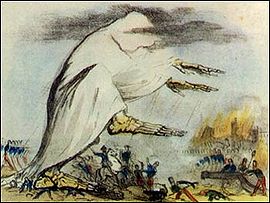
Disastrous Simplification Transferred From Disease to Climate

Miasma Theory of Disease
(Bad Air)


Greenhouse Gases Theory of Climate Change
(Bad Air)


The Miasma: Arising from decomposing organic matter to permeate the air and infect everyone who breathed it, completely invisible to the naked eye (except the artist's eye), absolutely silent, stalking the world by day and by night, causing pestilence and wars. 

No wonder so many Europeans believed during the West's medieval eras that world's end was nigh. 

If you think it got much better in the Renaissance, it wasn't until the late 1880s that many in the medical and scientific establishments in the West conceded that the miasma theory of disease was a crock. This, despite the fact that the germ theory of disease had been floated in Europe as early as 1546 by one Girolamo Fracastoro, an Italian physician. 

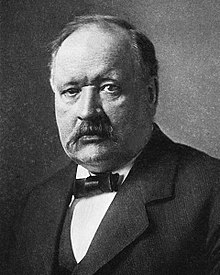
But no sooner had Westerners finished fanning themselves in relief that they weren't going to be done in by an invisible airborne threat, along came one Svante Arrhenius, a Swedish physicist more or less turned chemist:
In developing a theory to explain the ice ages, Arrhenius, in 1896, was the first to use basic principles of physical chemistry to calculate estimates of the extent to which increases in atmospheric carbon dioxide (CO2) will increase Earth's surface temperature through a greenhouse effect. These calculations led him to conclude that human-caused CO2 emissions, from fossil-fuel burning and other combustion processes, were large enough to cause global warming.
So if you believe Al Gore was the first to warn about greenhouse gases -- oh no; the greenhouse gases theory had been kicking around decades before Svante Arrhenius put his stamp of genius on it:
The existence of the greenhouse effect was argued for by Joseph Fourier in 1824. The argument and the evidence were further strengthened by Claude Pouillet in 1827 and 1838 and reasoned from experimental observations by John Tyndall in 1859, who measured the radiative properties of specific greenhouse gases. 
The effect was more fully quantified by Svante Arrhenius in 1896, who made the first quantitative prediction of global warming due to a hypothetical doubling of atmospheric carbon dioxide. 
However, the term "greenhouse" was not used to refer to this effect by any of these scientists; the term was first used in this way by Nils Gustaf Ekholm in 1901.  
As the Wikipedia article about Arrhenius goes on to note, his  conclusion "has been extensively tested, winning a place at the core of modern climate science."

But interest in a greenhouse effect arose not long after the Miasma Theory started coming under fire in medicine -- although it was then decades before miasma was finally tossed in the ashcan of history. There were holdouts right to the bitter end:
A transitional period began in the late 1850s with the work of Louis Pasteur. This work was later extended by Robert Koch in the 1880s. By the end of the 1880s the miasma theory was struggling to compete with the germ theory of disease.
Miasma Theory hung on because while it was completely nuts it was also beautiful. It was a simple explanation for epidemics and why physicians couldn't cure people who got sick during epidemics. As to why not everyone got sick when the miasma wafted into their region -- details. It was also very useful outside the profession of medicine:
[In 1840s Britain] No one knew the real causes of disease — the existence and effects of bacteria weren’t even suspected — but many medical theorists doubted the miasma theory, and few would have agreed that malnutrition and poverty were not causes of ill health. Nevertheless [Edwin] Chadwick, a relentless self-promoter who had the ear of those in power, drowned out contrary views, and his opinion became official doctrine.
As medical historian Margaret Pelling writes, “that the correlation between smell and disease became an article of popular faith was a triumph of sanitary propaganda.”
A simplistic miasma theory had the particular advantage for the political and economic elite, in that it excluded fundamental social problems as causes of working class discontent and unrest. It also countered commerce-disrupting calls for quarantines, because if disease was caused by bad air, then the victims weren’t contagious.
So while an English surgeon named William Budd managed in the late 1840s to persuade city fathers that Bristol's cholera epidemics would be stopped by cleaning up the city's drinking water, two colleagues making his same arguments were quashed by Miasma Theory diehards. 

In short, the germ theory wasn't an overnight success. But as the Miasma star fell, a new star started its ascension in the firmament of science, and it was fully as beautiful and simple as Miasma Theory. In fact it was the Miasma Theory reworked to explain that certain gases as much controlled climate.

So when an American scientist, Charles David Keeling, assembled data showing that carbon dioxide levels were steadily rising, American scientists and the government they served were off and running:
In the early 1960s, the National Science Foundation stopped supporting his research, calling the outcome "routine". Despite this lack of interest, the Foundation used Keeling's research in its warning in 1963 of rapidly increasing amounts of heat-trapping gases. A 1965 report from President Johnson's Science Advisory Committee similarly warned of the dangers of extra heat-trapping gases, which cause the temperature of the Earth to rise.
And as with Miasma Theory, extra greenhouse gases came to explain just about everything bad that was happening to the human race and for added emphasis, every perceived bad for the Earth -- that last something the Miasmists didn't claim, perhaps out of fear of raising the Church's ire.  

 "Just about everything" is barely an exaggeration. This autumn The Guardian announced "the unseen driver" behind the Honduran Migrant Caravan was climate change.

And so, after little more than a century, we've gone from the first Swedish Nobel Laureate, Svante August Arrhenius


To Alexandria Ocasio-Cortez, the youngest member of the U.S. Congress (New York's 14th congressional district), who will be U.S. President as soon as her fans nationwide are old enough to vote for her


Which is to say we've gone from Arrhenius' explanation in 1908 " ... that the human emission of CO2 would be strong enough to prevent the world from entering a new ice age, and that a warmer earth would be needed to feed the rapidly increasing population." 

To Ocasio-Cortez' explanation in 2018 that a new system of governance centered around combating global warming will usher in “economic, social, and racial justice.”

Reality Rears its Complicated Head

... modern climate modeling has been traditionally implemented by people with a technological background and little knowledge of ecosystem functioning. Such knowledge is generally poor, too. Thus, the ecological systems are “fed” into the models as a set of geophysical parameters, e.g., albedo, evaporation rate, surface roughness, amount of stored carbon etc.
While the numeric values of these parameters are borrowed from reality, they do not represent the ecosystem functioning in very much the same manner as a colored high-resolution digital photo of a corpse does not represent a live human being.
Without studying the principles of highly-organized functioning of ecological communities, including their genetically encoded ability to respond to environmental perturbations in a non-random compensatory way, the perspectives drawn from global circulation models with respect to the climatic effects of land cover change (e.g., statements like cutting all boreal forests will ease global warming) will continue to lack any resemblance to reality.

 
Quantitative analysis of ecological and biological variables is a very complicated task due to the complexity of living objects. ... Have a nice day.*
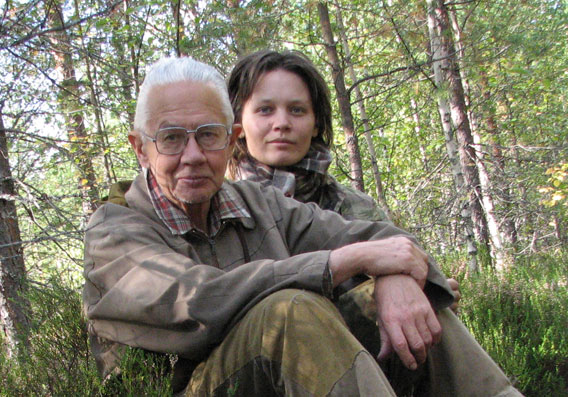
No they're not ecologists. They're physicist/mathematicians. Russian physicist/mathematicians. The math part means it's taking most American climate scientists a long time to figure out what Victor Gorshkov and Anastassia Makarieva are talking about when they argue that condensation from forests, not temperature differences, drives the winds that cause the rains to fall over land.

Thereby challenging the accepted model of how Earth's climate works.

To be continued. 

* I couldn't resist adding that last sentence.   

**********

Thursday, December 6

Forest Fires and Bubonic Plague in This Era

Next plague outbreak in Madagascar could be 'stronger': WHO
February 7, 2018
AFP

" ... fleas that carry the Yersinia pestis bacteria that causes the plague have proven to be widely resistant to ... insecticides."

Geneva - The World Health Organisation chief on Wednesday said a deadly plague epidemic appeared to have been brought under control in Madagascar, but warned the next outbreak would likely be stronger.

"The next transmission could be more pronounced or stronger," WHO Director-General Tedros Adhanom Ghebreyesus told reporters in Geneva, insisting that "the issue is serious."

An outbreak of both bubonic plague, which is spread by infected rats via flea bites, and pneumonic plague, spread person to person, has killed more than 200 people in the Indian Ocean island nation since August.

Madagascar has suffered bubonic plague outbreaks almost every year since 1980, often caused by rats fleeing forest fires.

The disease tends to make a comeback each hot rainy season, from September to April. On average, between 300 and 600 infections are recorded every year among a population approaching 25 million people, according to a UN estimate.

But Tedros voiced alarm that "plague in Madagascar behaved in a very, very different way this year."

Cases sprang up far earlier than usual and, instead of being confined to the countryside, the disease infiltrated towns. The authorities recorded more than 2 000 cases, and Tedros said Wednesday the death toll stood at 207.

He also pointed to the presence of the pneumonic version, which spreads more easily and is more virulent, in the latest outbreak.

He praised the rapid response from WHO and Madagascar authorities that helped bring the outbreak under control, but warned that the danger was not over.

The larger-than-usual outbreak had helped spread the bacteria that causes the plague more widely.

This along with poor sanitation and vector control on Madagascar meant that "when (the plague) comes again it starts from more stock, and the magnitude in the next transmission could be higher than the one that we saw," Tedros said.

"That means that Madagascar could be affected more, and not only that, it could even spill over into neighbouring countries and beyond," he warned.

Complicating vector control is the fact that the fleas that carry the Yersinia pestis bacteria that causes the plague have proven to be widely resistant to chemicals and insecticides.

"That's a dangerous combination," Tedros said.

[END REPORT]

********

Nostradamus might have had a degree in medicine, after all

For background see my December 4 post, Nostradamus versus The Miasma. For those who saw the earliest versions of the post, yes I kept fiddling with it, even after final revisions, to include changing the title to better reflect where I was headed in the writing.

It's been quite a journey for me. All I'd known about Nostradamus before a few days ago was that he was famous for predictions that were highly controversial. The controversy, still with us, has overshadowed his work as a physician who specialized in treating bubonic disease, and  with considerable success.

But was he a certified physician? The sources I looked at while writing the earlier post indicated that he wasn't. Last night I returned to the question and found this:  

From the Medical Bag's short biography of Nostradamus:
At the age of 14, he enrolled in the University of Avignon to study medicine and become a physician. His studies there ended after 1 year due to an outbreak of the bubonic plague. He then became an apothecary and extensively researched herbal remedies. In 1522, he enrolled in the University of Montpellier to pursue the completion of his degree in medicine.
There are conflicting reports with respect to the completion of his doctorate. Some evidence suggests that he was expelled from the school due to his work with herbal remedies and the school’s dim view of anyone who was involved in the apothecary trade. Other accounts state he was never expelled and became licensed to practice medicine in 1525.
Ironically if not for his notoriety as a prophet it's likely Nostradamus's innovative approach to treating victims of bubonic plague would have barely registered a footnote in the history of plagues that swept Europe for centuries. As it is, we have only small pieces of a story that when fully told might earn him a more prominent place in the annals of medicine.

Nostradamus did not write an autobiography or an account of his years researching herbal cures to combat plague. And to my knowledge neither he nor Louis Serre, a prominent physician he teamed up with to combat a major bubonic plague outbreak in Marseilles in 1545, wrote about his experiences combating plague. Once the fire in Marseilles was put out "he then tackled further outbreaks of the disease on his own in Salon-de-Provence and in the regional capital, Aix-en-Provence." There doesn't seem to be an account of those battles, either, unless historians have been remiss.

Better translations of his known writings on medical topics might throw more light on his work as a plague doctor. As Wikipedia's discussion notes,
Most academic sources reject the notion that Nostradamus had any genuine supernatural prophetic abilities and maintain that the associations made between world events and Nostradamus's quatrains are the result of misinterpretations or mistranslations (sometimes deliberate).[8][...]They also point out that English translations of his quatrains are almost always of extremely poor quality, based on later manuscripts produced by authors with little knowledge of sixteenth-century French, and often deliberately mistranslated to make the prophecies fit whatever events the translator believed they were supposed to have predicted.
From contradictory accounts that I highlighted in the earlier post, it seems the same problem applies to translations of his medical writings.  

But enough survives of Nostradamus' approach to dealing with bubonic disease to raise the conjecture that he didn't accept or at least questioned the miasma theory of disease, which dominated medicine in the West (and China it seems as well) for centuries before and after his era.

He might have reasoned that because a miasma didn't infect everybody when it appeared in a region there was a factor in play with bubonic infection other than poisoned air. I'll go further and speculate that the more success he had with the use of rose hips in curing victims of the bubonic/pneumonic disease, the less stock he might've put in the miasma theory.

By the way, given the traditional uses of the rose hips fruit for medical conditions --  "It was used for the bites of rabid dogs, stomach complaints, menstrual problems and diarrhea" -- it's unlikely he found its use as a bubonic-fighter in a herbalist manual. It seems he fixed on rose hips through his years of researching plants for a cure for the bubonic disease. But from what I've read thus far, which granted isn't much, it seems all that's recorded about the question is that he was an experienced medical chemist ('apothecary'), and that he spent years researching plants for their healing properties. 

As I noted in the earlier post, it's almost eerie that he fixed on rose hips to combat bubonic disease given that one of the fruit's properties is Vitamin C, which wasn't discovered until the 20th Century. And the fruit's other nutrients, which give a synergistic boost to Vitamin C's bacteria-fighting ability, were probably discovered quite late in the last century and maybe into this one.

********

Wednesday, December 5

Save California's Pistachio Market Share! Bomb Iran!

The funny part is that Israelis don't even like California pistachios; they prefer Iranian pistachios, which have to be labeled Turkish so they can be sold in Israel. But if you hook up Gray Zone Project's 12/4 “Pistachio Wars”: How the Resnicks’ Snack Food Fortune is Fueling the Assault on Iran and Sputnik's 12/5 Tehran is Literally Sinking, then it's immediately evident this isn't so much about pistachios or anti-Iran lobbying as the Shoot Yourself in the Foot model of global agriculture trade, which is doing a jolly good job of depleting the world's aquifers.  

From that perspective, who's crazier? California's government, or Iran's? If you tell me Sacramento can't stop the Resnicks from pumping the Central Valley dry to gain more pistachio market share -- the state's incoming governor had better find a way to stop them, before those 
collapse more of the Central Valley.  

As Sputnik points out, as I've pointed out, and as everyone else who follows water issues knows, once the land sinks there's no plumping it back up Pundita don't you dare laugh it's not funny. But for crying out loud, physics doesn't give a damn: American land, Iranian land -- subsidence is the same for all, no matter what kind of government, defense policy, cultural values, or brand of pistachios.

********

Moon of Alabama versus Information Warfare

The 'anonymous' German author of a nonprofit website Moon of Alabama who goes by the name of Bernhard or simply "b" is working in a critically important niche, which is deconstructing information warfare operations and publishing analyses at no charge to the general public.    

He is not an investigative reporter and to my knowledge does not conduct original research, at least not for publication on MoA. He analyzes information from open sources; i.e., sources that are publicly available.

To my recollection he doesn't apply the term "information war" to information operations he studies, generally characterizing them as fake news, smear campaign, etc. when he writes about them. But an increasing number of information campaigns that Bernhard studies is not simple disinformation or even propaganda; it's a type of warfare.

A recent example is his British Government Runs Secret Anti-Russian Smear Campaigns. As you will see if you read through the post, this is not just about Russia and the British government. This is warfare; this is what it looks like in an era when it's gotten very hard for governments to gin up rationales for an armed invasion of a country.

The rise of internet social media with global reach has made it possible to weaponize information to the extent that it can and has done as much damage as kinetic warfare operations. The Syrian War, which Syria's President Bashar al Assad has  described as the first war fought on the internet, is a prime example. 

This kind of warfare, which is distinct from cyberwar, is almost always launched and coordinated by a government(s). It is so very dangerous in this highly globalized era of communications that must be stopped. Yet stopping it is next to impossible until the public learns to recognize the patterns of information warfare. Here is where I think Bernhard's work is an invaluable public service. 

And yet this man has to routinely interrupt his work to ask his readers for donations so he can cover his basic living expenses. The situation is unacceptable but that's the way things are for him. 

My big concern is that financial pressures could eventually  mean a loss of independence for him. Without naming names, I've seen it happen. They always assure the analyst, 'You just keep writing about what you want to write about.' But Rumpelstiltskin always shows up, and 'policy institute' isn't asking the analyst simply to guess its real name.      

So once again I am asking Pundita readers to donate to Bernhard's Moon of Alabama. There are a number of ways this can be done but I think the simplest, for readers who use Paypal, is to make a donation in euros via a credit or debit card. Here is the link to the Paypal page for donating to MoA. 

You can write Bernhard at the email address shown on his website's "about" page (which I think needs updating in light of his evolving focus on information operations) if you'd like suggestions for other way to donate.

But please donate by any which way, and the ideal would be a monthly 'subscription' that could be as small the cost of a couple lattes at Starbucks.    

Thank you very much.

Cordially,
Pundita

********  

Tuesday, December 4

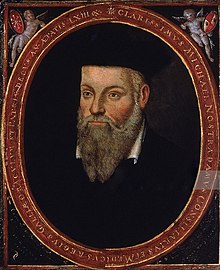
Nostradamus versus The Miasma

The Miasma (artist's depicton) 

The Plague Bacterium (scanning electron micrograph)

Bubonic Plague (miasma theory of disease)
... Caused by a miasma. Miasma was considered to be a poisonous vapor or mist filled with particles from decomposed matter (miasmata) that caused illnesses. ... a noxious form of "bad air", also known as night air. The theory held that the origin of epidemics was due to a miasma emanating from rotting organic matter ... The miasma theory was accepted from ancient times in Europe and China. The theory was eventually given up by scientists and physicians after 1880, replaced by the germ theory of disease: specific germs, not miasma, caused specific diseases. ...
Bubonic Plague (germ theory of disease)
An uncommon infectious disease of animals and humans caused by Yersinia pestis (Y. pestis) bacteria.
From Wikipedia's Plague Doctor article about doctors who specialized in treating bubonic plague in earlier centuries in the West, in Europe in particular:
A famous plague doctor who gave medical advice about preventive measures which could be used against the plague was Nostradamus.[20][21] Nostradamus' advice was the removal of infected corpses, getting fresh air, drinking clean water, and drinking a juice preparation of rose hips.[22][23] In Traité des fardemens it shows in Part A Chapter VIII that Nostradamus also recommended not to bleed the patient.[23]
Wow. I doubt a better single ingredient for fighting a serious bacterial infection could have been found in Europe during Nostradamus's era. Rose hips are very high in Vitamin C (they contain more C than citrus fruits), which is a powerful bacteria fighter. They also contain "vitamins A, B-3, D and E as well as bioflavonoids, citric acid, flavonoids, fructose, malic acid, tannins and zinc."

Moreover, Vitamin C has been shown in controlled studies to prevent pneumonia and in others to aid in the treatment of pneumonia. As the CDC notes, bubonic plague can progress into an infection of the lungs, causing pneumonic plague.

The most amazing aspect of Nostradamus's recommendation of rose hips is that Vitamin C wasn't identified until the 20th Century. 

However, a little clarification would be in order at Wikipedia because a passage in their article on Nostradamus paints a different picture about his medical advice than the Wikipedia article on plague doctors:
Nostradamus was not only a diviner, but a professional healer. It is known that he wrote at least two books on medical science. One was an extremely free translation (or rather a paraphrase) of The Protreptic of Galen (Paraphrase de C. GALIEN, sus l'Exhortation de Menodote aux estudes des bonnes Artz, mesmement Medicine), and in his so-called Traité des fardemens (basically a medical cookbook containing, once again, materials borrowed mainly from others), he included a description of the methods he used to treat the plague, including bloodletting, none of which apparently worked.[40]
So. Which one of the Wikipedia authors didn't read Traité des fardemens carefully? Or perhaps, from the #40 source note, it's that the author of the above passage blindly relied on a writer, Peter Lemesurier, who from his 2010 book quite clearly judged Nostradamus to be a fraud in all matters.

However, Lemesurier was technically correct in claiming that Nostradamus wasn't a doctor. He did not have a medical degree but he certainly studied medicine, and in a university setting for a time, and most importantly he was both an herbalist and an apothecary. From another section of Wikipedia's article on Nostradamus:
Student Years
At the age of 14[6] Nostradamus entered the University of Avignon to study for his baccalaureate. After little more than a year (when he would have studied the regular trivium of grammar, rhetoric and logic rather than the later quadrivium of geometry, arithmetic, music, and astronomy/astrology), he was forced to leave Avignon when the university closed its doors during an outbreak of the plague.
After leaving Avignon, Nostradamus, by his own account, traveled the countryside for eight years from 1521 researching herbal remedies.
In 1529, after some years as an apothecary, he entered the University of Montpellier to study for a doctorate in medicine. He was expelled shortly afterwards by the student procurator, Guillaume Rondelet, when it was discovered that he had been an apothecary, a "manual trade" expressly banned by the university statutes, and had been slandering doctors.[15] The expulsion document, BIU Montpellier, Register S 2 folio 87, still exists in the faculty library.[16]
However, some of his publishers and correspondents would later call him "Doctor". After his expulsion, Nostradamus continued working, presumably still as an apothecary, and became famous for creating a "rose pill" that purportedly protected against the plague.[17]
The rose pill was made from rose hips. From the History Channel's article about Nostradamus:
Over the next several years, Nostradamus traveled throughout France and Italy, treating victims of the plague. There was no known remedy at the time; most doctors relied on potions made of mercury, the practice of bloodletting, and dressing patients in garlic soaked robes.
Nostradamus had developed some very progressive methods for dealing with the plague. He didn’t bleed his patients, instead practicing effective hygiene and encouraging the removal of the infected corpses from city streets.
He became known for creating a “rose pill,” an herbal lozenge made of rosehips (rich in Vitamin C) that provided some relief for patients with mild cases of the plague.
His cure rate was impressive, though much can be attributed to keeping his patients clean, administering low-fat diets, and providing plenty of fresh air.
The History Channel doesn't give enough credit to rose hips and doesn't mention that Nostradamus also saw to it that his patients got clean drinking water; those two factors, more than fresh air or keeping the patient clean, would have greatly improved chances for recovery from bubonic plague. And would have prevented mild cases from turning severe.

There is an additional angle. Vitamin C is a detoxifier and poison antidote although that's getting into administering megadoses of the vitamin. But even at lower doses and if consumed on a regular basis a rose hip preparation, whether in juice or lozenge form, would have been some protection from harmful bacteria in drinking water. That would have made the difference between life and death for many seriously ill patients. In Europe's cities the drinking water was so polluted it's amazing the people there lived past 20 unless they drank water in the form of beer or other alcoholic beverage.

As to Nostradamus's purported slandering of doctors -- if he was criticizing the general run of 'plague doctors' it wasn't slander but the bald truth. Many who were called plague doctors had no medical training whatsoever. Yet even for experienced caregivers with medical degrees their success rate at curing bubonic and pneumonic plague hovered around zero. Any recovery they oversaw was due to a patient's unusually strong immune system. 

The plague doctors simply didn't know what they were doing. They had no knowledge of the disease they were up against beyond its overt symptoms. Nostradamus was the towering exception. He did develop some knowledge, and it put him centuries ahead of his time in treating a very lethal bacterial infection. 


********

Sunday, December 2

The Incredible First Farmers in the Modern Israeli State

Jews in exile weren't allowed to own land or work farmland in most parts of the world, so they literally had to start from square one when they arrived in Israel and began farming. But the land itself had fallen into such neglect for such a very long time that it was largely unfarmable! So farming the land meant first rehabilitating it.

The following video (10 minutes) about the first Israeli farmers is an inspiring story for everyone -- including, I venture, the young Israelis who've become so citified they have only the vaguest understanding that Israel isn't only their homeland; it's also a land brought back from the dead, and by an amazing group of people.

This is a good time to mention modern Israel's first farmers as the Time of Many Lights continues, starting with Diwali last month and now at sundown with lighting of the first candle in the Special Menorah and lighting of the first candle of Advent. Auspicious that these first candle lightings to celebrate Jewish and Christian observances happen on the same day this year.


Light! More light!


********

Turkey, transit for so many refugees, is now losing Turks fleeing Erdogan

From The Wall Street Journal, December 1:

[...]

Around 14,000 people crossed the Evros frontier from January through September of this year, more than double the number for the whole of last year, according to the Greek police. Around half of them were Turkish citizens, according to estimates from Frontex, the European Union’s border agency. Many are judges, military personnel, civil servants or business people who have fallen under Turkish authorities’ suspicion, had their passports canceled and chosen an illegal route out.

Nearly 4,000 Turks have applied for asylum in Greece so far this year. But most Turkish arrivals don’t register their presence in Greece, planning instead to head deeper into Europe and further from Turkey.

The inflow has added to the strained relationship between Turkey and Greece, already bedeviled by territorial tensions and historical grievances. Turkish authorities and pro-government media have branded the thousands who have crossed the Evros as terrorists and accused Greece of harboring them.

Though the Evros frontier is heavily guarded, it is still an easier way to reach Greece than taking a boat to an Aegean island such as Lesbos. The islands have become dead-ends, where thousands of refugees and other migrants remain stuck in squalid camps as a trickle is allowed onto ships headed for the Greek mainland.

[...]

Several thousand Turks, stripped of valid travel documents, are thought to be waiting in Athens for their chance to reach what they hope will be safety and better prospects in Europe’s North.

[...]

********

Friday, November 30

Fisher House, helping families stay strong


American Service Members Wounded in Action in Three Wars
 20,320 - Afghan War (up to 2017)
 31,952 - Iraq War (up to 2016)
304,000 - Vietnam War


WMAL radio, which serves the Greater Washington, DC area, is holding its annual fundraiser for Fisher House all day today and until 7 PM on Saturday:
WMAL listeners have generously contributed millions of dollars to the Fisher House Foundation to help build houses for the families of our injured veterans as they return home for treatment. Group homes at Bethesda, Walter Reed, the VA, Dover AFB, and more than 50 locations across the country provide a comfortable place for loved ones to live while remaining close to their injured family member.
You can listen online to the WMAL radiothon here.

Fisher House is a very worthy charity that didn't exist during the Vietnam War -- or during the two-month Cambodia ground combat operation ordered by Nixon (354 American troops killed, 1,689 wounded). Out of a list of 82 top-rated charities that serve military members, veterans and their families, Fisher House is tied for first place with Aspen Challenge in terms of financial score, transparency, and accountability.     

Since its inception in 1990 Fisher House has served 335,00 families and saved those families an estimated total of $407 million in out-of-pocket expenses, which otherwise they would've spent on travel and lodging to stay near a wounded military family member hospitalized in the USA or another country. In all, Fisher House has provided 8 million days of lodging at no cost to families of the wounded.

As to how many lives Fisher House has saved, the organization provides no statistic for that. But of course having loving family members close by during the early days of hospitalization can mean the difference between life and death for many of the worst wounded. And the presence of family is the best defense against despair when severely wounded soldiers realize that no amount of surgeries and hi-tech prosthetics will ever make them whole again.

So while much of the WMAL fundraiser is taken up with relatives of wounded soldiers explaining how Fisher House helped them, it can be very hard to listen to their accounts. What makes it bearable, what makes it transcend issues of war, is that these family members are strong people. Maybe they didn't start out strong, maybe they never saw themselves as strong, but it's either collapse into a heap of sorrow or dig deep and find strength. The relatives of wounded warriors who talk to the WMAL audience about getting through their experiences are worth listening to for that reason alone. 


**********