Translate

Sunday, January 6

The Revolution is Not Being Televised

How The Ball Of Yarn Got Rolling:
There goes the neighborhood

Socialism, in its original conception, had nothing to do with 'leftism' or Communism. As Pundita readers may recall, some years ago I stumbled across the original meaning of socialism during my quest to track down the genesis of the term 'police state.'  

It turned out that socialism, in its original conception, was simply the inclusion of more people in a society in the government. It was the brainchild of aristocrats in the Germanic kingdoms who saw the rise of industrialization and recognized that a modern government had to be more inclusive but for this more in the society had to be literate. So their idea was to take numbers of people off the farms and educate them and then put them to work in government.

Universities began cranking out many graduates but the system of socializing government was so popular and so profitable for the universities, soon things got out of hand. The governments couldn't make enough jobs for any more than a fraction of the graduates. The rest were left destitute but because of their college education they not only knew how to read and write, they also knew how to work a printing press. Three guesses what happened next. Yes, the Revolutions of the 1840s. These were accompanied by the rise of the police state and the rise of Communism, and on and on.

The Shah of Iran made the very same mistake. The wheel was again created right here in the USA only with a twist. Scoundrels talked credulous American parents and their college-age children into believing that all they had to do was go into steep debt to finance a college education and presto! the graduates would step into good-paying jobs.

So that was how millions of American college graduates ended up serving coffee, driving taxis or living, jobless, in their parents' basements. The twist was that these destitute American college graduates were saddled with so much debt that they might never hope to pay it off in their lifetimes. 

Now there were contributing factors in the 1840s revolutions and the Islamic one in Iran. Nearby kingdoms at odds with the Germanic ones used the unrest fomented by jobless college graduates to make even more trouble in the Germanic regions (thus, the biggest impetus for the rise of the Germanic police state). And some of the Shah's policies had angered the Iranian business community, which then joined with jobless Iranian college graduates to foment revolution.

There are also contributing factors to the unrest among many college graduates and their families in the United States in the recessionary and post-recessionary periods. This led many of them to push the Democratic Party toward Stalinist Communism masquer0ading as 'socialism.' But the biggest factor had been building in the USA long before the college debt scam and Great Recession. The factor is simply that a large number of Americans can't afford to have children in this era. 

The Bottom Line For Societies

Child-rearing adults need a reasonably stable means of supporting themselves; without that, the society has more problems than you can shake a stick at, and it can't last; it will either evolve or descend into chaos and revolution. 

Over the past half-century, the United States went from being the land of lifetime employment in big businesses to a land of very uncertain income from small businesses. This has meant that many young Americans not only can't afford to raise children they don't dare procreate. Not unless they want to face the prospect that their children will be raised, in effect, as wards of the state -- raised on government welfare payments -- and on unemployment checks. 

These Americans are not impressed when they see 312,000 new jobs were created in the USA in December. They know many of the jobs are so low-paying they can't support a family, or can be taken over by a robot at any minute, or can disappear when a business has to cut back on production.    

Which is to say the lives of many American small business owners and their employees are governed by business quarterly reports. This means that many child-rearing American workers can't plan much further ahead than the next business quarter. It is a system that punishes humans for having children -- for being human. 

Given this overturning of the natural order, the chief factor preventing armed revolution in the USA is that its governments -- federal, state, and local --  and their contractors employ many Americans of working age, including many victims of the college-education debt scam.  

Today the federal government alone has about 800,000 full-time employees. Not surprisingly many of those employees (as well as government contractors) would vote for Stalin himself for President if he campaigned on the promise never to cut any federal jobs or departments.

In summary, the need for job security not employment per se is the biggest driver of the current push for larger government in America, even among Americans who hate welfare. These Americans aren't looking for handouts. They want a steady income, one they can plan on continuing long enough to raise a family.

The catch is that big government itself depends on a relatively stable business environment, which is now deader than a doornail. The era that allowed for the prospering of the Germanic kingdoms has been replaced by dog-eat-dog global business competition. This has turned even the most liberal of democratic governments into versions of the deacon in the 1970 satire film, "Cotton Comes to Harlem." But whether liberal or authoritarian all central governments are now rip-off artists as if they had a choice, and that's not even talking about central banks fiddling with the 'economy.'

Thank You We Can Do It Ourselves

Now whenever you see so much mess everywhere you look, this is a Sign of a system failure. But the flip side of a system failure of this magnitude is another system being born.

That is exactly what is happening, and it's been happening since a fairly large number of literate people got really good at doing research on the internet. All these people are talking to each other all across the world via the internet, and so How-To tips for doing things yourself, whether it's curing a medical condition without help from a physician or managing a community problem without government assistance, are flying thick and fast. 

This epochal DIY shift is not showing up yet on the TV nightly news, except in bits and pieces that give no indication of its magnitude. For the magnitude, you need to be very skilled at internet research. [laughing] So the Black Power sloganeers and Gil Scott-Heron were right when they intoned in the early 1970s "The revolution will not be televised," only they couldn't have imagined back then -- no one could've imagined -- how the revolution would really take shape and what it would mean. It's not about Black power; it's about all people in the American society getting a handle on managing their own lives.  

Communitarianism

But what's the DIY solution to the problem of highly uncertain employment for parents? It's basically the same solution that's been in effect ever since humans organized themselves into tribes. The English word for it in this era is "communitarianism;" here's a dictionary definition I pulled from Google:
a theory or system of social organization based on small self-governing communities.
an ideology that emphasizes the responsibility of the individual to the community and the social importance of the family unit.
There are two types of community organizing. One type is exemplified by the Americans Barack Obama and Saul Alinsky; it's basically organizing a community to get the government to do something. The other type, exemplified by Thailand's King Bhumibol Adulyadej and the American Paul Glover, is organizing a community to do something for itself.

The second type holds the key to buffering parents against the uncertainties of employment.

The community-based system of self-governing is not here yet but it's on the way, and this is unstoppable. Humanity is finally taking in stride the social upheavals set in motion by the Industrial Revolution and learning how to translate the time-honored way of governing into one that works for this age. The key, as King Bhumibol recognized, was networking: not just one small community but ones plugged into others in a region. 

In other words, lateral government rather than pyramidal. It's the only way to manage governance in the age of mega-populations, and now it's do-able. 

If it's not on the telly has anyone told the Establishment a revolution is going on? You bet the ones who supervise the status quo see what's coming. So it will be a bumpy ride but nothing we can't handle. 

[smiling] Happy New Year, everyone.     

********

Why are many Americans easily defrauded?

It's because Americans were conditioned over more than two generations to disrespect their money. This happened principally because of the unrelenting promotion of debt-financing. When the financial practice was applied to individuals, as happened when American farmers in the early 20th century took on personal debt to finance capital expenditures for mechanized farm equipment, this set in motion a nightmare that greatly deepened the 1930s Depression in America and flooded its cities with penniless dispossessed farmers looking for work in factories. 

The nightmare continued during the post-WW2 period with the use of 'revolving' credit for household and other personal purchases. By the time scam-artists sold the financing of a college education through taking on steep personal debt, parents and college-age children in the American Middle Class were easy marks. By then, Americans were used to throwing their hard-earned money away on debt-financed expenditures. And they'd accepted the scam artists' assurances that good-paying jobs would await the debt-ridden college graduates -- assurances that collapsed as the Great Recession set in and the true cost of supporting themselves in today's USA sank in with the graduates.

Debt-financing for purchases should only be undertaken by for-profit business corporations, which limits risk for the individual. And debt-financing for anything other than business profits is a perversion of capitalism. 

I'll cut a story by noting that if individuals have respect for their money, they will be prepared to go to great lengths to avoid paying interest on borrowed money -- and even then, they'll be very aware that they are taking a great risk by borrowing at all -- as the markets in repossessed cars and homes testify. The awareness vanished in America along with respect for money. 

One consequence was the proliferation of Pyramid schemes and other fraudulent 'get rich' schemes where Americans not only threw all their savings into the schemes but also took on high-interest debt so they could throw even more money into them. 

Things got completely out of control when Americans started using their credit cards to purchase attendance at seminars costing thousands of dollars that held out the promise of getting rich by one guaranteed method or another.

Such is the case with the latest Get Rich scheme, which Alana Semuels recounts in detail for the January 2 issue of The Atlantic: How to Lose Tens of Thousands of Dollars on Amazon: "A growing number of self-proclaimed experts promise they can teach anyone how to make a passive income selling cheap Chinese goods in the internet's largest store. Not everyone’s getting rich quick."

The seminars are not fraudulent in the legal sense, and some who use the tutorials can make a profit from what they learn. But when you consider, as Semuels points out, that all the information taught at the seminars is easily available for free on the internet, the kind of people who fork over thousands of bucks for the seminars are not the types best suited to make money through a highly competitive and complicated business that can require a lot of hard work to get established.

And so, on top of losing the money they invest in the seminar, many attendees lose all the money they invest in starting their reselling business on Amazon -- and then some, if they've gone into credit-card debt to pay for the seminar and help finance the resale business startup.

As Semuels notes, trying to get rich quick is an old American tradition, which arose in an era when many Americans did respect money. Toward the end of her report, she takes a stab at explaining why Americans have always had a weakness for Get Rich schemes. But lack of respect for money explains why many Americans in this era are suckers for Get Rich schemes that stand up and shout they're highly deceptive or outright frauds. Those Americans are already used to throwing away money.

For those who'd say the U.S. society would collapse if Americans stopped using debt financing for personal purchases -- this is saying society would collapse if the majority of adults stopped throwing money away. The status quo would collapse, but this would mean Americans were finally ready to emerge from a nightmare.

*********

Friday, January 4

America: Somehow I don't think Europeans will ever understand us

(The YouTube poster spelled "thou" wrong)


*****


Pope Francis and demonic possession

Some years ago I explained on this blog why I believe that Francis is not the real Pope, that Benedict is still Pope and will remain so until his death. Without going over old ground I would ask the Church authorities to consider that the longer they hail a  pretender as the Pope, the more Catholics are plagued by demonic possession.  

Francis doesn't seem to have made the connection; he's just seeing demons popping up everywhere he looks. This has prompted him to give exercised public warnings about the dangers of demonic possession.

Francis also doesn't seem to notice that since he was installed as Pope, witchcraft practices have skyrocketed in countries where Roman Catholicism is practiced including right here in the USA.

None of the above observations say anything, one way or another, about Francis' sincerity. And he didn't install himself on the papal throne. But the spiritual power that Jesus transmitted to the disciple he named Peter, and which Peter then transmitted at the point of his death to his designated successor, and so on down the line, is no small matter. The Vatican hierarchy has clearly lost sight of this fact. 

So now they're in a real pickle because even if they admit to the truth among themselves they can't reinstall Benedict; they would be afraid of the consequences for the Church.

There might be a way to thread the camel through the needle but instead of thinking things through, the Vatican sprang into executive action. And so hundreds of priests from Catholic churches around the world are being put through the Vatican's exorcism training to battle a veritable pandemic of demonic possessions.  

This is Shoot Yourself in the Foot leadership, where all the Vatican is doing is giving more power to demonic forces than they could muster on their own.

And when things get to the point where a pop singer (Celine Dion) can't launch a 'gender-neutral' children's clothing line without being accused of deviltry by a Catholic priest, this is an outright onslaught on the meaning and power of the teachings of Jesus. And the attack is coming not from the outside but from inside the Church.

Roman Catholicism isn't the only religious sect presently undergoing great internal turmoil, but the root cause is always the same: Confusion about who protects the teachings. And so I would say to that Catholic priest, and the Vatican: Not you, you idiots.

*********

Wednesday, January 2

The scariest warning out there to get enough sleep

For readers who have tried to get more sleep and can't, I have found some recommendations, which I'll put in another post, but I venture the biggest obstacle is simply not fully realizing how important it is to get about 8 hours sleep a night. The sleep expert quoted in the following transcript takes care of that problem. He just goes down the list, bing, bing, bing. Scared the tar out of me -- and I've read a lot of other reports on the topic over the years, to which I always replied, 'Yes yes I know it's important' then continued with my crummy sleep schedule. No more. I have finally gotten the message.    
  
A sleep expert explains what happens to your body and brain if you don't get enough sleep
By Noah Friedman
November 1, 2018
Business Insider

Following is a transcript of the video. [emphasis throughout is mine]

Matthew Walker: My name is Matthew Walker, I am a professor of neuroscience and psychology at the University of California, Berkeley, and I am the author of the book "Why We Sleep."

We certainly know that a lack of sleep will actually prevent your brain from being able to initially make new memories, so it's almost as though without sleep the memory inbox of the brain shuts down and you can't commit new experiences to memory. So those new incoming informational emails are just bounced, and you end up feeling as though you're amnesiac. You can't essentially make and create those new memories.

We also know that a lack of sleep will lead to an increased development of a toxic protein in the brain that is called beta-amyloid and that is associated with Alzheimer's disease because it is during deep sleep at night when a sewage system within the brain actually kicks in to high gear and it starts to wash away this toxic protein, beta-amyloid.

So if you're not getting enough sleep each and every night, more of that Alzheimer's-related protein will build up. The more protein that builds up, the greater your risk of going on to develop dementia in later life.

What are the effects of sleep deprivation on the body? Well, there are many different effects. Firstly, we know that sleep deprivation affects the reproductive system. We know that men who are sleeping just five to six hours a night have a level of testosterone which is that of someone ten years their senior. So a lack of sleep will age you by almost a decade in terms of that aspect of virility and wellness.

We also know that a lack of sleep impacts your immune system. So after just one night of four to five hours of sleep, there is a 70% reduction in critical anticancer-fighting immune cells called natural killer cells. And that's the reason that we know that short sleep duration predicts your risk for developing numerous forms of cancer. And that list currently includes cancer of the bowel, cancer of the prostate, as well as cancer of the breast.

In fact, the link between a lack of sleep and cancer is now so strong that recently the World Health Organization decided to classify any form of nighttime shift work as a probable carcinogen. So in other words, jobs that may induce cancer because of a disruption of your sleep rate rhythms.

We also know that a lack of sleep impacts your cardiovascular system because it is during deep sleep at night that you receive this most wonderful form of effectively blood pressure medication. Your heart rate drops, your blood pressure goes down.

If you're not getting sufficient sleep, you're not getting that reboot of the cardiovascular system, so your blood pressure rises. You have, if you're getting six hours of sleep or less, a 200% increased risk of having a fatal heart attack or stroke in your lifetime.

There is a global experiment that is performed on 1.6 billion people twice a year and it's called daylight savings time. And we know that in the Spring, when we lose one hour of sleep, we see a subsequent 24% increase in heart attacks the following day.

Another question, perhaps, is what is the recycle rate of a human being? How long can we actually last without sleep before we start to see declines in your brain function or even impairments within your body? And the answer seems to be about 16 hours of wakefulness.

Once you get past 16 hours of being awake, that's when we start to see mental deterioration and physiological deterioration in the body


We know that after you've been awake for 19 or 20 hours, your mental capacity is so impaired that you would be as deficient as someone who was legally drunk behind the wheel of a car. 

So if you were to ask me what is the recycle rate of a human being, it does seem to be about 16 hours and we need about eight hours of sleep to repair the damage of wakefulness.

Wakefulness essentially is low-level brain damage.

[End TRANSCRIPT]

EDITOR'S NOTE: This video was originally published on December 26, 2017. Lamar Salter contributed reporting on a previous version of this article.

[END REPORT]

If you don't decide to get enough sleep after reading all that, you might be misapplying the famous "Cry Wolf!" aspect of scientific findings. Yeah scientists change their minds a lot but in this case, the jury's in -- and it's been in for decades; it's just that science keeps finding additional reasons that humans need enough sleep. 

For example, here's a recent finding from scientists at the Salk Institute; summary published Nov. 27 at Science Daily"Why screen time can disrupt sleep: Scientists uncover how certain retinal cells respond to artificial illumination." 

Can the problem be offset by blue-light screen filters? I don't think the problem is limited to computer light, at least not from my reading of the study summary; it seems to be artificial light -- at night. 

The bottom line for humans is that we are creatures of light and darkness. So I think the more ways we can find to adhere to the Circadian Cycle without completely sacrificing our modern way of life, the better for our health over the long-term -- meaning just when we most need good physical health and sharp minds: as we enter middle age. Or when we realize we can't afford to retire from work. Or if our health deteriorates to the point where we end up in a nursing home, where too often strangers who don't give a damn whether we live or die are tasked with looking after us.   

As to what we're going to do about Daylight Savings Time,  outlaw it -- 'yesterday.' 

What about jet travel across time zones? Well, living is a calculated risk; it all depends on what kind of risks you consider necessary and how often you want to take them. At the least, follow all the tactics advised for readjusting your sleep cycle after a time-zone change.  

********

Did Israel really think U.S. would have no problem with China's takeover of Haifa port?

"The Prime Minister’s Office, Transportation Ministry, and Foreign Ministry declined requests for comment on this report."

U.S. NAVY MAY STOP DOCKING IN HAIFA AFTER CHINESE TAKE OVER PORT
Concerns prompt ‘review’ of Shanghai agreement within Israel’s inner security cabinet, sources say.
by MICHAEL WILNER
DECEMBER 15, 2018 21:25
The Jerusalem Post

WASHINGTON – The US Navy has acknowledged that its longstanding operations in Haifa may change once a Chinese firm takes over the civilian port in 2021, prompting Israel’s national security cabinet to revisit the arrangement, The Jerusalem Post has learned.

Haifa, the nation’s largest port city, regularly hosts joint US-Israeli naval drills and visits from American vessels. But a 2015 agreement between Israel’s Transportation Ministry and Shanghai International Port Group (SIPG) – a company in which the Chinese government has a majority stake – has raised intelligence and security concerns that are only now prompting an interagency review.

That agreement granted SIPG control over the port for 25 years. The Chinese company has committed $2 billion to the project and, according to state-run media, plans to transform the port’s bay terminal into the largest harbor in the country.

A representative of the Sixth Fleet said the navy’s partnership with Israel remains “steadfast.”

“Our US Navy ships frequently visit Haifa, Israel, for both US-Israel bilateral military activity and port calls,” Commander Kyle Raines told the Post, when asked whether China’s coming presence might affect fleet operations in the Mediterranean city.

“For now, there are no changes to our operations in Israel,” the commander continued. “I can’t speculate on what might or might not occur in 2021.”

Three sources familiar with the matter said that due to concerns that US defense officials privately shared with their Israeli counterparts, the Israeli government has launched “a review of the agreement at a high level,” specifically among members of the inner cabinet.

According to one source, several members expressed worry that sensitive infrastructure matters have not been properly vetted by Israel’s full national security cabinet prior to approval.

“You don’t want a decision that was made ostensibly for business reasons to have an impact on Israel’s relationship with the American navy,” the source said.

The deal was signed off by Israel Katz, who was serving as transportation minister at the time and has remained in the position since. He occupies a seat in the national security cabinet.

A senior IDF officer confirmed that the review is underway. But it is unclear whether Israel has any recourse to allay US concerns with the China project, which is already sealed and in motion.

“Historically, it’s interesting to see [that] the whole awakening is now when the contract was signed in 2015 – it begs the question what the hype is all about. It’s probably more conducive now because of the US-China tensions over trade, national security and the like,” said Assaf Orion, a retired Israeli brigadier-general and expert on Israel-China relations now based at the Washington Institute for Near East Policy. “There is always a question of encouraging investment versus managing risk.”

“The bottom line here is that Israel will make a fatal mistake by doing either or both of the following: disregarding China’s potential to advance Israel’s economy, and doing it with our eyes shut,” Orion continued. “We must keep our eyes open, fully aware of the risk management requirements and its possible impact on the US-Israel relationship.”

Retired Israeli and American defense and intelligence officials raised concerns throughout the summer that Chinese management of the port might jeopardize America’s operations there.

The former head of Israel’s Mossad, Efraim Halevy, sounded an alarm in recent months over the security implications of China’s creeping presence across Israel’s critical infrastructure. And retired Admiral Gary Roughead, ex-chief of US naval operations, warned that a Chinese-run seaport in the bay could force the navy to dock its warships elsewhere.

“The Chinese port operators will be able to monitor closely US ship movements, be aware of maintenance activity and could have access to equipment moving to and from repair sites and interact freely with our crews over protracted periods,” Roughead remarked during a conference last month at the University of Haifa.

“Significantly, the information systems and new infrastructure integral to the ports and the likelihood of information and electronic surveillance systems jeopardize US information and cybersecurity,” he added.

Israel has its own security concerns in Haifa to consider as well. The seaport in question is not far from an Israeli navy base where the country maintains its fleet of submarines, which foreign press has reported are capable of carrying and launching nuclear missiles. Domestic critics say that China’s shipping operations in close proximity to the fleet amount to an unacceptable security risk.

This would not be the first time that the Sixth Fleet altered its operations in Haifa due to security concerns. In the aftermath of the USS Cole bombing in Yemen in 2000, and during the Second Intifada, the frequency of port calls fell dramatically and USO Haifa was permanently shuttered.

But neither of those events were within Israeli government control.

The Prime Minister’s Office, Transportation Ministry and Foreign Ministry declined requests for comment on this report.

Herb Keinon contributed to this report.

[END REPORT]

Rising sea levels: For islanders there is no retreat inland

"The weakening of the basic assumption of sovereign permanence will inevitably have political and financial knock-on effects that have yet to be reckoned with. The world must decide how to treat sovereign states when their time horizon becomes limited."

I don't agree with every point made by Adam Tooze in the following editorial, and I think he's overlooking that before the rise of nation-states, humanity had a concept of sovereignty. But he has given much thought to issues that are not as distant as it might seem. He notes that sovereign debt markets and ratings agencies must already take into account just how long a nation or region is going to be above water. 

So, I find his argument food for thought.   

ARGUMENT
Rising Tides Will Sink Global Order
Global warming will produce national extinctions and international insurgencies—and change everything you think you know about foreign policy.
BY ADAM TOOZE 
DECEMBER 20, 2018, 6:29 AM
Foreign Policy

The meeting held in Katowice, Poland, last week to discuss the further implementation of the Paris climate agreement was hailed by the participants as a success. A complete breakdown was avoided; the appearance of multilateralism was preserved. But it was a triumph of process over substance. The alliance of the United States, Saudi Arabia, and Russia blocked adequate recognition of the apocalyptic findings of the latest report by the U.N. Intergovernmental Panel on Climate Change, and Brazil has withdrawn from hosting the next meeting.

More important, no decisions were taken on emissions. The governments of Poland and the United States even used the meeting to reaffirm their commitment to coal.

In due course this blindness may be overcome. But time is of the essence. It is commonly said that climate change is a global risk that affects everyone. But that truism hides an essential difference. It is far riskier for some populations than for others. The current targets put the world on track for a 3.5-degree Celsius temperature rise; that is enough to doom the island nations in the Caribbean, Pacific, and elsewhere whose very existence is called into question by rising sea levels. Inhabitants of coastal areas around the world face mass displacement. In delta regions like Bangladesh that will involve tens of millions of people. But they at least have a hinterland to retreat to. For islanders, there is no retreat.

In addition to practical contingencies, this crisis has raised new and fundamental questions about international politics. What does sovereignty mean when global risks are so unequal? How will countries with a finite life expectancy conceive of politics? And what is the world’s responsibility when the first nations begin to disappear under water? The answers will likely add up to a revolution in global order.

This will become especially apparent for the United States. The conservative wing of American politics is the global leader in climate change denialism—indeed, it is the credo of the Trump administration. But, given the consequences for the international order that the United States has underwritten and the responsibilities that will soon be forced upon the country by its immediate neighborhood, this is an increasingly untenable position for the American government machinery to uphold.

The most vulnerable island states tend to be small. In the blunt economic calculus of climate change, as specified by one of this year’s economic Nobel laureates, William Nordhaus, the fate of the Maldives, Jamaica, or the Bahamas barely weighs in the balance. Their small scale also means that they are powerless to affect what happens. No renewable energy policy they might adopt will make any difference. It will be the consumption and production of fossil fuel by the great population centers of the West and Asia and the fossil fuel economies of the giant producers—the United States, Saudi Arabia, Russia—that will decide their fate.

The big states have their own economic and political reasons for their reticence. The governments in Brazil and the United States that are boycotting climate change diplomacy are democratically elected. But the violence they are threatening to smaller states is radical.

One might shrug. The archipelago nation-states are fragile entities. The history of human settlement on many of them is not continuous. But the fact is that during the 20th century they were cast as nation-states. Sovereign equality may be a hypocritical fiction. But one of the core assumptions of nation-state sovereignty is permanence. The only legitimate way to dismantle a sovereign is for it to spawn others.

The extinction of sovereignty as, for instance, in the partition of Poland in 1939 between Nazi Germany and Stalin’s Soviet Union, is the definition of international crime. The Soviets at least incorporated the population of eastern Poland as citizens. There is little discussion today of compensating for the impending widespread loss of sovereignty.

This development will also affect the basic structure of international relations. Sovereign permanence is a basic assumption of our present global order. Internationally, the assumption that nations have infinite time horizons is the foundation of all ideas of a stable and lasting international community, which structures all international cooperation. 

Domestically, in any given country, this assumption structures all policy discussions by distinguishing states from the individuals who are their citizens; in extremis, it’s the legitimacy of the state’s permanence that entitles governments to call on their citizens to make the ultimate sacrifice. In mundane terms, it is what gives states their ability to sustain enormous debts on an essentially permanent basis.

These basic unquestioned features of our political order are now in jeopardy. Rich countries worry about “dying out” due to demographic decline. But that can be fixed by migration. Climate change faces island nations with something even more elemental. They will cease to be viable as territorial states. They will literally disappear from the map. Relatively affluent island states like the Bahamas talk boldly about mitigation. But 80 percent of the Bahamas is one meter or less above sea level. What can mitigation possibly mean in that case? And what of Haiti, whose impoverished population lives crowded in the floodplain that borders deforested and infertile mountains?

The weakening of the basic assumption of sovereign permanence will inevitably have political and financial knock-on effects that have yet to be reckoned with. The world must decide how to treat sovereign states when their time horizon becomes limited. What kind of investment can be justified in a state whose lifespan is numbered in decades? When does lending money for reconstruction after the latest devastating hurricane no longer make sense? These are already questions for sovereign debt markets and ratings agencies. But they will also become basic political questions for the entire international community.

[END]


Map of areas controlled by the different factions in Syria as of 12/10/18


Tuesday, January 1

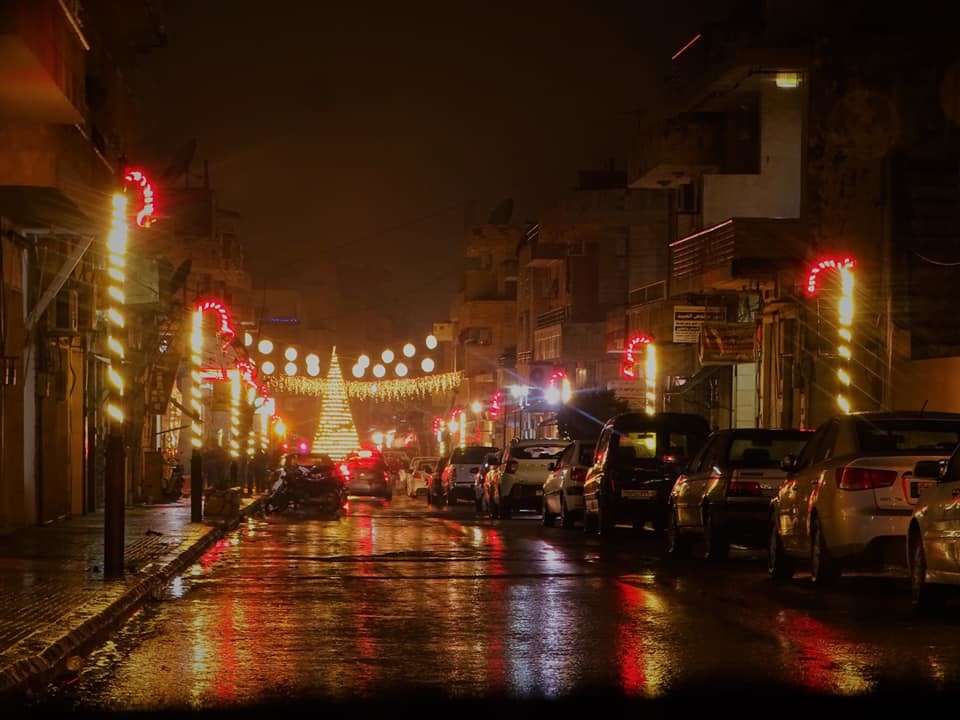
The Spirit of Christmas is Alive and Well in Syria.


Even in the Small Towns


From Arab News, December 25, 2018
... Both Christians and Muslims look forward to celebrating the occasion, and many Muslim families decorated trees in their homes, prompting jokes on social media about Christians taking photos next to Muslims’ Christmas trees.
“Our Muslim neighbors set up better decorations than we did,” said Meray, a Christian school teacher who lives in Al-Muhajirin district in Damascus. ...
From Vanessa Beeley (reporting from Syria for RT)
Christmas celebrations have literally radiated out across Syria and western media was curiously silent in the face of such displays of unity and solidarity among Syria's diverse peoples.

Syrians saw off the year 2018 under a glittering canopy of festive lights and elaborate decorations adorn the streets of many cities, towns and villages throughout much of the country.

Izraa, a town in the southern province of Daraa, was liberated from US Coalition client terrorism in July 2018 after the surrender of the armed groups. Residents celebrated Christmas for the first time in seven years and they celebrated in style.

In Damascus, people poured onto the streets of the Old City without fear of a rain of mortars from extremist groups in Eastern Ghouta, an area fully cleansed of armed groups, by the Syrian Arab Army and allies in April 2018. I walked among the thousands of civilians who gathered around the towering Christmas trees and jostled each other to take selfies next to the myriad of Christmas displays that lined the streets.

In 2018 this was not only a “Christian” festival, this was a rebirth of the Syrian celebration of life and a symbol of victory over international terrorism - a vindication of all that Syria has represented and defended for seven long and arduous years spent battling western-backed ideological extremism that would tear apart the secular fabric of Syrian society and reduce it to sectarian hatred and ensure the extinction of minority communities in a country that has embraced diversity for centuries.

During his Christmas Eve sermon in 1967, Martin Luther King said “We must either learn to live together as brothers or we are going to perish together as fools”.
While NATO-aligned media in the West has maintained a sectarian narrative with regards to the Syrian conflict and has dehumanised the Syrian people who have stood by their Government, their President, their Army and their allies - Syria has resolutely drawn together the threads of its cultural tapestry in defiance of such simplistic narratives and has confounded its enemies who underestimated the power of a people who have withstood centuries of invasion and instability.

Dr Hadi Yazjii is a Syrian American physician who spent the first two decades of his life in Syria before moving to the US. He told me:

“Given the fact that modern-day Syria and ancient Syria (including Damascus and Antioch) has been the actual place that is responsible for spreading Christianity to Europe, Syrians feel a special sense of universality, responsibility and pride in their heritage which transcends the pure religious celebration. Christmas reflects the sacred secular status of Syria and the Levant”.

This fierce belief in a secular heritage has been the life-force of the Syrian resistance against [Western] military adventurism and Gulf State, Turkish and Israeli sponsorship of extremism in the region.
The ancient Christian town of Maaloula was invaded by Nusra Front and subsidiaries in September 2013. During the attack, three unarmed men from Maaloula were executed in cold blood, one after the other, as each one refused to convert to Islam. This stubborn resistance against ideological tyranny and persecution is what has enabled Syria to endure the hardship and suffering foisted upon them by the West and to emerge victorious despite the bloodshed and devastation that has affected every family and community.

After Damascus, I traveled to the Syrian Christian towns of Al Skeilbiyyeh and Mhardeh to the north of Hama province, bordering territory controlled by Nusra Front (rebranded as Hay’at Tahrir Al-Sham or HTS) who dominate the assorted extremist armed groups that occupy Idlib. Both towns have received thousands of mortars from the terrorist entities encamped on their borders, less than 500 meters away from the towns at certain points.

In Al Skeilbiyyeh, volunteers worked for fifty days on the production of a lavish and gloriously flamboyant Christmas carnival that spilled colour and joy onto streets that have been scarred by rockets and mortars for the last seven years. I spoke to the organisers who told me that they feel a deepening sense of security in recent months. For them, and all residents I spoke to, 2018 signified a shift away the uncertainty of previous years towards greater stability.
This important shift was entirely attributed to the heroism of the volunteer Syrian National Defence forces and their commander, Nabel Alabdalla, who have valiantly defended the town and its people alongside the Syrian Arab Army and allies.
[...]
********

SouthFront throws cold water on happy talk about Syrian Army's arrival in Manbij

FARS reported today that the Syrian Army has surrounded Manbij to block the Turkish Army's advance but it looks like the advance is still on unless the Turks are engaging in performance art.

MORE TURKISH BATTLE TANKS SPOTTED EN ROUTE TO SYRIAN BORDER DESPITE REPORTS ABOUT DE-ESCALATION IN MANBIJ AREA (VIDEO)
January 1, 2019
SouthFront
On December 30 and 31 reports appeared that Turkey had ordered their proxies deployed near the northern Syrian town of Manbij to end the state of emergency and withdraw from the frontline with the Kurdish-dominated Syrian Democratic Forces (SDF).
However, these reports gave no indication that real de-escalation has been observed so far. Furthermore, more and more Turkish battle tanks appear to be moving to the areas bordering the SDF-held part of Syria
Separately, the Syrian Observatory for Human Rights (SOHR) came in with a new report claiming that Syrian Army troops have started withdrawing from positions north of Manbij where they have recently been deployed. If this is confirmed, the army withdrawal will open a new window for a possible Turkish military operation in the area.
It should be noted that a similar situation was observed during the battle for Afrin in 2018. Initially, Syrian Army troops entered the Afrin region with an aim to prevent a Turkish military operation. But the Kurdish People’s Protection Units (YPG) refused to allow the return of government institutions in the area and continued to make various demands on the Syrian government. Then the Syrian Army troops withdrew and the Turkish armed forces, backed by their proxies, captured the city of Afrin from the YPG.
[END REPORT]
 As to how things are going in Afrin these days:

Turkey go-fers have already picked the city so clean they can now cart away what's left by hand. Wait, guys, you missed some wires. 


Turkey-Backed Militants Continue Plundering Civilians' Assets in Northern Syria
January 1, 2019
FARS


TEHRAN (FNA)- Ankara-backed militants continue looting people's assets in occupied Afrin region in Northwestern Aleppo, a Kurdish media outlet reported on Tuesday.

Xeber 24 news website quoted local sources as reporting that the Ankara-backed militants have stolen a large volume of Afrin residents' olive products and assets.

It further added that the militants have stolen almost 2,000 barrels of olive oil along with one and a half million Syrian lira from the residents of the village of Karku in Ma'abatli region in Northwestern Aleppo.

The news website went on to say that over 30 members of the Ankara-backed National Army have raided the village and looted the assets and agricultural products, adding that the militants further transferred the stolen products to Turkey via Rajou road.

The Kurdish-language Hawar news reported in October that governor of Turkey's Hatay called on Ankara-backed militants in Afrin in Northwestern Aleppo to hand over the entire olive crops to the Turkish province.

In the meantime, Salah Ibo, the deputy head of Afrin Agriculture Department, said that Ankara intended to steal $100 mln of Afrin residents' agricultural products.

Also, Hawar news went on to say that terrorists of Ahrar al-Shamiyah and Tajamo'a Adl, both affiliated to the Turkish army, have started fierce clashes in the village of Qajomo in Jandaris region over the distribution of looted olive products.

It added that residents in Jandaris are now allowed to step onto their farms after the Ankara forces seized their lands. 


[Pundita Note: I think Hawar News means "not" allowed.]

[END REPORT]

********

"Are the wheels coming off China's Belt and Road megaproject?"

Excellent analysis by Hong-Kong based CNN journalist James Griffiths, published December 31, 2018, at CNN. He starts off by discussing the recent uproar about China's loans to Kenya. Griffiths points out BRI loans are now so controversial that criticism of them has arisen China. As to where things stand now:
While boosters for the BRI remain plentiful, and the project is not on the verge of failing any time soon, there are signs that a shift is underway. The number of contracts signed in 2018 was down on previous years, and the country's big development banks have reportedly been told to partner with the World Bank and other international lenders on future projects.
******** 

If they run out of experimental Ebola vaccine they might try fermented soy

A big reason the recent Ebola virus outbreak spread quickly in Congo was widespread fear in the region of the experimental Ebola vaccine. Under such conditions, a battery of natural treatments -- including garcinia kola, a traditional African medicinal herb (see report below) -- should have been offered by clinics. But I guess the vaccine developers and governments who pay them were concerned that if such treatments were known to the at-risk population, many would refuse to take an experimental Ebola vaccine. Many refused anyhow, and so the outbreak became a full-scale epidemic. 

August 2, 2014
Natural Treatments for Ebola Virus Exist, Research Suggests
By Sayer Ji
Activist Post

[...]

While the conventional medical system reflexively puts its faith and money into drug and vaccine development, with NIH recently announcing it will begin an early trial on Ebola vaccines this September, very little research has been performed on reducing risk, or mitigating post-infection harm, with the use of time-tested, natural immune-boosting and/or plant-based approaches. Given the low safety risk and cost of botanical- and food-based interventions, this is where we should be looking first for viable, and immediately accessible solutions. Indeed, a recent study published in 2012 holds great promise as far as identifying a natural way to mitigate the virulence – and therefore also widespread fear – associated with Ebola virus.
Published in the journal Archives of Virology and titled, “Inhibition of Lassa virus and Ebola virus infection in host cells treated with the kinase inhibitors genistein and tyrphostin,” researchers at the University of Texas Medical Branch, investigated the potential therapeutic role of two so-called ‘kinase inhibitors’ in interfering with Ebola virus: 1) the plant compound genistein 2) the pharmaceutical drug tyrophostin.
[...]
The researchers sought to identify genistein and tyrophostin’s ability to inhibit viral entry of various viruses known to cause hemorrhagic fever, including Ebola, Marburg virus (MARV), Vesicular Stomatis virus (VSV) and Lassa virus (LASV). Proteins from these four viruses were engineered to be expressed by a special type of virus, known as vesicular stomatitis virus (VSV).
The study found both genistein and tyrophostin individually inhibit the entry of these viruses into the cells, both through interfering with endocytosis (the process by which a cell pulls in a virus) and uncoating proteins (the process by which a virus alters proteins on the surface of the host cell to gain entry). It was also observed that a synergistic effect occurred when genistein and tyrophostin were added together.
[...]
Where does Genistein Come From?
While primarily found in soy products, especially fermented soy foods, wherein beneficial microbes cause the biotransformation of the precursor phytocompound genistin into genistein, it is also found in fava beans, kudzu, coffee and red clover, and many other lesser known medicinal plants.
What Else Does Genistein Do?
At Greenmedinfo.com we have indexed over 150 health benefits of genistein, across 50 mapped physiological pathways, that have been identified in the biomedical literature. You can view them here: Evidence-Based Genistein Benefits. It is interesting to note that genistein’s wide spectrum antiviral properties have already been identified. A 2009 review,[4] in fact, stated:
Genistein is, by far, the most studied soy isoflavone in this regard, and it has been shown to inhibit the infectivity of enveloped or nonenveloped viruses, as well as single-stranded or double-stranded RNA or DNA viruses. At concentrations ranging from physiological to supraphysiological (3.7-370 muM), flavonoids, including genistein, have been shown to reduce the infectivity of a variety of viruses affecting humans and animals, including adenovirus, herpes simplex virus, human immunodeficiency virus, porcine reproductive and respiratory syndrome virus, and rotavirus.
What are Other Potential Natural Therapeutics for Ebola?
First, it must be pointed out that, historically, Ebola virus outbreaks occur in some of the most impoverished places on Earth (primarily the poorest regions of Africa), among populations chronically malnourished, traumatized by sociopolitical unrest and wars, and where modern-day sanitation, hygiene practices, and adequate nutrition are available suboptimally, to say the least.  In other words, the mainstream media’s prediction of a so-called ‘catastrophic’ outbreak in the US and other wealthier countries does not seem to take into account the differing contexts that makes infections like these possible to begin with, with the ‘inner terrain,’ i.e. immune status of the host, fundamental in determining the degree to which an individual becomes susceptible to infection.
With that said, Ebola does appear to be a uniquely pathogenic virus to which the human body has yet had adequate time to properly adapt, and therefore it is instructive to point other potential natural therapies that have been studied in the past:
  • Garcinia kolaAs reported in 1999, extracts from the seeds of this traditional African medicinal herb were found to”…inhibit this virus [Ebola] in cell culture at non-toxic concentrations.”
  • Homeopathic interventionsA study published in 1999 explored the therapeutic potential of a homeopathic preparation of the six-eyed spider venom (Sicarius) at treating symptoms associated with Ebolavirus infection.[5]
  • Estradiol: A 2013 analysis, titled “A systematic screen of FDA-approved drugs for inhibitors of biological threat agents,” found that estradiol exhibited anti-Ebola virus activity in vitro, indicating the relevance of hormonal factors and perhaps gender in susceptibility to the disease – as well as a possible therapeutic role for estradiol if future clinical research confirms these findings.
This is only a small sampling, and the fact is that very little research has been performed in this area. There is a wide range of natural compounds that have yet to be evaluated for their direct anti-Ebola activity and/or immune boosting properties, and that may be highly relevant to the goal of preventing and curing it. The most important consideration is that no infection – including highly lethal ones like Ebola – occurs in a vacuum. Psychological, biological, environmental and sociopolitical factors all determine the incidence, spread, and virulence of viral infections.
Therefore, in the absence of any known drug- or vaccine-based method to prevent or reduce harm from Ebola infection, the aforementioned research and ‘environmental’ considerations may provide future hope and direction for addressing epidemics of this kind. This is especially important considering how profoundly fearful folks have become at the specter of diseases they do not understand — fears which contribute to immunosuppression and therefore may contribute to the self-fulfilling prophecy associated with belief in Ebola’s extreme lethality. 
References
[...]
*********

A sign of evil is complexity designed to cause great confusion

Then there was the time one of the Buddha's cousins, Devadatta, decided with a king, whose name I don't remember offhand, to murder the Buddha. Their problem was that they were such well-known enemies of the Buddha that suspicion would automatically fall on them if he was murdered in obvious fashion or died under suspicious circumstances. So the two of them cooked up a plan to create so much confusion about the murder that nobody would be able to figure out just what happened, much less who did it.

The plan was to have several of the king's soldiers individually hide along a circuitous route. The first solider was privately instructed to kill the Buddha, who routinely walked along a particular path in the evening. The soldier was ordered to then return to his barracks by a designated route after murdering the Buddha.  

The second soldier was instructed to lay in wait along a designated route then leap out of hiding and kill the soldier he saw approaching, then return to barracks along a designated route. This soldier to be murdered would be the one who'd murdered the Buddha. 

The third soldier was given the same instruction as the second: leap out of hiding and kill the soldier he saw approaching, then return to barracks by a designated route.

And so it went, with each soldier ordered to murder another soldier and unaware that he would be murdered in turn.

The complicated scheme fell apart when the soldier who was sent to assassinate the Buddha was so impressed by the Buddha's demeanor that he blurted he'd been sent to kill him but couldn't do it. 

After questioning the solider about the orders he'd been given, the Buddha advised him to return to the barracks but to completely avoid the return route he'd been ordered to take. The soldier agreed, and the Buddha then returned to his quarters.

As night turned into day, all the soldiers hiding along the designated routes waited in vain for their target soldier to show up, and finally drifted back to the barracks by the most direct routes. As they poured out explanations to the commanding officer about why they'd all seemingly gone AWOL, the first soldier -- the one who'd taken the Buddha's advice -- put two and two together and explained his part in what by then was obviously a devilish scheme to create a bloodbath. 

The story quickly got outside the barracks and within hours everyone figured that the king had tried to murder the Buddha and cover up his deed by murdering his own troops. The king turned around and blamed Devadatta for the plot and so the whole story came out, although by the time all the back and forth finger-pointing was done charges weren't brought against Devadatta, and of course the king wasn't charged.

Someday, perhaps, investigators paid to do such things will get to the bottom of Benghazi-gate and Russia-gate and other situations involving suspected wrongdoing that are so hideously complicated nobody has been able to get the story straight after years of trying. The sowing of mind-numbing confusion can spring from people simply trying to cover up their part in actions that they knew or suspected at the time were wrong. Some of it can be the result of real evil: intent on the part of plotters to hide their roles in doing deliberate harm by creating as much confusion as possible about a situation.

Either way, the Buddha's advice to the solider to 'go around' is a good guide for the public when exhorted to judge on incidents that are so complicated it's a fool's errand to attempt to learn what really happened. 

********