Translate

Wednesday, March 10

Pundita explains America to the author of "America Without God"

Shadi Hamid, an author of two books, a writer for The Atlantic, and a senior fellow at Brookings Institution, has penned an article for The Atlantic that Drudge found interesting enough to link to, which is how I learned about America Without God. The  introduction says, "As religious faith has declined, ideological intensity has risen. Will the quest for secular redemption through politics doom the American idea?"

Hamid is part of a huge crowd of observers, both domestic and foreign, that has tried over the course of centuries to understand America. This exercise has most often landed them so far outside the ballpark they're in the parking lot. Undaunted, they proceed to extract meaning from their understanding of what a parking lot looks like. This has been the case for Shadi Hamid, who wonders whether a perceived decline in religious faith in America has been funneled into politics. 

I don't mean to shortchange Hamid's contemplations but I think a genuinely helpful discussion about American politics and religion should start with an understanding of what America is actually all about. 

A fast way to get Hamid and The Atlantic's editors in the ballpark is the story of the Iraqi engineer who was frantic because the U.S. bombing of Baghdad had put a critical facility out of commission. There was no hope of obtaining parts to get it running again anytime soon. I don't remember whether the American military officer sent to help him had an engineering background, but he looked at the situation then told the Iraqi  (paraphrasing here), 'Okay, let's see what we can do with duct tape and wire.'

If the Iraqi believed that all Americans were batshit crazy, the suggestion would've confirmed it for him. But he went along and helped the American scrounge parts from other bombed-out facilities.  

Then, between the two of them, and with lots of trial and error and liberal use of wire and duct tape, they got the parts fitted together and fired up the facility. Keeping it going required constant tinkering, and I don't think it worked terribly well but it wasn't working well even before the bombing. 

And there you have it; there are countless kinds of hearts but the soul of America is a tinkering fool.  

For various reasons our soul is not immediately evident, or maybe it's so evident it's hidden in plain sight. But when you consider the peoples who left everything behind to settle in America, they are and always have been marked by incredible resourcefulness and the improvisational spirit that manifests in tinkering and the do-it-yourself mentality.

That's come to be the real divide in American society. On one side are people who were never prompted to do things for themselves and were sold on the idea that success meant getting others to do things for them. On the other side, people who measure success in the ability to do things for themselves.

Those who want others to do things for them have been in the ascendant in recent years but that's because the complexities of modern society in the USA have stymied the creation of action paths sufficient to deal with the present era. The upshot has been a kind of social gridlock resulting in large numbers of Americans who take out their frustrations by calling each other bad names.

The gridlock masks the fact that doing it yourself doesn't necessarily mean thinking it up for yourself. The American and Iraqi who engineered the restoration of a facility were following a model, what they knew certain parts should do when fitted together. There are prodigies who can figure out from scratch how to do something, but most of us need a model, an action path to follow, a set of instructions, before doing something new for ourselves.  

So that's where we are today in the USA: waiting on the path makers to tinker routes through the new complexities. The path makers are around, as I pointed out years ago on this blog. Now it's just a matter of waiting for their work to come to the fore. Then we'll see where the situation that so concerns Shadi Hamid really stands.

********

New research raises more questions about sunscreen products

At the end of this post I've republished passages from troubling new research findings on sunscreens. But first I want to point out that there are considerable questions raised by various studies about whether sunlight causes skin cancer. From what I've read about the topic in articles for the layperson, the issue is not cut-and-dried. In his 2019 article, The Sun Does Not Cause Melanoma, Dr Leland Stillman stated flatly,

... melanoma rates have been increasing for fifty years, faster than any other cancer, and this is definitely not due to changes in our exposure to ultraviolet-B light.  

But he hedges:

One of the most consistent risk factors I was able to identify from the literature on melanoma was intermittent sun exposure, specifically resulting in sunburns. In other words, if you rarely see the sun and, when you do, you get sunburned, then you are maximizing your risk of melanoma. 

Yet from an undated unsigned article at Naturalon titled, Compelling Evidence that Avoiding the Sun is Dangerous:

[...]

One of the world’s leading experts on skin cancer, the sun, sunscreens, and melanoma skin cancer risks, doctor Bernard Ackerman, MD (deceased 2008) released an article to the New York Times in July of 2004 where he stated that the link between developing deadly melanoma and overexposure to sunlight was completely unproven. He stated at that time that there was no conclusive evidence that even getting serious burns would lead to skin cancer and no proof that sunscreens protect the body from melanoma and that there was no proof that being exposed to the sun increased the risk of melanoma.

He also cited a Swedish study done in 2000 that concluded that there were higher rates of melanoma in those who used sunscreen compared to those who did not.

A California-based scientist and author, Elizabeth Plourde, PhD, states that malignant melanoma, as well as all other skin cancers, dramatically increased with the use of sunscreens over the past 30 years. She points out that many sunscreens contain toxic chemicals, even chemicals that are known carcinogens.

[...] 

I'm afraid that the latest published research findings on sunscreens tend to support Plourde's observations and the conclusion in the 2000 Swedish study:

From Benzophenone Accumulates over Time from the Degradation of Octocrylene in Commercial Sunscreen Products, a research paper by C. A. Downs et al., published March 7, 2021 by the American Chemical Society at ACS Publications. 

      Abstract 

Benzophenone is a mutagen, carcinogen, and endocrine disruptor. Its presence in food products or food packaging is banned in the United States. Under California Proposition 65, there is no safe harbor for benzophenone in any personal care products, including sunscreens, anti-aging creams, and moisturizers.

The purpose of this study was to determine (1) if benzophenone was present in a wide variety of commercial sun protection factor (SPF)/sunscreen products, (2) whether benzophenone concentration in the product increased over time, and (3) if the degradation of octocrylene was the likely source for benzophenone contamination.

Benzophenone concentration was assayed in nine commercial sunscreen products from the European Union and eight from the United States (in triplicate), including two single ingredient sources of octocrylene. These same SPF items were subjected to the United States Food and Drug Administration (U.S. FDA)-accelerated stability aging protocol for 6 weeks.

Benzophenone was measured in the accelerated-aged products. Sixteen octocrylene-containing product lines that were recently purchased had an average concentration of 39 mg/kg benzophenone, ranging from 6 mg/kg to 186 mg/kg. Benzophenone was not detectable in the product that did not contain octocrylene. 

After subjecting the 17 products to the U.S. FDA-accelerated stability method, the 16 octocrylene-containing products had an average concentration of 75 mg/kg, ranging from 9.8 mg/kg to 435 mg/kg. Benzophenone was not detectable in the product that did not contain octocrylene. Benzophenone was detected in the pure octocrylene manufactured ingredient.

Octocrylene generates benzophenone through a retro-aldol condensation. In vivo, up to 70% of the benzophenone in these sunscreen products may be absorbed through the skin. 

The U.S. FDA has established a zero tolerance for benzophenone as a food additive. In the United States, there were 2999 SPF products containing octocrylene in 2019. The safety of octocrylene as a benzophenone generator in SPF or any consumer products should be expeditiously reviewed by regulatory agencies.

Introduction

Octocrylene (CAS no. 6197-30-4) is one of 14 United States Food and Drug Administration (U.S. FDA) active ingredients approved for use in sun protection factor (SPF) over-the-counter drugs which include sunscreens, moisturizers, lip balms, and anti-aging products. In March of 2019, 2999 SPF products that were registered for sale in the United States contained octocrylene.(1) Octocrylene is also used in non-SPF-labeled personal care products such as shampoos, hair sprays, tanning oils, and conditioners.

The personal care product industry has known for some time that octocrylene is contaminated with benzophenone (CAS no. 119-61-9).

[...]

Here I'll interrupt to ask the obvious question: if the industry knew about that, why didn't the FDA?

You'll just have to finish reading the paper; it'll all come painfully clear in the end.

So what's the best course if you feel you're facing a choice between the possibility of skin cancer from the sun and the possibility of cancer from sunscreen products? I think reasonable advice comes from the article in Naturalon: 

[...]
While sunlight may increase the risk of certain types of skin cancer, what is much less publicized is that going without it can greatly increase your risk of other illnesses.

About 50,000 people every year will be diagnosed with either basal cell or squamous cell skin cancer. These are highly treatable and are rarely, if ever, life threatening. Melanoma, on the other hand, makes up for about 10 percent of all skin cancers. If not caught early, it is generally fatal. Much of the information regarding limiting one’s exposure to the sun has been directed at reducing melanoma. There was a recent study released which showed that sunburns in early childhood increased the risk of developing melanoma later on.

But the link between sunlight and melanoma isn’t as clear as you might think. Studies show that habitual exposure to the sun can actually cause the skin to make its own self-protective mechanisms against it. Also, melanoma often forms on body parts that don’t tend to receive much sunlight, such as the soles of the feet.

The balance of evidence strongly suggests that in order to avoid melanoma, it’s important to protect your skin from very intense sun, or sunburns early in life, but just how much protection is not quite clear.

Also, the advice we have been given regarding sunscreen is also open to question as at least two recent studies have shown that using sunscreen is associated with an increased risk of melanoma.

Studies show that just a 10 percent reduction in exposure to sunlight leads to an increased risk of breast cancer by as much as 10 percent and as much as a 12 percent increase in colon cancer.

In light of all these different types of advice and conflicting reports, perhaps it’s best to suggest that we avoid the sun when it’s at its strongest by staying in the shade, staying indoors, or wearing protective clothing, rather than sunscreen.

[...] 

********

Tuesday, March 9

The abuse of human language

The photo is from a video posted in Sputnik's playful A Husky's Guide to Ending an Unwanted Conversation

Huskies are famously argumentative, mimicking intonations in human language and even mustering a few words when pounding home a point to their dazzled human companions.  But Huskies are not impressed by the loquaciousness of other Huskies, as we can see from the above. 

I wish it was that simple to end unwanted human conversation. Yet there is now a crying need to talk less. This is because people in modern societies are abusing language to such an extent that much discussion is not to inform but to persuade. 

So what happens to getting informed if the goal of communication is to get others to agree? I'll tell you because there's a precedent.

The late Stephen F. Cohen, a Russia expert, once said on John Batchelor's radio show that when he was living in Moscow everyone read Pravda, but by then no one believed anything from Russia's official news source. They didn't believe because they'd learned the hard way that the official source was only trying to get agreement with its position, and telling fairy tales instead of reporting in order to do it. So everyone made up their own version of whatever situation Pravda was reporting on.  

Steve recounted the story several years ago but I still remember my reaction: No wonder the Soviet Union fell apart. 

More than one factor contributed, but the situation Steve described made it inevitable that the empire would collapse on itself. 

It's not possible for a society to hold together if many of its members not only don't believe what authoritative sources are telling them, they're also making up for themselves versions of  what the sources are reporting and which can have no basis in facts. 

Yet this is exactly what is happening in the United States today when it comes to public discussion of anything even remotely political. 

It's important to put the horse before the cart when purporting to inform. You don't want to start out the discussion by trying to get everyone to agree with you because soon enough no one will believe a word you say.

********

More on American nomadism


Michael Vlahos has written at his blog ("A New Civil War") about issues raised in my February 25 Pundita post (The New American Civil War and the New American Nomadism) and invited me to write a guest post on the topic. 

His post is titled RV Nomads Today, Red Guard Tomorrow. My post at his blog is titled Nomadland and secession of sorts.

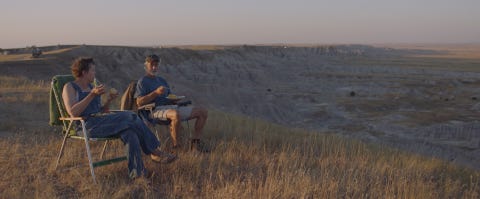
The discussion is happening at a fortuitous time. Yesterday came the news that "Nomadland" won the Critics Choice awards for best picture and director, and that the film is set to "sweep" the Oscars.


********

Saturday, March 6

Maybe they don't have ice ages on the planet Bill Gates comes from

On February 15 the Wall Street Journal publicized Bill Gates' latest book, "How to Avoid Climate Disaster." The book "outlines the various activities that add greenhouse gases to the earth’s atmosphere and then offers a step-by step analysis of the innovations that could offer a remedy." As an incentive to WSJ readers to pay attention, the article explains there's an awful lot of money to be made from Climate Change. There is indeed, notwithstanding Solyndra's flameout, which cost American taxpayers an awful lot of money.

If Bill's instructions are a success at vastly reducing manmade greenhouse gases (note that if it's something bad, it's still called manmade rather than humanmade), I look forward to his step-by-step analysis on avoiding an ice age.

See, that was the whole point of manmade greenhouse gases, as far as Svante Arrhenius was concerned -- Arrhenius being the first scientist to "use principles of 
physical chemistry to estimate the extent to which increases in atmospheric carbon dioxide are responsible for the Earth's increasing surface temperature" according to Wikipedia. But he undertook his study in a quest to understand how ice ages happened.

After getting his  point across in German and at least one other language, in 1908 he went to the English-speaking public. In his book, "Worlds in the Making" he wrote:
"We often hear lamentations that the coal stored up in the earth is wasted by the present generation without any thought of the future, and we are terrified by the awful destruction of life and property which has followed the volcanic eruptions of our days. We may find a kind of consolation in the consideration that here, as in every other case, there is good mixed with the evil. By the influence of the increasing percentage of carbonic acid in the atmosphere, we may hope to enjoy ages with more equable and better climates, especially as regards the colder regions of the earth, ages when the earth will bring forth much more abundant crops than at present, for the benefit of rapidly propagating mankind." (p. 63)
Subsequent generations of scientists pointed out his laughable underestimation of how much carbon emissions would be produced by factories but the point is that Arrhenius seemed to think manmade global warming could save the human race from being wiped out by a catastrophic ice age. 

Was he right? Maybe, in theory. From a riveting explainer about the discovery of global warming (which mentions Arrhenius' work):
Past Climate Cycles: Ice Age Speculations:
[...] 

The calculations were backed up in 2004 by data from a heroic new drilling effort in Antarctica that brought up ice spanning the past eight glacial cycles. Among these was an unusually long previous cycle where the orbital elements had been similar to those in our own cycle. On the other hand, in 2012 a team using a different ancient cycle as an analogy to the present claimed that the world should indeed be descending into an ice age within the next few thousand years.(53*)

The scientists who published these calculations always added a caveat. In the Antarctic record, atmospheric CO2 levels over the past 750,000 years had cycled between about 180 and 280 parts per million. The level by 2012 had climbed almost to 400 and kept climbing. (The other main greenhouse gas, methane, was soaring even farther above any level seen in the long ice record.) Greenhouse warming and other human influences seemed strong enough to overwhelm any natural trend.
One scientist, paleoclimatologist William Ruddiman, even argued that the rise of human agriculture had already produced enough greenhouse gases to counteract the gradual cooling that should have come during the past several thousand years; every previous cycle had begun a steady cooling soon after its peak, rather than leveling off as ours had done.(53a) As emissions climbed exponentially, we might not only cancel the next ice age but launch our planet into an altogether new climate regime.

[...]
To cut a story I think the scientific consensus at this time is that whatever threat the human race would face from a catastrophic ice age is neither here nor there, if we're wiped out first by unprecedented global warming.

But is it unprecedented? Here we run into the reality that it's not possible to put the universe and its history on a laboratory bench for examination. Which calls to my mind an old joke told to me by a CIA  analyst. I can't remember the exact details but the gist is this:

After World War Three broke out, the U.S. President called the CIA director into the Oval Office. He threw a 2,674 page report at him titled, "How to Avert World War Three" and fumed, 'We did everything this damn report recommended! Now you tell me what we missed!" 

The director called for the lead analyst on the report and snapped, 'Tell the President what they missed.'

The analyst thumbed through the report then said, 'They missed the third footnote on page 822.'

Somehow I doubt Bill Gates would find the joke funny. 

********

Thursday, February 25

The New American Civil War and the New American Nomadism


Michael Vlahos was the first academic to publicly raise the question of whether the United States of America was heading into what he termed a new civil war. I can't recall when he first discussed the question on John Batchelor's radio show, where he has been a regular commenter for several years, but it was at least three or maybe four years ago. In any case, at the time his observations sounded preposterous, at least to me, and I confess to smirking when he told John he was teaching a class at Johns Hopkins University to explore the question.

That was then. The many headlines about civil unrest in the USA during the past year make the prospect of a civil war less preposterous, or at least a more popular subject for discussion. On February 19 Michael appeared on John's show to discuss his latest blog post, Show Trial: Bellows of Civil War - "Strongarm political theater stokes the fires scorching our constitutional order." (Audioboom podcast JBS Show: Part 1 and Part 2 ). The show trial he's referring to, actually two of them, are the impeachment trials of Donald Trump.

I should add that Michael and John are not predicting the outbreak of a civil war, they've been asking whether one could occur in the relatively near term. But they've been asking at such length and in such detail, with references to the actual civil war in the USA, it's obvious they believe there is a clear danger of another American secessionist war in the not too distant future.

Below are the notes at Audioboom on the Batchelor-Vlahos discussion, although I recommend that you also listen to the podcast. Following the notes I'll relate my thoughts on the civil-war question.

(The term 'show trial' relates specifically to the infamous courtroom 'trials' in the Soviet Union, which weren't trials as we understand them in a democracy. The accused had already been found guilty by the prosecutor and appeared in court only for the charges to be read out and the sentence handed down.)  
Michael E Vlahos: @JHUWorldCrisis; Johns Hopkins; in re: Are we in a civil war? Looking for road signs.

The escalation becomes obvious only after violence starts. One indication is the show trial of the president at the beginning of the pandemic; then a second show trial ending with a not guilty verdict in the Senate in February 2021.

A show trial is part of the narrative that, here, the Democrats seek to establish. Blue [Democrat] and red [Republican], global and national, urban and rural.

The Speaker of the House announces a commission to investigate 6 Jan events. Why? The new president [Biden] had said, “Enough about Donald Trump.”

Strategy of persecution/inquisitions of red; now charged with being potentially criminal. In operatic terms, the show trial of February is the basis for creating a criminal case against red, being called an evil, terrorist element [by] blue-controlled media. Leading to an emplacement of an anti-red pogram, institutional stance by the dominant agencies of law enforcement.

Donald Trump was the bridge, is now left behind.

Salon.com: “Now the Republicans are the party of terrorism.” This commission, like the 9/11 Commission, which provided impetus for the War on Terror, and all of that stripped away civil liberties and protection for Americans; the Patriot Act.

Blue’s goal is to put aside the electoral factor that’ll keep them in power, instead create a dispensation from outside politics to criminalize red. Will criminalize the popular dimensions of red. GOP [such as Romney]: You can be rump Republicans, Vichy collaborators. The others will be “terrorists.”

Blue will then be in total control.

HR 1: bill that’ll upend electoral politics by creating a system inherently and forever going to wire outcomes in any election for blue; doing this via shenanigans to allow blue to dominate for the next several generations.

Anyone will be able to vote with no oversight or control. Reminiscent of 1860s [U.S. Civil War era].

https://www.anewcivilwar.com/post/show-trial-bellows-of-civil-war

[END NOTES]
My view is that they didn't have the NSA in Abraham Lincoln's time. They didn't have the WTO either. Nor did they have large pensions for retired American military personnel, if they had pensions at all in those days, as well as other benefits of being enlisted in the military in today's USA.

Which is to say I believe there is no chance there will be another secessionist war in the United States. Any attempt at secession would be nipped in the bud, and without a shot fired.

All it would take is the tactics used by the Democratic Party to portray the Republican Party as the party of terrorists in the wake of the January 6 incursion by Trumpians into Washington's Capitol building -- tactics which relied heavily on a compliant media and a badly informed public audience.

Add to this the machinations of tacticians in the U.S. defense and intelligence fields should any real threat of secession emerge. By the time those characters were finished fooling around with the nation's head, Americans would be too confused and fragmented in their views to get up a serious secession movement, let alone die fighting for it.

This doesn't rule out chatter about secession, but we have seen how well counter-chatter works in today's USA. Five minutes after the chatter starts, the counter-chatterers are busy at their laptops.

There is, however, an appreciable challenge to the United States holding together even without threat of secession. The challenge is rooted in the dissolution of a class of Americans who form the backbone of this country -- people who had always worked hard in the attempt to keep up a middle-income existence. Significant numbers of these Americans, many of them finding they were too broke to retire, were forced into a nomad-like existence by the Great Recession and now they're being joined by refugees from the Great Pandemic.

They're living in tents, motorized trailers, and RVs and working low-paying jobs where they can find them. In the process they have forged a community of people helping others survive the rigors of nomadism in the 21st Century.

Now, a 2020 film about the nomads has been released in the USA -- Nomadland -- to plaudits from the movie biz and the mainstream media. (See Time Magazine's laudatory February 15 report, "What to Know About Nomadland and the Real-Life Community Behind the Movie."

This new nomadism has been unstructured -- it's still a stretch to call it a 'movement' -- which is one reason the nomad community has been growing for years under the media radar. Another reason it's been ignored for so long by the media is that it's not political. It's just many Americans from different backgrounds and political persuasions coming to the same conclusion about the futility of trying to keep up a traditional middle-class existence while carrying a crushing debt burden, or finding themselves crushed by it with no job, no savings left, and no house.

As American nomadism becomes more structured, you may trust the Democratic and Republican parties and the federal government won't take it lying down. And they will be prodded to action by businesses and banks that depend on Americans trying to keep up their house mortgages. So there will be all kinds of attempts to co-opt nomadism, some of them relatively benign as with commercializing the lifestyle, and some scary.

So where to now for nomadism? The answer depends on many factors, but I think an important one is that the movement converges with others -- the survivalists, the ever-increasing number of Americans fleeing the cities, back-to-nature 'green' advocates, and Americans pushing back against the huge amount of U.S. land that the federal government controls.

But I think at the top of the list is the large number of Americans who are now completely disenchanted with politics. The entire structure of American society in this era is formed by politics, to the point where the sense of community has been supplanted by it. I think many Americans are rebelling against this inhuman state of affairs.

What they've lacked is action paths -- ways to reconnect with each other without politics. The new nomadism offers one such path, and can provide inspiration for other paths. This will be a pioneering effort, but America was settled by pioneers.

About the photographs in this post

The first one is from a Daily Mail report headlined, "A THIRD of Americans walk around in a zombie-like concussion daze because of a lack of sleep and stress, new study of college athletes finds."

Only a third? They need to expand the study.

The second photo is a scene from Nomadland.

********

Sunday, February 14

Another gift of Covid as slowly sanity dawns in the medical profession

Hooray for Betsy Morris and the WSJ Life & Arts Section! 

Now, just wait until mainstream medicine discovers people need lots of sunlight without sunblock lotions to maintain health.

And note the only time many young city people spend in the sunlight is when they're staging political protests in parks. Is this flight to the outdoors an unconscious drive for better health?  I'm not sure I'm joking. 

For Better Health During the Pandemic, Is Two Hours Outdoors the New 10,000 Steps?

By Betsy Morris
February 14, 2021
The Wall Street Journal

[Emphasis and notes throughout are mine. BTW you can also listen to this article. See the WSJ page for the link.]

The physical and mental damage inflicted by Covid has doctors, researchers and others racing to tap into nature’s therapeutic effects


Will two hours in the park become the next 10,000 steps?

As people spend more time indoors, a mountain of scientific research says spending time in nature is critical to health and increases longevity. That means being in fresh air, under trees and away from cars and concrete—on a regular basis. And, no, the Peloton doesn’t count.

“There’s an urgent need emerging in science and at the gut level to increase the nature experience. This field is just exploding,” says Gretchen Daily, a professor of environmental science at Stanford University.

The benefits have been clear to scientists for some time, but the pandemic has made the matter more urgent. The physical and emotional toll the virus has taken, especially in urban areas with little green space, has galvanized doctors, researchers and others to tap into nature’s therapeutic effects.

Spending time in the woods—a practice the Japanese call “forest bathing”—is strongly linked to lower blood pressure, heart rate and stress hormones and decreased anxiety, depression and fatigue.

Scientists have repeatedly found that human anticancer natural killer cells significantly increase after walks in a forest. In one such study, published in 2010 in the Journal of Biological Regulators and Homeostatic Agents, the number and activity of killer cells increased in a group of twelve healthy men after two walks, each two hours long, in a one-day trip to a forest park in the Tokyo suburbs. So did anti-cancer proteins, according to the research led by Qing Li, an associate professor at the Nippon Medical School. Cortisol in the blood and adrenaline in the urine significantly decreased. The effects lasted at least seven days, the researchers found.

Time in a forest is linked to decreased inflammation, which has been implicated in chronic disease.  [Note: And, increasingly, Covid]

“People are deciding whether or not this type of coffee bean or that type is better for you, when there is such an obvious health tool at your disposal. You literally just walk outside. People don’t know,” says Jared Hanley, co-founder and CEO of NatureQuant, a startup working on an app for users to track the time they spend in nature much like they count steps.

A study published in Nature’s Scientific Reports in 2019 found the 20,000 participants were significantly more likely to report good health and well-being when they spent 120 minutes or more in nature a week. The good vibe peaked at 200 to 300 minutes a week. Anything less than two hours didn’t make a difference.

There still is a lot researchers don’t know, like how physiologically nature influences health. They are racing to find answers by scanning brains, quizzing people to see how cognition is affected by different environments and planting a full-grown forest in a schoolyard to learn how much and what type of tree canopy is needed to curb air pollution and alleviate asthma. [Note: LOL]

Pediatricians at the UCSF Benioff Children’s Hospital in Oakland, Calif., have been so concerned about the lack of nature in their urban patients’ lives that they write prescriptions for it. Every year, “we ask: Do they have access to outdoors and green spaces? If no, they automatically get a referral to our program,” says Nooshin Razani. One Saturday a month “we invite them to nature outings with us,” she says. In clinical trials, Dr. Razani found that every park visit decreased parents’ stress and increased children’s resilience.

Kaiser Permanente and retailer REI are plugging forest bathing. Engineers are quantifying the health benefits of green space using satellite temperature maps, geographic mapping systems, pollution and census data and even Lidar, the remote sensing technology in self-driving cars.

NatureQuant has devised a tool that scores locations—down to the residential address—from “Nature Deficient” to “Nature Rich” based on surrounding natural elements that correlate with good health.

Many people know intuitively that nature is good for you—but still don’t spend that much time in it. The average adult spent 11 and a half hours a day consuming media in 2019, according to Nielsen. 

Note:  The average time looking at computer screens had increased to 13 hours a day by March 2020]

In 2019, half of 18- to 29-year-olds surveyed by the Pew Research Center said they were online almost constantly. A 2017 survey for the federal wildlife and park agencies found it “increasingly normal to spend little time outside.”

Gretchen Daily, at Stanford, thought it would take “a really immersive experience” in nature to produce a significant benefit. As research, she assigned 45-minute walks to each of two groups. One group walked through the hills, the other down a busy, but still tree-lined thoroughfare. “I was shocked,” she says. On a series of cognitive tests afterward, “there was a massive difference. It’s not like they were in Yosemite or the wilderness,” she says, but the hill walkers performed dramatically better. Bottom line, she says: “A 45-minute walk in nature can make a world of difference to mood, creativity, the ability to use your working memory.”

Natural Capital Project, a global partnership she founded, is about to launch a software tool that maps the return on investment in nature, including the health benefits of green space.

Brent Bucknum, founder of the Hyphae Design Laboratory in Oakland, Calif., along with other scientists is studying the biophysics of vegetation in neighborhoods in Louisville, Ky., to test urban greening the way a new pharmaceutical would be tested. In one case, he is measuring the direct impact on residents’ health—asthma, heart disease, dementia—before and after planting 8,000 trees. Data from satellites and drones isn’t reliable enough to measure it or establish a causal relationship. The research is meticulous and “epically expensive,” he says. He, too, plans to launch a company with his findings.

“It’s great to simplify things for people but we see the problem as a much more complex web of components,” he says. Very small environmental fluctuations from one backyard to another can result in big differences to the health of people who live there. Such rigorous research takes time, though. Now there is more public interest in nature and health than scientists can keep up with, he says, and “I think we should leverage that.”

Write to Betsy Morris at betsy.morris@wsj.com

[END REPORT]

Thursday, January 7

After months excusing violence, now they're upset about the breach of the Capitol Building

 "There's been a complete collapse of equality before the law."

."... a completely bifurcated system whereby the less law that applies to one group, the more micro-regulations applied to another."

-- Mark Steyn points up the hypocrisy during his talk with Tucker Carlson last night:  


Tuesday, December 15

"The U.S. finds itself in a peculiar situation in which it can neither win nor lose its wars".

What is a "just" war in this era of drones and long-range missiles, when one side can fight without taking any risk whatsoever?  In the December 21 issue of the New Yorker, Anand Gopal, as assistant research professor at the University of Arizona, raises many questions and struggles more for perspective than answers in "America's War on Syrian Civilians" (titled "Clean Hands" in the print version). 

An important read that challenges the reader to think hard about a kind of warfighting that can be perfectly legal by the accepted rules of war but also unjust.

One caveat -- The Russian and Syrian armies would label as propaganda Gopal's characterization of the air-bombing of Aleppo. One thing is certain: so much propaganda has been generated by the Natoist/American side about the Syrian War that it will be many years more before independent investigators can establish the truth of what happened in Aleppo. 

But Gopal is looking at a very big picture and so his mention, almost in passing, of Aleppo does not detract from the sincerity and worth of his allover observations. Here, a few excerpts from his writing:

     [...]

What is the purpose of this war? Should it be fought, and, if so, fought differently? These are conversations that neither the military nor human-rights organizations appear interested in having.

[...]

 ... the focus on legality may have lulled us into a comfort with war itself. Human-rights groups have found the U.S. guilty of dozens of war crimes in Afghanistan, but most American killing has been lawful: a housewife wandering too close to a convoy, a farmer gunned down on faulty assumptions, a family made victim to the rule of proportionality.

Americans seem to become exercised about the miseries of combat only when the rules are flagrantly violated; as long as they are not, a war quietly slides into the background—even into a permanent state of being. If the Afghan war continued for another twenty years, it’s doubtful whether it would arouse much domestic opposition, even though the over-all suffering may be as great as a wanton slaughter that ended in a decisive victory. The U.S. cannot carry out such a slaughter without violating the law and provoking widespread opposition, and so the conflict remains at a perpetual low boil. The U.S. finds itself in a peculiar situation in which it can neither win nor lose its wars.

[...]

********

Saturday, November 21

Putin's grim economic prognosis for 2021

But he had kind words for President Trump's efforts to restore the US economy and thus, keep the world economy afloat in the Covid Era.  Only time will tell how correct Putin is about 2021.  Also see Sputnik's report today Greenback at Risk? Dollar Loses Crown as World's Payments Currency for First Time Since 2013

Putin Tells G20 World Faces Economic Crisis ["probably" ] Not Seen Since Great Depression
November 21, 2020
Sputnik News International 

MOSCOW (Sputnik) - Russian President Vladimir Putin said at the G20 summit [conducted online because of Covid] on Saturday that the world is facing a major economic crisis this year that can be comparable to the Great Depression.

"The scale of the challenges that humanity faces in 2020 is truly unprecedented. The coronavirus epidemic, global lockdown and freezing of economic activity have triggered a systemic economic crisis that the modern world has probably not known since the Great Depression," Putin said.

The Russian president also praised the contribution of the United States to the world economic recovery.

"US President [Donald Trump] just spoke about the efforts of the United States, indeed, this is a very big contribution to the restoration of the US economy and, therefore, to the restoration of the world economy," Putin said.

Putin added that mass unemployment and poverty remain major issues for the world.

"The main risk, of course, remains … despite some positive signals, the main risk will still remain massive long-term, so-called stagnant mass unemployment. With the subsequent growth of poverty and social disorder," Putin said.

 Devaluation of national currencies during the global COVID-19 pandemic is a major risk, especially for low-income countries, the Russian President added.

"Their fiscal revenues have decreased significantly, and the need to allocate significant funds to fight the pandemic is growing almost every day. A major risk is posed by the devaluation of national currencies and, accordingly, an increase in the cost of servicing public debt - primarily for low-income countries, where two-thirds of loans are in dollars," Putin said.

The Russian President also has urged G20 members to abandon protectionism and sanctions. 

"We must aim to contain protectionism, the practice of imposing sanctions unilaterally and to mend supply chains," he said.

On Measures to Prevent Further Rise of Inequality Amid Pandemic

Putin called on the participants in the G20 summit in Riyadh to take additional steps to prevent the deterioration of the debt crisis in developing countries, as well as an increase in economic and social inequality amid the coronavirus pandemic.

During his address, Putin noted the considerable assistance provided by the International Monetary Fund and the World Bank to developing countries in these conditions. The president recalled that in April, at their suggestion, the G20 decided to establish a temporary moratorium on debt payments.

"This is, of course, a highly demanded initiative. However, it applies only to the poorest countries and does not include their debts to private lenders, affecting less than 4 percent of the total cost of servicing the debt of developing countries this year. I think additional measures are needed to prevent the worsening of the situation and growth of economic and social inequality," he said.

On Access to COVID-19 Vaccines 

"Russia supports the key project considered by the current summit, which aims to make efficient and safe vaccines accessible for everyone. There is no doubt that immunizing drugs should be common public property. And our country, Russia, of course, is ready to provide the vaccines developed by our scientists to those in need," Putin said.

The president added that competition among pharmaceutical companies is inevitable, but there will be enough work for everyone, as the scale of the pandemic obliges countries to use their potential to provide COVID-19 vaccines to the global population.

On WTO Reform

There is no alternative to the World Trade Organization (WTO) today, but changes are needed in light of contemporary global challenges, Putin said.

"In general, the G20 should continue to search for common approaches to reforming the World Trade Organisation in accordance with contemporary challenges," Putin said.

 he Russian president added that this goal will not be achieved without a stable, efficient and multilateral trading system based on universal norms and principles.

"And there is no alternative to the World Trade Organisation today," Putin added.

[END REPORT]

********


Monday, October 26

The right way to investigate the U.S. Global War on Terror.

Matthew Duss, writing for Foreign Affairs on October 22, lays out his case for establishing a commission to investigate the sins of America over the course of the Global War on Terror and recommend remedial actions so that America never does anything like GWOT ever again. (U.S. Foreign Policy Never Recovered From the War on Terror: "Only a Reckoning With the Disastrous Legacy of 9/11 Can Heal the United States.")

The catch is that to follow what he wants of a GWOT commission is like following a description of Russiagate, which maybe five Americans can understand (I'm not one of the five), or the Tale of Benghazi, which is so confusing that the public (those 5 or 10 still game for solving the mystery) is still trying to figure out what happened that fateful night, and why. 

So many tangled tales have arisen since 9/11 that it's the tangles, not any specific situations, which hallmark not only the long war but also all the major incidents of the early part of this century. Indeed the best description for this era is Red Herring.

A commission of the kind Matthew Duss envisions would only add to the tangle, with the entire enterprise collapsing in a tangle of counter-accusations.

A simpler way to approach the problem would be to look at the genesis of U.S. military actions that eventually got lumped in with GWOT but at the start had virtually nothing to do with it.  Libya and Syria fill the bill. Straighten out the story of those 'wars,' then use that as a lens to study U.S. actions across the spectrum of GWOT.

To get the ball rolling across the mounds of red herring, I recommend Libya, the Obama Administration, and the Muslim Brotherhood (Part 1) and  Libya, the Obama Administration, and the Muslim Brotherhood (Part 2) by Vincent Amoroso for The Best of Africa.  

Note the date of publication -- January 2020.  Yes, this year. The basic story has been known for a long time to interested members of public but it took an awful lot of work and patience to fit the pieces together in a way that wasn't hopelessly confusing to a general reader. Often it would be years before an intelligence agency would cough up a bit of the story, to be fit with other bits.  

Yet when it's all said and done, when all the pieces finally drop, we will be staring not at the United States of America but at a logo.

 
Then it will come clear that to really understand the madness involved in the Global War on Terror, it is the U.S. prosecution of the Cold War that must first be investigated by a American commission.

That, dear reader, will never happen.  

********

Thursday, October 8

Houthi Common Sense: "If we are funded by Iran, please, bomb Iran."

Leader of the Ansarallah Movement, Muhammad Ali Al-Houthi
  

Pundita editorial comment: Hear! Hear! 

"Settle your issues with Iran, leave Yemen out": Houthi to Saudi Arabia and US
October 7, 2020
AMN

BEIRUT, LEBANON (10:20 A.M.) – The leader of the Ansarallah Movement, Muhammad Ali Al-Houthi, called on Saudi Arabia and the United States to “settle their accounts” with Iran, instead of targeting the Yemenis.

Houthi said in an interview with the German newspaper Der Spiegel:

"Saudi Arabia operates in the Arabian Peninsula as an American state that submits to Trump. The American president fixes the price that Saudi Arabia pays. The United States gives directions.

“We are not a terrorist group and fundamentally we do not recognize this term. The United States attaches the sign of terrorists to those who oppose its policies. Even the demonstrators on American streets have been described as terrorists by Trump. I ask myself why is this happening now? What is the red threat that we passed?"

Houthi continued, in response to a question about Western intelligence reports about the increasing use of Iranian missiles and drones by the Houthis:

“Why are Saudi Arabia and the United States fighting a war against us? On the pretext of our support from Iran? If we are funded by Iran, please, bomb Iran, the financing party. No, slaughter the Yemenis!"

This is exactly what we said to the Saudis and the Americans. If you have accounts with the Iranians, then settle them with the Iranians,” he added.

Since March 2015, Saudi Arabia has led the Arab coalition, which has been waging intense military operations in Yemen in support of the Yemeni government loyal to President Abd Rubbah Mansour Hadi."

[END REPORT]

********

Rosy the Raccoon analyzes 2020 US presidential campaign


Thanks, Sputnik for catching her hard at work.

*********

Monday, September 21

Wasting food is a custom in modern China. Changing the custom won't be painless.

From Xi Declares War on Food Waste, and China Races to Tighten Its Belt; The New York Times, published August 21, updated September 17:
[...]
Mr. Xi’s “clean plate” campaign strikes at the heart of dining culture in China. Custom dictates that ordering extra dishes and leaving food behind are ways to demonstrate generosity toward one’s relatives, clients, business partners and important guests.

Such habits have contributed to an estimated 17 million to 18 million tons of food being discarded annually, an amount that could feed 30 million to 50 million people for a year, according to a study by the Chinese Academy of Science and the World Wildlife Fund.

Mr. Xi’s call is as much a warning against the dangers of profligacy as it is a reflection of the generational shift in values that has emerged as living standards rise.

[...]

Many among the country’s younger generation, such as Samantha Pan, a 21-year-old student in Guangzhou, embrace being free from having to worry about saving food for a rainy day, and hold little regard for the state’s moral exhortations.

“This type of initiative is very boring and useless,” Ms. Pan said in a telephone interview. “I am entitled to order as much food as I want. If I just happen to love wasting food, it’s still my freedom.”

[...] 

As we can see from Ms Pan's ringing defense of her freedom to waste food, not all of China is racing to tighten its belt. Yet China is now facing severe food insecurity, as detailed by the updated Times report and one from The Hill, Another famine coming? China struggles to meet basic food demands.

As with so many other kinds of crises that have arisen in this young century, the only viable course of action is for individuals to change their thinking. 

Change or die; that's what the crystal ball is telling me. 

********


Tuesday, September 8

Should India stay with the Shanghai Cooperation Organization?

 Well, here is my opinion of Beijing:


"Bite by bite, China has been eating away at Indian borderlands." The quote is from an Indian security expert published today in The New York Times report, Shots Fired Along India-China Border for First Time in Years.  Brahma Chellaney is right as far as it goes but the Chinese haven't only been taking bites from the 'borderlands.'  For years they got so little pushback from the China-huggers bought-off Indians in Delhi they moved ever more openly into Ladakh. They went so far that finally Delhi woke up and took action. Then the Chinese got nasty. And here we are today.  

The Chinese have shown their true colors so many times during the past 20 years that any government is a fool to join a security organization with "Shanghai" in the name -- unless it's so desperate for Chinese financial aid it's willing to endure being shanghaied by smiling backstabbers. India doesn't and shouldn't need to endure being stabbed in the back.  

As to whether India should be turning to the United States for help in dealing with the Chinese, well, here is my opinion of Washington:


Substitute "land" for "lady" in the lyrics, and there is America, the British Empire wannabe, to a T.  These days you have to be crazy to join any American 'coalition of the willing' 

********

Wednesday, September 2

Human response to Covid virus

Farmer in Amazon fighting
 forest fire with sprinkler can
 
Photo : CARL DE SOUZA/AFP

Photo at Sputnik's This week in pictures, August 15-21.  

********