Translate

Thursday, February 2

Afghan War, Groundhog Day chapter

Many things happened with blinding speed yesterday after Washington awakened to the news, already all over Europe, Kabul, Tehran and Rawalpindi, of a leaked NATO report that pointed to Pakistan's ISI as supporting the Afghan Taliban's war against NATO troops. I haven't checked which press source broke the story yesterday morning, European time, but if the BBC wasn't the first it was among the first.

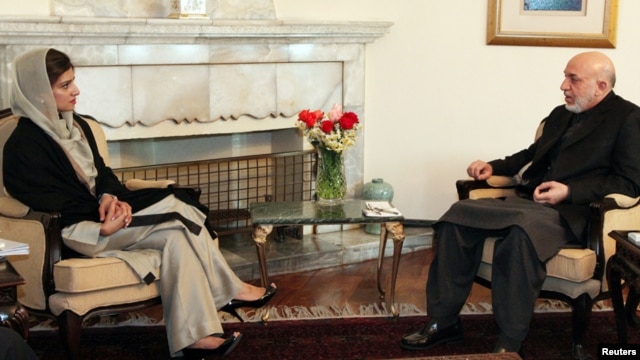
The leaked report coincided with a visit to Kabul by Pakistan's Foreign Minister, Hina Rabani Khar, and was leaked on the eve of a NATO defense ministers' meeting in Brussels, which U.S. SecDec Leon Panetta was preparing to attend.

The rest of the news day went by in a blur of rumors, speculations and damage-control, all of which heated up when Panetta announced to reporters (on the flight to Brussels, if I recall) that the U.S. "might" move up to 2013 the end of U.S. combat operations in Afghanistan instead of staying with the agreed-on timeline of the end of 2014.

By the evening, when Jennifer Griffin reported on Fox that an unnamed White House official told her that Panetta had jumped the gun and that Obama had planned to make the announcement of the 2013 pullout in May at the NATO summit in Chicago, the confusion threatened to collapse into farce, as diplomats and reporters scrambled to keep up with the spin from official sources here and abroad.

Here, three reports that provide a window on how the day shook out:

> It was announced yesterday after his meeting in Kabul with Pakistan's Foreign Minister that he'll attend a trilateral meeting in Pakistan on February 16-17 that will include a (presumably high-ranking) member of Iran's government. See this report from Online News (Pakistan) for details.

> Last night David S. Cloud reported for the Los Angeles Times:
By announcing a specific timetable, Defense Secretary Leon Panetta is hoping to head off a push by military allies to pull out their Afghan forces more quickly. [...]
Last night Robert Burns reported on the situation for the Associated Press (with contributions from AP writer Anne Gearan). The report, headlined, Panetta: US combat in Afghanistan to end next year, is on the long side because it goes into detail to dispel, to the extent possible at this time, the confusion raised by Panetta's announcement. But I'm going to cherry pick just a few passages because I think they have significance with regard to the leaked NATO report (see my Feb. 1 post Who was the leaker at NATO?), which the Burns report doesn't mention, and leave you to pore over the rest:
[...] On his second trip to Europe since becoming Pentagon chief last July 1, Panetta is gathering with his counterparts at a delicate time for NATO, not only because of the uncertainty surrounding the military mission in Afghanistan but also because of a growing gap in military power between the U.S. and nearly all other European members of the alliance.

That chasm is not expected to narrow even as the U.S. reduces its defense budget by nearly $490 billion over the coming decade and reduces the size of the Army and Marine Corps.

The U.S. remains the leader of a 28-nation NATO, but the Obama administration has made no secret of its intention to shift focus toward Asia and the Middle East. It announced last week that it will remove two Army brigades from Europe in the next two years, leaving one in Germany and one in Italy. The alliance also is quietly discussing the possible withdrawal of American nuclear weapons from Europe in coming years. The nuclear issue is on the agenda for the Brussels meeting.

Gen. Ray Odierno, the Army chief of staff, said last week that the two brigades being removed from Europe will be eliminated rather than reassigned to U.S. bases. Both are based in Germany — the 172nd Infantry Brigade, in Grafenwoehr, and the 170th Infantry Brigade, in Baumholder.

Odierno said that in the long run [Pundita emphasis] this change will benefit both the United States and its European partners because U.S. Army combat and support units will periodically rotate in and out of Europe for training and joint exercises that are designed to meet the needs of the European forces.
[...]
You will note from the rest of the report that Panetta brings up the money topic more than once.

One more point about the AP report: I don't like arguing with Burns, who is a respected veteran reporter, but I think he's wrong if he's implying that the sudden decision to move up the end of combat operations was motivated by Obama's campaigning for reelection. ("The [new] timeline fits neatly into the U.S. political calendar, enabling President Barack Obama to declare on the campaign trail this year that in addition to bringing all U.S. troops home from Iraq and beginning a troop drawdown in Afghanistan, he also has a target period for ending the U.S. combat role there.")

I think the Obama administration was caught flat-footed by the leak of such a highly sensitive NATO report, which goes further than any other report that's come to public light in pointing to the fact that the U.S. has been pandering to a regime that it has known aids and abets the killing of NATO troops.

The best Obama could do, to douse a scandal that could bring down his administration, was to immediately signal that he was yanking U.S. combat troops out of the sights of Pakistan's military/ISI as soon as possible.

Of course I could be wrong and the unnamed White House official could have been right; maybe it was Panetta who made the decision on his own initiative to announce a change in the timeline. If that's the case I'd say he saw the leaked report's danger to the Obama administration, and the Pentagon, faster than Obama did. The danger is very real given the implications of the leaked report. If a Republican had been in the White House when the report was leaked, by the start of next week ranking Democrats in Congress could have been calling for the President's impeachment.

The only way out for the Obama administration, other than announcing an early end to combat operations, would have been to signal a radically different U.S. approach to Pakistan. Obama and his counterparts in the other major NATO countries, who've also pandered to Pakistan's regime, have not to this point displayed the inclination to make such a change.

That's the way things stand, as official Washington prepares to awaken to Groundhog Day.

Wednesday, February 1

Obama caves into pressure from NATO allies: Panetta announces 2013 as end to U.S. combat mission in Afghanistan

UPDATE 7:30 PM ET
Jennifer Griffin reporting frm Pentagon 7:07 PM for Fox: White House unnamed official claiming Panetta might have jumped the gun on Obama's planned announcement at May NATO summit to move up timeline for end of combat operations. Panetta told reporters that 2013 end "may" be the end of U.S. combat operations. Point is that O is trying to pin blame on his Secretary of Defense for moving up the announcement. What a boss to work for, eh?
************
Obama decided not to wait until the May NATO summit in Chicago to talk timelines for withdrawal. See the New York Times report if you haven't already heard the news. U.S. trainers for ANA will remain through 2014 -- maybe. See this VOA report, 'Insider' Attacks Against Coalition Forces by Afghan Security Forces Probed in US Congress.

Who was the leaker at NATO? (UPDATED 2X)

(First updated version, at 4:55 PM ET, added a few clarifications. The second update, at the end of the post, is a question from a reader and my reply.)

A reader asked, in response to the Dragon Lady post, if I was implying that the British command at NATO was behind the leaked report. No; I was simply responding to Rashid's comment. As much as I like to blame the British foreign office for too much rain in Washington or too little, I can't feature Cameron or anyone in the MoD authorizing such a leak. Of course the one time I'm willing to let the British off the hook could be the time I was wrong, but if I had to take a guess as to which government had its fingerprints on the leak, it would be Germany.

Here's the reasoning behind my guess:

The real point of the NATO leak is that most Afghans are willing to put up with the Taliban; that's not true but that's the meta-message of the report -- the part of the report that was leaked. The implied conclusion is, 'So then what is NATO doing in Afghanistan?'

Germany's government wants out of Afghanistan even more than the French or the British. The German command in NATO might have become concerned that Obama was building a case for war with Pakistan -- or at least military operations in the country that would drag the EU even deeper into the mess.

The Germans have more on their plate right now than any other major country including the United States because the EU is staring into the abyss. The concern in many quarters is that the 2008 financial meltdown might have been just a prelude to what's coming. There are too many variables at this point to call how it will all shake out. But I think whether or not the worst-case economic scenario materializes, the Germans feel it's imperative to wash their hands of the entire 'AFPAK' matter right now, and leave it to the Northern Alliance, with covert help from India, Russia and Iran (and posssibly China) to settle Pakistan's hash in Afghanistan. As to whether that means they'd go as far as to leak that report to drum up more support for a very early exit from Afghanistan, well, desperation is the mother of many things.

Again, I'm guessing.
*************
UPDATE 6:10 PM ET
Reader question: "Pundita, you don't think the leaker could be Sarkozy, who hates Karzai?"

I think that's too obvious. Sarkozy has already made his case publicly known and in spectacular fashion. But Sarkozy's announced plan to leave A'stan a year early would be the perfect opportunity for Germany. I think Merkel wants Europe out of A'stan even earlier than Sarkozy does. So if ever there was a perfect time for Germany to try and tip the scales of NATO involvement in A'Stan, it's now. Bonus for Merkel: the leak would be blamed on the USA (that's who Islamabad is blaming -- see Rashid's interview -- or France.)

It's possible that Panetta's statements on 60 Minutes about Pak-OBL, most of which were made available at least two days in advance of the broadcast, might have raised alarms that Obama was starting to make a case for boots on the ground in Pakistan, even though State scrambled to do damage control in Islamabad about Panetta's statements.

One other point about Sarkozy: A big question in my mind is whether the US command in A'stan managed to hide from other ISAF members the pattern of increasing number of NATO troops killed by ANA soldiers, or the number of troops killed, until the NYT report ripped the lid off the situation.

If the answer is yes -- if the French command at NATO had to learn the story from the Times -- I think Sarkozy's fury might have been directed more at Obama or the US command at NATO than Karzai.

Again, it's just a question I have but one that keeps me up at night.
Pundita

Deputy Barney Fife meets the Dragon Lady

"Afghan President Hamid Karzai meets with Pakistani Foreign Minister Hina Rabbani Khar in Kabul on February 1."

Pix from RFERL interview today with Ahmed Rashid about the leaked NATO report fingering the ISI. Rashid thinks the report was leaked to time with the Karzai-Khar meeting. It would have been leaked anyway.

The dog and pony show that Gilani and Kayani put on, in the attempt to persuade the IMF that there was something approximating a civilian government in Pakistan, backfired. So then Gilani had to run around Davos last week assuring everyone that there was not going to be a coup in Pakistan.

My favorite part of the Rashid interview:
RFE/RL: Is the revelation in this NATO report about Islamabad's support for the Taliban news to you?

Ahmed Rashid: It's very well known amongst NATO militaries [and] amongst the U.S. military. I was told by senior American generals that they approached [U.S.] President [George W.] Bush and Secretary of Defense Donald Rumsfeld back in 2005 about the support that the Taliban were getting from Pakistan. But it was ignored by Bush at that time.
"Ignored?" So Tony Blair and Gordon Brown had nothing to do with anything. They were just sitting there in Downing Street, pure as the driven snow.

See this what I keep warning: the longer Americans stay in there and play with NATO, the more bags we're going to be left holding.

Has Kayani decided ISI is the sacrificial goat?

Well, the general has to find some means to placate the IMF fast, or he's in deep doo-doo. However, we can't learn the answer until we discover where President Obama has hidden the bunny. If this makes no sense, it's just because there are some readers who're trying to make sense of things that I never added a quote from a famous figure in the U.S. news media to the Puffy Head part of this blog's sidebar: "Pundita is Alice in Washington's Wonderland."

NATO's Superduper Top Secret You Mustn't Read This leaked report: "ISI supporting Afghan Taliban" or what NATO and waterbugs have in common

Once I was chasing a waterbug around the house to kill it when it made an executive decision to hide instead of run.

"You do realize I can see you, you nitwit," I said peevishly.

It didn't realize; it thought that because it could no longer see me, I couldn't see the back of its body sticking out from the hiding place.

I couldn't bring myself to kill a creature that meant me no harm and couldn't comprehend that its attempts at subterfuge were completely transparent.

So, in the manner of the samurai who sheathed his sword and walked away when the thief he'd cornered spat in his face, I lowered the swatter then made enough noise to scare the waterbug into running again. The chase resumed until the waterbug lucked into a cranny big enough to hide its entire body from my eyes.

At least as far back as 2005, when the Taliban resurgence in Afghanistan became evident, the British government has wanted a 'political' settlement with them, and other NATO nations that haven't wanted to confront Pakistan's regime have wanted the same settlement. And hang the facts that most Afghans hate the Taliban and don't want any settlement that puts Pakistan and its Taliban proxies in control of their country. The following report, which has set off another predictable cascade of denials from Pakistan's regime, is best understood with those facts in mind:
Pakistan helping Afghan Taliban - Nato
February 1, 2012

"The Taliban are not Islam. The Taliban are Islamabad."

The Taliban in Afghanistan are being directly assisted by Pakistani security services, according to a secret Nato report seen by the BBC.

The leaked report, derived from thousands of interrogations, claims the Taliban remain defiant and have wide support among the Afghan people.
[...]
The report alleges that Pakistan knows the locations of senior Taliban leaders.

"We have long been concerned about ties between elements of the ISI [Pakistan's intelligence service] and some extremist networks," said US Pentagon spokesman Captain John Kirby, adding that the US Defence Department had not yet seen the report.
[...]
The BBC's Quentin Sommerville in Kabul says the report - on the state of the Taliban - fully exposes for the first time the relationship between the ISI and the Taliban.

The report is based on material from 27,000 interrogations with more than 4,000 captured Taliban, al-Qaeda and other foreign fighters and civilians.

The report notes: "Pakistan's manipulation of the Taliban senior leadership continues unabatedly".

It also says that Pakistan is aware of the locations of senior Taliban leaders.

"Senior Taliban representatives, such as Nasiruddin Haqqani, maintain residences in the immediate vicinity of ISI headquarters in Islamabad," it said.

It quotes a senior al-Qaeda detainee as saying: "Pakistan knows everything. They control everything. I can't [expletive] on a tree in Kunar without them knowing. The Taliban are not Islam. The Taliban are Islamabad."

Pakistan is finding it harder to convince outsiders it is not helping the Afghan Taliban and giving safe haven to its leaders.

In effect, the accusation is that Pakistan is betting on the insurgents being the strongest power in Afghanistan and most likely ally once Nato leaves - something Islamabad of course strenuously denies.

The leak of this report comes at a particularly sensitive time. Pakistan is already blocking the supply route to coalition forces in Afghanistan, following a Nato attack in which 24 Pakistani soldiers were killed.

With increasing pressure being heaped on Pakistan, public support here for formally ending co-operation with the West simply grows.

Our correspondent says the report seems to suggest that the Taliban feel trapped by ISI control and fear they will never escape its influence.

However, it states: "As this document is derived directly from insurgents it should be considered informational and not necessarily analytical."

Adm Mike Mullen, former chairman of the US Joint Chiefs of Staff, has explained Pakistan's closeness to the Afghan Taliban by pointing to infiltration of its army by the religious right, but he also says it is part of a grand strategy to increase leverage in the region via "proxies".

Despite Nato's strategy to secure the country with Afghan forces, the secret document details widespread collaboration between the insurgents and Afghan police and military.

Lt Col Jimmie Cummings, a spokesman for Nato's International Security Assistance Force (Isaf) in Afghanistan, said the document was "a classified internal document that is not meant to be released to the public".

"It is a matter of policy that documents that are classified are not discussed under any circumstances," he said.

The report also depicts the depth of continuing support among the Afghan population for the Taliban, our correspondent says.

It paints a picture of al-Qaeda's influence diminishing but the Taliban's influence increasing, he adds.

Taliban influence

In a damning conclusion, the document says that in the last year there has been unprecedented interest, even from members of the Afghan government, in joining the Taliban cause.

It adds: "Afghan civilians frequently prefer Taliban governance over the Afghan government, usually as a result of government corruption."

The report has evidence that the Taliban are purposely hastening Nato's withdrawal by deliberately reducing their attacks in some areas and then initiating a comprehensive hearts-and-minds campaign.

It says that in areas where Isaf has withdrawn, Taliban influence has increased, often with little or no resistance from government security forces. And in many cases, with the active help of the Afghan police and army.

When foreign soldiers leave, Afghan security forces are expected to take control.
The report says that surrender is far from their collective mindset.

"For the moment, they believe that continuing the fight and expanding Taliban governance are their only viable courses of action," it adds.

According to the report, rifles, pistols and heavy weapons have been sold by Afghan security forces in bazaars in Pakistan.

The report adds that Taliban members "do not receive salaries or other financial incentives for their work", but their operations are funded by the narcotics trade and they frequently take a cut from the trade.

Their main revenue, though, is from donations, and they travel around the country from door to door making no secret of their affliation, it says.

Tuesday, January 31

Obama announces continued big U.S. aid to Pakistan's regime. Will this encourage it to continue stealth ethnic cleansing in FATA?

January 31, CNN-IBN:
[During an online town hall] US President Barack Obama hit out at Pakistan for its inability to fight terrorism. Obama was responding to a war veteran's question but defended his government's move to continue giving Islamabad millions in aid.

"When it comes to the fight against terror, Pakistan either lacks resources or the will," said Obama, saying America needs to pump in funds to tackle terror.

American drones regularly target terrorists in the Federally Administered Tribal Areas (FATA) of Pakistan, Obama has also said in the first such acknowledgment by the top US leadership on its highly successful but secretive programme.

"A lot of these strikes have been in the FATA, and going after al-Qaeda suspects who are up in very tough terrain along the border between Afghanistan and Pakistan," Obama said in response to a question [...]

"For us to be able to get them in another way would involve probably a lot more intrusive military action than the ones we're already engaging in," Obama said.
[...]
Obama said these strikes by unmanned drones are regularly carried out and these are "targeted focussed effort at people who are on a list of active terrorists".

"For the most part, they've been very precise precision strikes against al-Qaeda and their affiliates, and we're very careful in terms of how it's been applied," he said, responding to the question.

This is the first time that the US has publicly acknowledged the drone attacks inside Pakistan. The United States so far had refrained from publicly speaking on this issue.
[...]
I don't know what reasoning informed President Obama's decision to acknowledge the U.S. drone strikes; perhaps the announcement is part of a new tactic for dealing with Pakistan's regime. In any event, handing the regime a virtual blank check risks encouraging it to continue what's been de facto ethnic cleansing in FATA -- and against tribes that are defenseless, and voiceless in Washington and on the world stage.

The situation is something like the early stage of the clearing operation in Sudan, which morphed into what was called "genocide in slow motion." Only in the case of FATA it's Pakistan's military that does the initial clearing, not Janjaweed-type militias, ostensibly to drive out what it considers to be 'bad' Taliban (those who attack the regime). Then the military pulls out and looks the other way while other Taliban burn down villages and kill tribe members -- or claims it doesn't have enough troops to control the Taliban.

Reports on the plight of the tribes in FATA are few and far between in the Western media, but this one from 2011 conveys the picture:
'Clearing' Kurram: What Pakistan's Army Didn't Do in Kurram Agency
By Daud Khattak
August 25, 2011
AFPAK Channel, Foreign Policy magazine

On Aug. 18, Pakistan's most powerful man, Army chief Gen. Ashfaq Parvez Kayani, secretly flew to Kurram agency in the country's Federally Administered Tribal Areas (FATA) and declared it free of "miscreants."

No doubt the Pakistani Army did a great job clearing militants from Central Kurram, the focus of the operation, as it did in areas like the Swat Valley. But Kayani's visit and announcement raise the following question: What do "clear" and "miscreants" mean for a Pakistani Army fighting to regain control of the area from a discreet force that can shift, hit, kill, and target anywhere, any place, and any time? And if the area had been successfully cleared, why did Kayani not travel by road, and why did he not meet the open jirgas of tribal elders in that area, as was the tradition when top Pakistani officials visited the tribal belt before 2001?

Indeed, it would have been great fun if Kayani had taken the governor of Khyber-Puktunkhwa province (the federal government figure who is actually in charge of administering the FATA) along with him, traveling by road to the "cleared" area so that the youth of Kurram could welcome them with the beating of drums and traditional dance, attan, instead of welcoming Kayani's visit from afar while begging him to finish the job and lift the siege on Kurram's main city, Parachinar. Only then would the people of Kurram come to believe that their area had truly been secured.

However, what is clear in Kurram and the rest of the tribal areas is that the people continue to live under the threat of terrorists operating under different names, from Jaish to Lashkar to Tehrik, despite numerous operations and claims of victory by Pakistan's security forces.

Although the Army announced that the Kurram operation was launched after a demand from the area's tribal elders, locals contradicted that statement in conversations with the author, saying they never asked for the military operation, whose key objective was to open the Tal-Parachinar road for people traveling to Parachinar, the center of Upper Kurram, from Peshawar via Sadda, the headquarters of Lower Kurram Agency. Instead, they had been asking for more than two years for the government simply to provide them basic security, with no response in return.

However, locals told this writer, they still cannot travel on the Tal-Parachinar road without risking their security, despite the two-month-long operation and ensuing "victory."

All the available accounts from Central Kurram suggest that one of the major impacts of the operation was that it forced the local population to leave their homes, allowing the Taliban to go from village to village, burning the villages vacated by the people.

According to reports aired by the Pashto-language radio station Mashaal, so far 16 villages have been burned to the ground by the Taliban in spite of the Army operation, with each village consisting of an average of 50 to 60 houses.

Similar operations have already been conducted in other tribal agencies -- South Waziristan, Mohmand, Bajaur, and the Bara area of Khyber, where the security forces have been engaged in combat operations for the past two years while the people live under a curfew -- and been declared successes.

All the while, the displaced people from those areas continue to live in tents, leaving the field open for the Army and the Taliban. Once the playing fields for their children, the land of the tribesmen is now known as a recruiting center for suicide bombers and jihadists.

FATA's nearly 7 million tribesmen, once fiercely independent, stunningly hospitable, and unbelievably proud, are now living as a vanquished nation robbed of their land, resources, independence, customs, and traditions by the imported jihadists and the state security agencies.

Many in these tribal areas can't live and even visit their homes and villages for fear of being kidnapped by armed bandits, killed by the Taliban, arrested by the Army or intelligence agencies, or targeted accidentally by American drones. And those who have not left or have since returned can't dare to utter a word either against the Army or against the militants.

Two weeks ago, when armed Taliban raided some shops in the central bazaar in Miram Shah, the capital of North Waziristan, and burned pieces of women's garments for being un-Islamic and too thin, this writer tried to talk to some shop owners about the incident. Those who would speak agreed to do so only on the condition that they would not condemn the act and would only discuss their financial losses. Yet the situation is little different between the Taliban-controlled Miram Shah and in "cleared" areas of Mohmand, South Waziristan, Bajaur, and Kurram.

In fact, the threat for the common citizen in all those areas is as widespread as it was before the military operations. And this is the reason they are staying in tented villages despite the hot summer and chilly winter, with no proper food, water, medicines, and schooling for their children. Many others have migrated to other cities and towns, shutting down their businesses and leaving their farms.

While the sacrifices of the Pakistani Army and Frontier Corps over the years are no secret, the failure to achieve peace and security despite the substantial use of force and displacement of hundreds of thousands leaves room for many questions -- most importantly, whether the Army is unwilling to definitively crush the militants, or instead if it is incapable of doing so.

In Kurram, the road to Parachinar has been closed by militants for the last few years, while the security forces have merely looked on. Suddenly and unexpectedly, these same forces announced a clearing operation, but only in an area where the situation was quite calm and peaceful. Thousands of families were displaced to live in camps, and then suddenly the Army announced victory one evening while the displaced people, as scared as before, find their situation unchanged.

The road to Upper Kurram that goes from Peshawar to Parachinar via Tal is still closed, and the people, scared of being kidnapped or killed, still travel through the Afghan cities of Jalalabad, Kabul, Khost, and Gardez to reach Parachinar.

Many locals with whom this writer talked on the phone say the real militant problem existed in Lower Kurram, while the Army was engaged for the past two months in Central Kurram. During the whole operation, it was not made clear who or which group of militants was being targeted, or whether any prominent militant leaders had been killed or arrested.

It is equal parts interesting and tragic that only a day after Gen. Kayani's visit to Central Kurram and the announcement regarding the "clearance" of the area, a teenage bomber wreaked havoc on worshippers in a mosque offering Friday congregational prayers in the Jamrud subdivision of Khyber agency, an area previously declared "clear" of militants.

Seeing the bomb blasts in a supposedly secure area, how could people in Kurram be expected to believe that their lives and property would be safe following the military operation in their backyard? And while the key road to Parachinar stays closed, it does not matter much for the people if some portion of the agency is cleared or not; the agency will always struggle to survive while its heart remains blocked.

Daud Khattak is a journalist working with Radio Free Europe/Radio Liberty's Pashto-language Mashaal Radio in Prague.

Monday, January 30

The tell

During his discussion with Scott Pelley for CBS 60 Minutes, aired last night, U.S. Secretary of Defense Leon Panetta went through a short list of reasons as to why he believed that "someone" must have known the identity of the occupant in the Abbottabad compound; while he didn't elaborate it was clear that he meant someone in authority in Pakistan's military.

The problem with the list is that it could just as well have pointed to the occupant being a known major dealer in illicit drugs: the high walls, the Pakistani military helicopter(s) that U.S. intell had observed flying over the compound, and so on. This was a point one of John Batchelor's guests mentioned soon after the Abbottabad raid. Even the expensive SUVs seen routinely leaving and entering the compound could have belonged to a honcho in the drug trade, which is a big part of Pakistan's unofficial foreign exchange. That would also explain why folks who lived nearby weren't nosy neighbors.

However, at the end of the discussion Panetta told Pelley that there was one other thing: inspection of the compound after the U.S. raid turned up that there was no alternate or secret escape route from there.

That was the tell. That was how President Obama knew for certain he'd been right not to alert Pakistan's government to the planned raid. Only if bin Laden had expected to be warned of any impending raid would he have lived for years in the compound without installing an exit other than the front gate.

Yo, State: how do you explain this?

China wins first Afghan oil extraction contract. Oh but that's right I forgot: you were so busy helping Pakistan scare up American investors to mine Thar coal after China pulled out of the deal that you didn't have time to negotiate with that bunch of losers in Kabul's ministry of mines and precious metals, or whatever it's called.

Speaking of Thar coal, if you want to start the week with a belly laugh read Fouad Khan's beautifully researched and written analysis for the (Pakistan) Express Tribune, Chasing a pipe dream: three reasons why Thar coal will not save Pakistan. Just a little preview:
The fixed carbon content of Thar coal is less than 22%. The low carbon content translates into low energy generation capacity, which means that if energy is invested into transporting the lignite from source to point of consumption, the net energy output of the mining, extraction, transportation and conversion process becomes less than zero; you end up investing more energy making energy out of coal than you get out of it in terms of megawatts. In order to get any energy out of lignite, it has to be converted into electricity almost entirely onsite; where it is being mined. Which brings us to the first reason why Thar coal will not save Pakistan.

There isn’t enough water
[...]
Gee I hope the Thar-Pak folks don't read the Express Tribune if their intention is actually to help Pakistan; I think that's the name of the American coal-mining consortium that was thrown together.

Where was I? China snapping up contracts in Afghanistan that should have gone to the USA seeing how Americans are spilling so much of their blood there and all.

I know; it's not State's fault. It's never State's fault because it was born under an unlucky star. When you're wrong there's a President in office who follows your advice. When you're right it so happens there's a President who won't listen to a word you say. And then there are presidents, such as Obama, with a built-in homing device: if State is right that means he doesn't listen; if it's wrong he loves the advice.

But has it ever occurred to State that Foggy Bottom might be built on top of a Native Indian burial ground? I'm serious; maybe the problem is not in the stars. It could be ghosts. In that case State doesn't need a bigger budget; it needs a shaman or two. Have them do a blessing ceremony to pacify any angry spirits hanging out in the halls. Or State could always solve the problem by relocating its headquarters to somewhere else. Like Brussels.

All right, all right, Pundita; somebody get the hook because I could on like this for the rest of week.

Friday, January 27

Urgent advice for State: Warn Obama to stop pushing the envelope (UPDATED 2X)

UPDATE 2:05 PM ET January 29
Adding two important news reports to the footnotes, both of which I'd misplaced at the time I published this post and just found.

Footnote #1: Egypt faces hurdles in securing IMF aid, January 25, Reuters. Although the January 25 report doesn't contain the news about the billion dollar-'bridge' loan that I'd mentioned in the text, it presents key observations that were dropped from the updated January 26 Reuters report I'd originally linked to.

Footnote #8: Pakistan stoking anti-Indian sentiments to divert attention from the heat at home, January 26, Times of India. At first glance this report doesn't differ markedly from the one in The Hindu about the LeT 'resurgence' in Pakistan but it brings out points which underscore the seriousness of the development, and not only for India. LeT is one of the world's most dangerous international terrorist organizations; that Pakistan's military let its leader out of his cage at home at this juncture is almost beyond belief. Almost.
******************
I was sitting on the patio one morning six years ago, enjoying the quiet and early Spring weather, when I heard the most godawful sound. I'd barely blurted, "What the --?" when I learned the sound was a squirrel's idea of a battle cry issuing from maybe 200 squirrel throats. All the squirrels in the neighborhood, it seemed, had banded together to run off a large rat and the chase was taking them through my back yard. I never saw or heard anything like it my life. And let me tell you that rat was burning rubber. Never saw a rat run so fast.

I told this story not to insult any government but to graphically illustrate that when sufficiently provoked and desperate, even the weakest governments can set the mighty United States back on its heels. Once this gets underway it can snowball into a trend.

With all such situations it's perceptions of American actions that count, or to be more precise the perceived pattern of actions. During the past year the perceived pattern is that President Barack Obama is throwing his weight around the world, everywhere he can.

I understand that Obama can cite reasons for each instance in which he's crashed national borders in pursuit of the bad guys. Yet the perception is that Obama has gotten hold of two very efficient lethal weapons -- U.S. Special Forces teams and armed drones -- and is deploying them anywhere in the world he sees fit.

But even President George W. Bush and his most aggressive predecessors in the Cold War managed to meddle in ways that didn't make it look as if the entire planet was suddenly under surprise attack from the United States. They knew when to back off -- and they were operating in a communications era when their every move in a foreign country wasn't broadcast around the world.

Times have changed. It's the piling-on phenomenon that's leading people to these perceptions Okay, so you wanted to shoot rockets at al Qaeda operatives in Pakistan's badlands. Okay, so you had to support Sarkozy's war against Gaddafi. Okay, so you had shoot rockets at al Qaeda in Yemen. Okay, so you had to take out Osama bin Laden when you found him. Okay, so you had to rescue an American citizen who was kidnapped by common criminals.

But all of these "okay" situations are piled on top of Obama expressing public support for Egypt's democracy activists and as much telling Mubarak to decamp. And piled on top of meddling in spectacular fashion in Pakistan's internal affairs. And starting a cold war with Iran's regime not to mention starting a cold war with Syria's regime.

All this within the space of a year.

I don't need to tell State that the juntas in Pakistan and Egypt are in absolutely desperate straits. They are both staring at the imminent prospect of a complete economic collapse in their countries. And the fear is that raising loans amounting to a billion dollars from the World Bank and African Development Bank until the IMF can (if it chooses) to bail them out might not be enough to stave off economic collapse in Egypt. (1)

Nor should I need to tell State that both juntas have broad and deep support in their respective countries, if for no other reason than the large number of civilians the businesses owned by the juntas employ.

So a reasonable person would assume that last month, after Egypt's junta gave a clear warning to the Obama administration to back off in Egypt, State would have immediately yanked the Democratic and Republican party NGOs that were operating in Egypt. I mean -- how much more of a warning do you need, when a security force raids the NGOs and confiscates their computers while the junta accuses the NGOs of being fronts for the American government and meddling in Egypt's internal affairs? (2)

But no, the NGOs continued to operate in Egypt -- all for a good cause, of course -- after State pulled their irons out of the fire in December. Now we learn as of yesterday some Americans working for the NGOs have been barred from leaving Egypt. This is a prelude to arrest warrants being issued -- or at least that's the implied threat of the action to prevent the Americans (and some Europeans who work for othe ngos from leaving Egypt. (2)

Obama is understandably furious about the situation but he could have seen this coming even before Mubarak left office. And now Egypt's generals believe they have no other choice but to find a scapegoat for the country's economic crisis. The Obama administration's ill-conceived attempt to bring more democracy to Egypt, which is using a very small number of Egyptians, has handed the junta the perfect goat.

Now I turn to Pakistan. The country is not only facing economic collapse but it's also in the throes of the worst fuel crisis in its history. (3) So why has the Obama administration decided that this is the perfect time to turn the heat up on Iran by trying to get Pakistan's regime to abandon the gas pipeline Iran is building for them, and sign up to get gas from the TAPI pipeline? (4)(5)

Is the answer that chipmunks are managing the Pakistan portfolio for the Obama administration? I ask this also because this is the same question they're asking in Afghanistan. I mean -- our war office and State couldn't even keep track of containers being transshipped through Pakistan, many of those containers containing desperately needed food supplies for Afghans.

Why "desperate?" Because the Obama administration and Congress haven't wanted the Afghan government to use an Iranian route for shipping food to Afghanistan and because the Northern Distribution Network, where it's the middle of winter anyway, is full up with shipping war supplies for NATO. So they've had a food shortage in Afghanistan, which has driven food prices, even for food basics, through the roof.

But how can you lose track of almost 160,000 shipping containers? The containers have disappeared in Pakistan. Gone! Poof! (6)

And not to put too fine a point on it but the U.S. command can't even win a war against a bunch of guys in baggy pants who take their orders from Rawalpindi. What's been the Obama strategy to deal with this situation? Play patty-cake with the Emir of Qatar and increase meddling in Pakistan. (7)

What has the answer been from Pakistan's junta? They've let Lashkar-e-Taiba out of its cage in Pakistan. (8) Do I have to draw stick figures to explain to State what that implies?

For starters, the junta is saying to forget Doha; the Obama administration can negotiate a truce with Mullah Omar all it wants, and it won't mean squat to LeT, which just might take the prize as the world's most dangerous international terrorist organization. (9) The larger implication is that the junta is signaling Obama that if he's worried about international terrorists taking over Pakistan's nuke weapons, the worry is misplaced because the junta will simply hand them a nuke if they get any angrier at him.

I understand that little blame for the entire mess I've described above can be laid at State's door. But someone has to take responsibility for conveying the facts of life to President Obama and State has to be the designated fool in this instance.

In summary, this is one of those times it's crucial for the American government to practice message discipline across the board. Sometimes you can have it all, but if you try to have it all at the same time, you sow the impression that you're crazy. That's a fast way to replace respect with fear. When people become afraid that you're both crazy and hogging their turf, they act in the same way a bunch of Washington squirrels did one fine morning.

1) January 26, Egypt says to seek extra $1 billion to support budget; Reuters
Egypt said on Thursday it would ask the World Bank for a $500 million loan and another $500 million loan from the African Development Bank to help it fill a budget gap widened by a year of political and economic turmoil.

Egypt has also persuaded the International Monetary Fund (IMF) to reduce the interest rate it would charge on $3.2 billion loan Cairo had requested from the IMF, Planning and International Cooperation Minister Faiza Abu el-Naga told reporters.

"We have achieved a reduction from the IMF on the interest rate on the loan from 1.5 to 1.1 percent," she said, adding that this would put the cost of the finance more in line with interest rates worldwide.

The turmoil in Egypt has pushed up unemployment, widened its budget and balance of payments deficits and drained its foreign reserves. Many economists believe a currency devaluation is imminent.

Egypt announced earlier this month it had formally asked the IMF for an aid package, saying it wanted the money as soon as possible and hoped an agreement would be signed within weeks.

The IMF, however, says any agreement would have to be accompanied by financial commitments from other international donors and attract broad political support within the country.

Thrashing out the technical details of a loan will take two to three months, it said.

The World Bank and African Development Bank loans would carry an interest rate of between 7 and 8 percent, Abu el-Naga said. Egypt would request a mission from the World Bank come to Egypt soon, she added, without giving details or a date.The central bank, trying to keep the Egyptian pound stable against the dollar, has run through $9 billion of its foreign reserves since June, when the government rejected an IMF agreement similar to the one it is now seeking.

The depletion accelerated before the parliamentary election and during a series of violent political protests in November and December, with the central bank spending at least $2 billion in each of the last three months. By the end of December, reserves had fallen to $18 billion.
January 25, Egypt faces hurdles in securing IMF aid; Patrick Werr, Reuters

2) January 27, 2012: Egypt Bans Travel for 10 U.S. Citizens; Ben Hubbard, Associated Press via TIME online
CAIRO) — Egypt banned at least 10 Americans and Europeans from leaving the country, including the son of U.S. Transportation Secretary Ray Lahood, hiking tensions with Washington over a campaign by Egypt's military against groups promoting democracy and human rights.

The United States warned Thursday that the campaign raised concerns about Egypt's transition to democracy and could jeopardize American aid that Egypt's battered economy needs badly after a year of unrest. [...]

The travel ban was part of an Egyptian criminal investigation into foreign-funded democracy organizations after soldiers raided the offices of 10 such groups last month, including those of two American groups.

The investigation is closely intertwined with Egypt's political turmoil since the fall of Hosni Mubarak nearly a year ago. The generals who took power have accused "foreign hands" of being behind protests against their rule and they frequently depict the protesters themselves as receiving foreign funds in a plot to destabilize the country.
[...]
3) January 25, 2012: Energy Deficit Renders Punjab Uncompetitive; Dawn (Pakistan)

4) In the first version of this post I referred to the TAPI pipeline as "crazy;" without getting into a discussion of TAPI, I had it confused in my mind with the Nabucco gas pipeline. So many pipelines to keep straight.

5) This report is undated although it was surely published within the past week; I'm linking to this version rather than the International Herald Tribune report because of the wording of the title supplied by the Pakistani website that quotes IHT: US enticing Pakistan with cheap gas; Online International News Network (Pakistan)

6) January 27, 2012: Afghanistan bound 157,736 US containers; Aftab Maken, The News International (Pakistan)
ISLAMABAD: The Federal Board of Revenue (FBR) on Thursday made a stunning revelation before the Senate Standing Committee on Commerce that a total of 157,736 containers of the United States destined to Afghanistan have never reached the landlocked country and disappeared inside Pakistan.
[...]
7) January 25, 2012: Brahma Chellaney learns U.S. Afghan War exit strategy is literally full of gas; Pundita

8) January 24, 2012:Hafiz Saeed ‘threatens' India; Hasan Suror, The Hindu
In a spectacle guaranteed to “send a chill through New Delhi,” as The Financial Times put it, Hafiz Saeed, the suspected mastermind behind the 2008 Mumbai terror bombings, is being feted in Pakistan as a “hero” attracting thousands of people as he “criss-crosses” the country at the head of a radical road-show targeting India and calling for “jihad.”
[...]
January 26, 2012: Pakistan stoking anti-Indian sentiments to divert attention from the heat at home; Times of India

9) January 26, 2012: What's wrong with the following sentence?, Pundita

Thursday, January 26

What's wrong with the following sentence?

January 24, 2012:
The opening of a Taliban office in the Gulf Arab nation of Qatar is contingent on the renunciation of international terror and the backing of a peace process to end the Afghan conflict, an American diplomat said Tuesday.
From a January 12, 2012 al Jazeera report (remember that Doha, Qatar, is AJ's home base and that the media organization was the brainchild of the Emir of Qatar); watch carefully don't blink:
US officials are believed to have held a series of secret meetings with the Taliban in Germany and Qatar since 2010, but those talks had to be suspended last December after Karzai objected to the process.

Karzai has been less enthusiastic towards any arrangement that would lead to the Taliban sharing power and last month recalled Afghanistan's ambassador to Qatar over reports that the group had opened an office in Doha.
In other words the office is open; it's just that there hasn't been a ribbon-cutting ceremony.

Now to a report, dated January 26, 2012 from the Islamabad-based Pakistan Observer:
Three “moderate” Taliban leaders are proceeding ahead to open a “Liaison Office” in Doha, Qatar within next few days but the move is yet to be backed by Taliban top Leader Mullah Omar and his close associates.

Although the new “Embassy” will be named as Political Office for the “Islamic Emirate of Afghanistan” but it was not clear if the top Afghan Taliban leadership will endorse the mission’s objectives.

According to reliable sources two former Taliban officials, Agha Tayeb and Mullah Muhammad Zaeef is being backed by two Afghan diplomats Shahabuddin Dilawar and Suhail Shaheen are behind the new move seen as an attempt to pave the way for a negotiated deal.

Hard-line Taliban leaders have opposed the idea to open an office in Qatar where U.S. Central Command is also headquartered and had tacitly backed the move to open such a Liaison Office in Ankara. Turkey had already offered to play a role of mediation to ease confrontation in Afghanistan.
Turkey would be a logical choice but Obama is not interested in any logic that pertains to the Afghan War, as Brahma Chellaney's discussion made clear. But the point is that the "moderate" Taliban involved with setting up the Doha office are not involved with international terrorism and never have been. So it's kind of silly for the Obama administration to claim they're demanding that the Taliban they've been clowning around with since 2010 must renounce international terrorism before they can serve cucumber sandwiches at the office.

I believe the precise term is "groveling," Rep. Gohmert

The United States recently has been talking about a truce with the Taliban. [Louie] Gohmert, a member of the House Judiciary Subcommittee on Crime, Terrorism and Homeland Security, characterized such efforts as begging ...

January 25, 2012:
GOP congressman: Supply more arms to the Northern Alliance and carve out Balochistan from Pakistan
by Michael McAuliff
The Huffington Post

WASHINGTON - President Obama is losing the war in Afghanistan to the Taliban, argued Rep. Louie Gohmert after listening to Tuesday's State of the Union address. So he proposed one way to win: create a new, friendly state within the borders of neighboring Pakistan.

The Texas Republican took issue with Obama's assertion that "the Taliban's momentum has been broken." He said he had just visited Afghanistan and came away with a very different sense from talking to members of the Northern Alliance, a multiethnic confederation of warlords and other forces who led the U.S.-backed ouster of the Taliban in 2001.

Gohmert argued that, far from being broken, the Taliban are feeling powerful enough to demand that members of the Northern Alliance apologize before the United States leaves in 2013. "If you look at the objective facts ... they're not on the run," Gohmert said.

His solution was first to supply more arms to the Northern Alliance. But then, he said, the Afghan border with Pakistan needs to be shored up.

"Let's talk about creating a Balochistan in the southern part of Pakistan," Gohmert told The Huffington Post, referring to a region of Pakistan that constitutes nearly half that vital if troublesome ally.

"They love us. They'll stop the IEDs [improvised explosive devices] and all the weaponry coming into Afghanistan, and we got a shot to win over there," said Gohmert, who accused Obama's national security advisers of giving the president bad intel on Afghanistan.

"His strategy of working from ignorance and thinking we have them on the run is no way to go through life, son," Gohmert said. "I'm about to borrow from an 'Animal House' line, but anyway, that's no way to go through life when you're that ignorant of what's really going on."

The White House did not answer a request for comment, and Gohmert's office did not elaborate on how the United States could even discuss carving off Balochistan from a country that is both an ally and a nuclear power.

The United States recently has been talking about a truce with the Taliban. Gohmert, a member of the House Judiciary Subcommittee on Crime, Terrorism and Homeland Security, characterized such efforts as begging, backed by an offer to "let all these Taliban murderers" go free.

Wednesday, January 25

Uh oh. Is NATO lying in its teeth about the level of violence in Afghanistan?

"We find their suggestion that the insurgency is waning to be a dangerous political fiction ..."

NATO is consistently reporting a decrease in violence nationwide, which should pave the way for a handover to Afghan security forces and a NATO withdrawal.

The issue of whether violence across Afghanistan is rising or falling is key to the NATO-led mission's objective of pacifying the country and handing it over to Afghan forces so NATO combat troops can slowly withdraw by 2014
.
Violence spikes in key Afghan regions

By Nick Paton Walsh
January 25, 2012
CNN

Kabul - Attacks by the Taliban in southern and eastern Afghanistan have risen sharply in recent months, according to figures released by the U.S.-led coalition, a sign that the allied offensive against the insurgency is yet to blunt its potency.

The figures are in contrast to the broader trend of decreasing violence nationwide depicted by the NATO mission. That depiction is challenged by non-government organizations active in Afghanistan; Human Rights Watch describes 2011 as "the most violent year ever."

NATO's International Security and Assistance Force, or ISAF, says overall enemy attacks declined by 9% across the country in 2011. But the number of attacks by the insurgency rose last year by 19% in the east when compared to 2010. A smaller rise was seen in the south of the country, 6%.

These two areas - known by ISAF as RC South and RC East - account for nearly two-thirds of insurgent attacks across the country. The statistics are significant, as NATO is consistently reporting a decrease in violence nationwide, which should pave the way for a handover to Afghan security forces and a NATO withdrawal.

One analyst said the figures from the south are especially noteworthy, as this region was the target of major NATO operations in 2010. Even taking into account the insurgent violence triggered by those 2010 operations, last year was still more violent.

The increase suggests a continuation of fighting during the traditionally quieter winter months. In fact, the south and east of Afghanistan, according to NATO figures, saw a decline in violence in late summer (compared to 2010) only to spike as winter approached.

An ISAF spokesman, Lt. Col. Jimmie Cummings, said the rise in insurgent attacks was a result of coalition forces taking the fight to the enemy.

"This increase in enemy-initiated attacks is attributed to deliberate operations (surge) in both the east and south by Afghan and ISAF forces in the fall designed to further pressure insurgents in former Taliban strongholds," he said in an e-mail statement.

Cummings added that operations in the south had helped reduce high-profile attacks in the city of Kandahar by about a third compared to 2010.

The issue of whether violence across Afghanistan is rising or falling is key to the NATO-led mission's objective of pacifying the country and handing it over to Afghan forces so NATO combat troops can slowly withdraw by 2014.

Human Rights Watch takes issue with NATO's depiction of declining violence, especially as it affects civilians. The organization's Afghanistan researcher Heather Barr told CNN: "This has been the most violent year ever and the worst year for civilian casualties. If this is what winning looks like, it does not look that way for the Afghan communities experiencing this violence first hand."

Barr said the group's analysis was based on data that it considered credible from the United Nations and from the Afghan Non-government Safety Organization, or ANSO, which uses similar data to ISAF's to evaluate the risk for charity and development groups working nationwide.

A recent U.N. report highlighted a considerable rise in security incidents. ANSO said in its last quarterly report that there was a continuing rise in violence, and that attacks by the insurgency nationwide were 14% higher last year than in 2010.

But ANSO said that is significantly lower than year-on-year rises recorded previously, and it's unclear whether that's because ISAF has the insurgency under pressure or because the insurgents have, ahead of the 2014 withdrawal, made "the calculus that there is no point sprinting to the finish if everyone else has dropped out of the race."

ANSO also challenges NATO's analysis of insurgent violence. Its latest report says the group is unable to analyze NATO statistics that pointed to a 3% reduction in attacks in the first eight months of 2011, compared with the same period in 2010.

But it adds: "We find their suggestion that the insurgency is waning to be a dangerous political fiction that should be given no consideration in NGO risk assessment for the coming year."

What did you do with the bunny, Mr Obama?


"obama reminds me of a magician i saw as a little girl. he put a bunny in a hat and then pulled out a quarter. i was 7 y.o and i was not fooled i stood up and screamed where is the bunny, where is the bunny, what did you do with the bunny."
-- Member of the American Public Ms. Sonia Trevino, 2008

.

Brahma Chellaney learns U.S. Afghan War exit strategy is literally full of gas

Geostrategist Brahma Chellaney's January 21 article for the Japan Times presents such troubling news that perhaps the first reaction from readers who aren't familiar with his career would be to ask how good he is as a source. So you might want to turn to the Wikipedia article on Chellaney before reading the report. No source is infallible but Chellaney is very good. I think every sentence in his report requires study by Washington -- and the American public and journalism establishment. However, I'll start by pulling from the report the passages I found most troubling (emphasis mine):
In fact, the choice of Doha, Qatar, as the seat of U.S.-Taliban negotiations has been made with the intent to cut out the still-skeptical Afghan government and to insulate the Taliban negotiators from Pakistani and Saudi pressures. The choice also meshes with U.S. efforts to build Qatar as a major promoter of Western interests in the Arab world, on the lines of Saudi Arabia.

Just as oil wealth has propelled the Saudi role, gas wealth is driving the Qatari role
— best illustrated by Qatar's military and financial contributions to regime change in Libya and its current involvement in fomenting a Sunni insurrection in Alawite-ruled Syria, the last remaining beacon of secularism in an increasingly Islamist-oriented Arab world.
Now I'll quote in greater detail from the December 5, 2010 (U.K.) Telegraph report I linked to on Sunday in the attempt to emphasize to Rick Santorum that the Saudis are not America's friends. The report discussed a classified U.S. Department of State cable that had just been published by Wikileaks. I quoted only a couple passages about Saudi Arabia, which I'll repeat here, but it discussed other countries including Qatar:
[...] "It has been an ongoing challenge to persuade Saudi officials to treat terrorist financing emanating from Saudi Arabia as a strategic priority," read a cable from Hillary Clinton, the US Secretary of State, dated Dec 30, 2009.

"Donors in Saudi Arabia constitute the most significant source of funding to Sunni terrorist groups worldwide," added the document.
[...]
There was no accusation of official Saudi government support of militants. The Clinton memo credited the Saudis with "significant progress" under US pressure to deal with the issue, especially disrupting al-Qaeda's finance channels.

However, it claimed that "Riyadh has taken only limited action" to interrupt the flow of money to Taliban, Lashkar-e-Taiba and associated groups which have launched attacks in Afghanistan, Pakistan and India. It believed that private funds from Arab states were the Taliban's greatest source of income, above revenues from the opium-poppy trade.

The tiny kingdom of Qatar, which was last week granted the right to stage the 2022 World Cup, was singled out as the "worst in the region" in terms of its co-operation with the US. Qatar's approach on militant financing is "largely passive," and its security services "have been hesitant to act against known terrorists" because they fear being seen too close to the United States, the memo said.

Kuwait, which was saved from Saddam Hussein's invasion by US-led forces in 1991, was a "key transit point" for funds that were threatening stability in Pakistan and Afghanistan and targeting coalition [forces].
[...]
Qatar had not cleaned up its act by the time it was approached by the Obama administration to serve as the headquarters for the Afghan Taliban and negotiation site. And the country's emir -- an absolute monarch -- has no intention of cleaning up. With some understatement the emir is not America friendly despite gestures made from expediency; worse, as Clinton's classified statements reveal, the government is studiously looking the other way when it comes to funding for deadly enemies of the United States.

Yet Chellaney brings out that once again, an American administration has leaped from the frying pan into the fire. Granted, it's open knowledge in Washington that Saudi Arabia's King Abdullah and President Obama don't get along; reportedly Abdullah was furious with Obama's handling of Egypt's crisis and not happy about other matters, some of them relating to Iran. But to attempt to make the Emir of Qatar the American government's new two-faced best friend in the Arab world is -- well, it's the foreign relations equivalent of Russian Roulette.

Not to mention that the American public has complained for decades that we have to extricate our government from its entanglement with the Saudis. Then, just when we thought we might get free in a few years, now we're getting tangled up with another potentate -- because of gas!

More to the immediate point, it is very dangerous for the United States to plunk the Taliban into Doha in an official Afghan government capacity, which is exactly what has been proposed without naming it.

I haven't even gotten to the part about Lashkar-e-Taiba and their actions in Afghanistan but now I'm going to let Chellaney get in a few more words (the emphasis is mine throughout):
Escaping Afghanistan, the graveyard of empires

By BRAHMA CHELLANEY
January 21, 2012
Japan Times

NEW DELHI — Since coming to office, President Barack Obama has pursued an Afghan war strategy summed up in just four words: "surge, bribe and run." The U.S.-led military mission has now entered the "run" part, or what euphemistically is being called the "transition to 2014" — the year Obama arbitrarily chose as the deadline to wind down all NATO combat operations.

The central aim is to cut a deal with the Taliban — even if Afghanistan and the region pay a heavy price — so that the United States and its NATO partners exit the "Graveyard of Empires" without losing face. This effort to withdraw as part of a political settlement without admitting defeat is being dressed up as a "reconciliation" process, with Qatar, Germany and Britain getting lead roles to help facilitate a U.S.-Taliban deal.

Yet what stands out is how little the U.S. has learned from past mistakes. In some critical respects, it is actually beginning to repeat past mistakes, whether by creating or funding new local militias in Afghanistan or striving to cut a deal with the Taliban. As in the covert war it waged against the nearly nine-year Soviet military intervention in Afghanistan, so too in the current overt war, U.S. policy has been driven by short-term considerations, without much regard for the interests of friends in the wider region.

To be sure, Obama was right to seek an end to this protracted war. But he blundered by laying out his cards in public and emboldening the enemy.

Within weeks of assuming office, Obama publicly declared his intent to exit Afghanistan, before he even asked his team to work out a strategy. He quickly moved from the Bush-initiated counterinsurgency strategy to limited war objectives centered on finding a face-saving exit. A troop surge that lasted up to 2010 was designed not to militarily rout the Taliban but to strike a political deal with the enemy from a position of strength. But even before a deal could be negotiated, rising U.S. casualties and war fatigue prompted him to publicly unveil a troop draw down, stretching from 2011 to 2014. If the surge failed to militarily contain the Taliban, it was largely because its purpose had been undermined by Obama at the very outset.

A withdrawing power that first announces a phased exit and then pursues deal-making with the enemy undermines its regional leverage. It speaks for itself that the sharp deterioration in U.S. ties with the Pakistani military has occurred in the period after the draw-down timetable was unveiled. The phased exit has encouraged the Pakistani generals to play hardball.

Worse, there is still no clear U.S. strategy on how to ensure that the endgame does not undermine the interests of the free world or further destabilize the region. It is also unclear whether the U.S. after 2014 will be willing to rely on its air power and special forces to keep Afghanistan in the hands of a friendly government and army — or whether it will do what it has just done in Iraq: pull out completely and wash its hands off the country.

Think of a scenario where Obama had not played his cards in public. Immediately after coming to office, Obama could have used his predecessor's diversion of resources to the Iraq war to justify a troop surge in Afghanistan while exerting full pressure on the Pakistani generals to tear down insurgent sanctuaries. Had that happened without the intent to exit being made public, not only would many Afghan and American lives have been saved, but also the side desperate for a deal today would have been the Taliban, not the U.S.

The outcome of the current effort to clinch a deal with a resurgent Taliban is uncertain. Even if a deal materializes and is honored by the Taliban on the ground, it cannot by itself pacify Afghanistan.

Although Afghanistan historically was designed as a buffer state, it does not today separate empires and conflicts. Rather, it is the center of not one but multiple conflicts with cross-border dimensions. Given Afghanistan's major ethnic and political divides, genuine national reintegration and reconciliation would make a lot of sense.

However, instead of opening parallel negotiating tracks with all key actors, with the aim of eventually bringing them together at the same table, the U.S. is pursuing a single-track approach focused on achieving a deal with the Taliban. Such is its single-mindedness that a conscious effort is under way to keep out representatives of the National Front (formerly Northern Alliance) from even international conferences on Afghanistan.

In fact, the choice of Doha, Qatar, as the seat of U.S.-Taliban negotiations has been made with the intent to cut out the still-skeptical Afghan government and to insulate the Taliban negotiators from Pakistani and Saudi pressures. The choice also meshes with U.S. efforts to build Qatar as a major promoter of Western interests in the Arab world, on the lines of Saudi Arabia.

Just as oil wealth has propelled the Saudi role, gas wealth is driving the Qatari role -— best illustrated by Qatar's military and financial contributions to regime change in Libya and its current involvement in fomenting a Sunni insurrection in Alawite-ruled Syria, the last remaining beacon of secularism in an increasingly Islamist-oriented Arab world.

Meanwhile, the new U.S. containment push against Iran threatens to compound the internal situation in Afghanistan. Iran's nuclear program is a factor behind the new containment drive. But a bigger factor is the intent not to allow Iran to be the main beneficiary of the end of U.S. military operations in Iraq and the planned NATO exit from Afghanistan. Yet, without getting Iran on board, building a stable Iraq or Afghanistan will be difficult.

In truth, U.S. policy is coming full circle again on the Pakistan-fathered Afghan Taliban, in whose birth the CIA had played midwife. President Bill Clinton's administration acquiesced in the Taliban's ascension to power in Kabul in 1996 and turned a blind eye as that thuggish militia, in league with Pakistan's Inter-Services Intelligence, fostered narco-terrorism and swelled the ranks of the Afghan war alumni waging transnational terrorism. With 9/11, however, the chickens came home to roost. In declaring war on the Taliban in October 2001, U.S. policy came full circle.

Now, U.S. policy is coming another full circle on the Taliban in its frantic search for a deal. This has been underscored by a series of secret U.S. meetings with the Taliban last year and the current moves to restart talks in Qatar by meeting the Taliban's demand for the release of five of its officials who are held at Guantánamo Bay. Mohammed Tayeb al-Agha, an aide to the one-eyed Taliban chief Mohammad Omar, has emerged as the Taliban's chief negotiator with Marc Grossman, America's Afghanistan-Pakistan (Afpak) envoy.

The Qatar-based negotiations serve as another reminder why the U.S. political leadership has refrained from decapitating the Taliban's top command-and-control. The U.S. military has had ample opportunities to eliminate the Taliban's Rahbari Shura, or leadership council, often called the Quetta Shura because it relocated to the Pakistani city in 2002.

Yet, tellingly, the U.S. military has not carried out a single drone, air or ground strike against the shura. All the U.S. strikes have occurred farther north in Pakistan's tribal Waziristan region, although the leadership of the Afghan Taliban or its allied groups like the Haqqani network and the Hekmatyar band is not holed up there.


The sanctity of existing borders has become a powerful norm in world politics. Border fixity is seen as essential for peace and stability. Yet, paradoxically, the norm has allowed the emergence of weak states, whose internal wars spill over and create wider regional tensions and insecurities. In other words, a norm intended to build peace and stability may be creating conditions for greater regional conflict and instability. This norm is likely to come under challenge in the Afpak belt, where the dangers of political fragmentation cannot be lightly dismissed.

When history is written, the legacy of the NATO war in Afghanistan will mirror the legacy of the U.S. occupation of Iraq — to leave an ethnically fractured nation. Just as Iraq today stands ethnically partitioned in a de facto sense, it will be difficult to establish a government in Kabul post-2014 whose writ runs across Afghanistan.

More important, Afghanistan is not Vietnam. An end to NATO combat operations will not mean the end of the war because the enemy will target Western interests wherever they may be. The U.S. hope to regionally contain terrorism is nothing more than self-delusion. If anything, this objective promises to keep the Afpak belt as a festering threat to regional and global security.

Tuesday, January 24

Let's see what kind of mood Messr. Sarkozy is in today.

The conference I was attending broke up early. Translation: I got bored and cut out. So I'm as free as a bird until Thursday. Translation: Now I'm working my way through a backlog of half-finished Pundita posts. To give myself a break I looked up the news from France regarding A'stan. Here's the latest from VOA (with my comments inserted in a few places), which seems to indicate that Sarkozy has calmed down a little. Even so I wouldn't want to be in Karzai's shoes when he meets behind closed doors later this week with France's President.
France Rules Out Hasty Afghanistan Withdrawal

Tuesday, January 24th, 2012 at 1:35 pm ET

France is ruling out a hasty withdrawal from Afghanistan after an Afghan soldier shot and killed four French troops last week.

French President Nicolas Sarkozy suspended military operations in Afghanistan and said he was considering an early pullout from the country if security conditions are not clearly established following Friday's attack in eastern Afghanistan.

On Tuesday, French Foreign Minister Alain Juppe told parliament that France will not give in to panic [Pundita note: Panic? I think it was rage.] and immediately withdraw all French troops from Afghanistan this year. He said calls for a complete withdrawal of troops by the end of of 2012 have not been thought through.

France has about 3,600 soldiers serving in Afghanistan, mainly in the east, with all French combat troops scheduled to leave the country in 2014.

Afghan President Hamid Karzai left Tuesday for a five-day trip to Turkmenistan and Europe. He is expected to travel to France, where his office says he will sign a strategic partnership treaty with President Sarkozy.

On Friday, an Afghan soldier opened fire on unarmed French troops during a training exercise at a base in Kapisa province. The shooting was the latest in a series of incidents in which international troops have been killed by Afghan security forces.

NATO Secretary-General Anders Fogh Rasmussen reiterated the attack was isolated. He [Pundita note: Aw, put a sock in it, Rasmussen. The New York Times is standing by its report.] told the French newspaper Le Monde Tuesday that he understood France's concerns about security and that the process of recruiting Afghan soldiers must be reexamined.

French Defense Minister Gerard Longuet was quoted as saying the shooter was an insurgent infiltrator. But NATO officials said Tuesday it was too early to tell if the Taliban was behind last week's killing of the four French troops.

Coalition spokesman Brigadier General Carsten Jacobsen told reporters said that past investigations into similar events have found many different reasons for them.

He said “there are no indicators of a systemic issues of infiltration” by the Taliban into the Afghan security forces and that officials look at this “closely every day.” [Pundita note: What you mean 'we' Kemosabe? Has the Coalition asked Afghanistan's intelligence service to look into whether the attacks have been systemic since -- let me see -- 2009? Say, wasn't that the year LeT established a major presence in Afghanistan, or do I have the years mixed up again?]

An eerie journey back in time

"What is happening? Both Hagenbeck, who boasts to the media about the high quality of his intelligence, and Khalilzad, who is unquestionably in a position to know, have stated that the Taliban and al-Qaeda are being nurtured, not in some inaccessible terrain along the Pakistan-Afghanistan border but in Quetta, the capital of Pakistan's Balochistan province where the Pakistan Army and the ISI have a major presence. Yet President Bush and his neo-conservative henchmen have remained strangely quiet, allowing Pakistan to strengthen the Taliban in Quetta, and, as a consequence, re-energize al-Qaeda -- the killers of thousands of Americans in the fall of 2001." -- Ramtanu Maitra, 2003

There are actually many news reports and published analyses from the early part of the Afghan War that now produce an eerie effect because they pointed so clearly to the very situation that exists today. But Ramtanu Maitra's analysis might be the eeriest of all because in light of where the Afghan War stands today it greatly challenges the widely-held assumption that the Bush administration simply dropped the ball in Afghanistan because it was distracted by the Iraq invasion and subsequent insurgency in the country. Perhaps that's true or partly true, but then there is the Maitra writing, clanking its chains, as it were, in the manner of Dickens's Ghost of Christmas Past --

Why the US needs the Taliban
By Ramtanu Maitra
July 30, 2003
Asia Times Online

Since Pakistani President General Pervez Musharraf made his much-acclaimed visit to Camp David and met US President George W Bush on June 24, new elements have begun to emerge in the Afghan theater. US troops in Afghanistan are now encountering more enemy attacks than ever before, and clashes between Pakistani and Afghan troops along the tribal borders have been reported regularly.

On July 16, speaking to the [Electronic] Telegraph of the United Kingdom, US troop commander General Frank "Buster" Hagenbeck, based at Bagram Air Base in Afghanistan, reported increased attacks over recent weeks on US and Afghan forces by the Taliban, al-Qaeda and other anti-US groups that have joined hands. He also revealed some other very interesting information: the Taliban and its allies have regrouped in Pakistan and are recruiting fighters from religious schools in Quetta in a campaign funded by drug trafficking. Hagenbeck also said that these enemies of US and Afghan forces have been joined by Al-Qaeda commanders who are establishing new cells and sponsoring the attempted capture of American troops. One other piece of news of import from Hagenbeck is that the Taliban have seized whole swathes of the country.

Reliable intelligence

Hagenbeck's statements were virtually ignored in Washington. Also ignored were a number of similar statements issued from Kabul by Afghan President Hamid Karzai and his cabinet colleagues. On July 17, presidential spokesman Jawed Ludin spoke to the Pakistani newspaper The News of the Afghan government's concern over the volatile situation on its border with Pakistan. Ludin urged Pakistan to "take steps" to prevent the Taliban fighters from crossing over to launch terrorist attacks against Kabul. "We will take it seriously to confront it," he warned. "So our expectation is for all those involved in the war against terror to take serious steps," Ludin added, clearly addressing the Bush administration.

A week later, on July 24, in an article for The Nation, a Pakistani news daily, Ahmed Rashid, the well known expert on the Taliban and Afghanistan, quoted President Hamid Karzai, during an interview at Kabul, as saying: "As much as we want good relations with Pakistan and other neighbors, we also oppose extremism, terrorism and fundamentalism coming into Afghanistan from outside. We have one page where there is a tremendous desire for friendship and the need for each other. But there is the other page, of the consequences if intervention continues, cross-border terrorism continues, violence and extremism continue. Afghans will have no choice but to stand up and stop it."

Among Americans, only the special envoy of the US president to Afghanistan and a good friend of President Karzai, Zalmay Khalilzad, has shown any concern about the recent developments. Khalilzad has little choice but to keep up a bold front to the Afghans, telling them how his bosses in Washington are doing their best to rebuild Afghanistan, and attributes the present crisis to the security situation. Like everyone else, Khalilzad has little in reality to offer and, given the opportunity, falls back on what "must be done" and "should be done". At a July 15 press conference at Kabul, Khalilzad said every effort has to be made by Pakistan not to allow its territory to be used by the Taliban elements. This "should not be allowed", he said. "We need 100 percent assurances [from Pakistan] on this, not 50 percent assurances, and we know the Taliban are planning in Quetta."

What is happening? Both Hagenbeck, who boasts to the media about the high quality of his intelligence, and Khalilzad, who is unquestionably in a position to know, have stated that the Taliban and al-Qaeda are being nurtured, not in some inaccessible terrain along the Pakistan-Afghanistan border but in Quetta, the capital of Pakistan's Balochistan province where the Pakistan Army and the ISI have a major presence. Yet, President Bush and his neo-conservative henchmen have remained strangely quiet, allowing Pakistan to strengthen the Taliban in Quetta, and, as a consequence, re-energize al-Qaeda - the killers of thousands of Americans in the fall of 2001.

Recall for a moment: Following the September 11 terrorist attacks in the United States, no other terrorist was portrayed by the United States as more dangerous than al-Qaeda leader Osama bin Laden and no other Islamic fundamentalist group was presented to the American people as more despicable than the Taliban. Within a month the United States invaded Afghanistan to "take out" the Taliban, al-Qaeda and bin Laden, while the world lined up behind the new anti-terrorist messiahs from Washington, providing it the necessary moral and vocal support. Why, then, is Washington now weakening President Karzai and allowing the strengthening and re-emergence of the Taliban?

Karzai shared with Ahmed Rashid his belief, like that of the average Afghan today, that the answer to that question lies in an understanding reached between the United States and Pakistan during Musharraf's visit to Camp David, that Afghanistan could be, in effect, "sub-contracted" to Pakistan. Karzai also told Rashid that Musharraf's critical remarks about the Karzai regime during his visit to the United States reminded him of the pre-September 11 days when Pakistan was fully backing the Taliban and exercising ever-more-strident control over Afghanistan. Musharraf had said, among other things, that the Afghan president does not have much control over Afghanistan beyond Kabul. But, Karzai added in the interview with Rashid, no matter what the outsiders are planning or plotting, as of now, "I want nobody to be under any illusion that Afghanistan will allow any other country to control it." Is Karzai overreacting? Most likely, he is not. He has seen the writing on the wall. It is arguable whether the Taliban's return to power is inevitable, but there is little doubt that under the circumstances it is very convenient for the US.

Bowing to realities

To begin with, it was clear from the outset that the United States never really wanted to be in Afghanistan. It was basically a jumping-off point for the "big enchilada", the re-shaping of the Middle East's politics and regimes. The Afghan reconstruction talk was mostly wishful thinking. For anyone familiar with present-day Afghanistan - its security situation, the drug production and trafficking, its destroyed infrastructure, its rampant illiteracy and poverty - its reconstruction by foreigners is either a dream or a string of motivated lies.

Now, after a half-hearted effort that lasted for almost 18 months, the Bush administration has come to realize that it is impossible to keep Pakistan as a friend and simultaneously keep the Northern Alliance-backed government in power in Kabul. The "puppet" Pashtun leader in Kabul, Hamid Karzai, does not have the approval of Pakistan and the majority of the rest of the Pashtun community straddling both sides of the Pakistan-Afghanistan border. So, either one has Pakistan as a friend with an Islamabad-backed Pashtun group in power in Kabul, or one gets Pakistan as an enemy. There should be no doubt in anyone's mind how the Bush administration would act when confronted with such a choice.

Secondly, look at the Northern Alliance (NA) allies. The best ally of the NA is Russia, the Bush administration's key contestant for supremacy in Central Asia. In the 1980s, the United States spent billions of dollars to get Afghanistan out of the Russian orbit. It is ridiculous to believe that the Bush administration would act differently now to protect the NA and Karzai. Much better is to have Afghanistan sub-contracted to Pakistan and keep the Russians at bay, than to yield ground to Moscow, who is hardly friendly to Pakistan.

Thirdly, the NA, and particularly the Shi'ites of the Hazara region of Afghanistan, are close to Iran. Iran is building a road which will connect the Iranian port of Chahbahar to the city of Herat in central Afghanistan and link up with Kandahar in the southeast. While this is going on, some neo-conservatives in Washington are screaming for Iranian blood. Even if the Bush administration is not quite willing right now to spill that blood, it is nonetheless a certainty that Washington will be more than eager to see the Iranian influence in Afghanistan curbed. If the NA-backed Karzai government stays in power for long, Iran would most definitely enhance its influence. The Taliban do not want that and they have sent a message recently by slaughtering the Shi'ites in Quetta with the full knowledge of the Pakistani authorities. Besides being anti-Russia, the Taliban are also anti-Shi'ite, or anti-Iran. This added "virtue" of the Taliban has not gone unnoticed in the corridors of intrigue-makers in Washington.

Finally, there is the India factor. A minor factor, it does, however, come into play in calculating the pluses and minuses of the resurgent Taliban option. The Bush administration wants closer relations with India - not on New Delhi's terms, but on Washington's terms. Indian activity in Afghanistan has increased multifold since the Karzai government came to power in the winter of 2001. These developments are being eyed suspiciously by Islamabad. While Washington would not make a federal case out of it, it surely does not like to see India forming a strategic alliance with Russia and Iran in Afghanistan. Washington would rather like to break such an alliance quickly, particularly if its ally, in this case Pakistan, wants such an alliance broken. Significantly, a well-connected relative of Musharraf, Brigadier Feroz Hassan Khan, formerly at the Wilson Center and now a fellow at the Monterey Institute of International Studies, addressed these issues directly in a recent publication.

Not just whistling in the dark

In the January issue of Strategic Insight, a publication for the Center for Contemporary Conflict, Khan observed: "In Iran, President Khatami is moving in tandem and cooperation with Pakistan in supporting the Karzai government as manifest in the recent visit to Pakistan. However there are hardliners in Iran who would want to continue with the old game of supporting warlords and factions and consider Pakistan as rival vis-a-vis Afghanistan, and who are still suspicious of the Saudi role. Iran is pitching its bid, by constructing a road from Chahbahar Port in the Persian Gulf through Iran's Balochistan area to link up eventually with Kandahar in the hope of 'breaking the monopoly of Pakistan'. Afghanistan is currently sustained primarily through the Karachi-Quetta/Peshawar routes - Bolan and Khyber passes respectively - which has provided Afghanistan with trade and transit with the outside world for centuries."

Furthermore, Khan pointed out, "Russia remains involved with the major warlords [of Afghanistan]. One such warlord, Rashid Dostum, was recently on a shopping spree for arms and equipment from Moscow. Russia believes it has its own experience and expertise in Afghanistan and must reestablish its interests. Given the history, Pakistan is very uncomfortable with this development."

Of course, the Khan's treatise would not have been complete without pointing to the devious role of the Indians in Afghanistan. He said: "India is a major proactive player now. It is providing well-coordinated military supplies to the Northern Alliance thorough the air base in Tajikistan. This includes weapons, equipment and spare parts aimed at strengthening those elements that had become the sworn enemies of Pakistan during the Taliban's rule. Fear in Pakistan is that despite Afghanistan's changed policies, some elements still hold a grudge against Pakistan and would be willing to do India's bidding. This would bring the India-Pakistan rivalry into the Afghan imbroglio."

It is safe to assume that Khan, who has an extensive background in arms control, disarmament and international treaties, and who formulated Pakistan's security policy on nuclear war, arms control and strategic stability in South Asia, is not merely whistling in the dark.

The terms of convenience

Now the question remains: what might Pakistan be expected to deliver in return for the Bush administration granting it control over Afghanistan once more? In the real world, Pakistan can help the United States significantly. It has already agreed not to provide nuclear technology to Islamic nations. Musharraf may have to give the United States control of its nuclear research facility, among other things. More important will be to hand over Osama bin Laden to the United States and send two brigades of Pakistani troops to Iraq to help out the beleaguered US troops there. The arrest of Osama would surely justify the US mission to Afghanistan, and could set the stage for America's eventual withdrawal from that country. Another likely item on the agenda is Pakistani recognition of Israel.

Would this new arrangement of "sub-contracting" (to use Karzai's apt term) Afghanistan to the Pakistan-Taliban combination complicate the already complex situation any further? Probably not. It was evident in October 2001, when the United States went pell-mell into Afghanistan with the help of the Northern Alliance, that America's hastily-organized arrangement there was unsustainable. It was clear that no matter what Islamabad says, or how much pressure is brought to bear on it, Pakistan has absolutely no reason whatsoever to agree to such an arrangement.

Washington came to appreciate the non-sustainability of this arrangement when Musharraf, in a sleight of hand, brought the Muttahida Majlis-e Amal - the MMA, also known as "Musharraf, Mullahs and the Army" - to power in the two provinces bordering Afghanistan. At that point, Karzai's tenure as president of Afghanistan shrank abruptly, and Washington deemed it time to give up the "Marshall Plan for Afghanistan" and settle for next best - Taliban rule in Afghanistan under Pakistani control, once again.
******
(Copyright 2003 Asia Times Online Co, Ltd. All rights reserved.)

A few choice words about poetic justice and the Washington Consensus

I'm adding David Bosco's April 6, 2011 report for Foreign Policy, Is the Washington Consensus dying? to my MENA's New Left post, in which I mentioned in passing that Mackell's complaints about the Washington Consensus weren't entirely unjustified. The 'money' quotes in Bosco's report(which he took from the Bretton Woods Project):
World Bank chief economist Justin Lin continues to stir the waters by pushing for increased global investment to boost growth and by suggesting that developing country governments need more interventionist industrial policies.

Lin, a Chinese national, speaking to the G24 group of developing countries in mid-March, called for "a global push for investment along the line of Keynesian stimulus [which] is the key for a sustained global recovery."

He argued that current policies of richer countries risked locking in a period of low growth, but "a push for investment will increase the demand for capital goods and reduce manufacturing sectors' underutilisation of capacity in high-income countries, which in turn will increase "employment, consumption, demand for housing, opportunity for private investment, and growth."

This runs contrary to the austerity measures being pursued by many countries at the behest of the IMF.
I don't have anything against the basic tenets that make up the Washington Consensus (aka neoliberalism) any more than I have something against capitalism. But as long-time readers of this blog know I've had plenty against the indiscriminate, state-imposed application of neoliberal tenets in countries that have had neither the deep democratic political and judicial infrastructures nor the social safety nets of Margaret Thatcher's England or Ronald Reagan's America.

The cookie-cutter application of neoliberal shock therapy to developing countries(which includes the sudden privatization of state-run industries) has unleashed havoc in one country after another, created entire classes of super-oligarchs, given capitalism a bad name, driven large numbers of people toward (or back toward) communist ideas, caused them to cling ever more tightly to Keynes's economic nostrums and caused them to thorougly despite not only the United States but the entire 'West.' And -- and -- transformed a small insurgency in Iraq that initially had no chance of getting off the ground into a monster that took thousands of lives.

So it's poetic justice that the developing country of China, which managed to resist the worst of neoliberal shock therapy, is now in a position to lecture the World Bank and IMF -- and the United States -- about overzealous application of the Washington Consensus. Hah!

Man cannot live by sausage and vodka alone

From Russia's middle class - a growing problem for Putin by Gleb Bryanski (Reuters, December 9, 2011):
"There are two things (lacking in Russian politics). The first one is a mass liberal party. Or, to put it more precisely, a party of irritated urban communities," the Kremlin's chief domestic policy adviser, Vladislav Surkov, said this week in an interview with a prominent Russian journalist.

"They should be given parliamentary representation," Surkov, the Kremlin's "grey cardinal" who created Russia's tightly controlled political system, said in the interview, which appeared on journalist Sergei Minayev's blog.

But the Kremlin's plans to promote a middle-class party before last Sunday's election to the State Duma, the lower House of parliament, broke down when its leader, metals tycoon Mikhail Prokhorov, departed from the script.

After apparently backing his rise to the leadership of the small pro-business party Right Cause, the Kremlin pulled the rug from under him in September, with Surkov orchestrating the removal of Prokhorov and his supporters.

Prokhorov likened Surkov to a puppet master and said the Kremlin had "privatised" the political system.

"Surkov does not understand that all of a sudden, thanks to the high oil price, there is middle class in Russia," said Oleg Tinkov, owner of retail bank Tinkov Credit Systems.

"We are no longer happy with the pact 'Sausage in exchange for democracy'. We spend one or two months a year abroad, we speak three languages and we think," he said.

Late Russian general and politician Alexander Lebed once said most Russians did not care who they were ruled by as long as they could buy six kinds of sausage and cheap vodka. Those days, it seems, are over.
[...]
Gleb Bryanski has been filing reports on Russia for Reuters since 2009. His knowledge of the country and its politics shines throughout his December 9 report (with great editing by Reuters correspondent Timothy Heritage (another Russia Hand).

The report makes it clear that Putin is just one of the players in the unfolding political drama in Russia. Ironically Putin's greatest detractors among American political conservatives would find more in commmon with his views of the urban liberal intellectual elite -- what he calls "the goatee beards" -- than they might want to admit. That is, if they bothered to get informed on what's really happening in Russian politics. They have created out of Putin, and indeed out of all of Russia, a two-dimensional cartoon that has no basis in reality.